

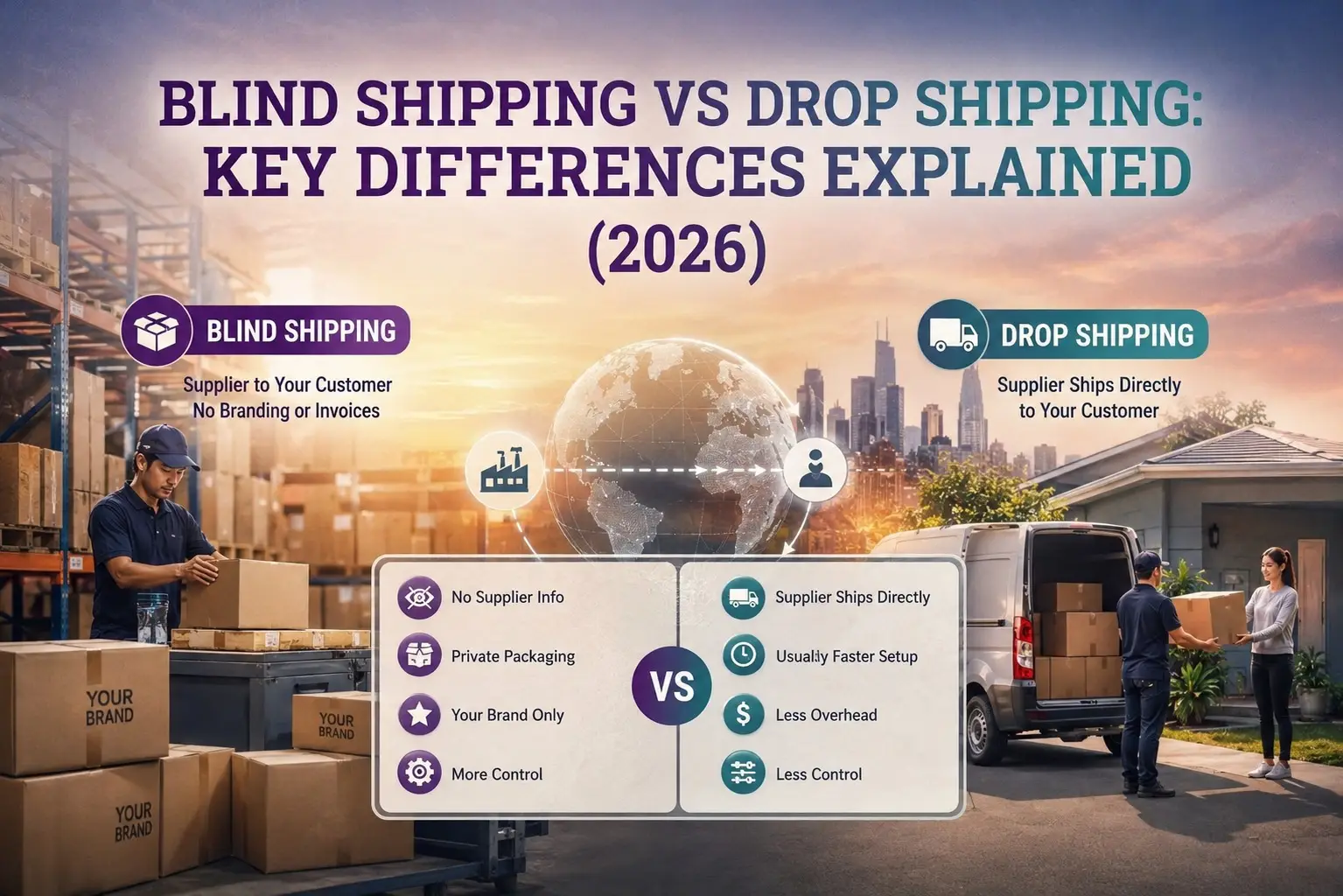
Drop shipping is a business model where a supplier ships orders directly to your customer on your behalf. Blind shipping is a method used within that model where the supplier's identity is hidden from the customer. The package appears to come straight from your brand. One defines the fulfillment structure. The other controls what the customer sees at their door.
You may have heard both terms thrown around in e-commerce and importing circles. Sometimes people use them interchangeably. They are not the same thing.
Understanding the difference between blind shipping vs drop shipping can save you from a lot of confusion when setting up your supply chain. It also helps you make smarter decisions about how your brand shows up to customers.
What is Drop Shipping?
Drop shipping is a fulfillment business model. You sell products through your store without ever holding physical inventory. When a customer places an order, you forward that order to a supplier or manufacturer. They pack and ship it directly to your customer.
Think of a small business owner selling phone accessories online. They list 50 products on their website. When someone buys a phone case, the order goes to a supplier based in Guangzhou. The supplier ships it straight to the buyer in the US. The store owner never touches the product.
Drop shipping has grown significantly as an e-commerce model. The global drop shipping market was valued at $351.8 billion in 2024 and is projected to reach $2.4 trillion by 2032, according to Globe Newswire.
Standard drop shipping has one catch, though. The package arriving at your customer’s door might show the supplier’s logo, a foreign return address, or an invoice with the factory’s pricing. That breaks the brand experience fast.
What is Blind Shipping?
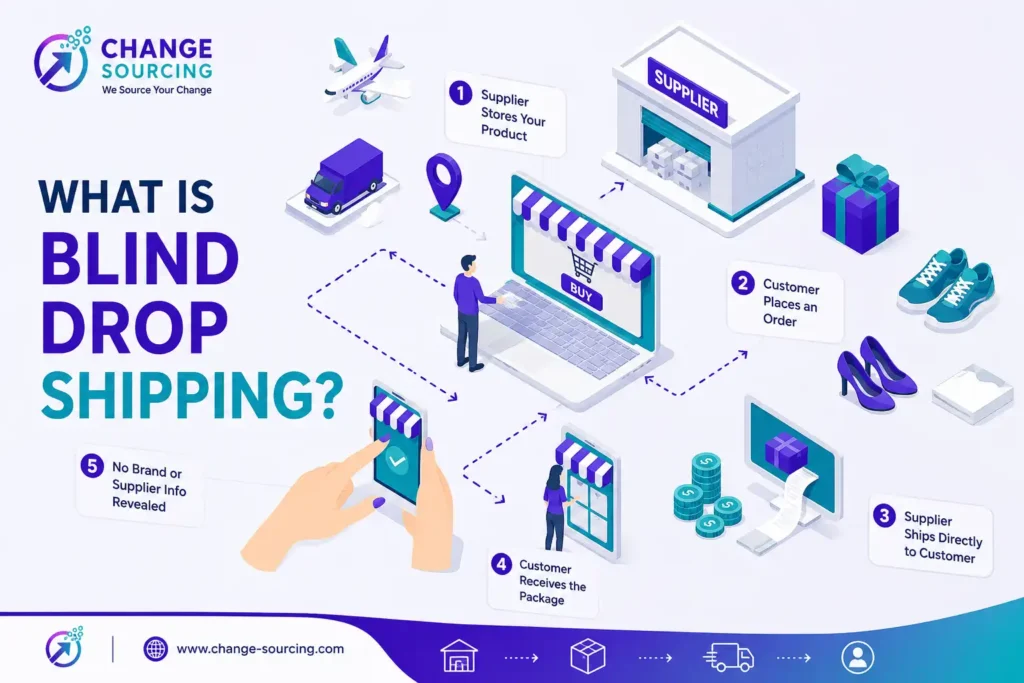
Blind shipping is a method layered on top of drop shipping. The supplier still ships the product directly to your customer. But their identity is completely removed from the package and all shipping documents.
The customer receives the order and sees your brand name. Your return address. Your packing slip. Not a single detail points back to the original factory or supplier.
To make this happen, the supplier’s details are stripped from a key document called the Bill of Lading before the package leaves for delivery.
What is a Bill of Lading and Why Does It Matter?
The Bill of Lading, or BOL, is the official document that travels with every shipment. It lists the goods, the origin, the destination, and both parties involved in the transaction.
In a normal drop ship order, the BOL shows the supplier as the sender. In blind shipping, a second version of the BOL (called a Switch BOL) is created.
The supplier’s details are swapped out for yours before the shipment reaches the customer.
Carriers need this replacement document submitted before the shipment departs. Without it, the original BOL stays with the package, and your supplier’s identity is exposed.
Blind Shipping vs Drop Shipping: Side-by-Side Comparison
| Drop Shipping | Blind Shipping | |
| What it is | A fulfillment business model | A shipping method/tactic |
| Inventory held? | No | No |
| Supplier visible to customer? | Often yes | No — hidden completely |
| Your brand on the package? | Not by default | Yes |
| Extra setup required? | Minimal | Yes — Switch BOL needed |
| Extra cost? | No | Yes — carrier fee ($100-$200) |
| Best for | Getting started quickly | Protecting brand and supplier identity |
The Simple Way to Tell Them Apart
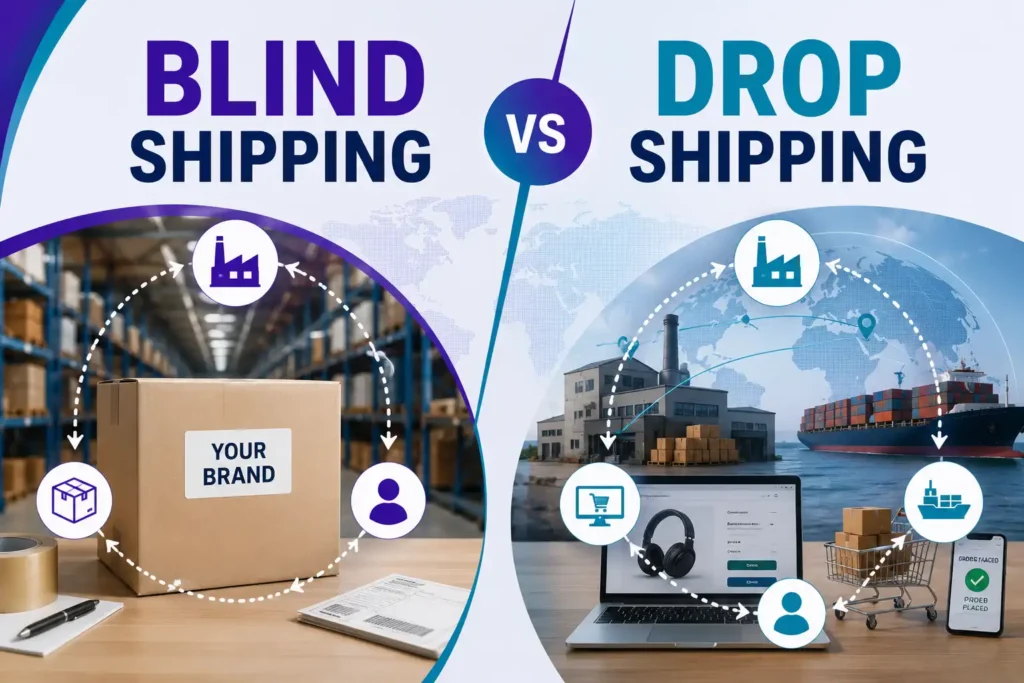
Drop shipping answers: Who ships the product? The supplier ships it on your behalf.
Blind shipping answers: What does the customer see when it arrives? Your brand, not your supplier.
One describes the entire fulfillment chain. The other controls the final moment of that chain — what the customer holds in their hands. You can drop ship without blind shipping. But you cannot use blind shipping without a drop ship setup already in place.
What is Double-Blind Shipping?
Regular blind shipping hides the supplier from the customer. Double-blind shipping goes one step further and hides both sides from each other.
In a double-blind setup, the supplier does not know who the end customer is. The customer does not know who the supplier is. A third party, usually a freight forwarder or sourcing agent, manages the entire booking.
Here is how it works in practice. A distributor in the US is buying from a factory in Guangzhou. They do not want the factory to know their US retail client’s identity. They also do not want their client to know which Chinese factory they source from. The sourcing agent sits in the middle, managing both sets of documents separately.
The Three Types of Blind BOL
When arranging blind shipping, there are actually three variations of how information gets hidden:
- Single-blind BOL: Only one party’s identity is hidden, usually the supplier’s.
- Double-blind BOL: Both the supplier and the end customer are hidden from each other.
- Three-way blind BOL: Even the carrier has limited visibility into who both parties are. Used in highly sensitive trade relationships.
Most e-commerce businesses use single-blind. Double-blind is more common in B2B distribution and wholesale. Three-way is rare and typically reserved for high-value or sensitive commercial contracts.
Is Blind Shipping Legal?
Yes. Blind shipping is a legal and widely used practice in global trade. Thousands of businesses use it every day across e-commerce, distribution, and wholesale.
There is one rule that must never be broken, though. The contents of the shipment must still be declared accurately to customs.
Blind shipping hides the commercial relationship between buyer and seller. It does not give anyone permission to misrepresent the goods inside the package.
Falsely declaring goods to customs is a separate legal issue with serious consequences under US Customs and Border Protection regulations. The “blind” part only applies to the commercial paperwork — not to what goes on the customs declaration.
Always confirm with your carrier that they support blind shipping before arranging it. Not every carrier offers this service. Those that do will typically charge an accessorial fee to cover the additional administrative work.
How Much Does Blind Shipping Cost?
Standard drop shipping does not carry any additional shipping cost beyond the normal freight rate. Blind shipping does.
Carriers charge an accessorial fee to handle the Switch BOL and any label customization.
This fee typically ranges from $100 to $200 per shipment, depending on the carrier, the route, and the complexity of the documentation.
For high-volume shipments, that cost per order becomes very small. For single low-value items, it may not make financial sense. This is why blind shipping is better suited for wholesale or bulk orders rather than one-off retail purchases.
When Should You Use Blind Shipping?
Blind shipping makes the most sense when your brand reputation and supplier relationships need protecting. Here are the clearest situations where it is worth the extra setup:
- You source from China and do not want customers to see a Chinese return address or factory name on the package.
- You sell white-label or private-label products, and the brand identity matters.
- You want to prevent customers from bypassing you and ordering directly from your supplier.
- You operate in a competitive niche where supplier information is a real business asset.
- Your product is sold as a premium or branded item, and the unboxing experience matters.
When Standard Drop Shipping Without Blind Shipping is Fine
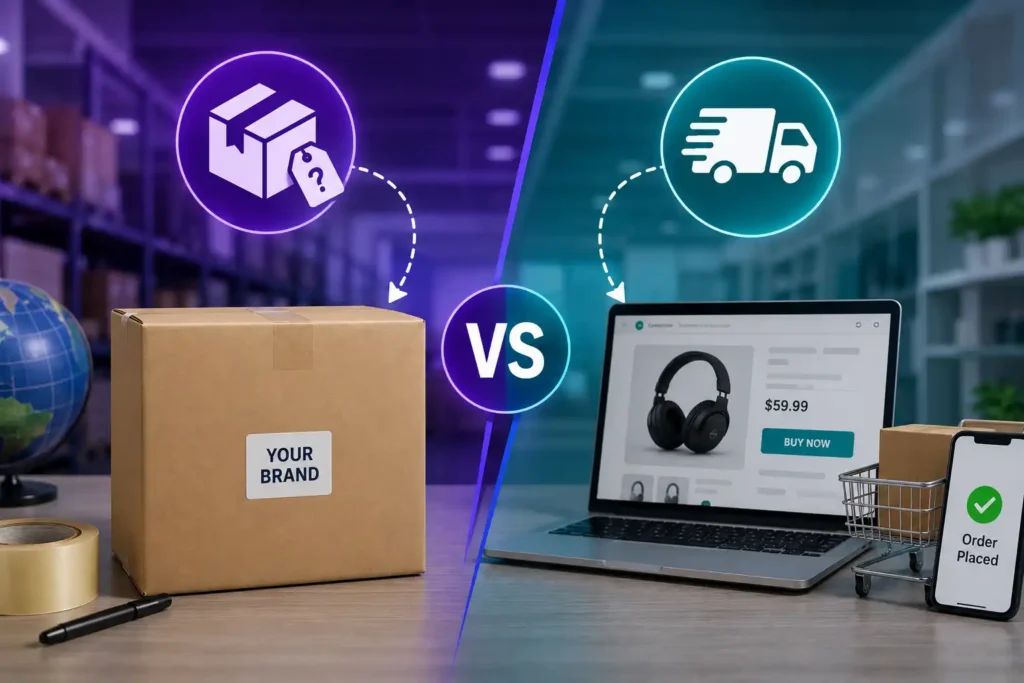
Not every business needs blind shipping right away. Standard drop shipping works well when you are testing a new product and do not want to add cost before validating demand.
It also works when your supplier already ships in plain, unbranded packaging by default. Some suppliers and fulfillment platforms do this as standard practice, which makes the formal blind shipping process unnecessary.
If your margins are thin or you are still building supplier trust, skip blind shipping until the business model is proven. Add it when protecting your brand and supplier relationships becomes a real priority.
CHANGE Sourcing Insights: Arranging Blind Shipping from China
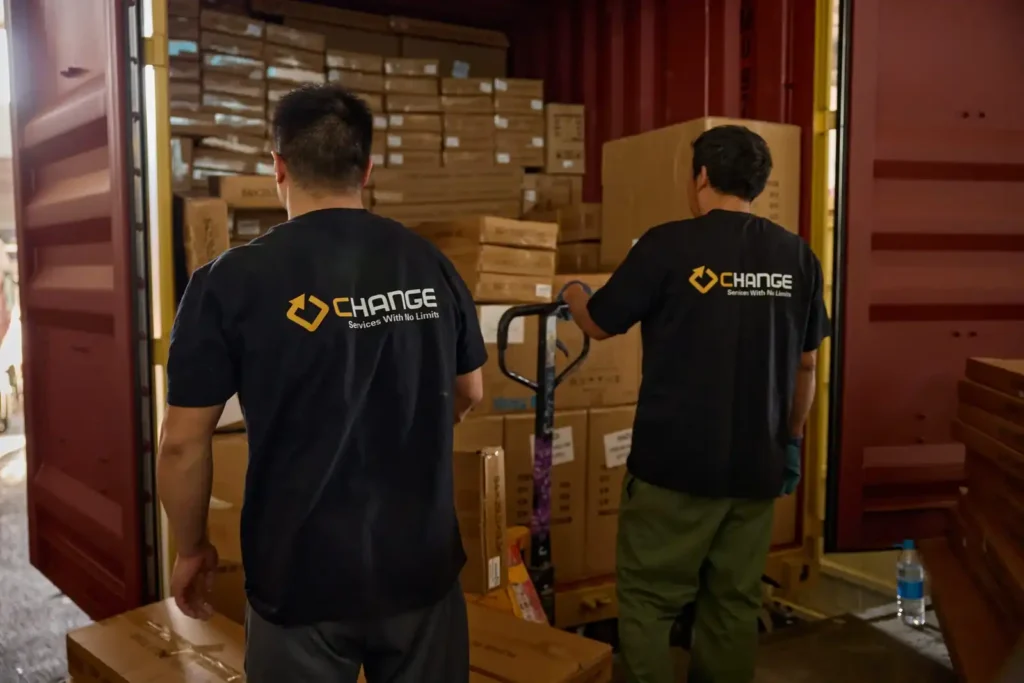
| CHANGE Sourcing — Yiwu & Guangzhou, China 18+ years of experience | 1,500+ global clients | End-to-end sourcing, QC, and logistics |
When you source products from Chinese factories, the default shipment will show a Chinese return address, the factory name, and sometimes the original invoice with production pricing.
For any business selling to retail customers in the US, UK, or Europe, that undermines the brand instantly.
CHANGE Sourcing handles blind shipping arrangements directly from China. Our team is based in Yiwu and Guangzhou, the same cities where the factories are.
We coordinate the Switch BOL, work with the freight forwarder, and set up custom packing slips so the package your customer receives carries your brand name, not your supplier's.
We also manage double-blind arrangements for B2B distributors who need to protect both their supplier relationships and their client list. The documentation, carrier coordination, and compliance checks are all handled on your behalf.
If you are sourcing from China and want to set up blind shipping or need help building a clean, branded fulfilment process, get in touch with our team for a free consultation.
You can also explore our full range of sourcing and logistics services to see how we support importers end-to-end.
FAQs about “Blind Shipping vs Drop Shipping”
No. Drop shipping is the fulfillment model where a supplier ships directly to your customer. Blind shipping is a method used within that model where the supplier’s identity is removed from the package and paperwork. You need drop shipping in place before blind shipping applies.
Carriers charge an accessorial fee for the additional document work. The fee generally ranges from $100 to $200 per shipment depending on carrier and route.
Yes. A sourcing agent or freight forwarder in China can manage the Switch BOL, carrier coordination, and custom label setup on your behalf. CHANGE Sourcing handles this process for importers sourcing through Yiwu and Guangzhou.
A Switch BOL is a second set of shipping documents issued to replace the original. It removes the supplier’s details and replaces them with the seller’s information before the package is handed over for delivery.
Yes. Blind shipping is fully legal and standard practice in global trade. The goods must still be accurately declared to customs. US Customs and Border Protection requires truthful declarations regardless of any commercial confidentiality arrangements between buyer and seller.
Double-blind shipping hides both sides of the transaction. The supplier does not know who the end customer is. The customer does not know who the supplier is. A third party manages the booking and all documentation. It is used mainly in B2B distribution, where both supplier relationships and client lists need protecting.
Final Thoughts
Drop shipping gives you the model. Blind shipping gives you the professional layer on top of it. For anyone building a brand that sources products from overseas suppliers, blind shipping is what keeps the customer experience clean and your supply chain protected.
Standard drop shipping is a great starting point. But once your brand matters and your supplier relationships are an asset, setting up blind shipping is a straightforward step with a real impact.
If you source or plan to source from China, CHANGE Sourcing can handle the entire process from supplier verification and quality checks to blind shipping coordination and freight.
Reach out for a free consultation, and we will walk you through the options.