
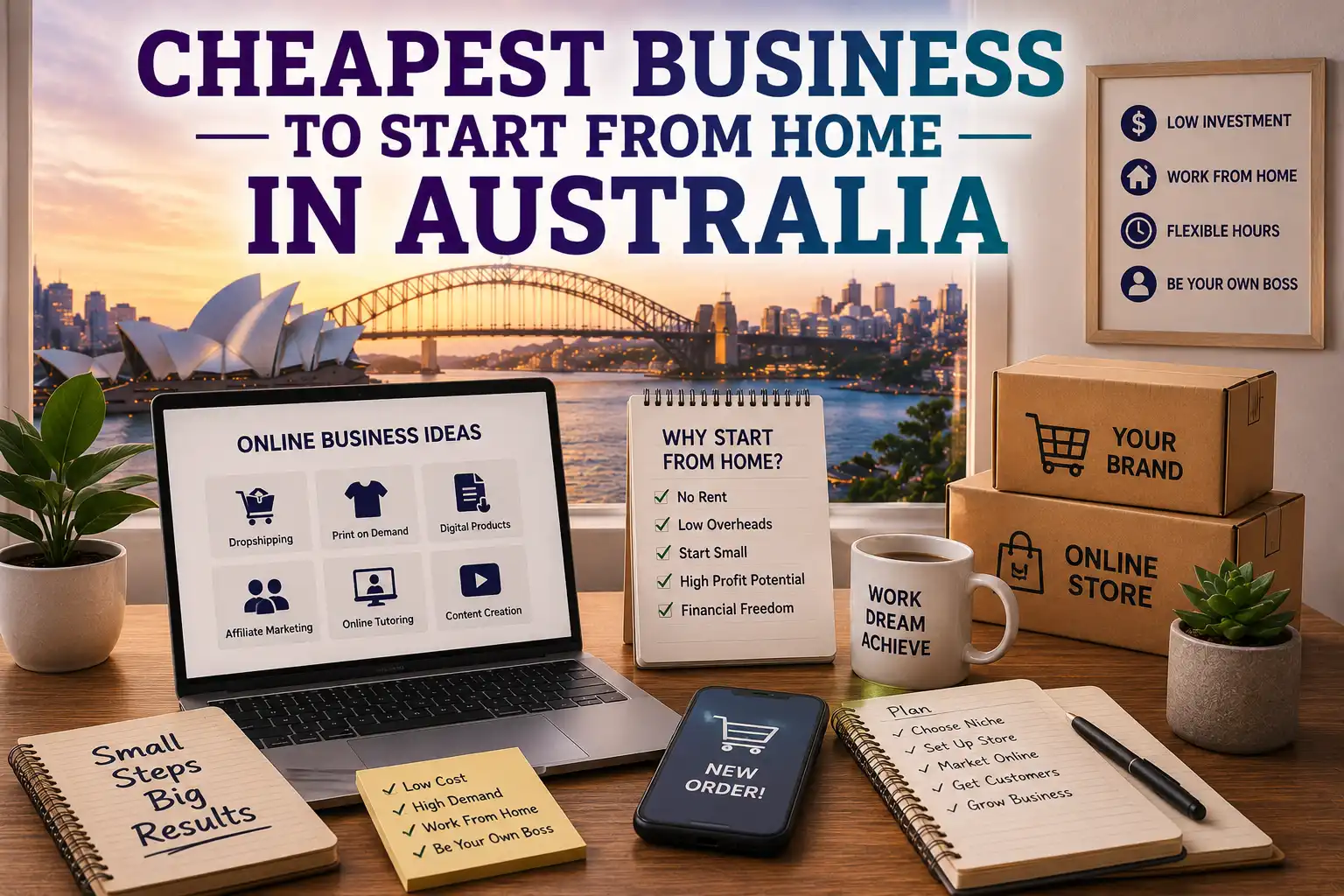
Most people think starting a business requires a big lump sum sitting in a savings account. In reality, 63.6% of Australia’s 2.73 million actively trading businesses have zero employees, which means the majority are solo operations, most of them running lean from home.
The real barrier is not money. It is not knowing which businesses actually cost the least to start.
Below you will find the 10 cheapest businesses to start from home in Australia, each with a line-by-line cost breakdown, a realistic income range, and the Australian-specific legal steps you need to take before your first day of trading.
What Makes a Business the “Cheapest” to Start from Home?
The cheapest home businesses in Australia share four things.
- They need under $500 in total startup capital.
- You can run those businesses on skills you already have or can build quickly.
- They do not require office or retail space.
- And, they can operate legally from a residential address under Australian council rules.
Almost every business on this list is service-based or digital-product-based. That is by design. When you remove physical inventory and commercial rent from the equation, your financial risk drops to almost nothing.
What are the Mandatory Costs to Start Any Business in Australia?
Before we get into each business idea, you need to understand the baseline legal costs that apply to all of them in Australia.
| Item | Cost | Notes |
|---|---|---|
| ABN Registration | $0 | Free via the Australian Business Register |
| Business Name (1 year) | $42 | Via ASIC — updated July 2025 |
| Business Name (3 years) | $98 | Via ASIC — best value if you are confident in your brand |
| Company Registration (Pty Ltd) | $611 | ASIC fee from July 2025 — not required for sole traders |
| GST Registration | $0 | Required only when annual turnover reaches $75,000 |
| .com.au Domain | $15–$25/year | Requires an ABN to register |
Not to mention, if you trade under your own legal name as a sole trader, you do not even need to register a business name. That means your total mandatory government startup cost can be exactly zero.
If you want a trading name that is different from your own name, you pay $42 to ASIC. That is it. Everything else on that list is optional at the start.
The 10 Cheapest Businesses to Start from Home in Australia
The businesses below are ranked from lowest to highest total startup cost. Each one has been selected because it can genuinely be launched in Australia with under $500 and operated from home.
1. Freelance Writing and Content Creation

Minimum Startup Cost: $0 to $42
Freelance writing is the lowest-barrier business on this list. If you can write clearly and consistently, you already have the core skill.
Businesses of every size need blog posts, web copy, email newsletters, and social media captions — and many of them outsource this work to freelancers.
| Item | Cost |
|---|---|
| ABN Registration | $0 |
| Business name (optional) | $42 |
| Portfolio website (free tier on WordPress.com or Wix) | $0 |
| Upwork or Airtasker account | $0 |
| Total Minimum | $0 to $42 |
Income range: The median freelance writer in Australia earns $29.48 per hour, with experienced writers reaching $50.51 per hour. Annual earnings range from $51,000 to over $105,000 full-time.
Time to first dollar: 7 to 14 days. You can create a profile on Upwork or Airtasker today, pitch five clients this week, and realistically land your first paid project within two weeks.
Day 1 checklist:
- Register your ABN for free at abr.gov.au
- Create a free Upwork profile
- Write 2 to 3 sample articles in your chosen niche
- Send your first 5 cold pitches to businesses in your target industry
Who it suits: Teachers, journalists, marketers, or anyone with domain knowledge in a specific field. A nurse who writes healthcare content, or an accountant who writes finance articles, can charge significantly more than a general writer.
2. Virtual Assistant Services

Minimum Startup Cost: $0
A virtual assistant (VA) handles tasks remotely that a business owner does not want to do themselves. Calendar management, inbox organisation, data entry, travel bookings, customer support replies — these are all standard VA tasks. And you need nothing but a computer and reliable internet to start.
| Item | Cost |
|---|---|
| ABN Registration | $0 |
| Trello or Notion (free project management) | $0 |
| Zoom free plan | $0 |
| Upwork or Airtasker listing | $0 |
| Total Minimum | $0 |
Income range: The average VA salary in Australia is $59,056 per year for employee-based work. Freelance VAs working with multiple clients can charge $25 to $60 per hour, depending on their specialisation.
The key to higher rates: Generalist VAs compete on price. Specialist VAs compete on expertise. A VA who handles only real estate agents, or only social media scheduling for ecommerce brands, can charge a premium because they bring niche knowledge to every task.
Time to first dollar: 1 to 3 weeks. Join relevant Facebook groups for Australian small business owners and pitch your services directly. Word of mouth moves fast in this niche.
You might also like to read: Do I Need an ABN to Sell Online in Australia? (2026 Guide)
3. Social Media Management
Minimum Startup Cost: $0 to $42
Thousands of Australian small businesses know they need to be on Instagram, Facebook, and LinkedIn — but they do not have the time or skills to manage it consistently. That gap is your business opportunity.
| Item | Cost |
|---|---|
| ABN Registration | $0 |
| Business name (optional) | $42 |
| Canva free plan (graphic design) | $0 |
| Buffer or Later free scheduling tier | $0 |
| Total Minimum | $0 to $42 |
Income range: Most social media managers charge $400 to $1,500 per month per client for basic content creation and posting. Land three to five clients, and you have a $1,200 to $7,500 per month business from your home office.
How to start with no experience: Pick one platform. Manage your own accounts consistently for 60 days. Screenshot your growth. Use those results as your portfolio when pitching clients. You are not selling a promise — you are selling a proof.
Time to first dollar: 2 to 4 weeks.
4. Online Tutoring and Coaching
Minimum Startup Cost: $0
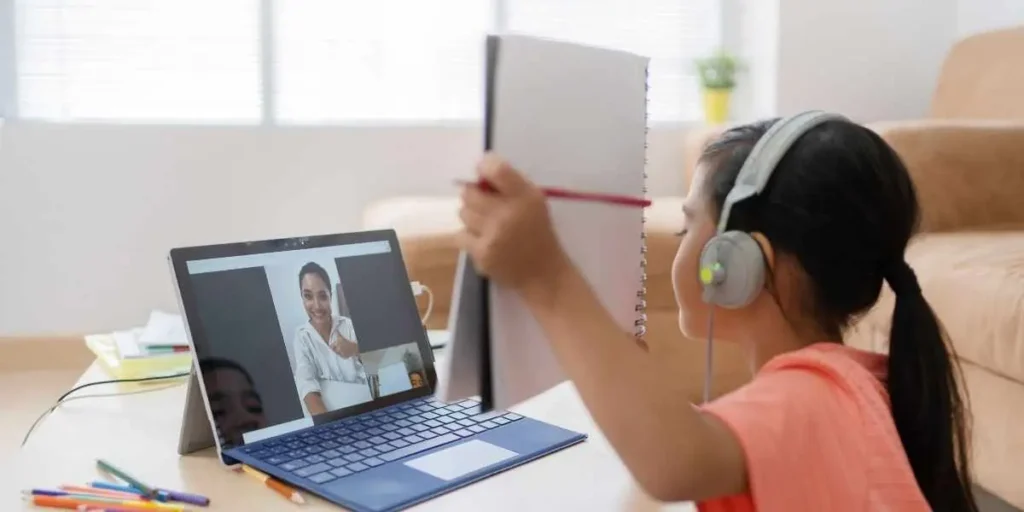
Online tutoring is one of the fastest-growing service categories in Australia. You can teach academic subjects, professional skills, music, a language, fitness, or any other area where you have genuine expertise.
| Item | Cost |
|---|---|
| ABN Registration | $0 |
| Zoom free plan | $0 |
| Calendly free booking tier | $0 |
| Listing on Tutor.com.au or Cluey | Free to apply |
| Total Minimum | $0 |
Income range: Tutors in Australia typically charge $40 to $120 per hour, depending on the subject, level, and their own qualifications. Maths, science, and ATAR exam prep tend to command the highest rates.
Quick example: A former high school science teacher who starts tutoring HSC Chemistry online, four evenings a week for two hours each session, can earn around $480 to $960 per week without leaving home.
Time to first dollar: 7 to 14 days.
Important ATO note: If you earn tutoring income consistently and run it like a business (not just occasionally helping a neighbour’s child), the ATO considers it assessable income, and you need your ABN.
5. Dropshipping (eCommerce Without Inventory)
Minimum Startup Cost: $172 to $534
Dropshipping is the most popular low-cost product business model in Australia. You sell products through an online store, and when a customer orders, your supplier ships directly to them.
You never hold stock, pack boxes, or visit a post office.
| Item | Cost |
|---|---|
| ABN Registration | $0 |
| Shopify Starter plan | ~$9/month (AUD) |
| Domain name | $15 to $25/year |
| Product samples (recommended before selling) | $50 to $200 |
| Initial ad budget (Facebook or Google) | $100 to $300 |
| Total Minimum | $172 to $534 |
Income range: Beginners typically earn $0 to $5,000 per month. Experienced dropshippers who master product selection and paid advertising can earn $10,000 to $50,000 per month. Net profit margins on well-structured stores run between 15% and 35%.
The Australian market opportunity: Australia’s ecommerce revenue is projected to reach AUD $39.36 billion in 2025, growing at 3.39% annually through 2030. That is a strong domestic market for anyone starting an online product business right now.
One honest warning: Only about 1% to 5% of dropshipping stores reach consistent profitability, primarily because new store owners underinvest in marketing. The business model is cheap to start, but not cheap to scale. Budget for advertising from day one.
Margin tip: The biggest margin killer in dropshipping is buying through third-party fulfilment platforms that add a middleman markup to every product. If you identify a winning product and want to increase your margins significantly, moving to direct sourcing from Chinese manufacturers is the next logical step. We explain how that works in the CHANGE Sourcing section below.
You might also like to read: Is Alibaba Safe to Buy From Australia and How? 2026 Guide
6. Bookkeeping Services
Minimum Startup Cost: $42 to $500
Bookkeeping is one of the most stable and in-demand home businesses in Australia. Every business with a turnover above $75,000 must be registered for GST and lodge a Business Activity Statement (BAS) quarterly. Most small business owners would rather pay someone else to handle it.
| Item | Cost |
|---|---|
| ABN Registration | $0 |
| Business name | $42 |
| Cert IV in Bookkeeping (often government-subsidised through TAFE) | $0 to $2,000 |
| Xero subscription (free for registered BAS agents) | $0 |
| TPB (Tax Practitioners Board) registration to lodge BAS | ~$100 |
| Total Minimum | $42 to $500 |
Income range: Bookkeepers in Australia typically charge $35 to $65 per hour. A full-time bookkeeping practice earns $50,000 to $80,000 per year and often more with specialist clients.
Important legal note: To legally prepare and lodge BAS statements for clients, you must register as a BAS agent with the Tax Practitioners Board (TPB). This requires a minimum qualification (Cert IV in Bookkeeping or Accounting) and a registration fee. You can legally do basic record-keeping and data entry without registration, but you cannot lodge official tax documents.
Time to first dollar: 2 to 6 weeks (depending on whether you already hold a qualification).
7. Home Cleaning Services
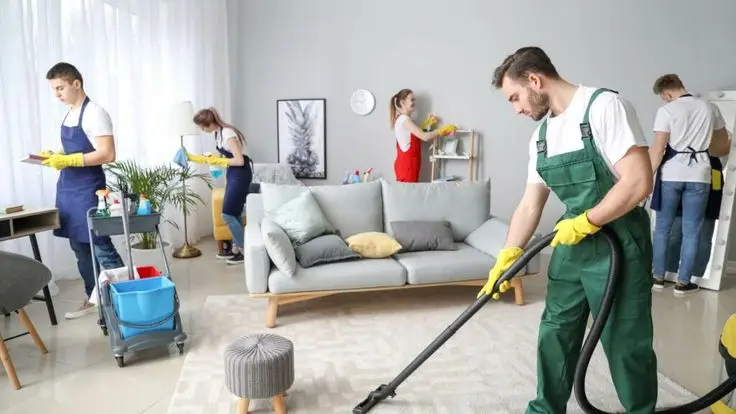
Minimum Startup Cost: $500 to $800
Cleaning is the one business on this list that is done outside your home but operated from it. Your home is your base — for scheduling, invoicing, and supply storage. The actual service happens at the client’s property.
| Item | Cost |
|---|---|
| ABN Registration | $0 |
| Basic cleaning supplies starter kit | $100 to $200 |
| Public liability insurance (annual) | $400 to $600 |
| Profile on Airtasker or hipages | $0 to list |
| Total Minimum | $500 to $800 |
Income range: Residential cleaners in Australia charge $35 to $60 per hour. Working four hours a day, five days a week, puts you at $700 to $1,200 per week. Commercial cleaning rates are higher, and contracts are longer.
Why insurance is non-negotiable here: Public liability insurance protects you if something breaks or someone is injured at a client’s property. Skipping it is not worth the risk. Basic annual coverage typically costs $400 to $600 for sole traders in this industry.
Time to first dollar: 7 to 14 days. You can list on Airtasker today and be booked for your first job this week.
8. Handmade and Craft Products
Minimum Startup Cost: $100 to $300
If you make candles, jewellery, art, ceramics, custom prints, or any other handmade product, you already have a business idea. Etsy has millions of active buyers globally, and Australian makers have a strong presence on the platform.
| Item | Cost |
|---|---|
| ABN Registration | $0 |
| Etsy shop (no monthly fee; $0.27 AUD per listing) | $0 |
| Raw materials for a starter batch | $100 to $300 |
| Product photography (smartphone is fine to start) | $0 |
| Total Minimum | $100 to $300 |
Income range: This one varies significantly. Consistent sellers on Etsy with strong SEO earn $500 to $3,000 per month. Some build full-time incomes. The key variable is product-market fit and how well you photograph and describe your items.
Food business note: If you want to sell baked goods or other food products from home, you need a Food Business Notification through your local council first. Requirements vary by state, so check with your specific council before you begin selling.
Time to first sale: 2 to 4 weeks (includes sourcing materials and setting up your store).
9. Print-on-Demand
Minimum Startup Cost: $0 to $31 per month
Print-on-demand (POD) is like dropshipping, but the products are custom-designed items — t-shirts, hoodies, mugs, wall art, tote bags, phone cases. You upload your design, set your price, and a third-party prints and ships each item when someone orders.
| Item | Cost |
|---|---|
| ABN Registration | $0 |
| Printful or Printify (free plan) | $0 |
| Canva free plan for design | $0 |
| Etsy store (listing fees apply) | ~$0.27 AUD per listing |
| Total Minimum | $0 to $5/month |
Income range: Margins per item are typically $5 to $20. Part-time POD sellers on Etsy earn $300 to $2,000 per month. Full-time sellers running multiple stores can earn significantly more.
Why POD beats dropshipping for zero-budget starters: You do not need to run paid ads to get started. Etsy has built-in organic search traffic. If your designs rank well in Etsy search, you can get sales with zero ad spend — something that is nearly impossible with a standalone Shopify dropshipping store.
Time to first sale: 1 to 2 weeks.
10. AI-Assisted Freelance Services
Minimum Startup Cost: $28 to $60 per month
This is the newest entry on the list and one of the most time-efficient home businesses available in 2026. Using tools like ChatGPT, Claude, or Midjourney, a single person can now deliver the output that used to require a team.
Services in this category include: AI-enhanced copywriting, image generation and editing, video script writing, research reports, translation, social media content at scale, and AI-augmented customer service setup.
| Item | Cost |
|---|---|
| ABN Registration | $0 |
| ChatGPT Plus or Claude Pro subscription | $28 to $32/month (AUD) |
| Canva free plan | $0 |
| Fiverr or Upwork profile | $0 |
| Total Minimum | $28 to $32/month |
Income range: Experienced AI-assisted copywriters and content creators charge $30 to $100 per hour. Because AI tools dramatically increase output speed, many practitioners are effectively earning $80 to $150 per productive hour once clients are established.
A real example of how this works: A solo copywriter previously took 4 hours to write a 1,500-word blog post. With AI assistance, the same post can be drafted, refined, and checked in under 90 minutes. At $60 per hour, that shifts the effective rate from $240 to $540 for the same deliverable.
Time to first dollar: 3 to 7 days. This is the fastest business on this list to monetise because your AI tool dramatically reduces the time between client brief and delivery.
At-a-Glance Comparison: Which Home Business is Right for You?
| Business | Min. Startup Cost | Time to First $ | Income Potential | Risk Level |
|---|---|---|---|---|
| Freelance Writing | $0 to $42 | 1 to 2 weeks | Medium-High | Low |
| Virtual Assistant | $0 | 1 to 3 weeks | Medium | Low |
| Social Media Mgmt | $0 to $42 | 2 to 4 weeks | Medium-High | Low |
| Online Tutoring | $0 | 1 to 2 weeks | Medium | Low |
| Dropshipping | $172 to $534 | 4 to 8 weeks | High | Medium-High |
| Bookkeeping | $42 to $500 | 2 to 6 weeks | High | Low |
| Cleaning Services | $500 to $800 | 1 to 2 weeks | Medium | Low |
| Handmade/Crafts | $100 to $300 | 2 to 4 weeks | Low-Medium | Low |
| Print on Demand | $0 to $31/month | 1 to 2 weeks | Low-Medium | Low |
| AI-Assisted Services | $28 to $60/month | 3 to 7 days | Medium-High | Low |
Can You Legally Run a Business from Home in Australia?
Yes — but the answer depends on three things: your local council’s zoning rules, your lease agreement if you rent, and any strata by-laws if you live in an apartment or townhouse.
What Do Local Council Rules Actually Say?
Most Australian councils allow low-impact home occupations in residential zones without requiring a Development Application (DA). “Low impact” typically means no walk-in customers, no external signage, no employees other than residents, and no noise or chemical hazards.
Common conditions councils impose include:
- No more than 2 non-resident employees on the premises
- No customer visits or limited appointments per week
- No signage visible from the street
- No significant vehicle movements beyond normal residential patterns
For example, in the Australian Capital Territory, a home business can operate without development approval if it uses no more than 40 square metres of floor space. Most digital and service businesses operate well within this.
The safest step: search "[your council name] + home occupation + development application" before you set anything up. Penalties for non-compliance can be steep and are not worth the risk.
What if You Rent?
Most Australian residential leases include a clause restricting the property to residential use. That means you need written permission from your landlord before operating a business, even if it is purely online with no clients visiting.
In practice, low-impact digital businesses (writing, VA work, tutoring via video call) are rarely a problem. But you still need the consent in writing. Verbal permission is not protection if a dispute arises later.
What if You Live in a Strata Building?
Strata by-laws operate separately from council rules. Even if your council permits your business activity, your Owners Corporation or Body Corporate by-laws may restrict deliveries, client visits, or certain activities. Check both sets of rules before you start.
What Tax Deductions Can Australian Home Business Owners Claim?
Running your business from home comes with real tax advantages that most new business owners do not fully use.
The ATO 70 Cents Per Hour Fixed Rate
For the 2024-25 and 2025-26 income years, you can claim 70 cents per hour for every hour you work from home. This rate covers electricity, gas, phone, internet, and stationery.
What it does not cover (claim these separately):
- Decline in the value of a desk, chair, computer, or monitor
- Repairs to home office equipment
- Cleaning costs for a dedicated home office space
A simple calculation: If you work 38 hours per week for 48 weeks, your deduction is 38 x 48 x $0.70 = $1,276.80 per year. On top of that, you can claim depreciation on your laptop, desk, and monitor separately.
Critical record-keeping requirement: The ATO does not accept estimates. You must keep a diary, timesheet, or digital log of your actual hours worked from home. Keep those records for five years from the date you lodge your return.
The $20,000 Instant Asset Write-Off
For the 2024-25 income year, eligible small businesses could instantly deduct assets costing up to $20,000 — including laptops, monitors, desks, and chairs. Confirm 2025-26 eligibility with your accountant, as this threshold has been subject to federal budget extensions.
Other Deductible Items for Home Businesses:
- Business insurance premiums
- Professional subscriptions (Canva Pro, Shopify, accounting software)
- Platform fees (Etsy listing fees, Upwork service fees)
- Professional development courses directly related to your business activity
- A portion of phone and internet costs if not using the fixed rate method
How to Scale a Cheapest Home Business Without Losing Money
Starting cheap is smart. But at some point, every successful home business faces a choice about how to grow. The path you take depends heavily on which type of business you are running.
Service Business Scaling Path
If you started as a freelance writer, VA, or social media manager, the scaling path looks like this:
- Raise your hourly rate as you build a portfolio and client reviews
- Productise your most common service into a fixed-price package
- Hire a subcontractor to handle overflow work
- Build a small agency model where you manage the client relationship and subcontract the delivery
This path requires no additional capital — only your time, reputation, and confidence to charge more.
Product Business Scaling Path
If you started with dropshipping or print-on-demand, the scaling path is different. Once you have validated a product and know it sells, the biggest lever for increasing profit is reducing your cost per unit.
Dropshipping through third-party apps like Oberlo or Zendrop means a middleman sits between you and the factory. That middleman takes a cut on every order.
The next step — which serious Australian product sellers eventually take — is moving to direct sourcing from Chinese manufacturers. When you buy at factory prices instead of dropshipping supplier prices, the margin difference on the same product is typically 30% to 60%.
That is where CHANGE Sourcing comes in.
You might also like to read: Best Vendors for Reselling in Australia 2026
How CHANGE Sourcing Helps Australian Entrepreneurs Source Products at the Cheapest Business Cost
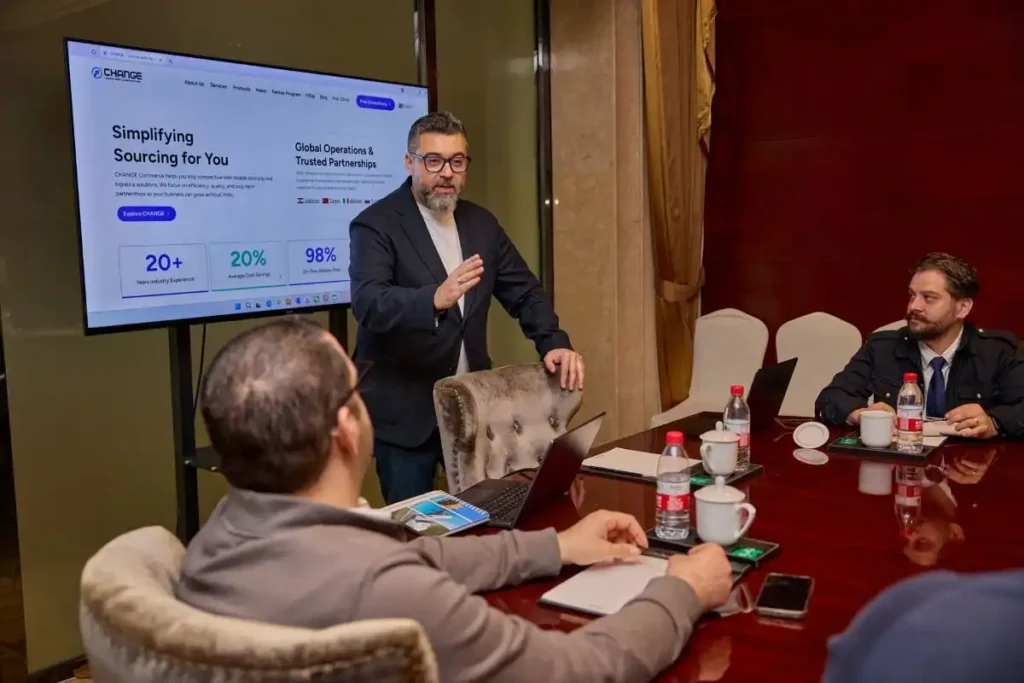
Once your home-based product business finds a winning item, the path to better margins runs through direct sourcing.
CHANGE Sourcing is a China-based sourcing company with offices in Yiwu and Guangzhou that helps Australian entrepreneurs buy direct from verified factories.
Here is what that looks like in practice. Imagine you are dropshipping a wireless phone charger. Through a standard dropshipping app, you pay $18 per unit and sell it for $39. Your gross margin before ads is $21, or about 54%. After ad spend, you net $8 to $12 per sale.
Now imagine you source the same charger directly from the factory at $7 per unit. You still sell it for $39. Your gross margin jumps to $32 before ads. After ad spend, you net $20 to $24 per sale — roughly double. On 100 orders per month, that difference is $800 to $1,200 in additional profit every single month.
CHANGE Sourcing handles:
- Supplier vetting and factory audits
- Quality inspections before goods leave China
- Freight coordination to Australian addresses
- Communication with suppliers in Mandarin on your behalf
This is how Australian home-based product sellers go from a thin-margin dropshipping operation to a real, scalable import business without needing to learn the entire supply chain from scratch.
Get a free consultation with CHANGE Sourcing here
You might also like to read: Best China Suppliers for Small Business in 2026
Frequently Asked Questions
Freelance writing and virtual assistant services are the cheapest. Both can start at $0 in government costs if you trade under your own name as a sole trader. All you need is a computer and an internet connection.
Yes, if you already own a computer and have internet access. Service businesses like freelance writing, VA services, and online tutoring require no upfront government spending. Your ABN is free. Your business name registration is optional if you trade under your own name.
Yes. Most Australian residential leases include a “residential purposes only” clause. Get written permission from your landlord before operating, even if your business is entirely online. Without it, you could be in breach of your lease.
Using the ATO fixed rate method, you claim 70 cents for every hour worked from home in 2024-25 and 2025-26. A full-time home business operator who works 38 hours a week, 48 weeks a year, can claim over $1,276 in deductions through this method alone — plus separate depreciation on equipment.
When your annual business turnover reaches $75,000. Below that, GST registration is optional. For most home businesses in their first year, this is not a concern.
Final Thoughts
The 10 businesses above share one trait: they give you a real chance to earn income without a significant financial risk. The cheapest — freelance writing, VA services, AI-assisted services — start at zero. The most expensive on this list, cleaning services, still comes in under $800.
The difference between people who start and people who wait is rarely about money. It is almost always about clarity.
Pick one business from the table above. Register your ABN today at abr.gov.au — it is free and takes under 15 minutes. Send your first pitch or post your first listing this week. The first step costs nothing.
You might also like to read: Is It Legal to Resell Items: Common Questions Answered in 2026