
The best vendors for reselling clothes include thrift chains like Goodwill, liquidation platforms like B-Stock and BULQ, domestic wholesale suppliers like Faire and Tasha Apparel, and China-based sourcing options like Alibaba and factory markets in Guangzhou. The right choice depends on your budget, order volume, and how much lead time you can work with.
Finding consistent, affordable inventory is the hardest part of building a clothing resale business. You can have a great eye for style and a loyal customer base, but if your sourcing is unreliable, your margins and your momentum will suffer.
This guide covers the best vendors for reselling clothes across four categories: thrift and secondhand sources, liquidation platforms, domestic wholesale suppliers, and China-based direct sourcing.
Before we dive in, there is one important distinction to make. Sourcing vendors are where you buy your inventory. Reselling platforms like Poshmark or Depop are where you sell it. This guide focuses entirely on the sourcing side.
Each vendor listed here includes real addresses, official websites, and contact details so you can take action immediately.
What are the Best Vendors for Reselling Clothes?
The best vendors for reselling clothes fall into four categories: thrift and secondhand sources, liquidation platforms, domestic wholesale marketplaces, and China-based direct suppliers. Each suits a different business size, capital level, and niche.
Choosing the wrong category for your stage is one of the most common reasons new resellers struggle with profitability.
A beginner with $300 has very different needs than a boutique owner placing orders worth $5,000. The sections below are organized by that logic, starting from the lowest barrier and working up to the highest-margin sourcing options.
According to Statista, the global apparel market is projected to reach $2.04 trillion by 2029. The demand is real. The opportunity is in sourcing smarter than the competition.
Which Vendor Type is Right for Your Business Stage?
Beginners with under $500 to invest should start with thrift stores and small liquidation lots. Growing resellers with $500–$5,000 available should explore domestic wholesale.
Buyers spending $5,000 or more per order should look at China-direct sourcing or work with a local sourcing agent.
Here is a quick decision table to help you match your stage to the right vendor type:
| Business Stage | Capital Range | Best Vendor Type | Risk Level |
|---|---|---|---|
| Beginner | Under $500 | Thrift stores, BULQ lots | Low |
| Growing Reseller | $500 – $5,000 | Domestic wholesale (Faire, Tasha Apparel) | Medium |
| Scaling / Boutique | $5,000+ | China direct or sourcing agent | Medium-High (manageable with the right partner) |
The average gross profit margin for apparel businesses sits at around 56.88% according to NYU Stern School of Business, significantly higher than the 37.76% cross-industry average. That margin is available at every stage, but how you access it depends on your sourcing channel.
Quick Comparison: Best Vendors for Reselling Clothes at a Glance
| Vendor | Type | Official Website | Min. Order | Best For |
|---|---|---|---|---|
| Goodwill | Thrift | goodwill.org | None | Beginners, vintage pickers |
| ThredUp Rescue Boxes | Secondhand lots | thredup.com | ~$10/box | Poshmark / Depop resellers |
| B-Stock | Liquidation | bstock.com | Varies by auction | Experienced bulk buyers |
| BULQ | Liquidation | bulq.com | ~$100 | Beginners testing liquidation |
| 888 Lots | Liquidation (apparel) | 888lots.com | ~$150 | Clothing-focused resellers |
| Faire | Wholesale marketplace | faire.com | No minimum (many brands) | Boutique / indie brand buyers |
| Tasha Apparel | Wholesale (LA) | tashaapparel.com | $100 | Women’s fashion resellers |
| OrangeShine | Wholesale marketplace | orangeshine.com | $50–$100 | Women’s clothing |
| WFS | Wholesale | wholesalefashionsquare.com | $49 | Affordable fast-fashion resellers |
| Alibaba | China B2B | alibaba.com | 50–300 pieces | Private label, volume buyers |
| 1688.com | China factory-direct | 1688.com | Often 5–50 pieces | Cost-first bulk sourcing |
| Change Sourcing | Sourcing agent (China) | change-sourcing.com | Flexible | Factory access without travel |
Best Thrift and Secondhand Vendors for Clothing Resellers
Thrift stores are the most accessible starting point for clothing resellers, offering low cost per item, daily inventory refresh, and no minimum order requirements.
The trade-off is time: you need to sort through a lot to find the right pieces.
Goodwill
Website: goodwill.org
MOQ: None
Average cost per item: $2–$8
Best for: Beginners, vintage pickers, thrift flippers
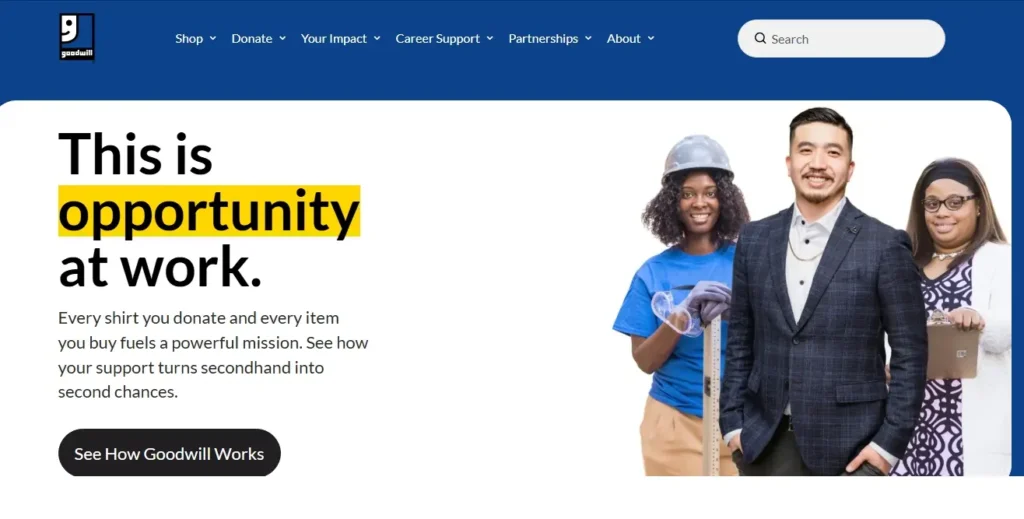
Goodwill operates over 3,000 locations across the US and Canada. Most stores use a color-tag rotation system where specific tags go on sale each week, often at 50% off.
If you learn your local store's schedule, you can time your visits for maximum discount.
The real hidden gem is the Goodwill Outlet, sometimes called “the bins.” Items here are sold by the pound, typically around $1.49/lb, which means you can find branded clothing at almost no cost per unit. It requires more time and patience, but the margins on well-chosen pieces can be substantial.
Location tip: Use the store locator at goodwill.org to find your nearest Goodwill Outlet location.
Salvation Army
Website: satruck.org
MOQ: None
Average cost per item: $1–$6
Best for: Budget sourcing, casual and workwear finds
Salvation Army stores generally price clothing slightly lower than Goodwill. The best strategy is visiting mid-week, typically Tuesday through Thursday, when new donations from their collection trucks have been processed and put on the floor.
Weekend crowds reduce your chances of finding the best pieces first.
Use the Salvation Army store locator to find a branch near you.
ThredUp (Rescue Boxes for Resellers)
Website: thredup.com
MOQ: One box (starting around $10–$40)
Best for: Poshmark and Depop resellers testing categories
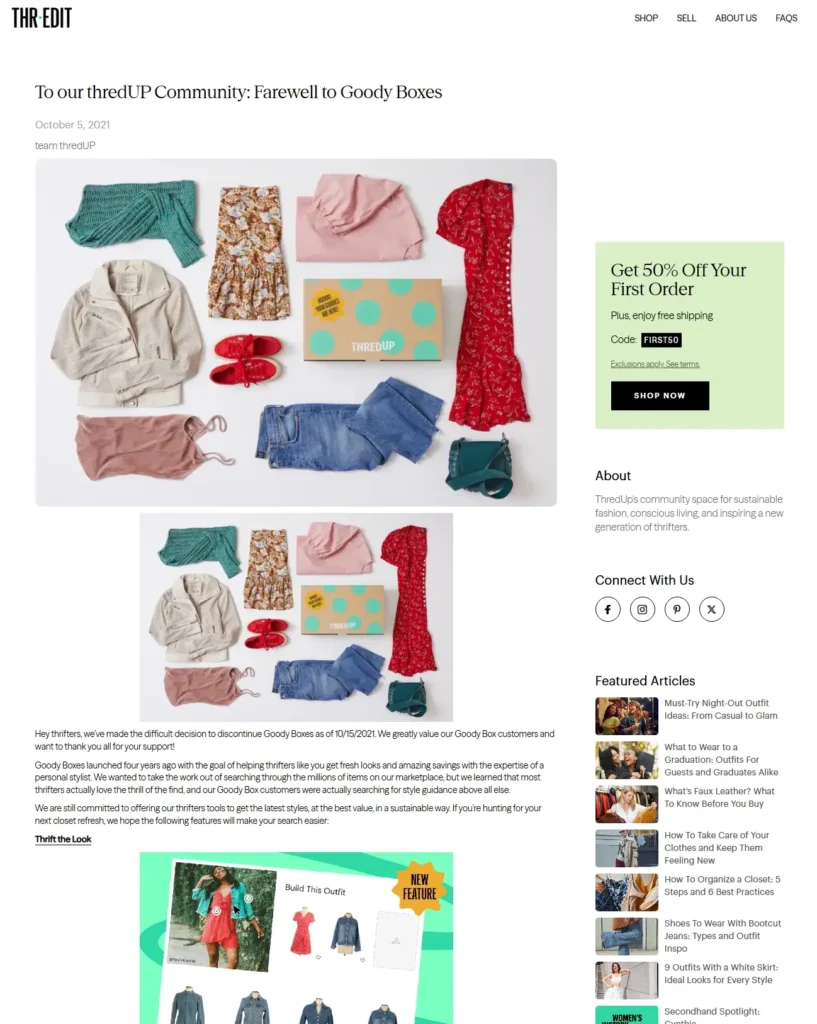
Most people know ThredUp as a place to sell clothes, not buy them. But ThredUp also sells Goody Bags and Rescue Boxes, which are curated lots of secondhand clothing that resellers can buy at a low entry cost.
These boxes are a smart way to test a new clothing category without committing to a large upfront spend. Expect mixed conditions. The sourcing cost is low, but plan time to inspect, photograph, and list each piece individually.
You might also like: Top 8 Fast Selling Products to Import from China in 2026
Best Liquidation Vendors for Buying Clothes in Bulk
Liquidation vendors sell overstock, returned, and shelf-pull clothing from major retailers at 70–90% below retail prices.
They are best for resellers who have storage space, at least $100–$150 in starting capital, and the ability to sort and grade mixed inventory.
The most important distinction to understand before buying liquidation pallets is the difference between manifested and unmanifested (mystery) lots.
A manifested lot lists every item inside, so you can calculate your expected return before purchase. An unmanifested lot is cheaper but carries real risk. Always start with manifested lots.
B-Stock
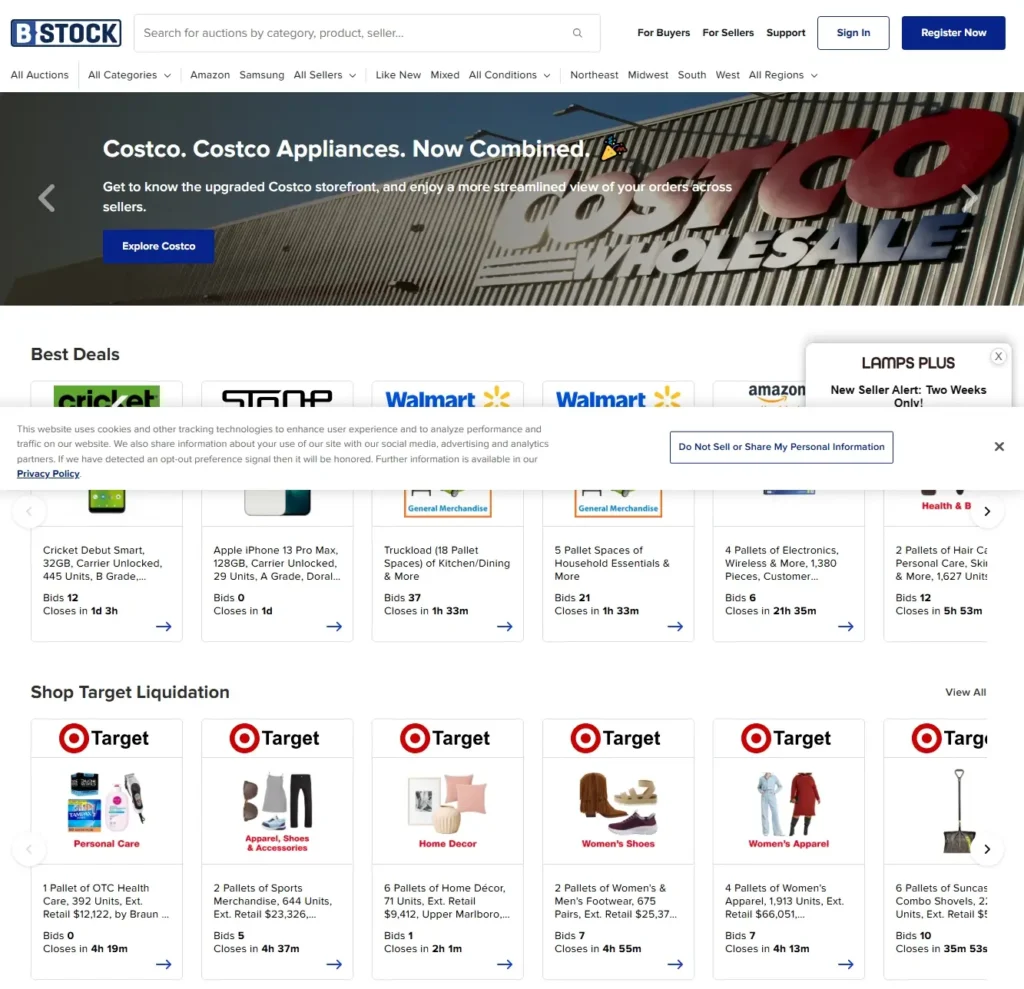
Website: bstock.com
Type: B2B auction marketplace
Min. order: Varies by auction (often $100–$500+)
Contact: bstock.com/contact
Address: 1900 S Norfolk St, Suite 310, San Mateo, CA 94403, USA
B-Stock is the largest B2B liquidation marketplace, running auctions on behalf of retailers like Amazon, Walmart, Target, and Home Depot. Because the retailers themselves run the auctions, you are buying authentic returns with clear manifests, not repackaged mystery lots.
This is the most trustworthy liquidation option available.
The trade-off is that experienced buyers drive prices up at auction, so margins can be thinner compared to smaller platforms.
BULQ
Website: bulq.com
Type: Fixed-price liquidation lots
Min. order: Around $100
Contact: support@bulq.com
Address: 6051 Wallace Rd Ext, Suite 100, Wexford, PA 15090, USA
BULQ specializes in smaller lot sizes, making it one of the most accessible liquidation platforms for new resellers.
Lots typically run between $100 and $500, and both manifested and mystery box options are available.
Clothing and apparel pallets from BULQ carry significantly lower defect rates than electronics pallets, which makes them a practical starting point for fashion resellers. Fixed pricing, rather than auctions, means your budget is predictable from the start.
888 Lots
Website: 888lots.com
Type: Fixed-price clothing pallets
Min. order: Around $150
Best for: Clothing, shoes, and accessories focus
888 Lots stands out because it focuses specifically on clothing, shoes, and accessories rather than general merchandise.
Fixed pricing (no auctions) makes budget planning straightforward. This focus on apparel makes it more relevant for fashion resellers than broader liquidation platforms that mix in electronics and housewares.
You might also like: How to Import Samples from China in 2026
Best Domestic Wholesale Vendors for Reselling Clothing
Domestic wholesale suppliers offer consistent, repeatable inventory at predictable prices. They are ideal for resellers who have found their niche and need reliable stock without the lead times or complexity of overseas sourcing.
Faire
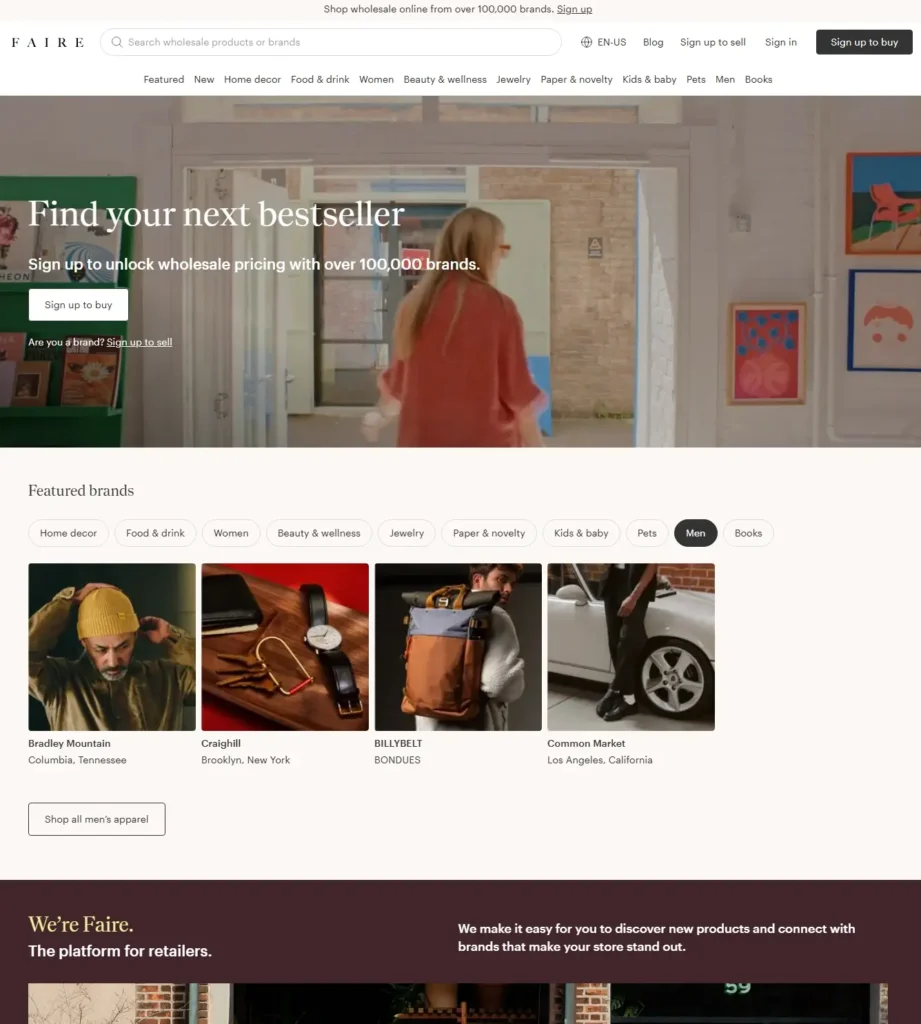
Website: faire.com
MOQ: No minimum on many brands
Contact: support@faire.com
Address: 100 Woodside Dr, San Francisco, CA 94127, USA
Faire is a wholesale marketplace that connects boutique owners and resellers with thousands of independent brands.
What makes it particularly useful for new wholesale buyers is the net-60 payment terms on your first order.
You receive the inventory and have 60 days to pay, which is a meaningful cash flow advantage when you are just getting started.
Free returns on opening orders reduce the risk of committing to a new brand. Faire is best suited for boutique-style resellers building a curated store with indie brands, rather than high-volume fashion resellers.
Tasha Apparel
Website: tashaapparel.com
MOQ: $100 minimum
Phone: (213) 741-0888
Email: info@tashaapparel.com
Address: 127 E 9th St, Los Angeles, CA 90015, USA (LA Fashion District)
Tasha Apparel is based in the Los Angeles Fashion District and focuses on trend-driven women’s clothing. The $100 minimum order is one of the lowest in the domestic wholesale space, which makes it a practical starting point for resellers who want to test styles before scaling up.
Because it is based in LA, turnaround times for US buyers are fast.
Think of it like this: if you are running a Poshmark store and you spot a style your buyers keep asking for, you can order a small test batch from Tasha in days, not weeks.
OrangeShine
Website: orangeshine.com
MOQ: $50–$100 depending on the brand
Contact: support@orangeshine.com
Address: 110 E 9th St, Los Angeles, CA 90079, USA
OrangeShine is an online wholesale marketplace that aggregates hundreds of US clothing brands in one place. Strong vendor reviews make it easier to evaluate new brands before committing.
It accepts reseller accounts without requiring a large minimum spend, which suits smaller buyers well.
It is particularly strong for women’s boutique clothing and items suited to Poshmark or eBay reselling.
Wholesale Fashion Square (WFS)
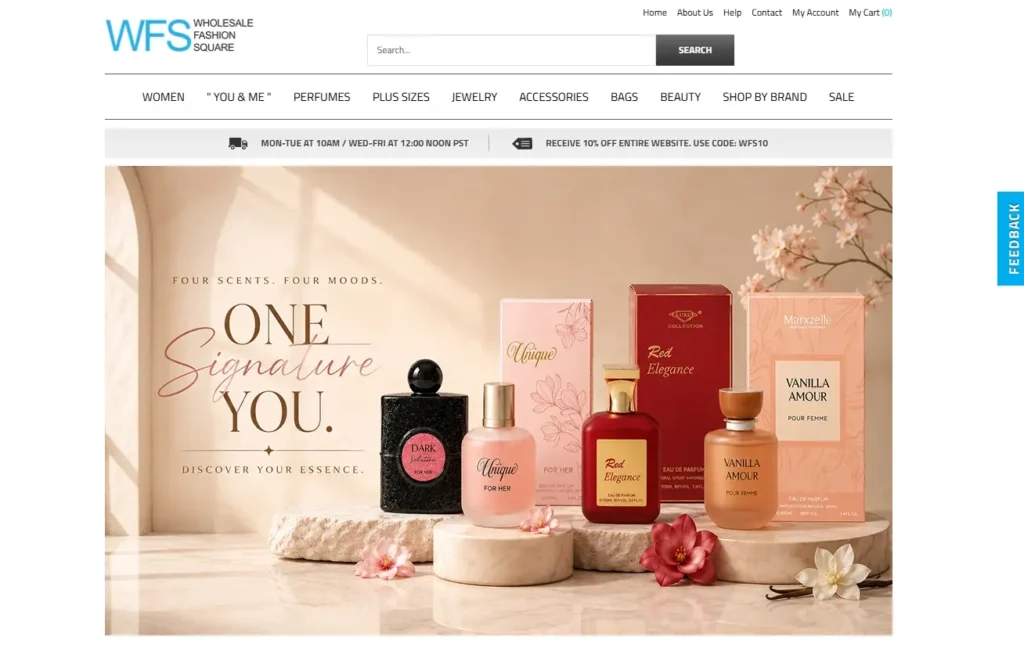
Website: wholesalefashionsquare.com
MOQ: $49 minimum
Phone: (213) 746-0999
Email: info@wholesalefashionsquare.com
Location: Ships from Los Angeles, CA warehouse
Wholesale Fashion Square has one of the lowest minimum orders in the space at $49. It ships quickly from its LA warehouse and focuses on affordable women’s and junior fashion.
For resellers who need to turn inventory weekly, WFS is a practical, low-friction option.
Faire vs. Wholesale Central: What is the Difference?
Faire is a marketplace where you actually purchase from brands. Wholesale Central is a free directory, similar to a search engine for wholesale vendors, that helps you discover suppliers across hundreds of niches.
Use Wholesale Central to research and find new vendor leads, then go to those vendors’ own sites or platforms to actually buy. The two serve different purposes and work best together.
How to Source Clothing Directly from China for Reselling
Sourcing clothes directly from China gives resellers the lowest per-unit cost available, typically 30–70% below domestic wholesale prices. The two main routes are online platforms and physical wholesale markets, either visited in person or accessed through a local sourcing agent.
What are the Best Online Platforms to Source Clothing from China?
For English-speaking buyers, Alibaba.com is the most accessible entry point. It connects buyers directly with Chinese manufacturers and offers Trade Assurance payment protection.
Always use Verified Supplier badges and filter by Manufacturer, not trading company, to get closer to factory-direct pricing.
Alibaba
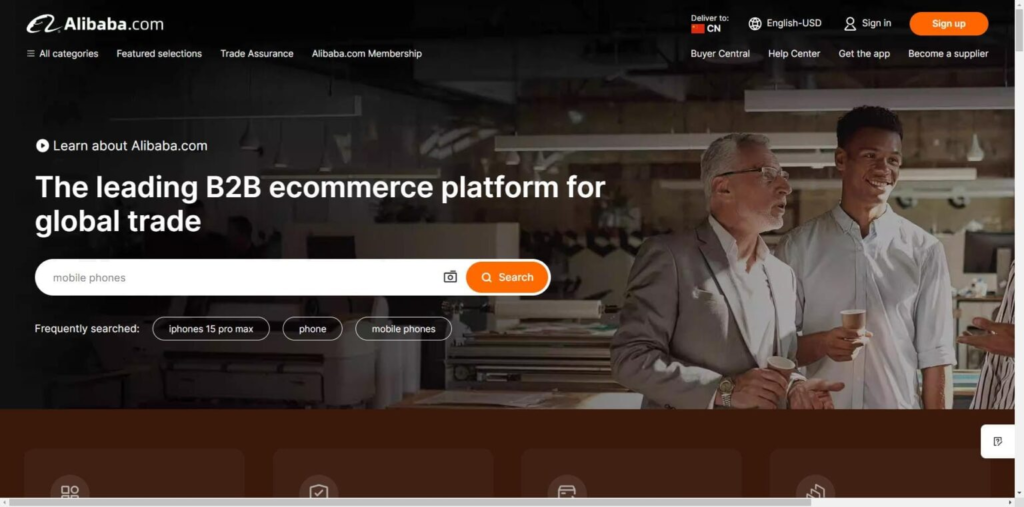
Website: alibaba.com
MOQ: Typically 50–300 pieces per style
Lead time: 30–60 days
Best for: Private label buyers and resellers ordering at volume
To order safely on Alibaba, always use Trade Assurance orders rather than paying outside the platform. Request a sample before any bulk commitment.
Filter suppliers by “Verified Manufacturer” status, which means a third-party audit has confirmed actual production capabilities on-site.
1688.com
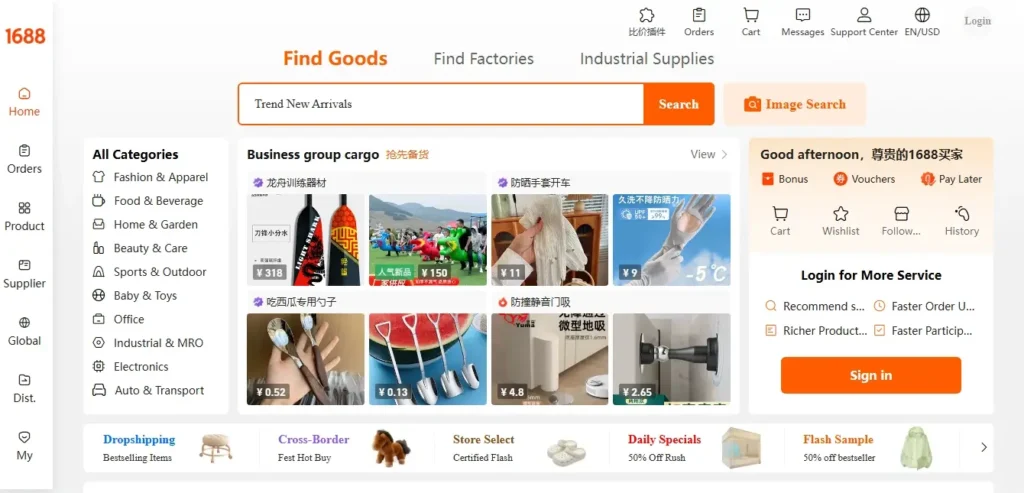
Website: 1688.com
MOQ: Often just 5–50 pieces per style
Price advantage: 30–50% cheaper than Alibaba for equivalent products
Access requirement: Requires a sourcing agent (Chinese-language platform only)
1688 is the domestic Chinese version of Alibaba, where Chinese retailers buy their own inventory. Think of it as the factory floor price, versus Alibaba’s export price.
The difference can be meaningful: an item that costs $8 on Alibaba might cost $5 on 1688.
The catch is that the platform is entirely in Chinese and requires a Chinese payment method. A sourcing agent based in China bridges both gaps and opens up 1688 pricing for international buyers.
For more on navigating Chinese wholesale platforms, see our guide on Best China Suppliers for Small Business in 2026.
What are the Best Clothing Markets in China to Visit in Person?
Guangzhou and Yiwu are the two primary clothing sourcing cities in China. Guangzhou is best for fashion apparel, particularly women’s and children’s clothing.
Yiwu is best for accessories and small commodity items at the world's largest small commodities market.
Guangzhou Shisanhang Clothing Market
Address: No. 1, Shisanxing Road, Liwan District, Guangzhou, China
Opening hours: 8:00 AM – 4:30 PM
Best for: Trend-driven women’s and children’s fashion, Korean and Japanese styles
Shisanhang is one of the most well-known clothing markets in Guangzhou. Lower floors focus on volume and competitive pricing.
Floors 4–6 carry more original designs and better quality. MOQ here is typically 5–10 pieces per color per style, making it accessible for smaller buyers.
Visit early in the day. The best stalls get busy quickly, and some close ahead of the official hour.
Guangzhou Shahe Clothing Wholesale Market
Address: Shahe, Tianhe District, Guangzhou, China
Best for: Casual wear, everyday fashion, and sportswear at low MOQ
Shahe is known for lower price points and more flexible minimum orders than Shisanhang. It is popular with buyers who need fast-moving, everyday styles at high volume rather than fashion-forward pieces. Small-quantity purchases are possible from many stalls here.
Yiwu International Trade Market
Address: 88 Chouzhou North Road, Yiwu, Zhejiang Province, China 322000
Opening hours: 9:00 AM – 5:00 PM
Best for: Clothing accessories, socks, underwear, and small apparel items at ultra-low MOQ
Yiwu is the world’s largest small commodity market, with over 75,000 booths across five districts.
It is less suited to fashion apparel but excellent for clothing accessories like belts, scarves, hats, and basic items like socks and underwear that complement a clothing resale business.
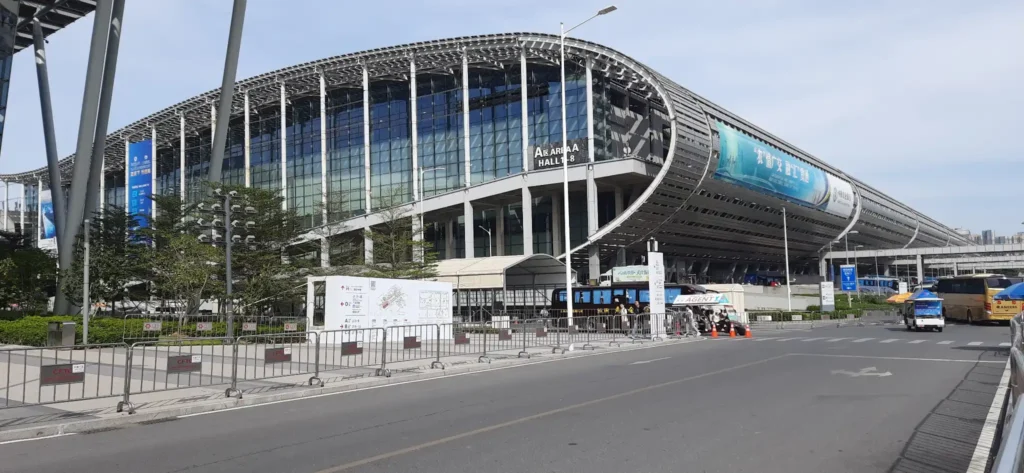
If you are attending the Canton Fair, which takes place twice yearly at the China Import and Export Fair Complex, No. 382 Yuejiang Middle Road, Haizhu District, Guangzhou, you can combine that trip with market visits to Shisanhang and Shahe in the same city.
Sourcing Clothing from China for Reselling: How Change Sourcing Can Help
Going factory-direct in China gives you the lowest wholesale prices available, but navigating suppliers, language barriers, and quality checks from overseas is not straightforward, especially if you are doing it for the first time.
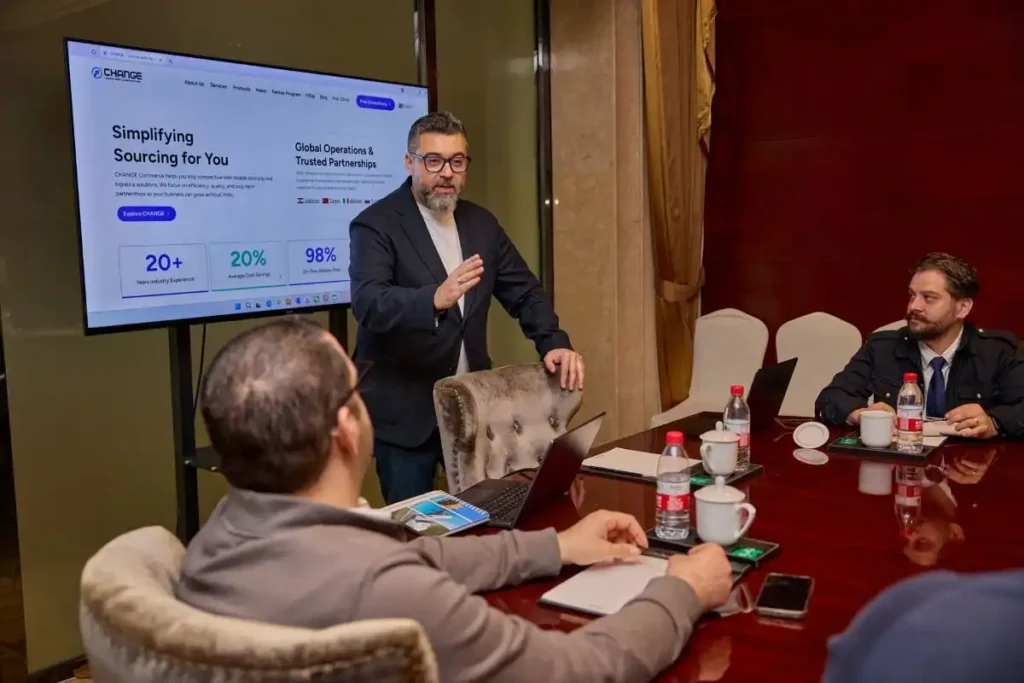
Change Sourcing is a B2B sourcing agency with 18 years of experience helping international buyers source products directly from Chinese manufacturers.
With offices in both Yiwu and Guangzhou, the team handles supplier vetting, factory visits, pre-shipment quality inspection, and end-to-end logistics so buyers do not need to travel to China or manage the process independently.
For resellers and boutique owners looking to access factory pricing on clothing without the guesswork, Change Sourcing provides a structured, transparent process from product request to delivery.
- Yiwu Office: Room 1107, 11th Floor, Block-A, Futian Building, Chouzhou North Road, Yiwu, China
- Guangzhou Office: Room 1908A, South Tower, World Trade Center, 371–375 Huanshi East Road, Guangzhou, China
- WhatsApp / Inquiries: +86 177 5808 8106
- Email: Contact@change-sourcing.com
- Website: Request a Free Sourcing Consultation
How Do You Vet a Vendor Before Buying Clothing to Resell?
Before placing any bulk order with a clothing vendor, verify their business license, request a sample, check third-party reviews, and confirm their return or dispute policy in writing.
For China-based suppliers, Trade Assurance on Alibaba or working with a local sourcing agent adds an important additional layer of protection.
Here are the five steps to follow before committing to any new vendor:
- Order a sample first. Never place a bulk order with a vendor you have never bought from. A sample order lets you verify quality, check sizing consistency, and evaluate packaging before you spend significant money.
- Verify business registration. For US wholesale suppliers, check for a business license and physical address. For Alibaba suppliers, look for the “Verified Manufacturer” badge backed by a third-party audit (SGS, TUV, or Intertek).
- Check reviews independently. Do not rely only on reviews hosted on the vendor’s own platform. Search for them on Google, Trustpilot, or trade forums before ordering.
- Get all terms in writing. MOQ, lead time, return policy, and dispute process should all be confirmed in writing before you pay anything. Verbal agreements are not enforceable.
- Use protected payment methods. PayPal Goods and Services, Alibaba Trade Assurance, or a bank escrow arrangement all provide some form of buyer protection. Avoid paying via wire transfer, Western Union, or cryptocurrency to any vendor you have not worked with before.
For those considering China as a sourcing channel, reading our guide on China Sourcing Without Middlemen: How to Buy and When Not To is a useful starting point.
What are the Red Flags When Choosing a Clothing Vendor?
The clearest red flags are: no verifiable business address, insistence on payment via wire transfer only, refusal to provide samples before bulk purchase, and prices that seem significantly below market rate with no clear explanation.
Watch for these specific warning signs before placing any order:
- No physical address or contact information that you can independently verify
- Prices 60% or more below comparable vendors without a credible reason
- Payment via Western Union, Zelle, or cryptocurrency only
- No sample policy or refusal to show product photos on request
- Social media profiles only, with no website and no verifiable business registration
Legitimate clothing vendors at every level, from thrift auction houses to China-based factories, will have verifiable contact details and a clear returns or dispute process. If a vendor cannot provide these basics, that is your answer.
Is Reselling Wholesale Clothing Profitable in 2026?
Yes. Reselling wholesale clothing is profitable in 2026. The average gross profit margin for apparel businesses is approximately 56.88% according to NYU Stern School of Business, well above the 37.76% cross-industry average.
Profitability depends on vendor choice, platform fees, and sell-through rate.
Here is a rough margin breakdown by vendor type:
- Thrift and liquidation: Potential margins of 80–200% or more on individual items, but requires more time per item to sort, photograph, and list.
- Domestic wholesale: Consistent 40–70% margins with predictable inventory and faster restocking.
- China direct: Lowest per-unit cost and highest margin potential at scale, but requires upfront volume and longer lead times of 30–60 days.
The most common margin killer is not vendor pricing. It is platform fees, shipping costs, and unsold inventory sitting in storage. Account for all three when calculating your actual return per item.
Frequently Asked Questions
Boutiques typically source from domestic wholesale marketplaces like Faire and OrangeShine, trade shows, or directly from manufacturers, including Chinese factories accessed through a sourcing agent. Many boutiques combine two or three sourcing channels to manage risk and maintain variety.
Thrift stores, especially Goodwill Outlet where items are sold by the pound, offer the lowest cost per item for individual sourcing. For bulk sourcing, Chinese factories accessed through a sourcing agent or directly via Alibaba offer the lowest wholesale cost per unit.
Yes. You can source through Alibaba.com directly, or use a China-based sourcing agency to handle supplier vetting, factory visits, quality inspection, and logistics on your behalf without leaving your home country.
Most reputable wholesale vendors require a business license and a reseller’s permit (also called a sales tax ID). These confirm you are a legitimate retailer and allow you to purchase inventory without paying sales tax on it. Requirements vary by state, so check your local regulations before applying to open a wholesale account.
You can start with under $50 at thrift stores. Liquidation lots start at around $100–$150. Domestic wholesale typically requires $100–$500 for a first order. China-direct sourcing becomes most practical and cost-effective at $1,000 or more per order.
Final Thoughts
The vendor category that is right for you today may not be the right one in six months. Most successful resellers start with thrift stores or small liquidation lots, build their knowledge of what sells, and then graduate to wholesale or China-direct sourcing as their capital and confidence grow.
Start at the level that matches your current budget, learn your market, and scale your sourcing as your sales data gives you confidence in what to order more of. The sourcing infrastructure is there at every stage. The key is choosing the right entry point and not skipping steps.
If you are ready to explore China-direct sourcing and want a team on the ground to handle the supplier side, get in touch with Change Sourcing for a free consultation.
You might also like: What are the Most Unique Products to Import from China in 2026?