

To import from China to Philippines, you need to register with the Bureau of Customs (BOC), find a verified Chinese supplier, arrange sea or air freight, prepare your customs documents, and pay the applicable duties plus 12% VAT on your landed cost.
The Philippines is one of China’s largest trading partners in Southeast Asia. According to the Philippine Statistics Authority, China consistently ranks as the top source of Philippine imports, supplying electronics, textiles, machinery, and consumer goods at competitive prices.
The trade lane is also geographically short. Southern Chinese ports like Shenzhen and Guangzhou can reach Manila in as few as 3 to 8 days by sea. Combined with the zero-duty rates available under the ASEAN-China Free Trade Agreement, the economics for Filipino importers and resellers are hard to beat.
This guide walks you through every step of the import process from China to the Philippines, including exact costs, customs rules, document checklists, and common mistakes to avoid.
Is It Worth Importing from China to the Philippines in 2026?
Yes. China remains the most accessible and cost-effective sourcing market for Filipino business owners, especially for small retailers selling on Shopee or Lazada.
The key advantages are straightforward. Product prices from Chinese manufacturers are often 30 to 70% lower than local wholesale prices. The supplier variety is deep across almost every category. And sea freight transit times from ports like Shenzhen or Guangzhou are short enough to support regular restocking without long lead times.
The one real requirement is handling the paperwork correctly from day one. Philippine customs procedures are formal and specific. Importers who skip the registration steps or arrive at the port without the right documents often face delays, storage fees, and unexpected costs that wipe out their margin.
If you set up properly before your first shipment lands, importing from China is one of the most repeatable and scalable sourcing strategies available to Filipino businesses today.
What are the Most Imported Products from China to the Philippines?
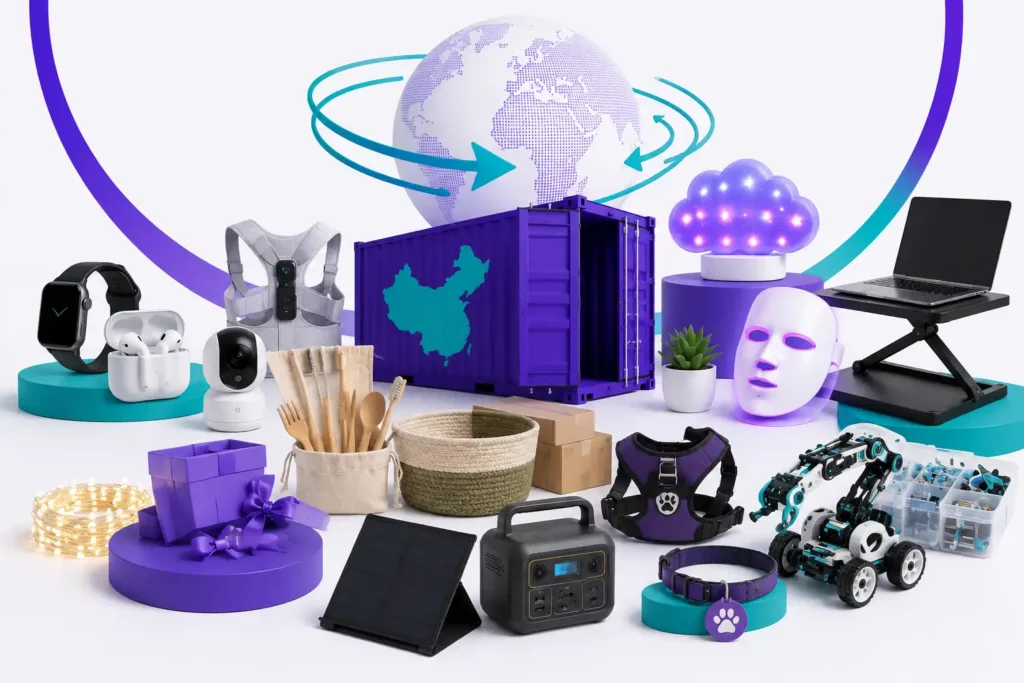
Electronics and machinery dominate the trade lane, followed by textiles, furniture, consumer goods, and construction materials.
Here is a quick breakdown by category and what to watch out for:
- Electronics and gadgets: Laptops, mobile phones, and components. Most qualify for 0% customs duty under ACFTA. Popular for Shopee and Lazada resellers.
- Clothing and textiles: Garments, fabric, and fashion accessories. Check our full guide on importing clothes from China to the Philippines.
- Furniture and home goods: High in demand, but bulky. Sea freight FCL is usually required.
- Food and agricultural products: High duty rates apply, sometimes up to 65%. Philippine FDA clearance is required before arrival.
- Cosmetics and personal care: Regulated. You need an FDA License to Operate before placing your production order.
- Solar panels and renewable energy equipment: Growing category. Separate permit requirements apply. See our Philippines solar panel import guide.
Before you source anything, check whether your product falls under a regulated or restricted category. That single step will save you from expensive surprises at the port.
How Do You Register as an Importer in the Philippines?
To import legally, register your business with DTI or SEC, get a Tax Identification Number (TIN) from BIR, then create an account in the BOC's Client Profile Registration System (CPRS).
Think of importer registration as three separate tasks, each handled by a different Philippine government agency. Here is what each one involves.
Step 1: Register Your Business with DTI or SEC
Sole proprietors register with the Department of Trade and Industry (DTI). Corporations register with the Securities and Exchange Commission (SEC). This is the foundation. Without a registered business, you cannot complete the BOC steps.
Gather your valid ID, business name, and address before you start. DTI registration for single proprietors typically costs under PHP 600 and can be done online.
Step 2: Get Your BIR Import Clearance Certificate
Register with the Bureau of Internal Revenue (BIR) to obtain your Import Clearance Certificate (ICC). The ICC is valid for three years under the BOC’s updated accreditation rules.
You will also need to create a CPRS account with the Bureau of Customs. Annual CPRS renewal costs approximately PHP 1,000 (around USD 20), and processing can take up to 15 business days.
Have your DTI/SEC certificate and TIN ready before you start.
Step 3: Know the Difference Between Regular and Non-Regular Importer Status
The BOC classifies importers into two pathways: Regular Importers and Non-Regular Importers. Regular Importers have gone through full accreditation and typically face faster cargo release.
Non-Regular Importers face stricter document review and potentially longer clearance times. If you plan to import consistently, go through full accreditation from the start. It makes every subsequent shipment easier.
How Do You Find a Reliable Chinese Supplier?

Use verified platforms like Alibaba, 1688.com, or Global Sources, attend trade fairs like the Canton Fair in Guangzhou, or work with a sourcing agent based in China.
Do You Need a Sourcing Agent or a Freight Forwarder?
Many first-time importers confuse these two roles. They are not the same, and you may need both.
A sourcing agent is your representative inside China. They find manufacturers, negotiate prices, arrange quality inspections, and handle export documentation. They operate on the China side of the supply chain.
A freight forwarder handles the logistics side. They book cargo space, prepare shipping documents, manage customs clearance in China, and coordinate delivery in the Philippines. They operate on the transport side.
For a first shipment, a good sourcing agent with logistics capabilities is often more efficient than managing two separate providers. Learn how to find a sourcing agent in China.
How Do You Verify a Chinese Supplier Before Paying?
Start by checking the supplier’s business license. On Alibaba, look for verified and Gold Supplier badges and Trade Assurance coverage. On 1688.com, check transaction volume and ratings.
Always request product samples before placing a bulk order. A sample order costs a small amount upfront but protects you from receiving an entire container of non-conforming goods.
For larger orders, consider a third-party factory inspection before your goods are shipped. Catching quality issues at the factory is far cheaper than discovering them after the cargo lands in Manila. See our list of top inspection companies in China.
What Shipping Options are Available from China to the Philippines?
Sea freight (FCL or LCL), air freight, and express courier are the three main options. Sea is the cheapest for bulk shipments. Air is the fastest for small or high-value cargo.
| Shipping Method | Cost (approx.) | Transit Time | Best For | Example Use |
| Sea LCL | $90-$120/CBM | 12-18 days | Small-to-mid shipments | Mixed goods, trial orders |
| Sea FCL (20ft) | $1,000-$1,600 | 10-15 days | Large bulk orders | Furniture, machinery |
| Sea FCL (40ft) | $1,800-$2,600 | 10-15 days | High-volume importers | Garments, consumer goods |
| Air Freight | $2-$5/kg | 3-5 days | Urgent/high-value goods | Electronics, spare parts |
| Express (DHL/FedEx) | $7-$12/kg | 2-4 days | Small parcels, samples | Samples, rush orders |
Note: Rates vary based on fuel surcharges, peak seasons, and port congestion. Always get a full quote that includes all surcharges.
Which Chinese Port Should You Ship From?
Port choice affects both transit time and freight cost. Here is how the main Chinese ports align with product types:
- Yiwu and Guangzhou: Best for consumer goods, garments, toys, and small commodities. Yiwu is one of the world’s largest wholesale markets for small manufactured goods. View Yiwu on Google Maps.
- Shenzhen: Best for electronics, tech hardware, and components. It is the closest major port to Hong Kong and has the highest frequency of direct sailings to Manila.
- Shanghai and Ningbo: Best for industrial goods, machinery, and raw materials. Higher transit times to Manila, but excellent container availability.
- Guangzhou (Nansha): Good for a mix of categories and frequently used for FCL shipments to Cebu and Davao. View Guangzhou port on Google Maps.
How Long Does Shipping from China to the Philippines Take?
Sea freight typically takes 7 to 15 days. Air freight takes 3 to 5 days. Transit time varies by origin port and Philippine destination.
| Origin Port | Manila | Cebu | Batangas | Davao |
| Shenzhen / Hong Kong | 3-8 days | 9-10 days | 8-9 days | 11 days |
| Guangzhou | 7-9 days | 9-11 days | 8-10 days | 11-12 days |
| Shanghai | 10-12 days | 11-12 days | 10-12 days | 12-13 days |
| Ningbo | 10-12 days | 11-12 days | 10-12 days | 12-13 days |
| Xiamen | 8-9 days | 9-10 days | 9 days | 11 days |
| Qingdao | 11-13 days | 12-13 days | 11-12 days | 13-14 days |
Add 2 to 5 business days for customs clearance at the Philippine port of entry. Plan for this in your lead time, especially for product launches or peak season orders.
You might also like to read: Import Tax from China to Philippines: Rate & Real Examples (2026)
What Documents Do You Need to Import from China to the Philippines?

You need a commercial invoice, packing list, bill of lading or airway bill, Certificate of Origin (Form E for ACFTA), and a Customs Import Declaration. Additional permits apply for regulated product categories.
What is the Standard Document Checklist?
- Commercial Invoice: Lists the goods, quantities, and declared value. Must be accurate. BOC uses this to assess duties and taxes.
- Packing List: Details each carton’s contents, dimensions, and weight. Must match the commercial invoice exactly.
- Bill of Lading (sea) or Airway Bill (air): Issued by the shipping line or airline. Acts as the title document for your goods.
- Certificate of Origin – Form E: Required to claim ACFTA duty rates. See next section.
- Customs Import Declaration (Single Administrative Document): Filed electronically through the BOC’s PhilCESP portal by your customs broker.
- Import Permit (product-specific): Required for food, cosmetics, drugs, medical devices, and certain regulated items.
What is Form E and Why is It Critical?
Form E is the ASEAN-China Free Trade Agreement Certificate of Origin. Without it, the BOC applies the standard MFN duty rate of 3% to 30%. With a valid Form E, most manufactured goods qualify for 0% duty.
Here is the critical detail that first-time importers often miss: Form E cannot be obtained after goods have been shipped. Your Chinese supplier must apply for it through their local commerce bureau before the goods leave China.
When placing your order, explicitly request Form E in writing. Do not assume your supplier will include it automatically. For a shipment of electronics worth PHP 200,000, the difference between 0% ACFTA duty and a 10% MFN rate is PHP 20,000 extra in taxes, before VAT.
Quick Example: What happens without Form E?
You import electronic components with a CIF value of PHP 100,000.
With Form E (ACFTA 0% duty): Customs Duty = PHP 0. Then 12% VAT = PHP 12,000. Total extra cost = PHP 12,000.
Without Form E (10% MFN duty): Customs Duty = PHP 10,000. Landed cost = PHP 110,000. Then 12% VAT = PHP 13,200. Total extra cost = PHP 23,200.
That is a PHP 11,200 difference on a single shipment.
Should You Use ACFTA Form E or the RCEP Certificate?
Since the Philippines joined the Regional Comprehensive Economic Partnership (RCEP) in June 2023, some product categories qualify for a better rate under RCEP than under ACFTA.
RCEP uses a separate Form RCEP (or a self-certified origin declaration for approved exporters). Under RCEP, the Philippines retained zero or existing MFN rates on 98.1% of goods from China.
Before your shipment, ask your customs broker to compare both the ACFTA and RCEP rates for your specific HS code. Choosing the right certificate can save money on categories where ACFTA still carries a residual duty.
What Permits are Required for Regulated Products?
Regulated goods require agency clearance before your goods can be released by the BOC. The agency and permit type depend on the product:
- Philippine FDA: Food, cosmetics, drugs, medical devices, veterinary products
- Bureau of Animal Industry (BAI): Live animals, animal products, feeds
- Bureau of Plant Industry (BPI): Plants, seeds, plant products
- Department of Environment and Natural Resources (DENR): Chemicals, hazardous substances
Important: FDA applications can take 4 to 12 weeks to process. Apply before you place the production order with your supplier, not after your goods have shipped. Importing regulated products without prior clearance results in port holds and potential confiscation.
How Do You Calculate Import Costs from China to the Philippines?
Import cost = customs duty (0% to 30% of CIF value based on HS code) + 12% VAT on the total landed cost + brokerage fee + port handling charges.
What is the Landed Cost Formula?
The BOC uses CIF value as the basis for assessing duty. CIF means Cost + Insurance + Freight, which is the price of your goods plus shipping and insurance costs to the Philippine port.
| Landed Cost Formula: Total Dutiable Value = CIF Value (in PHP). Customs Duty = Total Dutiable Value x Rate of Duty (based on HS code). Total Landed Cost = CIF Value + Customs Duty + Excise Tax (if any) + Brokerage Fee + Import Processing Charge. VAT = Total Landed Cost x 12% |
Here is a worked example to make this concrete:
| Example: Importing Electronic Components CIF Value: PHP 50,000 With ACFTA Form E (0% duty): Customs Duty = PHP 0. Brokerage + handling = PHP 4,000. Landed Cost = PHP 54,000. VAT = PHP 6,480. Total extra charges = PHP 10,480. Without Form E (10% MFN duty): Customs Duty = PHP 5,000. Brokerage + handling = PHP 4,000. Landed Cost = PHP 59,000. VAT = PHP 7,080. Total extra charges = PHP 16,080. |
What is the De Minimis Rule in the Philippines?
Goods with an FOB value of PHP 10,000 or below are fully exempt from customs duty and VAT. This applies per shipment, as defined by the Bureau of Customs under the Customs Modernization and Tariff Act (CMTA).
There is one important catch: if multiple parcels are shipped to the same recipient on the same day, the BOC can consolidate them and treat them as a single shipment. This directly affects e-commerce importers and small resellers who order multiple small packages.
How Does Philippine Customs Clearance Work?
After your shipment arrives at a Philippine port, your customs broker files an import entry declaration through the BOC’s Philippine Customs Electronic Service Portal (PhilCESP). Standard clearance takes 2 to 5 business days with complete documentation.
Here is how the process flows from port arrival to cargo release:
- Goods arrive at the port of entry (Manila, Cebu, Davao, or Subic)
- Import Entry Declaration (IED) filed electronically by your customs broker
- Document review by BOC examiner
- Duty and tax assessment issued by BOC
- Payment of customs duty, VAT, and fees
- Cargo released to your designated warehouse or delivery address
A licensed customs broker is not legally required, but in practice, first-time importers who try to handle BOC filings themselves frequently hit delays and end up paying demurrage fees at the port.
The broker fee is almost always less than the potential delay costs.
What Causes Customs Delays and How Do You Avoid Them?
Most customs delays come from the same handful of problems. Here is what causes them and how to fix each one:
- Mismatched commercial invoice and packing list: Every description, quantity, and value must match exactly across all documents. Check them before your goods leave China.
- Missing Form E: The single most common and costly oversight. Request it when you place your order.
- Unregistered FDA-regulated products: Apply for clearance 4 to 12 weeks before your shipment is ready.
- Incorrect HS code classification: Misclassification leads to wrong duty rates and can trigger a customs examination. Use the Philippine Tariff Commission finder to confirm your code.
- BOC de minimis consolidation: Multiple small parcels to the same address on the same day may be treated as one shipment and exceed the PHP 10,000 threshold.
What Products are Prohibited or Restricted for Import to the Philippines?
Narcotics, counterfeit goods, certain firearms, and obscene materials are outright prohibited. Regulated categories such as food, cosmetics, drugs, and medical devices require agency clearance before import.
Absolutely Prohibited (No Import Allowed)
- Dangerous drugs and narcotics (without Dangerous Drugs Board authorization)
- Counterfeit currency, goods, and trademark-infringing products
- Obscene or pornographic printed materials and media
- Products that incite rebellion, sedition, or treason against the Philippine government
Regulated Items (Require Permits)
- Food and food products (Philippine FDA clearance)
- Cosmetics, personal care, and health products (Philippine FDA License to Operate)
- Pharmaceuticals and medical devices (Philippine FDA)
- Firearms, ammunition, and explosives (Philippine National Police and DND authorization)
- Chemicals and hazardous substances (DENR clearance)
- Live animals and animal products (BAI sanitary and phytosanitary certificate)
For the complete official list, refer to the Bureau of Customs Guidelines on Importation.
How Can a Sourcing Agent Help You Import from China to the Philippines?
You do not legally need a sourcing agent to import from China to the Philippines. But first-time importers who work without one face a steep learning curve that costs real money.
A sourcing agent handles the China side of your supply chain end-to-end. That includes identifying manufacturers, verifying supplier legitimacy, negotiating pricing, coordinating pre-shipment quality inspections, and ensuring export documentation is complete before goods leave China.
The practical value shows up most at the documentation stage. A good sourcing agent ensures your commercial invoice, packing list, and Form E are all aligned before cargo moves.
A single mismatch between these documents is enough to hold your shipment at Manila port for days.
Why Change Sourcing is a Strong Partner for Philippines-Bound Cargo
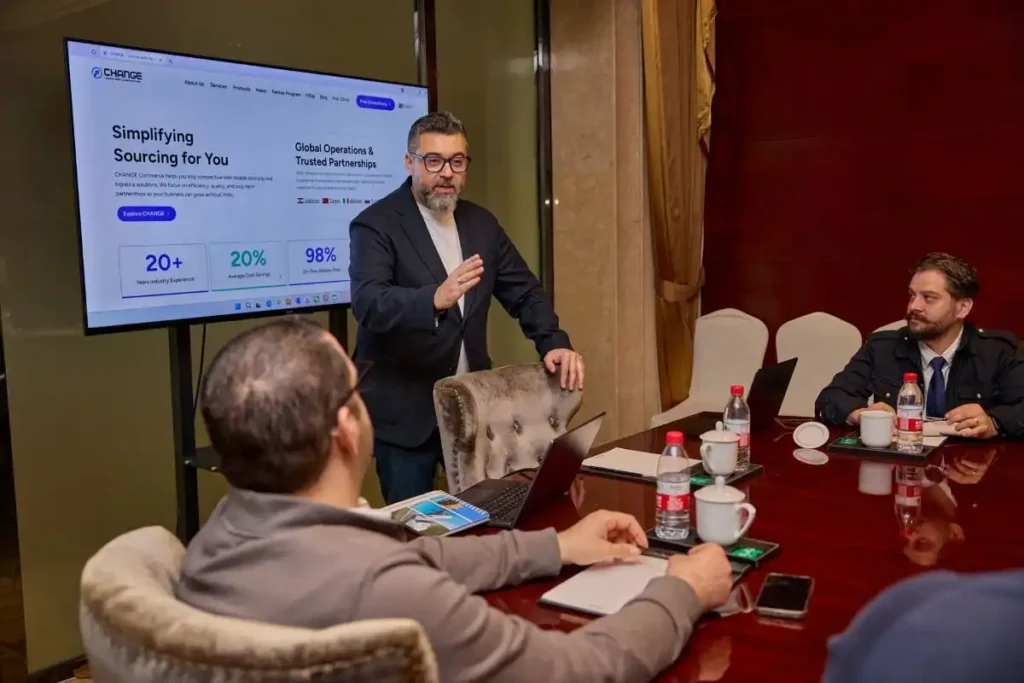
Change Sourcing operates out of two strategic hubs in China: Yiwu and Guangzhou. These are not arbitrary office locations. Yiwu is home to the world’s largest small-commodities wholesale market, the direct source for consumer goods that populate Shopee and Lazada stores across the Philippines. Guangzhou is one of China’s main textile, fashion, and manufacturing export hubs.
With 18+ years of sourcing and logistics experience and a track record serving 1,500+ clients worldwide, the Change Sourcing team supports Filipino importers across the full process: supplier identification, quality inspection, export documentation, and freight coordination from Chinese ports to Philippine destinations.
Services include product sourcing, quality assurance, end-to-end logistics, and dedicated account support. If you are planning your first import or looking to streamline an existing supply chain, contact Change Sourcing for a free consultation.
What are the Most Common Mistakes First-Time Importers Make?
The most common mistakes are skipping BOC registration before the shipment lands, not requesting Form E from the supplier, undervaluing the commercial invoice to reduce duties, and importing regulated products without FDA pre-clearance.
Here is the full list of what catches first-time importers off guard:
- Not registering with BOC before the shipment arrives: Your goods cannot be released without an active CPRS account. Set this up weeks before your first order.
- Forgetting to request Form E: Must be requested before production is complete. Cannot be obtained retroactively.
- Undervaluing the commercial invoice: Asking your supplier to declare a lower value is customs fraud. BOC monitors transaction values against market benchmarks. Penalties include goods seizure and surcharges up to 600% of unpaid duties.
- Skipping FDA pre-clearance for regulated goods: FDA applications take 4 to 12 weeks. Importing without clearance results in port holds.
- Not comparing ACFTA vs. RCEP rates: For some HS codes, RCEP produces a better rate than ACFTA. Defaulting to Form E without checking may mean leaving money on the table.
- Ignoring the de minimis consolidation rule: Multiple small parcels to the same address on the same day can be consolidated by BOC and treated as a single dutiable shipment.
- Choosing a supplier based on price alone: The cheapest supplier is not always the most reliable. Request samples, verify business licenses, and use Trade Assurance or third-party inspection before committing to bulk orders.
FAQs about “Importing from China to the Philippines”
Sea freight costs approximately $90 to $120 per CBM for LCL shipments. FCL rates range from $1,000 to $2,600 depending on container size. Add 0% to 30% customs duty on the CIF value (0% for most goods with a valid ACFTA Form E) plus 12% VAT on the total landed cost.
Most product categories do not require a specific import license. You do need to register your business with the BOC through the CPRS system. Regulated products such as food, cosmetics, pharmaceuticals, and medical devices require additional agency permits before goods can clear customs.
Sea freight takes 7 to 15 days, depending on the origin port. Shenzhen to Manila is typically 3 to 8 days. Air freight takes 3 to 5 days. Express courier (DHL, FedEx, UPS) takes 2 to 4 days. Add 2 to 5 business days for customs clearance after arrival.
Form E is the ASEAN-China Free Trade Agreement Certificate of Origin. It allows you to claim preferential tariff rates, often 0%, instead of standard MFN rates. Your Chinese supplier applies for it through their local commerce bureau before shipment. Request it explicitly when placing your order. It cannot be issued after goods have been shipped.
Technically, yes, but most first-time importers benefit from working with a licensed customs broker at a minimum. BOC filing requires knowledge of Philippine customs procedures, document formats, and HS code classification. Errors result in delays, port storage fees, and potential penalties.
Final Thoughts
Importing from China to the Philippines comes down to three things done right: importer registration completed before your first shipment lands, clean paperwork with Form E, and an accurate commercial invoice, and a reliable logistics partner who knows both the China and Philippines sides of the process.
Get those three right and the trade lane between China and the Philippines is one of the most accessible and profitable in Southeast Asia. Skip any of them, and you will spend more fixing problems than you saved on product costs.
If you are sourcing consumer goods, garments, or industrial products and want support from experienced professionals on the ground in China, reach out to the Change Sourcing team for a free consultation.
You might also like to read: