

To import from China to Bangladesh, you need an Import Registration Certificate (IRC) from the CCI&E, a verified Chinese supplier, and a freight plan — either sea freight through Chittagong Port or air freight to Dhaka. You then prepare your shipping documents, open a Letter of Credit or arrange T/T payment, and clear customs through the National Board of Revenue (NBR) by paying the applicable duties and VAT. The full process typically takes 3 to 6 weeks for sea freight and 5 to 10 days for air freight.
China is the single largest source of imports for Bangladesh. According to Bangladesh Bank’s trade data, Bangladesh imported over $16 billion worth of goods from China in the 2023–24 fiscal year alone. That number keeps climbing every year.
But importing is not as simple as placing an order and waiting. There are licenses, customs duties, shipping modes, and documents that can catch you off guard if you are not prepared.
This guide walks you through how to import from China to Bangladesh, step by step, with each detail.
How to Import from China to Bangladesh: The 8-Step Process
The full import process covers eight stages: getting your license, finding a product, verifying a supplier, arranging payment, booking freight, preparing documents, clearing customs, and receiving your goods.
Each step builds on the one before it.
Let us break each one down clearly.
Step 1: Do You Need an Import License to Import from China?
Yes. To import commercially in your own company name in Bangladesh, you need an Import Registration Certificate (IRC) from the Chief Controller of Imports and Exports (CCI&E).
Without it, you cannot open a Letter of Credit (L/C) at a Bangladeshi bank or clear goods at Chittagong Port under your own name.
How Do You Get an IRC in Bangladesh?
You apply to the CCI&E office. The documents required are:
- Valid Trade License
- Tax Identification Number (TIN) certificate
- Bank solvency certificate
- Membership certificate from a Chamber of Commerce or trade association
- Memorandum and Articles of Association (for companies)
- Passport-size photographs of proprietors or directors
The IRC must be renewed every year. The fee depends on the value of goods you plan to import annually.
For small businesses or first-time importers: You can import through a licensed C&F (Clearing and Forwarding) agent or a door-to-door import service.
These companies operate under their own IRC. You pay them a service fee and skip the licensing process entirely. This is a legal and popular option for startups.
Step 2: What Products Can You Import from China to Bangladesh?
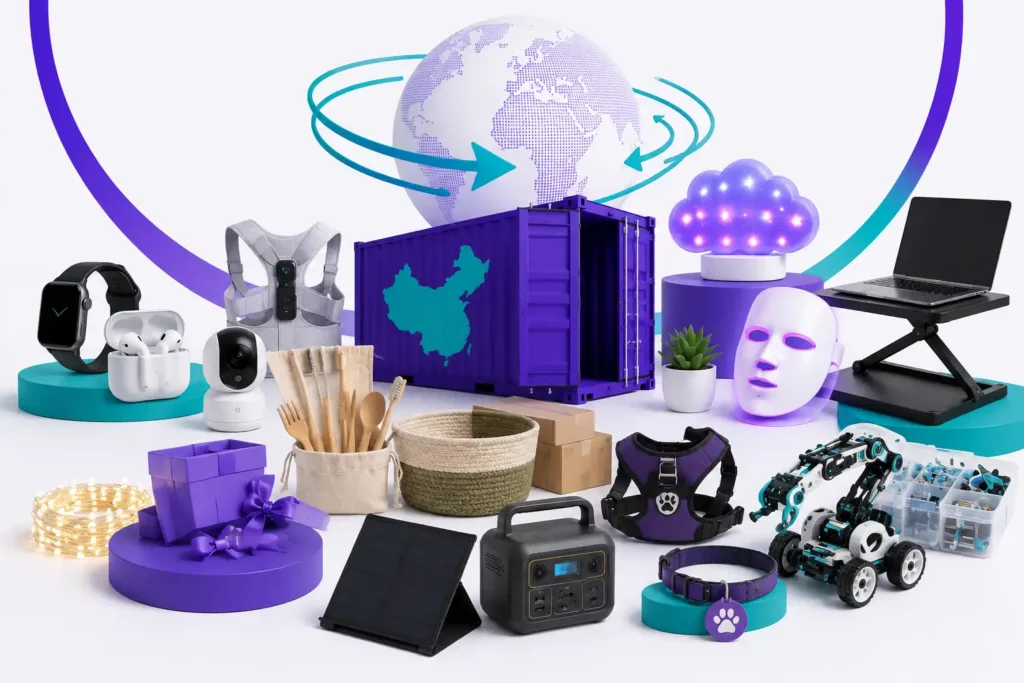
You can import nearly any manufactured product from China. The most commonly imported categories include textile and garment machinery, consumer electronics, construction materials, furniture, plastic goods, and raw materials for factories.
Are There Restricted or Prohibited Items?
Yes. Bangladesh has a list of goods that are either banned or require special permits before import. According to the National Board of Revenue (NBR):
Prohibited items include:
- Illegal drugs and narcotics
- Materials that offend religious sensitivities
- Certain reconditioned equipment without proper certification
- Pornographic material
Items needing extra permits:
- Electronics (mobile phones, routers, telecom equipment) require BTRC approval from the Bangladesh Telecommunication Regulatory Commission
- Food products require a nuclear radiation clearance test
- Cosmetics and food supplements require BFSA certification
- Pharmaceuticals require DGDA clearance
Always confirm your product’s status before ordering. A quick check on the Bangladesh Customs HS Code portal tells you the applicable duty rate and any permit requirements.
You might also like to read: Top 8 Fast Selling Products to Import from China in 2026
Step 3: How Do You Find Reliable Suppliers in China?

The most effective ways to find Chinese suppliers are through verified B2B platforms, trade fairs, and sourcing agents. Each option suits different importer needs.
Which Platform is Best for Finding Chinese Suppliers?
Alibaba.com — Best for Bulk and OEM Orders
Alibaba is the go-to for most Bangladeshi importers. Look for suppliers with the Gold Supplier badge, Trade Assurance coverage, and verified factory certification.
Trade Assurance protects your payment if the supplier does not ship on time or the goods do not match the description.
1688.com — Best for Lowest Prices
This is Alibaba’s Chinese domestic marketplace. Prices here are typically 20–30% lower than Alibaba because suppliers are selling to local buyers, not international ones.
The catch: everything is in Chinese, and you cannot pay directly from Bangladesh. You need a sourcing agent with a Chinese bank account to buy from 1688.
Made-in-China.com — Good for Industrial Products
Solid for machinery, hardware, and industrial supplies. This platform is especially good for supplier verification tools.
Canton Fair — Best for New Sourcing Relationships
The Canton Fair (held in Guangzhou, China) happens twice a year, in April and October. It is the largest trade fair in the world and brings together over 25,000 exhibitors across almost every product category.
If you want to meet factories face to face, evaluate samples, and build direct relationships, this is the best option.
You might also like to read: Canton Fair 2026: What First-Time Buyers Should Know
How Do You Verify a Chinese Supplier Before Ordering?
Do not send money to any supplier you have not verified. Check these things before placing an order:
- Ask for their business license and confirm it on China’s National Enterprise Credit Information System
- Request a video call walkthrough of the factory
- Ask for production samples before full payment
- Check their export history and ask for client references
- Use a third-party inspection company like SGS, Bureau Veritas, or QIMA for an on-site factory audit
A factory audit typically costs between $220 and $500 for a one-day visit and can save you from a very costly mistake.
Step 4: How Do You Pay Chinese Suppliers from Bangladesh?
The most common payment method is Telegraphic Transfer (T/T), but Letter of Credit (L/C) is required for formal large-volume imports.
The method you choose depends on order size, supplier trust level, and your bank’s dollar availability.
What are the Main Payment Options?

Telegraphic Transfer (T/T): You wire USD from your Bangladeshi bank account to the supplier’s Chinese bank. Standard terms are 30% advance before production and 70% before shipment. This is fast and simple for established relationships.
Letter of Credit (L/C): Required for most large formal imports. Your bank issues a guarantee to the supplier’s bank that payment will be made once shipping documents are presented. L/Cs protect both sides but take longer to arrange.
Trade Assurance (Alibaba): Alibaba holds your payment in escrow and releases it to the supplier only after you confirm receipt of acceptable goods. Best for new supplier relationships on Alibaba.
Payment via Sourcing Agent (BDT to RMB): If you cannot wire USD due to bank restrictions, a local sourcing agent in China pays the supplier in RMB, and you pay the agent in Bangladeshi Taka through a local bank transfer or cash at their Dhaka office. This is legal and widely used.
Important note: Bangladesh has faced dollar shortages that have made L/C approvals slower at some banks. Many importers now use sourcing agents like CHANGE Sourcing to handle China-side payments, which bypasses this bottleneck entirely.
Step 5: How to Ship from China to Bangladesh?
Sea freight is the most cost-effective option for large shipments, while air freight is faster but more expensive. The right choice depends on your cargo volume, budget, and timeline.
What is Sea Freight from China to Bangladesh?
Sea freight is the most popular method. Almost all heavy, bulky, or high-volume cargo arrives this way through Chittagong Port (which handles over 90% of Bangladesh’s seaborne trade) or Mongla Port.
FCL vs LCL: If your shipment fills a 20-ft container (roughly 25–28 CBM), you use Full Container Load (FCL). If it is smaller, you share a container with other importers, which is called Less than Container Load (LCL). LCL works well for test orders or smaller shipments.
How to calculate CBM: Length (m) x Width (m) x Height (m) = CBM per carton. Multiply by the number of cartons for the total CBM. Under 15 CBM, LCL is usually cheaper. Above 15 CBM, move to FCL.
| Origin Port (China) | Destination | Approx. Transit Time |
|---|---|---|
| Shenzhen | Chittagong | 12–18 days |
| Guangzhou | Chittagong | 14–20 days |
| Shanghai | Chittagong | 18–25 days |
| Ningbo | Chittagong | 20–28 days |
| Qingdao | Chittagong | 18–22 days |
Average cost for a 20-ft FCL: $800–$2,500 depending on season and carrier.
Chittagong Port congestion warning: In the weeks leading up to Eid, Chittagong Port sees a significant surge in cargo volume. Vessel queues can cause delays of one to two weeks. If you are importing for the Eid season, place your orders at least 8–10 weeks in advance.
What is Air Freight from China to Bangladesh?
Air freight moves cargo from airports like Guangzhou Baiyun International Airport or Shanghai Pudong International Airport to Hazrat Shahjalal International Airport in Dhaka or Shah Amanat International Airport in Chittagong.
Transit time is 3–7 days for standard air freight and 1–3 days for express courier (DHL Express, FedEx, UPS).
Cost runs between $4–$8 per chargeable kilogram. Airlines use volumetric weight, so a large but lightweight box may be charged based on its size, not its actual weight.
Formula: (L x W x H in cm) / 5000 = volumetric weight in kg.
Air freight makes sense for samples, urgent restocking, high-value electronics, or small orders where the speed benefit outweighs the cost premium.
What is Door-to-Door Shipping from China to Bangladesh?
Door-to-door service means a single company picks up goods from the Chinese factory and delivers them to your warehouse in Dhaka or Chittagong. All customs, duties, and port formalities are handled by the service provider.
This is the easiest option for first-time importers or businesses that do not have an IRC yet. You simply pay based on weight (air) or CBM (sea) and receive your goods at your doorstep.
You might also like to read: What are the Lightweight Goods to Import from China in 2026?
Step 6: What Documents are Required to Import from China to Bangladesh?

The core documents are a Commercial Invoice, Packing List, Bill of Lading or Air Waybill, Certificate of Origin, and proof of payment or Letter of Credit.
Inconsistencies between any of these documents are the number one cause of customs delays at Chittagong Port.
Documents Supplied by Your Chinese Supplier
- Commercial Invoice: Must show the accurate product description, HS code, unit price, total value, and Incoterms
- Packing List: Detailed list of contents, carton count, gross weight, net weight, and CBM
- Bill of Lading (sea) or Air Waybill (air): Issued by the shipping line or airline. This is your title document for the goods.
- Certificate of Origin: Confirms goods were made in China. Use the APTA (Asia-Pacific Trade Agreement) Form for preferential tariff benefits between China and Bangladesh.
- Inspection Certificate: Required for certain goods or if your buyer requests one
Documents You Arrange in Bangladesh
- Import Registration Certificate (IRC)
- L/C authorization or proof of T/T payment
- VAT/BIN registration certificate
- Insurance policy or cover note
- BTRC/BFSA/DGDA permit (product-specific)
- Customs Bond (if applicable)
Tip: Have your freight forwarder or C&F agent review all documents before the vessel departs China. Fixing errors from Bangladesh is costly and slow.
Step 7: What are the Customs Duties and Taxes on Imports from China to Bangladesh?
Imports from China to Bangladesh are subject to multiple tax layers applied on top of each other. Understanding these up front is critical for accurate landed cost calculations.
| Tax Type | Typical Rate | Notes |
|---|---|---|
| Customs Duty (CD) | 5–25% | Based on HS code classification |
| Regulatory Duty (RD) | 0–3% | Luxury goods, tobacco, alcohol, and high-end electronics |
| VAT | 15% | Applied on CIF value + CD + RD |
| Advance Income Tax (AIT) | 5% | Credited against your annual tax liability |
| Advance Tax (AT) | 7.5% | Applied on certain goods |
| Supplementary Duty (SD) | 0–100%+ | Luxury goods, tobacco, alcohol, high-end electronics |
China receives Most Favoured Nation (MFN) tariff treatment from Bangladesh, which means an average import duty rate of around 14% — lower than many other trading partners.
Exempted or reduced duty items include textile and garment machinery, generators, solar panels, raw cotton, agricultural machinery, and some medical equipment.
Always confirm using the Bangladesh Customs Duty Calculator.
Real Landed Cost Example
Say you import 500 plastic chairs from China. CIF value is $10,000.
- Customs Duty (15%) = $1,500
- Regulatory Duty (3%) = $300
- VAT (15% on $11,800) = $1,770
- Advance Income Tax (5% on $10,000) = $500
- Advance Tax (7.5%) = $750
- Total tax and duties = approximately $4,820
- Total landed cost = approximately $14,820
This means your effective tax rate on this shipment is around 48% on top of the CIF value. Factor this into your pricing before you place an order.
You might also like to read: Import Tax from China to Philippines: Rate & Real Examples (2026) — the tax calculation logic is similar and will help you understand the structure better.
Step 8: How Does Customs Clearance Work at Chittagong Port?
Once your shipment arrives at Chittagong Port, your C&F agent submits the Bill of Entry through Bangladesh’s ASYCUDA World system. Customs officers review the declaration, verify documents, assess duties, and may inspect the goods physically.
After duties are paid, the goods are released and trucked to your warehouse. The full customs clearance process typically takes 3–7 working days for a routine shipment with clean documents.
Key steps in the clearance process:
- C&F agent lodges Bill of Entry with all documents
- Customs assesses the declared HS code and CIF value
- Duties and taxes are calculated and paid
- Physical inspection (if selected — risk-based)
- Cargo released from the port
What are the Most Common Mistakes When Importing from China to Bangladesh?
The mistakes that cost Bangladeshi importers the most money are not always obvious before the first shipment. Here are the ones that come up most often.
Wrong HS Code: Customs Bangladesh uses its own reference value database. A misclassified product gets reassessed, fined, and delayed. Always confirm your HS code on the NBR portal before your supplier writes the commercial invoice.
Undervaluing the Invoice: Some importers ask suppliers to write a lower value to reduce duty. Bangladesh Customs has reference prices for thousands of products. If your declared value is below their threshold, they reassess at the higher value and may penalize you.
Skipping Supplier Verification: Sending 30–50% advance to a supplier you have never video-called or audited is a real risk. Scams do happen, and quality failures cost more than the audit would have.
Ignoring Incoterms: If you buy EXW (Ex Works), you are responsible for all charges from the factory gate in China. FOB (Free on Board) means the supplier delivers to the Chinese port, and you take responsibility from there. CIF (Cost, Insurance, and Freight) means the supplier covers freight and insurance to the destination port. For most Bangladeshi importers, FOB is the safest and most practical choice.
Not Buying Cargo Insurance: Sea freight to Chittagong involves transshipment at ports like Singapore or Colombo. Cargo can be damaged or lost. Insurance typically costs 0.3–0.5% of cargo value — a very small cost for the protection it provides.
Timing Shipments Poorly: Chinese factories close for the Chinese New Year (usually mid-January to mid-February). If your cargo-ready date falls during this period, your shipment will be delayed by 2–4 weeks. Order early. Similarly, avoid shipping for peak Bangladeshi demand periods without building in extra lead time.
When is the Best Time to Import from China to Bangladesh?
The best shipping windows are March to June and September to November. These periods avoid factory shutdowns in China and port congestion in Bangladesh.
Avoid Chinese New Year (January–February): Most factories in China close for 2–4 weeks. Place your production order at least 6 weeks before the holiday to guarantee a pre-CNY shipment.
Avoid pre-Eid rush (4–6 weeks before Eid): Chittagong Port becomes heavily congested as dozens of vessels arrive simultaneously. Freight rates also go up during this period.
Best sourcing season: Plan visits to the Canton Fair in Guangzhou in April or October if you want to source new products and meet new factories face to face.
How Change Sourcing Helps You Import from China to Bangladesh

Change Sourcing operates from Yiwu, China (the world’s largest small commodity market) and Guangzhou (the hub of South China manufacturing). The team has been helping importers source and ship from China since 2008.
For Bangladeshi businesses specifically, Change Sourcing solves three major problems:
Supplier access and verification: The team sources directly from factories across Yiwu, Guangzhou, Shenzhen, and beyond. They physically verify suppliers before recommending them, which eliminates the scam risk and quality gamble.
Payment handling: If your bank is restricting L/C openings or you are finding it difficult to wire USD to China, Change Sourcing can pay your suppliers in China directly. You settle in a way that works for your business.
Quality control before shipment: Every order goes through a pre-shipment inspection before leaving the factory. If something is wrong, it is fixed in China — not after it arrives at Chittagong.
Change Sourcing also handles consolidated shipments, meaning you can order from multiple factories and ship everything in one container, saving significantly on freight costs.
You can reach the team directly on WhatsApp at +86 177 5808 8106 or through the contact page for a free consultation.
Frequently Asked Questions
Yes, through a licensed C&F agent or door-to-door import service. For regular commercial imports under your company name, an IRC from the CCI&E is required. First-time or small importers commonly use import service companies to handle everything without needing their own license.
Sea freight takes 12–35 days depending on origin port. Air freight takes 3–7 days. Express courier takes 1–3 days. Add 3–7 working days for customs clearance at Chittagong once the shipment arrives.
Consumer electronics typically face 10–25% customs duty plus 15% VAT plus Supplementary Duty, which can be high for luxury items. BTRC approval is also mandatory for telecom and networking devices. Total tax burden on electronics can reach 40–60% of CIF value.
Yes. You can order from Alibaba suppliers and ship to Bangladesh using any freight method. Use Trade Assurance for payment protection with new suppliers. For 1688.com orders, you need a sourcing agent with a Chinese account to purchase on your behalf.
There is no legal minimum. LCL sea freight accepts even a single carton. Air freight accepts orders from 1 kg. Practically, your minimum should be enough to make the freight cost worthwhile relative to product value.
It depends on the method and supplier. Use Trade Assurance on Alibaba for new relationships. For bank transfers (T/T), always verify the supplier thoroughly first. Never pay 100% upfront before production is confirmed.
Final Thoughts
Importing from China to Bangladesh is very manageable once you understand the process. The steps are clear: get your IRC, find a verified supplier, agree on payment terms, choose the right shipping mode, prepare clean documents, and clear customs with an experienced C&F agent.
The mistakes to avoid are just as predictable: wrong HS codes, unverified suppliers, no cargo insurance, and poor timing around Chinese New Year or Eid.
If you want to skip the learning curve, working with a China-based sourcing team like Change Sourcing means you have boots on the ground from day one. Get in touch for a free consultation and start importing smarter.
You might also like to read: