
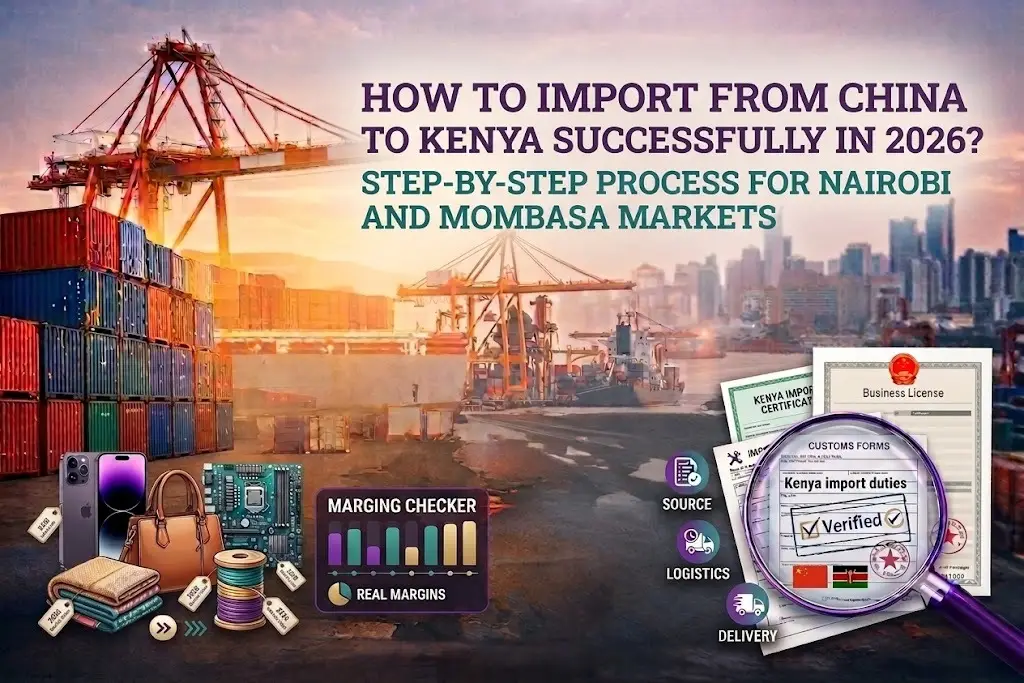
Importing from China to Kenya has never been more attractive. China-Kenya bilateral trade hit RMB 16.13 billion ($2.2 billion) in Q1 2025 alone, growing 11.9% year-on-year and marking the sixth straight quarter of record growth. That momentum tells a clear story: thousands of Kenyan entrepreneurs are finding real margins in Chinese products.
But the path from a product idea to cleared goods in your warehouse is full of traps. Supplier scams, wrong HS codes, missed PVoC certificates, and surprise duty bills have caught many importers off guard.
This guide walks you through every step, from registering your business to collecting your goods at Mombasa Port, so you know exactly what to expect and what it will cost.
Quick-Reference Summary Table
Before diving in, here is a bird’s-eye view of the full import process. Use this table as a reference point as you work through each section below.
| Understand Kenya’s import regulations | Action | Est. Time | Est. Cost Range |
|---|---|---|---|
| 1 | Business setup and legal prerequisites | 1–2 weeks | KES 1,000–15,000 |
| 2 | Find and vet suppliers | 1–3 weeks | $30–$150 (samples) |
| 3 | Negotiate MOQ, price and payment | 3–7 days | Varies |
| 4 | Understand Kenya import regulations | Ongoing | KES 5,000+ (IDF min) |
| 5 | Prepare import documents | 3–5 days | Included in agent fees |
| 6 | Choose shipping method | 1–2 days | $50–$4,700+ |
| 7 | Calculate landed cost | 1 day | 40–70% on top of product cost |
| 8 | Customs clearance at KRA | 3–7 days | KES 15,000–50,000 agent fees |
What You Need Before You Start: Business Setup and Legal Prerequisites
Most first-time importers jump straight to browsing Alibaba. That is a mistake. Before you place any order or transfer any money to a Chinese supplier, you need the right legal and financial foundation in place.
Without a registered business, a KRA PIN, and a proper bank account, you cannot legally clear goods at Mombasa Port. Setting these up takes one to two weeks and costs very little compared to the problems you avoid later.
Register a Business Entity
Before you place a single order from China, you need a legal business structure in Kenya. The three main options are:
- Sole Proprietorship – Simplest to register and cheapest. Best for individuals testing a product idea with small orders. No separation between personal and business liability.
- Partnership – Suitable when two or more people are co-investing. Requires a partnership deed.
- Limited Company – Strongest liability protection and the most professional structure. Best if you plan to scale, hire staff, or apply for business loans.
Registration is done through the Business Registration Service (BRS).
How Much Does It Cost?
- Sole proprietorship: from KES 1,000
- Partnership: from KES 3,000
- Private limited company: KES 10,000–15,000
The process is done online, and most applications are approved within three to five working days.
Obtain Your KRA PIN
A KRA Personal Identification Number (PIN) is mandatory for all commercial imports. You cannot file an Import Declaration Form (IDF) without one.
Registration is free and done through the KRA iTax portal.
If you already have a personal PIN, you will need a separate business PIN linked to your registered company. These are two different credentials in the system.
Open a Business Bank Account
To pay Chinese suppliers, you need a business bank account that handles foreign exchange (FOREX) transactions. Most major Kenyan banks, including Equity, KCB, and NCBA, offer USD accounts for businesses.
Your bank will also require this account for any Letters of Credit or T/T wire transfers. A personal M-Pesa or savings account will not work for international trade payments.
Validate Your Product Idea First
Do not order stock before confirming real demand. A simple example: if you are considering importing phone cases, walk through Gikomba or Eastleigh in Nairobi first. Count how many stalls sell them, what prices they charge, and where those products come from.
Then browse Jumia Kenya and Kilimall to check bestseller rankings, customer reviews, and price points. This one hour of research can prevent months of sitting on dead stock.
Understand HS Codes
Harmonized System (HS) codes are six to eight-digit numbers that classify every type of imported goods. The duty rate you pay is tied directly to your HS code.
For example, importing a phone charger under the wrong HS code could mean paying 25% duty when the correct rate is 0%, or vice versa. Getting it wrong means penalties or overpayment.
Confirm your HS code on the KRA customs portal or ask your clearing agent before placing any order.
How to Find and Vet Reliable Chinese Suppliers
Finding a supplier on Alibaba takes five minutes. Finding one you can actually trust takes more care. The sourcing platforms you use, the signals you look for in a supplier profile, and the steps you take before sending money all determine whether your first import goes smoothly or turns into a costly lesson.
Best Sourcing Platforms
There are four main platforms Kenyan importers use to source from China. Each has a different strength depending on your product type, order size, and experience level.
Alibaba
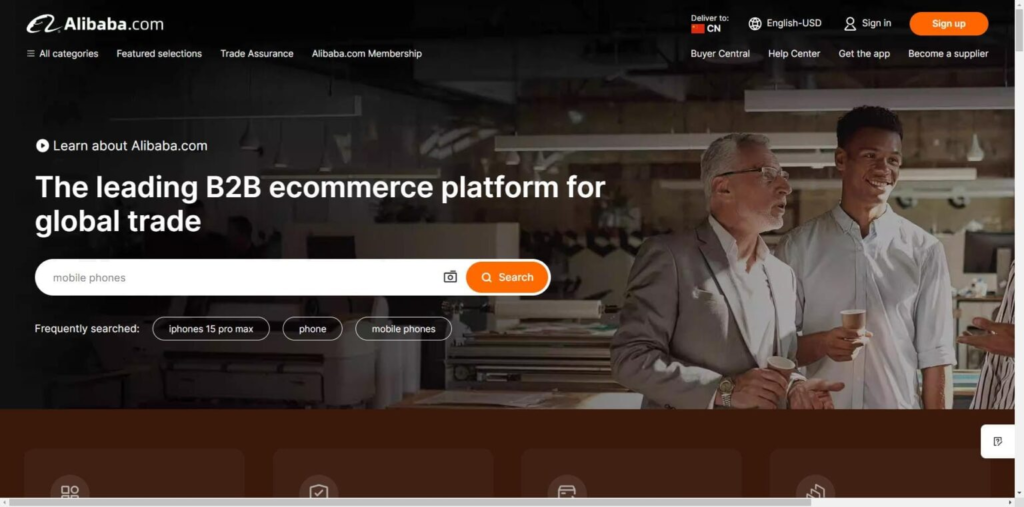
Alibaba is the largest and most trusted B2B sourcing platform in the world. It is the best starting point for any Kenyan importer, especially those placing their first order.
Pros:
- Trade Assurance protects your payment if the supplier fails to deliver
- Supplier profiles show verified business licences, transaction history, and reviews
- Built-in messaging, sample ordering, and dispute resolution
- Huge product range across almost every category
Cons:
- Prices are higher than those on domestic Chinese platforms like 1688.com
- Some listed “factories” are actually trading companies with a markup
- MOQs can be high for new buyers
Best for: First-time importers, buyers who want payment protection, and anyone sourcing general consumer goods, electronics, or fashion items.
Made-in-China

Made-in-China is a B2B platform with a strong focus on industrial and manufactured goods. It is well known among buyers sourcing machinery, metal parts, hardware, and construction materials.
Pros:
- Strong supplier base for industrial categories
- Verified manufacturer listings
- Competitive pricing for bulk orders
Cons:
- Smaller product range compared to Alibaba
- Less robust buyer protection than Trade Assurance
- Interface and communication tools are less polished
Best for: Buyers sourcing hardware, machinery, metal fabrication, construction materials, or automotive parts.
Global Sources
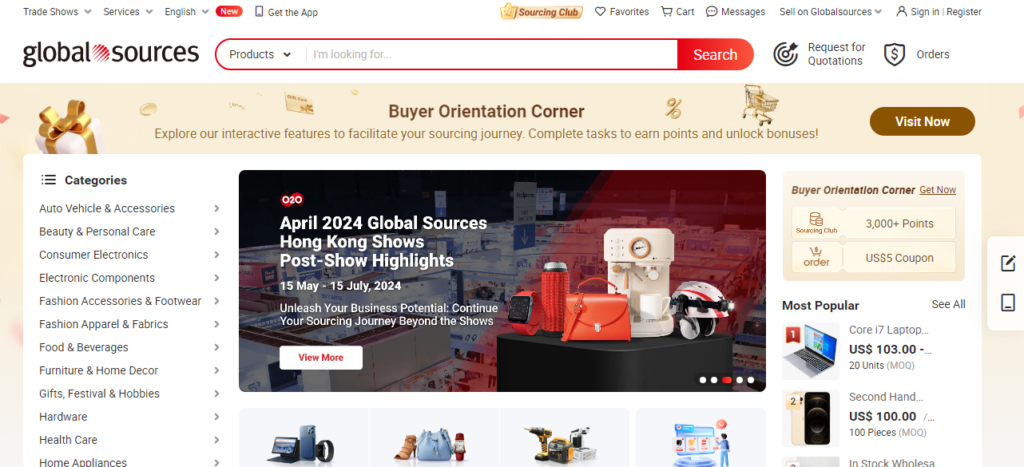
Global Sources is a Hong Kong-based sourcing platform popular for electronics and tech accessories. It also hosts twice-yearly sourcing fairs in Hong Kong where buyers can meet verified manufacturers in person.
Pros:
- Strong vetting process for listed suppliers
- Particularly strong for consumer electronics, mobile accessories, and gifts
- Annual trade shows give direct access to factory representatives
Cons:
- Smaller supplier base than Alibaba
- Less beginner-friendly interface
- Trade show attendance requires travel to Hong Kong
Best for: Buyers sourcing electronics, mobile accessories, gifts, and home goods who want a more curated supplier pool.
1688.com
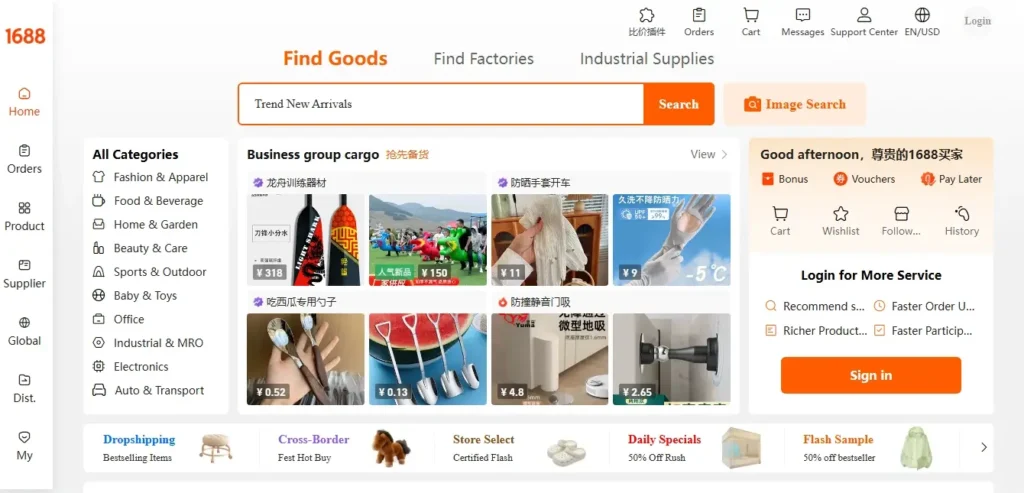
1688.com is Alibaba’s domestic Chinese wholesale platform. Prices are significantly lower than Alibaba’s because it is designed for Chinese buyers, not international importers.
Pros:
- Lowest prices of any Chinese sourcing platform
- Access to suppliers who do not list on international platforms
- Ideal for advanced buyers who want to reduce sourcing costs
Cons:
- The interface is entirely in Mandarin
- No built-in international buyer protections
- Communication with suppliers requires Mandarin or a sourcing agent
- Payment methods are designed for Chinese bank accounts
Best for: Experienced importers or those working with a China-based sourcing agent who can navigate the platform on their behalf.
How to Read a Supplier Profile
When evaluating any supplier on Alibaba, these are the signals that matter:
- Trade Assurance badge – Alibaba guarantees your payment if the supplier fails to deliver or the goods do not match the description
- Gold Supplier badge – The supplier has paid for a verified membership. Not a quality guarantee, but it confirms a real business
- Years active – Prefer suppliers who have been active for at least three years
- Response rate – Above 90% is the threshold. A low response rate means slow communication when problems arise
- Transaction history – More completed orders with positive reviews mean lower risk
- Verified factory address – Cross-check the listed address on Google Maps before ordering
A supplier with four years of activity, a 95% response rate, Trade Assurance, and 200+ completed transactions is far safer than a new listing with no reviews.
Always Order Samples First
Never ship a full container without first ordering a sample. A sample order typically costs $30–$150, including shipping and arrives in Nairobi in 7–14 days via air courier.
When your sample arrives, check the following before approving bulk production:
- Dimensions match the specification sheet
- Materials match what was advertised
- Packaging is intact and labelled correctly
- The product functions as expected
- Colour and finish match what was shown in product photos
If the sample falls short, request a revised sample. Do not proceed to bulk order until you are satisfied.
When to Hire a China-Based Sourcing Agent
For your first order from Alibaba, going direct is fine. But a sourcing agent makes sense when:
- You are sourcing from 1688.com and cannot navigate the Mandarin interface
- You need to visit multiple factories and cannot travel to China
- You are placing a large order and want someone on the ground doing quality checks
- You are managing five or more SKUs across different suppliers
A good sourcing agent handles supplier communication, price negotiation, factory visits, quality inspection coordination, and freight consolidation. They typically charge 5–10% of the order value or a flat monthly retainer.
Third-Party Factory Inspections
For orders above $3,000, hire an independent inspection company to visit the factory before goods are shipped.
The main firms operating in China are SGS, Bureau Veritas, QIMA, and Intertek.
A standard pre-shipment inspection costs $200–$400 and produces an independent report covering product quality, quantity accuracy, and packaging condition. You receive this report before paying your final balance, so you have the option to reject or renegotiate if standards are not met.
Red Flags to Avoid
Walk away from any supplier who shows these warning signs:
- No MOQ listed anywhere on their profile
- Asks you to pay via Western Union or a personal bank account outside Alibaba
- Cannot provide a verifiable factory address or business licence
- Refuses to send a proforma invoice before payment
- Asks for 100% payment upfront with no escrow or Trade Assurance option
- Has fewer than five completed transactions and no reviews
These patterns are consistent across supplier scams targeting new importers.
How to Negotiate with Chinese Suppliers (MOQ, Price, and Payment Terms)

Many Kenyan importers accept the first price they see on Alibaba and move on. That is leaving real money on the table. Chinese suppliers expect negotiation, and almost every term, including MOQ, unit price, and payment structure, has room to move.
Knowing how to negotiate properly is one of the fastest ways to improve your import margins before a single product ships.
Understanding MOQ and How to Negotiate It Down
MOQ stands for Minimum Order Quantity. It is the smallest number of units a supplier will produce in one order. A supplier might list a MOQ of 500 units, which can tie up significant capital for a first-time buyer.
Here is how to negotiate it down:
- Tell the supplier you are a new buyer testing the market and want to start with a smaller quantity to validate demand before scaling up
- Offer to pay a slightly higher unit price in exchange for a lower MOQ. For example, if 500 units at $3.00 is the MOQ, propose 150 units at $3.50
- Mention that you plan to place larger repeat orders once the product sells. Suppliers respond well to long-term buyer signals
- Many suppliers will accept 30–50% of their listed MOQ for a first order, especially on standard products that do not require custom tooling
Price Negotiation Tips
Getting a better unit price comes down to three reliable tactics:
- Competitive quotes – Request quotes from at least three suppliers for the same product. When you go back to your preferred supplier, telling them “Supplier B quoted me $4.50 per unit for the same spec” is a concrete pressure point that often results in a price match or improvement
- Product bundling – If you need multiple products, consolidate them with one supplier. Buying phone cases, screen protectors, and cables from one factory instead of three gives you more volume leverage with each
- Order value framing – Negotiate on total order value, not just unit price. A supplier is far more willing to drop price when you commit to a $5,000 order than when you ask for a discount on 50 units
Payment Structures Explained
Understanding your payment options protects you from losing money to scams or supplier failures.
- T/T (Telegraphic Transfer) 30/70 – The most common structure. You pay 30% upfront to begin production and 70% after goods pass inspection but before shipment. This is the recommended approach for off-platform transactions.
- Alibaba Trade Assurance – Your payment is held in escrow and only released after you confirm delivery and quality. Best option for new importers using Alibaba. Use it for every order until you have a long-term relationship with a supplier.
- Letter of Credit (L/C) – Your bank guarantees payment to the supplier’s bank once specific conditions are met. This suits large orders above $20,000, where both parties want a formal banking guarantee.
Avoid Western Union, MoneyGram, or direct personal bank transfers at all times. These offer zero buyer protection and are the payment method most commonly used in import scams targeting African buyers.
Always Get a Proforma Invoice First
Before transferring any money, request a proforma invoice. This document must include:
- Product description and specifications
- Quantity and unit price
- Total order value
- Payment terms and timeline
- Supplier’s full company name and banking details
Review it carefully, then confirm the banking details via a phone call or video call with the supplier before any transfer. Bank account substitution fraud, where a scammer intercepts an email and changes payment details, is a real risk in international trade.
Understanding Kenya Import Regulations: KRA, KEBS, and Compliance Rules
Kenya’s import regulations involve multiple government agencies and a set of mandatory compliance steps that apply before your goods even leave China.
Skipping or misunderstanding any of these steps leads to port delays, fines, or confiscated goods. This section covers what every Kenyan importer must know before their first shipment.
The Import Declaration Form (IDF)
Every commercial import into Kenya requires an Import Declaration Form (IDF). According to KRA, the IDF must be filed through the customs system before goods arrive in the country.
Two key fees are tied to the IDF:
- IDF Fee – A percentage of the customs value, with a minimum charge of KES 5,000
- Railway Development Levy (RDL) – Charged at 2% of the CIF value, introduced to fund Kenya’s Standard Gauge Railway from Mombasa to Nairobi
Your licensed clearing agent handles the IDF filing on your behalf through the KRA system.
The PVoC Certificate: What It is and Who Needs It
The Pre-Export Verification of Conformity (PVoC) program is run by the Kenya Bureau of Standards (KEBS). The PVoC program requires that regulated goods destined for Kenya pass a conformity assessment in the exporting country before they are shipped.
Products that comply receive a Certificate of Conformity (CoC), which is a mandatory clearance document.
Products covered under PVoC include:
- Electronics and electrical equipment
- Food and agricultural products
- Cosmetics and personal care products
- Toys and children’s products
- Building materials and chemicals
- Fertilizers and pesticides
KEBS has appointed SGS, Bureau Veritas, TÜV Rheinland, and QIMA to carry out PVoC assessments in China on its behalf. The inspection must happen before your goods leave the factory.
PVoC vs. Pre-Shipment Quality Inspection
These are two completely different things. Mixing them up is one of the most expensive mistakes a new importer can make.
| PVoC (Certificate of Conformity) | Pre-Shipment Quality Inspection | |
|---|---|---|
| Who conducts it | KEBS-appointed body (SGS, BV, QIMA) | Private inspector you commission |
| What it checks | Compliance with Kenyan standards and regulations | Whether goods match your order specs |
| Is it mandatory? | Yes, for regulated goods | No, but strongly recommended |
| Does it guarantee quality? | No | Yes, for what you specify |
You can have a valid PVoC certificate and still receive goods that are the wrong colour, wrong size, or poor workmanship. You need both.
Prohibited and Restricted Goods
Prohibited Goods (Cannot Be Imported Under Any Circumstances)
- Pornographic material
- Gambling machines
- Counterfeit currency
- Ammunition and explosives (without government approval)
- Narcotics and illegal drugs
- Ivory and game trophies
Attempting to import any of these results in immediate seizure and potential criminal charges.
Restricted Goods (Require Special Permits Before Import)
- Firearms and weapons
- Plants, seeds, and agricultural products
- Live animals
- Alcohol and tobacco
- Pharmaceuticals
- Electronics with serial numbers (require prior registration)
- Motor vehicles (must not exceed eight years from the year of manufacture)
Charities, government projects, and diplomatic missions may apply for duty exemption letters through the relevant government ministries.
Essential Import Documents Checklist
Missing even one document when your cargo arrives at Mombasa Port can result in demurrage charges that run into tens of thousands of shillings per day. Preparation before the goods ship is the only protection.
Below is the complete document checklist every Kenyan importer needs. Ensure all documents are sent to your clearing agent at least seven days before the vessel arrives.
| Document | What It Must Contain |
|---|---|
| Commercial Invoice | Supplier details, buyer details, product description, quantity, unit price, total value, Incoterm |
| Packing List | Package description, weight in metric tons, dimensions in meters, and cubic measurement. Must match the invoice exactly. |
| Bill of Lading (sea) / Air Waybill (air) | Carrier-issued transport document confirming shipment |
| Import Declaration Form (IDF) | Filed with KRA before goods arrive |
| PVoC / Certificate of Conformity | Issued by a KEBS-appointed inspection body in China |
| Insurance Certificate | Proof of marine cargo insurance covering the shipment |
| Proforma Invoice | Agreed before production, confirms order terms |
Key rule: The packing list and commercial invoice must match exactly. A quantity discrepancy between the two is one of the most common triggers for a KRA physical inspection and port delay.
Choosing the Right Shipping Method: Air Freight vs. Sea Freight

Your shipping method affects your cost, your timeline, and how much risk you carry during transit. Choosing the wrong method on a large order can wipe out your margins before you sell a single unit.
The right choice depends on your product type, order volume, and how urgently you need the goods. Here is a clear breakdown of every option available to Kenyan importers.
Air Freight
Air freight is the right choice for small, urgent, or high-value shipments. An air shipment from China to Kenya typically takes 4–7 days.
It is significantly more expensive than sea freight, charged per kilogram.
Best for: Electronics samples, fashion items, pharmaceuticals, and emergency restocking. If your product sells for KES 5,000 per unit and you are importing 20 units, air freight makes sense because the margin covers the cost.
Your goods arrive at Jomo Kenyatta International Airport (JKIA) in Nairobi rather than Mombasa, which cuts out the SGR leg of the journey.
Cost estimate: $3–$8 per kilogram, depending on the carrier and season.
Sea Freight
It is the default for most Kenyan importers because of its cost advantage on larger volumes. The sea freight from China to Kenya averages 22–28 days for FCL, while LCL shipments take 36–47 days once consolidation is factored in. Goods arrive at Mombasa Port.
FCL vs. LCL: Which One Do You Need?
Full Container Load (FCL) means your goods fill an entire 20-foot or 40-foot container. In early 2026, FCL rates from China to Kenya ranged from $1,400–$2,700 for a 20ft container and $2,300–$4,100 for a 40ft container (freight only).
FCL is cost-effective for large orders and reduces handling risk since no other importer's goods share your container.
Less than Container Load (LCL) means your goods share space in a container with other importers’ shipments. You pay per cubic meter (CBM). LCL is ideal for orders under 15 CBM. Expect $50–$80 per CBM in freight costs, though LCL takes longer because of the consolidation and deconsolidation process at both ends.
A practical example: if you are importing 300 kg of phone accessories (roughly 2 CBM), LCL is the right choice. If you are importing 500 units of furniture (filling a full 20ft container), FCL is cheaper and faster.
Which Chinese Port to Load From
The port your goods depart from affects transit time and inland trucking costs within China.
- Shenzhen / Guangzhou – Best for electronics, toys, clothing, and most of the Guangdong province manufacturers
- Shanghai – The largest port in the world by volume. Best for a wide range of goods
- Ningbo – Strong for hardware, machinery, and automotive parts
- Qingdao – Best for northern China manufacturers, chemicals, and heavy machinery
Your supplier’s factory location typically determines the loading port. Confirm this when finalising your order.
Incoterms for Kenyan Importers
Incoterms define who pays for freight, insurance, and duties at each stage of the shipment.
- FOB (Free On Board) – The supplier delivers goods to the named Chinese port and loads them onto the vessel. You pay freight and insurance from that point. This gives you control over freight costs and is recommended for most Kenyan importers.
- CIF (Cost, Insurance, Freight) – The supplier arranges and pays for freight and insurance to Mombasa. You take responsibility on arrival. Simpler, but some suppliers inflate CIF rates to improve their margin.
- DDP (Delivered Duty Paid) – The supplier handles everything, including customs clearance and duty payment. The easiest option, but most expensive, and you have no visibility on the cost breakdown.
Recommended: Use FOB for full pricing transparency. Get an independent freight quote and compare it against any CIF offer before deciding.
Inland Logistics After Mombasa
Once your goods clear Mombasa Port, the Standard Gauge Railway (SGR) is the most cost-effective way to move containers to Nairobi.
The SGR delivers to the Inland Container Depot (ICD) at Embakasi, Nairobi, which is significantly cheaper and faster than road haulage. Your clearing agent arranges an SGR booking as part of the clearance process.
Comparison Table: Air vs. Sea Freight
| Factor | Air Freight | Sea Freight (FCL) | Sea Freight (LCL) |
|---|---|---|---|
| Transit Time | 4–7 days | 22–28 days | 36–47 days |
| Cost | High (per kg) | Low–Medium (per container) | Low (per CBM) |
| Best For | Urgent, small, high-value | Large bulk orders | Small–medium orders |
| Risk Level | Low (less handling) | Low | Medium (shared handling) |
| Arrival Point | JKIA, Nairobi | Mombasa Port | Mombasa Port |
Full Kenya Import Cost Breakdown: What You Will Actually Pay
Many importers calculate their margins using only the supplier invoice price. They then get hit with duty, VAT, IDF fees, RDL, and agent costs at Mombasa and realise they are selling at a loss. This section gives you the complete picture so you can price correctly from day one.
Every cost listed below comes on top of what you paid your Chinese supplier.
The Main Cost Components
Product Cost
This is the FOB or CIF price from your supplier. Everything else is calculated on top of this figure. Make sure you are clear on whether the quoted price is FOB (freight not included) or CIF (freight and insurance included) before building your cost model.
Freight Charges
Freight cost depends on your shipping method:
- LCL sea freight: $50–$80 per CBM
- 20ft FCL container: $1,400–$2,700 (freight only)
- 40ft FCL container: $2,300–$4,100 (freight only)
- Air freight: $3–$8 per kilogram
Import Duty
The rate is tied to your product’s HS code and ranges from 0% to 100%. The EAC Common External Tariff sets most general goods at 0%, 10%, or 25%. Most finished consumer goods fall at 25%.
VAT
Charged at 16% on the CIF value plus import duty combined.
IDF Fee
Paid to KRA as a percentage of customs value. Minimum charge is KES 5,000.
Railway Development Levy (RDL)
2% of the CIF value. Applied to most commercial imports.
Excise Duty
Applies to alcohol, tobacco, plastics, and motor vehicles. Rates vary by product. Check the current schedule on the KRA website.
Other Costs
- PVoC inspection fee: $200–$400 per shipment
- Clearing agent fees: KES 15,000–50,000
- Port handling charges: vary
- SGR / inland transport to Nairobi: varies by container size
Worked Example: $2,000 Electronics Order
Say you are importing $2,000 worth of phone accessories via sea freight on CIF terms. Here is what the full landed cost looks like:
| Cost Item | Calculation | Amount |
|---|---|---|
| Product value (CIF) | Given | $2,000 (~KES 260,000) |
| Import Duty at 25% | 25% x $2,000 | $500 (KES 65,000) |
| IDF Fee | % of customs value | ~KES 9,100 |
| RDL at 2% | 2% x $2,000 | $40 (KES 5,200) |
| VAT at 16% | 16% x ($2,000 + $500) | $400 (KES 52,000) |
| Clearing agent fee | Flat rate (approx.) | KES 25,000 |
| Port handling + SGR | Approx. | KES 15,000 |
| PVoC inspection fee | One-time | ~KES 30,000 |
| Total Landed Cost | ~$3,200 (KES 416,000) |
Your $2,000 product costs roughly $3,200 by the time it sits in your warehouse in Nairobi. Price from the landed cost, not from the supplier invoice.
Customs Clearance in Kenya: Step-by-Step KRA Process
Customs clearance is where many importers lose time and money. Demurrage charges at Mombasa Port can reach KES 5,000–20,000 per day per container. Moving through the KRA process quickly depends on having all your documents ready before your cargo arrives, not after.
Here is the exact process, step by step.
Step 1: Goods Arrive at Mombasa Port
When your vessel docks at Mombasa Port, your goods are offloaded and placed in a bonded warehouse under KRA supervision. The demurrage clock starts immediately. Swift action from your clearing agent from this point is critical.
Step 2: Pre-Clearance Filing
Your clearing agent files your import entry through the KRA Customs Management System. This involves submitting:
- Commercial invoice
- Packing list
- Bill of Lading
- Import Declaration Form (IDF)
- Certificate of Conformity (PVoC)
This can and should be done before the ship docks. Pre-clearance reduces port dwell time significantly.
Step 3: Hiring a Licensed Clearing Agent
KRA requires all commercial importers to use a licensed customs clearing and forwarding agent to process imports through the official system.
When choosing an agent:
- Verify their KRA licence number directly on the KRA portal
- Ask for at least two client references and follow up on them
- Confirm their fee structure in writing before engaging them
- Do not pay any agent who requests cash without issuing a formal receipt
Step 4: Physical Inspection
KRA officers may conduct a physical examination of your goods. This is more likely for first-time importers, high-value shipments, or consignments flagged by the automated risk management system.
The inspection compares your actual goods against the declared packing list and commercial invoice. Any mismatch in quantity, product type, or value triggers penalties or further investigation.
Step 5: Duty Assessment and Payment
After document review and any physical inspection, KRA issues a duty assessment showing the total amount payable. Your clearing agent presents this figure to you. Payment goes directly to KRA through their official payment portal.
Goods are only released after KRA confirms payment. This is not a process you can speed up by paying the agent more.
Step 6: Collecting Your Goods
After clearance, your goods are either collected directly from Mombasa Port or transferred via SGR to the ICD at Embakasi, Nairobi. Your clearing agent coordinates the collection and can arrange last-mile delivery to your warehouse.
What Causes Customs Delays
These are the most common causes of delays at Mombasa Port:
- Late or incorrect documents submitted after the cargo arrives
- Mismatch between the commercial invoice and the packing list
- Missing PVoC Certificate of Conformity
- Wrong HS code declared on the IDF
- Failure to pay assessed duties promptly
- Goods selected for physical inspection queue
Every one of these is avoidable with preparation before the goods ship from China.
Quality Control: How to Ensure What You Ordered is What You Receive
A PVoC certificate tells KRA your goods meet Kenyan regulatory standards. It does not tell you whether the 500 units you ordered match the sample you approved. Quality control is entirely your responsibility, and it starts at the factory, not at Mombasa Port.
Here is how a proper QC process works for Kenyan importers.
Why PVoC Does Not Replace Quality Control
The PVoC is a compliance check, not a quality check. It confirms your goods meet Kenyan technical standards for safety and labelling. It does not check:
- Whether quantities match your purchase order
- Whether colour, finish, or dimensions match your sample
- Whether packaging and branding meet your spec
- Whether workmanship is acceptable
Think of PVoC as a passport control gate. It gets your goods into the country. Quality control is what ensures those goods are actually what you ordered.
Pre-Production Inspection
A pre-production inspection happens before the factory starts manufacturing your order. The inspector visits the facility to confirm:
- Raw materials match the agreed specifications
- Components are the right grade and source
- Factory capacity can meet your delivery timeline
This is most important for custom or branded orders where materials directly affect the final product.
During-Production (DUPRO) Inspection
A DUPRO inspection takes place when roughly 20–30% of your order has been produced. It is the most underused inspection type and arguably the most valuable. At this stage, the factory can still correct a systematic defect without scrapping the entire batch.
For example, if 100 out of 500 phone cases have been moulded with slightly wrong dimensions, a DUPRO inspection catches this when 400 are still salvageable. A pre-shipment inspection at the end would find the problem after all 500 are already made.
Pre-Shipment Inspection
This is the most commonly used inspection type. It happens after at least 80% of the order is produced and packed. An inspector visits the factory and checks a random sample of units against your approved sample and specification sheet.
You receive a detailed inspection report with photos within 24–48 hours. If the goods fail, you can reject the shipment or negotiate a remedy before releasing the 70% balance payment.
For any order above $2,000, treat this inspection as a required cost, not an optional extra.
What a QC Checklist Should Include
Share this checklist with your inspection company before their factory visit:
- Quantity verification against the purchase order and packing list
- Product dimensions and weight vs. specification
- Workmanship and surface finish vs. the approved sample
- Functionality test (for electronics and mechanical items)
- Packaging integrity and carton drop test
- Labelling accuracy, including brand name, country of origin, and barcodes
- Carton markings and shipper’s marks
How Change Sourcing Helps Kenyan Importers Source Smarter from China
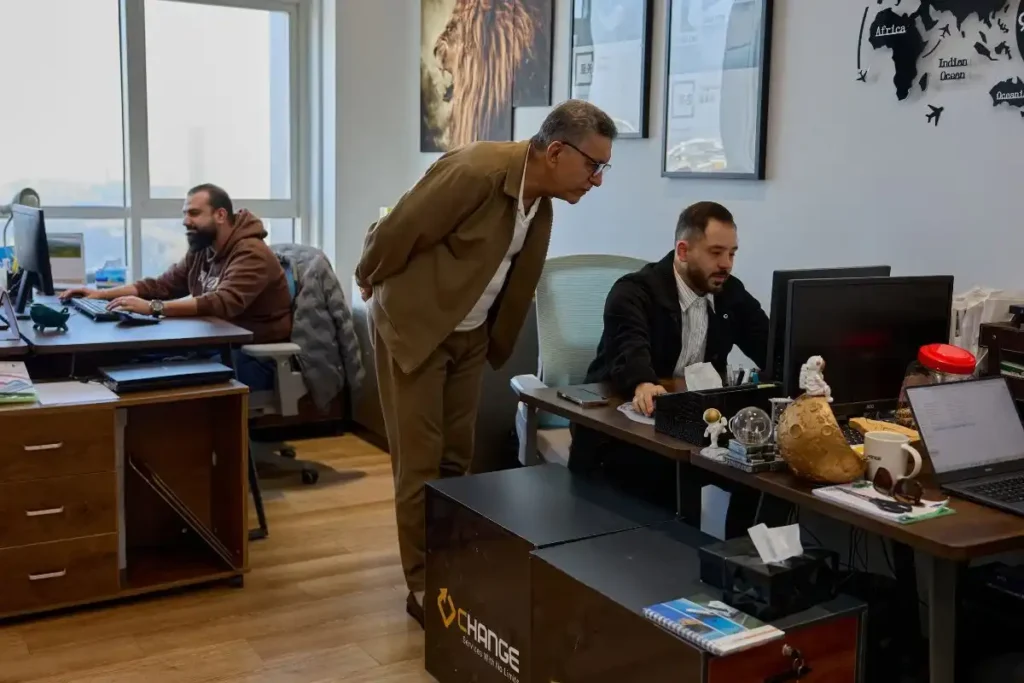
Importing from China involves supplier vetting, price negotiation, quality inspection, PVoC compliance, and freight coordination. Doing all of that alone on your first few orders is possible, but it is slow and carries real risk.
Change Sourcing works directly with Kenyan entrepreneurs and SMEs to take the complexity out of this process. Whether you are placing your first trial order or managing an established product line, the team provides support at every stage of the import chain.
What Change Sourcing Offers
Supplier Verification and Vetting
The team conducts factory audits and background checks on Chinese suppliers before you commit any capital. This covers verifying business licences, production capacity, and whether the factory actually manufactures your product or just resells from a third party.
Price Negotiation and MOQ Reduction
Experienced negotiators work on your behalf to secure competitive pricing and reduce minimum order quantities for first-time buyers. Most clients see cost savings of 10–20% compared to going direct as a new buyer with no negotiation history.
Quality Inspection Coordination
Change Sourcing coordinates pre-shipment inspections through KEBS-approved partners in China. This includes product testing, quantity verification, and packaging review. You receive a full inspection report before your 70% balance is due.
Freight and Documentation Support
The team helps you select the right shipping method and ensures all export documents from China, including the Certificate of Conformity for PVoC clearance, are correct and ready before the container is sealed.
To learn more about how Change Sourcing can simplify your next import order, contact for a FREE Consultation.
7 Common Mistakes Kenyan Importers Make and How to Avoid Them
Even experienced importers make these mistakes. Most of them are avoidable with the right process in place before money changes hands or goods leave the factory.
Mistake 1: Paying 100% Upfront
Once you pay in full, you have zero leverage if quality is poor or delivery is late. The supplier has no financial incentive to prioritise your order.
Fix: Always use a 30% deposit and 70% balance structure. For orders placed through Alibaba, use Trade Assurance so the full payment is held in escrow until you confirm delivery.
Mistake 2: Skipping the Sample Order
Saving $50–$100 on a sample to speed things up often leads to thousands of dollars spent on unsellable stock. One importer in Nairobi ordered 300 units of a kitchen appliance without sampling and received products with wrong voltage specifications for the Kenyan market.
Fix: Always sample before bulk ordering. No exceptions for physical products.
Mistake 3: Using the Wrong HS Code
Using an incorrect HS code, even accidentally, can result in KRA penalties, goods held at the port, and a flagged import record that triggers scrutiny on every future shipment.
Fix: Confirm your HS code with your clearing agent before filing the IDF. Do not guess based on a generic product description.
Mistake 4: Ignoring PVoC Requirements
Goods arriving at Mombasa without a Certificate of Conformity face mandatory destination inspection by KEBS. This means extended port delays, additional inspection fees, and potential rejection of the entire consignment.
Fix: Arrange PVoC inspection with a KEBS-approved body in China before your goods are shipped. This must happen at the origin, not after arrival.
Mistake 5: Not Factoring All Landed Costs into Pricing
A $2,000 shipment that costs $3,200 landed means your retail price must recover $3,200, not $2,000. Importers who price from the supplier invoice alone regularly end up selling at a loss.
Fix: Build your full landed cost model before placing any order. Use the worked example in the cost section above as your template.
Mistake 6: Choosing the Wrong Incoterm
Accepting CIF without checking the freight charge means the supplier controls that cost. Some suppliers inflate CIF freight to recover the margin they gave up on the unit price.
Fix: Use FOB, get an independent freight quote from your forwarder, and compare it to any CIF offer. If the supplier’s CIF freight is significantly higher than the market rate, negotiate.
Mistake 7: Working Without a Licensed Clearing Agent
Attempting to self-clear goods at Mombasa without KRA accreditation leads to delays, misfiled entries, and potential fines.
Fix: Budget KES 15,000–50,000 for a licensed clearing agent. It is a legitimate, necessary cost. Verify their KRA licence before engaging them.
Frequently Asked Questions
Sea freight takes 22–47 days depending on FCL or LCL, plus 3–7 days for customs clearance. Air freight takes 4–7 days in transit plus clearance. Budget 6–10 weeks for sea freight and 2–3 weeks for air freight from order placement to warehouse delivery.
Yes, for most regulated products a Certificate of Conformity is required per consignment. Exemptions apply for goods regulated by other agencies such as the Pharmacy and Poisons Board. Always confirm with KEBS or your clearing agent before shipping.
There is no legal minimum. Small orders under 50 kg are typically sent via courier (DHL or FedEx). LCL sea freight becomes economical from around 0.5 CBM. Most suppliers set their own MOQ starting from 50–500 units depending on the product.
You can import goods for personal use without a business registration. For commercial imports, you need a registered business entity, a KRA business PIN, and a licensed clearing agent.
Use Alibaba Trade Assurance for orders placed through Alibaba. For off-platform orders, use T/T bank transfer with a 30/70 split. Avoid Western Union, MoneyGram, or full upfront payments to personal accounts. Always confirm banking details via a direct phone call before transferring.