

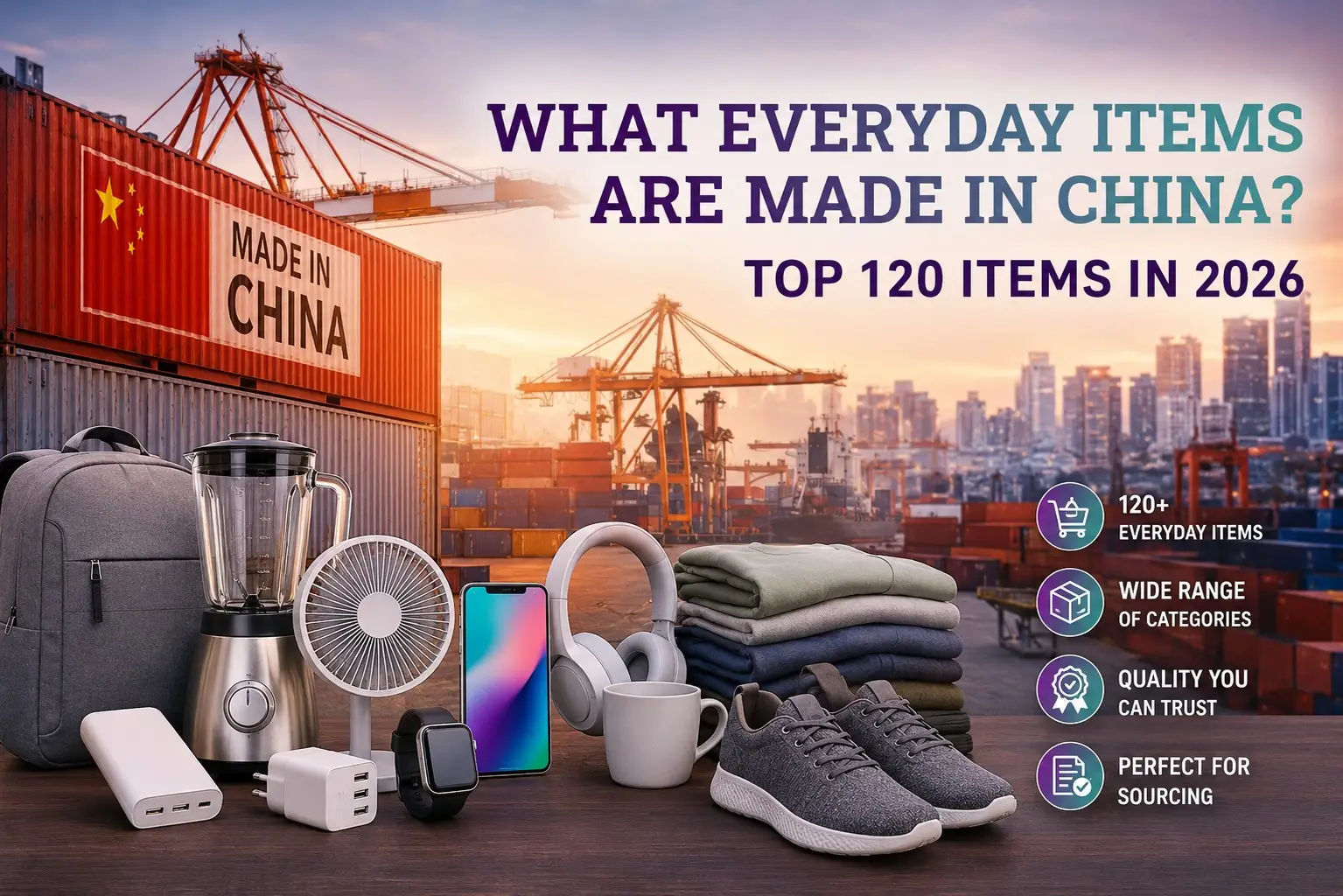
China produces roughly 28% of everything manufactured on earth. That means almost any product you pick up today — your phone, your shirt, your coffee maker, even the chair you are sitting on — was either made in China or built with Chinese-made parts. The full list covers electronics, clothing, household goods, toys, furniture, tools, medical supplies, and much more.
Walk through your morning routine and try to count how many things you touch that were made in China. The alarm on your smartphone. The kettle you boil water in. The clothes you pull from your drawer. You are likely a few minutes in before you even finish breakfast.
China has been the world’s largest manufacturer for 16 straight years. Its factories produce everything from the tiniest semiconductor chip to full living room furniture sets.
Because global supply chains are deeply connected, many products that appear to come from other countries still rely on Chinese components at some stage of production. This guide breaks down the full list of everyday items made in China, backed by real trade data.
How Dominant is China in Global Manufacturing?
To understand why so many everyday items come from China, it helps to see the numbers. The scale of Chinese manufacturing is genuinely hard to picture without data.
According to the World Bank and UN Statistics Division, China produced $4.7 trillion in manufacturing value added in 2024. That is 28% of all global manufacturing output — more than the United States, Japan, and Germany put together.
China overtook the United States as the world’s top manufacturer back in 2010 and has held that position every year since. In 2025, China contributed around 30% of global manufacturing value added, maintaining its top spot for 16 consecutive years.
| 28% of global manufacturing | 16 Years #1 manufacturer streak | $3.53 Trillion manufactured goods exported (2024) |
Think of it this way. If all manufacturing were divided equally among every country in the world, China would still be doing the work of nearly six average nations on its own. That concentration is why it is almost impossible to buy common goods without touching Chinese manufacturing at some point.
How China Compares to Other Top Manufacturing Nations
| Country | 2024 Manufacturing Output | Share of Global Total |
| China | $4.7 trillion | 28% |
| United States | $2.91 trillion | 17.3% |
| Japan | $867 billion | 5.15% |
| Germany | $830 billion | 4.93% |
| India | $490 billion | 2.91% |
Source: Safeguard Global / World Bank data (2024)
The ‘Invisible China’ Problem — Brands You Don’t Realize are Made There
Here is something that surprises most people. When you buy a product from a well-known Western brand, it might still be manufactured in China.
The brand controls the design, marketing, and distribution. The factory is in Guangzhou or Shenzhen.
Apple is the clearest example. The company designs its products in California. But the actual assembly of iPhones happens primarily in China through manufacturing partners. The same is true for major clothing labels, sports brands, and even premium home goods.
There is also an important distinction between the country of origin and the country of assembly. A laptop might be assembled in Vietnam, but the display panel, battery, and motherboard all came from Chinese factories.
The label says ‘Made in Vietnam’, but the majority of its components are Chinese.
This is not about deception. It is simply how modern global supply chains work. Understanding it helps you make smarter sourcing and purchasing decisions.
Electronics and Technology — China’s Largest Export Category
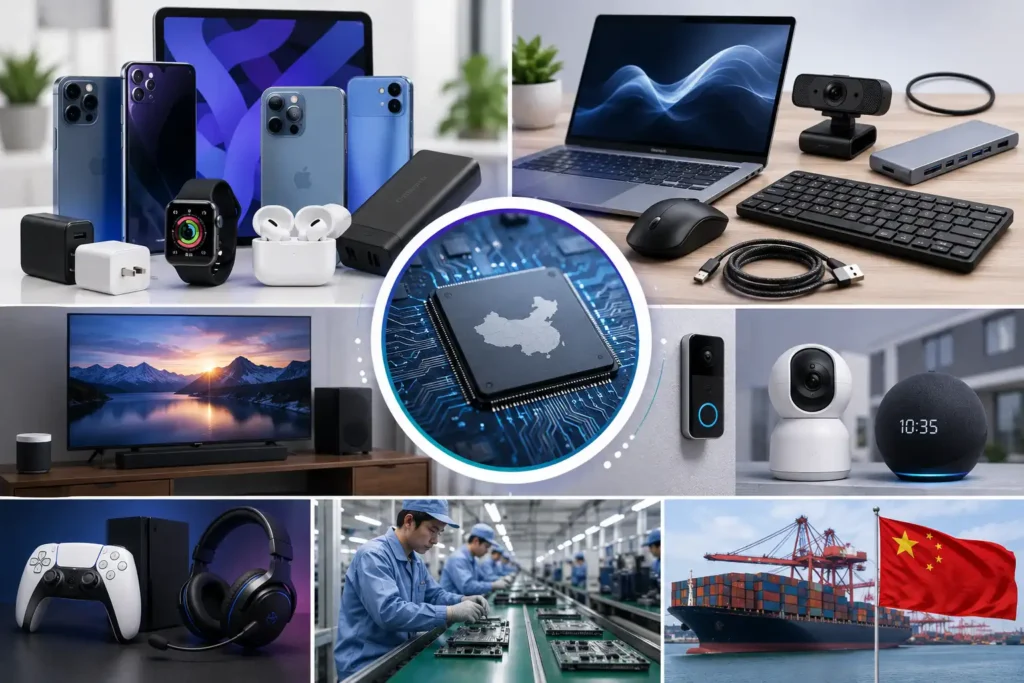
Consumer electronics represent China’s single biggest export category to the United States. The US imported roughly $427 billion worth of goods from China in 2023, and electronics made up the largest chunk of that total.
Smartphones and Tablets
The numbers here are striking. China accounted for 78% of all US smartphone imports in 2023, according to the Consumer Technology Association.
That covers not just Chinese brands like Huawei and Xiaomi — it includes iPhones, which are assembled in Chinese factories.
Even if you buy a phone that carries a US, South Korean, or Japanese brand name, the components inside almost certainly passed through Chinese manufacturing.
Batteries, screens, chips, and circuit boards are predominantly made or assembled in China.
Laptops, Computers, and Accessories
The story is similar for personal computers. China supplied 79% of all US laptop and tablet imports in 2023 — the highest share of any import category.
Brands like Lenovo are Chinese-owned and manufactured there. Brands like Dell and HP rely on Chinese factories for assembly.
On top of the devices themselves, almost every computer accessory comes from China. USB hubs, charging cables, power banks, mouse pads, keyboards, webcams — if you ordered it on Amazon, there is a high probability it shipped from a Chinese factory.
Home Entertainment and Smart Devices
- Televisions: Brands like Hisense and TCL are Chinese. Samsung and LG also manufacture significant portions of their TV lineups in China.
- Smart speakers and voice assistants: Most of the hardware components are Chinese-made.
- Video doorbells and security cameras: Brands like Ring and Arlo use Chinese manufacturing.
- Gaming consoles and accessories: While Sony and Microsoft design their hardware, much of the manufacturing happens in Chinese factories.
- Smartwatches and fitness trackers: The majority of wearables on the global market are assembled in China.
Clothing, Footwear, and Accessories
Fashion is one of the most China-dependent categories you use every day. Fast fashion brands, sports apparel labels, and even premium clothing lines all rely heavily on Chinese textile factories.
Everyday Apparel
T-shirts, jeans, underwear, socks, activewear, and winter coats are among the most commonly China-sourced items. China provides around 40% of US footwear imports, according to the Peterson Institute for International Economics.
Major athletic brands like Nike and Converse manufacture a large share of their products in China and Southeast Asia. Several of the factories involved are Chinese-owned, even when officially located in Vietnam or Bangladesh.
Children’s clothing is especially dependent on Chinese manufacturing. Kids grow fast and need new clothes every season, so parents buy more frequently — and most of those affordable options come from Chinese factories.
Bags, Wallets, and Fashion Accessories
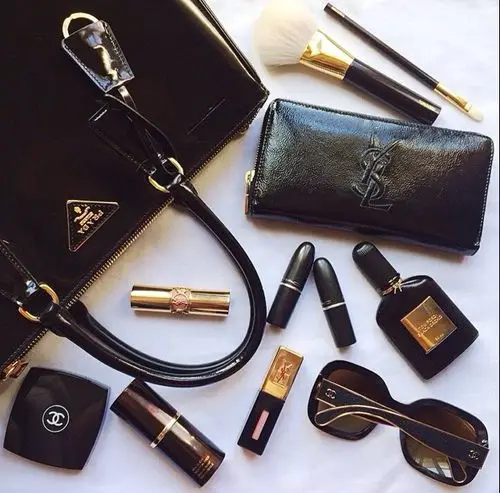
- Handbags: From budget totes to mid-range leather goods, Chinese factories supply a significant share of the global handbag market.
- Wallets and small leather accessories: The supply chain for these runs heavily through factories in Guangzhou.
- Sunglasses: China manufactures the vast majority of optical frames and finished sunglasses sold globally.
- Fashion jewelry: Rings, bracelets, earrings, and necklaces are a major export category out of Yiwu and other Chinese trade hubs.
- Belts and hair accessories: These are among the most common products sourced by importers from China due to low production costs and fast turnaround.
Household and Kitchen Goods
Open any kitchen cabinet, and you will likely find multiple China-made items. The same goes for cleaning supplies, bathroom accessories, and home decor.
Cookware and Kitchenware
Pots, pans, woks, baking trays, cutlery sets, spatulas, and serving spoons are all commonly manufactured in China.
Stainless steel and non-stick cookware, in particular, are dominated by Chinese factories.
Coffee mugs, water bottles, lunch boxes, and reusable containers are another large category. Yiwu, the city where CHANGE Sourcing is based, is one of the world’s largest hubs for small consumer goods like these.
Small Kitchen Appliances
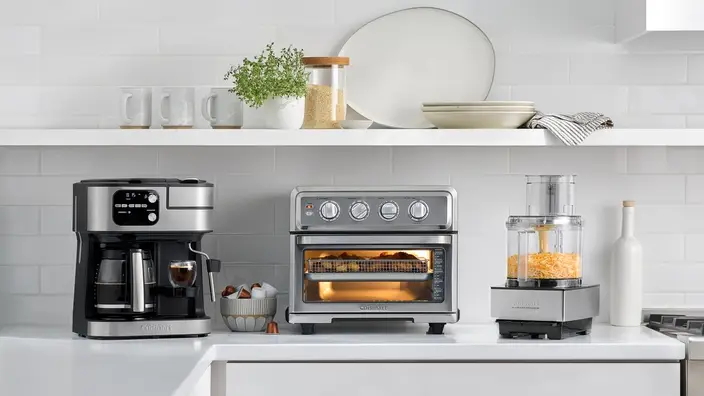
- Air fryers: The vast majority of global air fryer production happens in China. Brands like Cosori, Ninja, and even Philips rely on Chinese manufacturing.
- Coffee makers: From basic drip coffee machines to capsule-style brewers, Chinese factories dominate production.
- Microwaves: Chinese manufacturers like Midea and Galanz supply a large share of the global microwave market.
- Blenders, electric kettles, and rice cookers: All categories where Chinese manufacturing holds a dominant position globally.
Cleaning and Home Maintenance
Steam mops, brooms, vacuum accessories, and scrubbing tools are overwhelmingly produced in China. Even for premium vacuum brands, many of the replacement accessories and attachments come from Chinese factories.
Home Decor and Christmas Decorations

Wall clocks, artificial plants, ceramic vases, picture frames, candles, and plastic storage solutions — all categories where China plays a leading role. One notable example is Christmas ornaments.
Yiwu, China, hosts the world's largest wholesale market for holiday decorations. The city supplies an estimated 70 to 80% of all Christmas ornaments sold globally every year.
When you hang a bauble on your tree this December, the odds are very high that it came from within a few kilometers of CHANGE Sourcing’s own offices.
Toys, Baby Gear, and Sports Equipment
Children’s Toys
The toy industry is one of the most China-concentrated categories in the world. Industry estimates put China’s share of global toy production at around 80%.
In terms of US imports specifically, toys, games, and sports equipment accounted for $30 billion worth of Chinese imports in 2023 — about 6.8% of all Chinese goods imported to the US according to Al Jazeera's trade analysis.
- Action figures, model kits, and collectibles
- Stuffed animals and plush toys
- Remote-control cars and electronic toys
- Puzzles, board games, and card games
- Educational toys: building blocks, science kits, and learning tools
Baby and Infant Gear
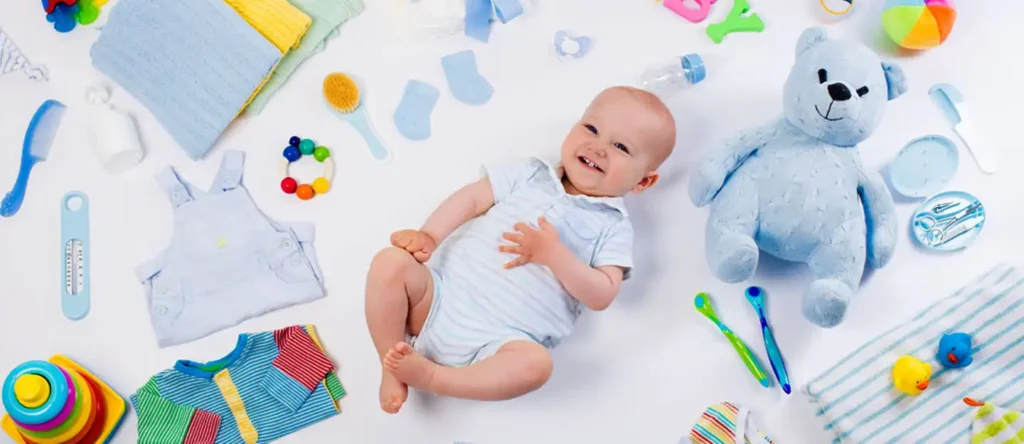
This is a category that often surprises new parents. Most of the baby gear on the market — from mainstream brands to budget options — is manufactured in China.
According to Consumer Reports, most must-have baby items, including car seats, strollers, cribs, and baby monitors, are made in China.
Even safety-certified products from premium brands typically come from Chinese factories that meet international safety standards.
- Car seats and booster seats
- Strollers and prams
- Cribs, bassinets, and playpens
- Baby monitors and bottle warmers
- Feeding sets, bibs, and storage containers
Sports and Outdoor Equipment
Exercise equipment, yoga mats, resistance bands, bicycle helmets, and sports balls all predominantly come from Chinese factories.
Even high-performance sporting goods brands source from China for many product lines.
Furniture and Home Furnishings
Furniture is one of the most significant trade categories between China and the US.
Not to mention, furniture and bedding accounted for $18.5 billion in US imports from China in 2023 — roughly 4.2% of total Chinese goods imported.
Living and Bedroom Furniture
- Sofas, recliners, and sectional couches: Many big-box retailers source their furniture ranges from Chinese factories.
- Beds, bed frames, and headboards: Especially for mid-range and budget furniture brands.
- Wardrobes, dressers, and chests of drawers: Flat-pack furniture giants like IKEA rely heavily on Chinese suppliers.
- Office desks and chairs: The home office boom accelerated imports of Chinese-made work furniture.
Soft Furnishings and Textiles
Mattresses, pillows, duvets, and bedding sets are produced in China at scale. So are curtains, rugs, table runners, and decorative cushions. These items make up the soft layer of most homes worldwide.
Tools, Hardware, and Industrial Supplies
This category is less talked about in consumer-focused discussions, but it is just as China-dependent. Whether you run a business, manage a warehouse, or are simply fixing something at home, the tools you reach for are very likely Chinese-made.
Power Tools and Hand Tools
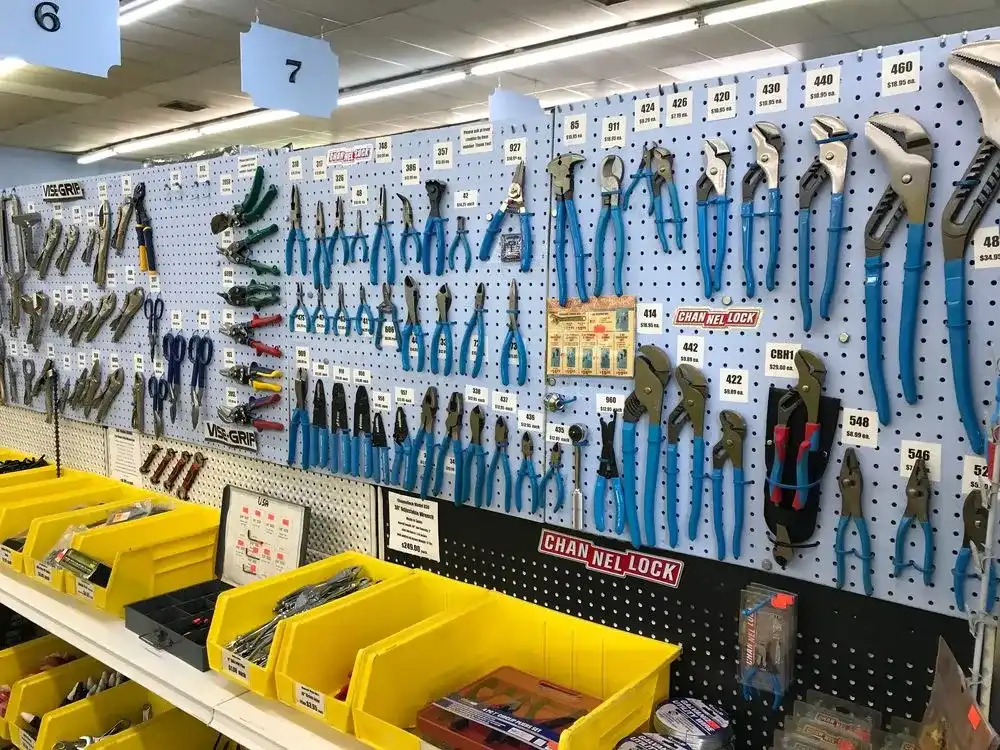
- Power drills, saws, grinders, and sanders: Many major brands, including some lines from Bosch and Black+Decker, are manufactured in China.
- Hand tools: Wrenches, screwdrivers, pliers, tape measures, and socket sets.
- Garden tools: Shovels, trowels, rakes, pruning shears, and watering equipment.
Hardware and Building Supplies
- Door handles, locks, and hinges: A core product category for importers sourcing through Yiwu and Guangzhou.
- Fasteners: Screws, nuts, bolts, nails, and anchors — China supplies a dominant share of the global fastener market.
- Safety equipment: Hard hats, safety goggles, high-visibility vests, and protective gloves.
- Lighting: LED bulbs, strip lights, and work lights are overwhelmingly produced in Chinese factories.
For businesses sourcing tools and hardware at scale, the quality range in China is wide. There are factories producing certified, premium-grade products and others focused on the budget market.
Working with a verified sourcing partner like CHANGE Sourcing helps you find the right tier for your needs.
Health, Beauty, and Personal Care Products
Walk through any pharmacy or beauty store. The products on the shelves depend on China in ways that are not obvious from the packaging.
Personal Care and Cosmetics
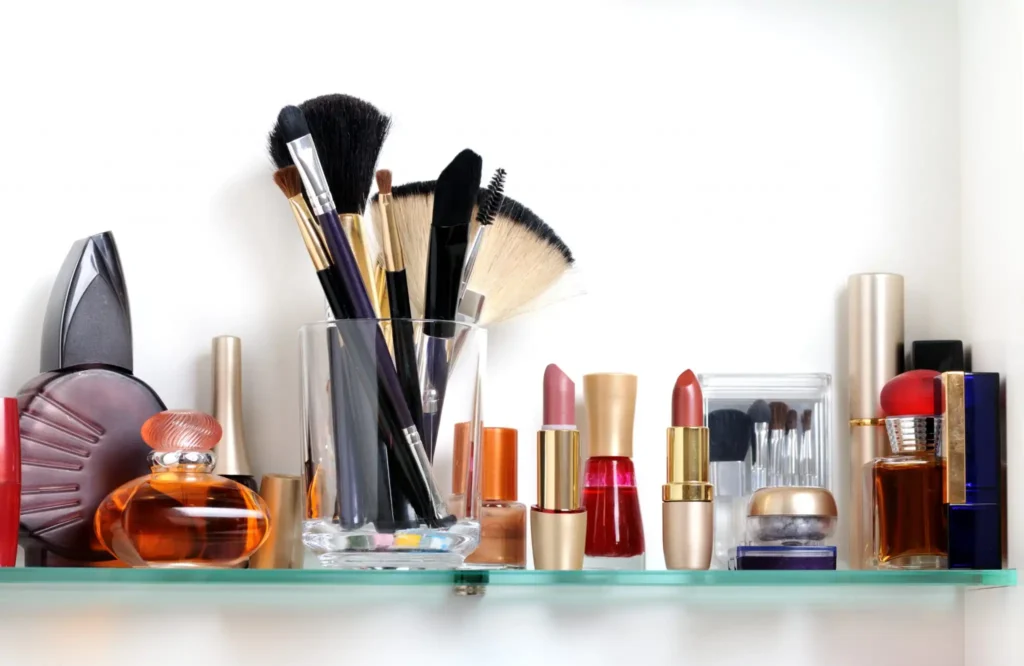
- Toothbrushes, razors, nail clippers, and combs: Almost universally, China-made for mainstream brands.
- Hair styling tools: Curling irons, straighteners, and hair dryers from everyday brands are almost all manufactured in China.
- Cosmetics packaging: Even premium beauty brands that do not manufacture in China typically use Chinese-made bottles, caps, compacts, and tubes.
- Skincare tools: Jade rollers, facial massagers, and LED therapy devices are primarily Chinese-manufactured.
Medical Supplies and Pharmaceuticals
The COVID-19 pandemic made this visible to a global audience. China is a critical supplier of personal protective equipment.
At the peak of demand, China was supplying roughly 50% of the world's face masks, gloves, and other PPE.
Beyond PPE, China is a dominant supplier of active pharmaceutical ingredients (APIs) used to manufacture vitamins and supplements globally.
The US National Institutes of Health has noted the concentration of API manufacturing in China as a supply chain consideration for the pharmaceutical sector.
- Vitamin C: China produces the majority of the world’s ascorbic acid supply used in supplements.
- Vitamin E: Similar situation — most raw ingredient production is China-based.
- Syringes and basic medical instruments
- Blood pressure monitors, pulse oximeters, and glucose meters
Food Products and Everyday Consumables
This is the category most people do not associate with Chinese manufacturing, but it is a real part of the picture.
Food Ingredients and Packaged Goods
- Garlic: China is the world’s largest garlic producer, accounting for roughly 80% of global supply. Much of the garlic powder and processed garlic on store shelves originates in China.
- Mushrooms: China produces and exports a huge volume of dried and processed mushroom products.
- Spices and seasonings: Ginger, star anise, cinnamon, and various spice blends are among China’s notable agricultural exports.
Tea
China is the world’s largest tea producer. According to the Food and Agriculture Organization of the United Nations (FAO), China accounts for over 40% of global tea production.
Whether you drink green tea, white tea, oolong, or pu-erh, it almost certainly came from China.
The 2025-2026 Tariff Impact — What is Getting More Expensive
The US-China trade relationship has been turbulent since 2018, and the 2025 tariff escalations put the issue front and center for businesses and consumers alike.
The Trump administration expanded tariffs on Chinese goods significantly in 2025. By June 2025, tariff rates on many Chinese electronics were sitting between 10% and 40%, depending on product classification.
Category-by-Category Tariff Impact
| Product Category | Tariff Exposure | Consumer Impact |
| Electronics | 10-40% (partial exemptions) | Moderate — some exemptions for phones/laptops |
| Clothing and footwear | High — most apparel affected | Price increases on basics and kids’ clothes |
| Toys and games | $30B category, heavily exposed | Major brands flagged price increases |
| Furniture and bedding | 5% to 198% depending on item | Significant increases on imported furniture |
| Baby gear | Most items still China-made | Limited alternatives; prices rising |
| Vaping products | ~90% made in Shenzhen | Steep price increases expected |
| Small appliances | Widely affected | Air fryers, microwaves, coffee makers |
The key reality here is that supply chain diversification takes years, not months. Shifting production from China to Vietnam, India, or Mexico requires factory setup, quality control infrastructure, and logistics networks.
For most product categories, Chinese manufacturing will remain dominant through at least 2027, regardless of tariff policy.
For businesses, the tariff environment makes supplier strategy more important than ever. Knowing exactly where your goods are made — and what tariff classification they fall under — directly affects your landed costs and profit margins.
What Your Home Would Actually Look Like Without Chinese Products

Here is a thought experiment. Walk through a typical morning and try to remove every item with a Chinese connection from the picture.
Your smartphone alarm would not go off — 78% of US phones come from China. You would have no kettle or coffee maker.
Your toothbrush would be gone. Getting dressed would be difficult since most affordable clothing depends on Chinese textiles or factories.
By the time you left for work, your house would look significantly emptier. Research and documentary projects have confirmed this in striking visual terms — removing Chinese goods from a typical home leaves behind a shell of furniture and very little else.
This is not a political statement. It is a reflection of three decades of supply chain integration. China built the infrastructure, the labor force, and the supplier ecosystems needed to produce almost anything at scale. That does not disappear overnight.
CHANGE Sourcing Insights: Sourcing Everyday Items Made in China the Right Way

| CHANGE Sourcing — Based in Yiwu and Guangzhou, China 18+ years of on-the-ground sourcing experience | 1,500+ clients served globally | End-to-end services from factory to your door |
Understanding that most everyday items come from China is the first step. The second step is knowing how to source them well. That is the part most guides leave out.
Not every factory producing the same category of goods delivers the same quality, compliance, or reliability. In Yiwu alone — where CHANGE Sourcing’s main office is located — there are thousands of suppliers for almost every product type.
Knowing which ones are worth working with requires being on the ground.
The Difference Between a Good and a Poor Chinese Supplier
- Verified manufacturers vs. trading companies: A factory can produce to your specification. A trading company adds a margin and may not have direct oversight of quality. Both have a role, but you need to know which you are dealing with.
- Certifications and compliance: Products entering Western markets must meet specific safety and regulatory standards. CE marking, ASTM compliance, RoHS, and others are not optional — they are legal requirements. Proper sourcing means checking these before you place an order.
- Factory audits: A pre-production visit or third-party inspection prevents problems that are expensive to fix once goods are shipped.
- Sample orders: Never skip this step for a new supplier relationship, regardless of how good the product images look on Alibaba.
How CHANGE Sourcing Works for Importers

CHANGE Sourcing operates as an end-to-end partner. Our team identifies verified suppliers, negotiates pricing, oversees quality inspections, and handles logistics from the factory floor to your warehouse.
We work across most of the product categories covered in this article — from consumer electronics and clothing to tools, baby gear, and home goods.
If you are looking to source any of the product categories listed here, you can start with a free consultation with our team.
We will identify the right suppliers for your needs, verify their credentials, and build a sourcing plan that fits your budget and timeline.
You can also browse our product sourcing categories or download our free step-by-step importing guide to get a clearer picture of how the process works end-to-end.
Frequently Asked Questions
Industry estimates suggest that 70 to 80% of consumer goods globally contain Chinese-made components or are wholly manufactured in China. China accounts for approximately 28% of all global manufacturing output according to World Bank data.
Consumer electronics is the largest single category. Machinery and mechanical appliances topped $82 billion in US imports from China in 2023, followed by electrical equipment (including smartphones and laptops) as the biggest combined category.
Several. Christmas ornaments — an estimated 70 to 80% of the global supply comes from Yiwu alone. Garlic powder and processed garlic — China accounts for roughly 80% of global garlic production. Vitamin C raw ingredients — the majority of the world’s ascorbic acid supply is Chinese-produced. Most PPE, including masks and medical gloves. And the vast majority of fashion jewelry is sold globally.
Very difficult in practice. Even products assembled in the US, EU, or Japan often contain components sourced from China. Achieving zero Chinese supply chain exposure requires significant effort, strict sourcing requirements, and higher costs. Some sectors, like defense procurement, have begun working toward this, but for everyday consumer goods, complete avoidance is not realistic.
Tariffs add a direct cost on imports. When US tariffs on Chinese goods increased in 2025, importers faced additional costs that were partly absorbed and partly passed to consumers as higher prices. The 2025 tariff rounds pushed rates on many categories to between 10% and 40%, with some furniture categories facing rates over 100%. China Briefing’s tariff tracker provides a current breakdown of applicable rates by product category.
Conclusion
The depth of Chinese manufacturing in everyday life is hard to overstate. From the device you are reading this on to the chair underneath you, the supply chain almost certainly passes through China at some point.
This is not likely to change in the short term. Building alternative manufacturing ecosystems in other countries takes years of investment and infrastructure development. For most product categories, China will remain the dominant global supplier through the rest of this decade.
If your business sources any of the categories covered here, CHANGE Sourcing can help you find the right suppliers, verify their quality, and build a reliable supply chain from China.
With 18 years of on-the-ground experience and offices in both Yiwu and Guangzhou, we have direct access to the factories producing the world’s everyday goods.
Get in touch for a free consultation and let us help you source smarter.