


To import goods from China to Saudi Arabia, register your business and set up a FASAH account. Check your product's HS code and SABER rules before you pay a supplier. Then verify the supplier, pick a shipping method, and match all your documents. A licensed broker files your declaration, and you pay duty and 15% VAT before release, so budget for taxes and fees, not only freight.
A low factory price can hide a costly problem. If one certificate is missing, your container can sit at the port for weeks. Storage fees add up, and your sales plan stops.
This guide shows you how to import goods from China to Saudi Arabia in the right order. You will learn which papers you need, how to check product rules, and how to find a safe supplier. You will also see how to pick a shipping method and how to work out your real cost with duty, VAT, and fees.
The rules in this guide come from Saudi government sources like ZATCA and SABER. Rules can change, so check the official page before you act. This guide was last updated in November 2026.
What Do You Need Before You Import Goods from China to Saudi Arabia?
To import goods for business, you need a valid commercial registration (CR), a VAT registration, a National Address, and a FASAH account.
Regulated products also need a SABER account. Most importers also hire a licensed customs broker to file the customs declaration for them.
Business Papers You Need

Start with your commercial registration. It must cover the type of goods you plan to import. Next, register for VAT with the Zakat, Tax and Customs Authority (ZATCA), and set up your National Address.
Some importers also join a chamber of commerce. Ask your broker if your business activity needs this.
Accounts and Platforms You Need
Open a FASAH account. This is the platform where customs declarations are filed. If your product falls under a Saudi technical rule, open a SABER account too.
Your broker must also be licensed and authorized for the port where your goods arrive. You can read how this works on the ZATCA broker authorization page.
Can an Individual Import Without a CR?
Yes, but only for small personal orders. ZATCA says purchases from online stores must be under 1,000 riyals in total value, including shipping and insurance. No clearance permission is needed for these orders.
If you plan to resell the goods, set up your business papers first.
How Do You Check Product Rules Before Paying a Supplier?
Find your product’s HS code first. Then check it on SABER and with other agencies like SFDA. Regulated goods need a Product Certificate of Conformity before shipping, and a Shipment Certificate for each order. Do all of this before you send any deposit to a supplier.
Step 1: Find Your HS Code
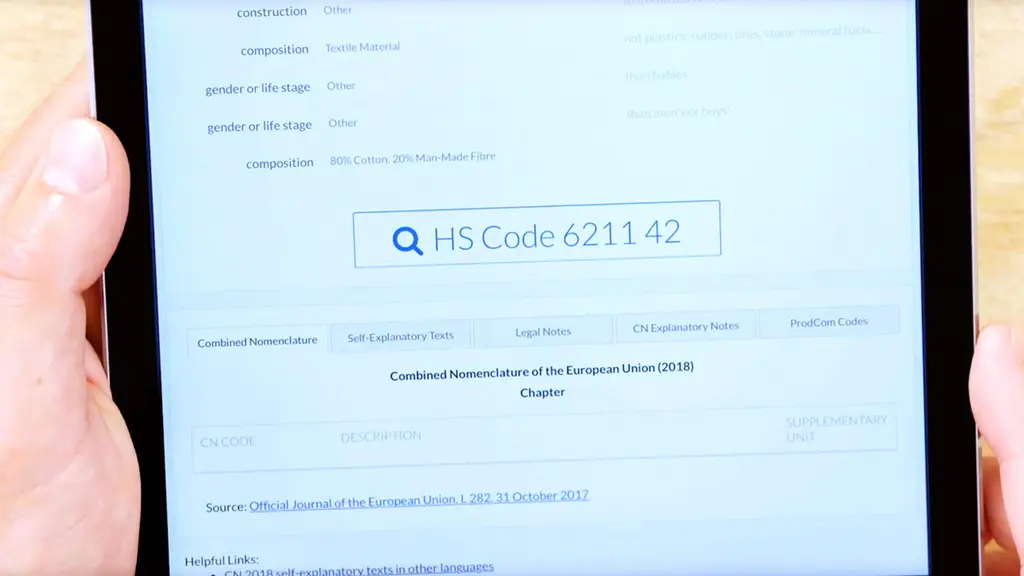
The HS code decides your duty rate and any extra rules. Search for it with the ZATCA tariff inquiry service. Your supplier may give you a code, but always confirm it yourself.
A wrong code can cause delays, a different duty rate, or extra checks.
Step 2: Check SABER Certificates
SABER is the online system run by the Saudi Standards, Metrology and Quality Organization (SASO). It is linked to FASAH.
Regulated products need a Product Certificate of Conformity (PCoC) from an approved testing body. Then each shipment needs a Shipment Certificate of Conformity (SCoC). Other products usually need a self-declaration and a shipment certificate.
SABER warns that missing certificates can lead to a shipment being sent back. Get the product certificate before the goods leave China. The testing body may ask the factory for reports or changes, and that is hard to fix after the ship sails.
What Do the Certificates Cost?
SABER lists its own fees, and the testing body charges separately. Check both before you set your budget.
Step 3: Check Other Agencies and Labels
Some goods need approval from another agency. Food, cosmetics, and medical devices usually go through the Saudi Food and Drug Authority (SFDA). Some products also need Arabic text or energy labels on the item itself.
| Product Type | Usually Checked By | What to Check First |
|---|---|---|
| Electronics and appliances | SASO through SABER | Test reports for your exact model |
| Food, cosmetics, medical devices | SFDA | Product approval or registration |
| Toys and children’s products | SASO through SABER, in many cases | Certificate for your HS code |
| Building materials | SASO through SABER | Product certificate before shipping |
| Clothing and textiles | Depends on the HS code | Labels and origin marking |
Use this table as a starting point. Your HS code gives the final answer.
How Do You Find and Verify a Supplier in China?

Search on trusted platforms like Alibaba or 1688 and shortlist at least five suppliers. Ask each one for samples, check their business license, and sign a clear written contract. Place a small trial order first, and inspect the goods before they ship.
Where to Find Suppliers
Alibaba is the easiest place to start. It works in English and offers buyer protection tools like Trade Assurance. 1688 is a Chinese wholesale site with often lower prices, but it is in Chinese, so most foreign buyers need help.
You can also try Made-in-China and Global Sources. Another option is the Canton Fair, where you meet factories face to face.
How to Check a Supplier is Real
Check the Business License
Ask for the business license. Then look the company up on China’s National Enterprise Credit Information Publicity System. Check the company name, status, and business scope. The scope should match the goods you want.
Ask for Samples and Test Reports
Order samples of the exact model you plan to buy. Ask for test reports that match that model. You will need them for your SABER certificate.
Inspect Before Shipping
A pre-shipment inspection checks quality, quantity, and packing at the factory before goods leave. It costs little compared to a bad shipment arriving in Saudi Arabia.
Tip: Pay a small deposit only. Pay the balance after you approve the inspection report.
How Do You Choose the Right Shipping Method and Incoterm?
Use express for samples, air freight for urgent or high-value goods, LCL for small loads, and FCL for large loads. Pick an Incoterm like FOB so you control the freight. Always collect at least three quotes, because prices change with season and route.
Which Incoterm Works Best?
An Incoterm decides who pays for freight and insurance and who carries the risk. It also changes your customs value, because duty is based on the value including freight and insurance.
- FOB: The supplier loads the goods on the ship at the Chinese port. You pay freight and insurance, and you choose the shipping line. This is a common choice.
- EXW: You collect the goods at the factory and handle everything else. This needs a strong forwarder in China.
- CIF: The supplier pays freight and insurance to the Saudi port. It is simple, but check the port charges at the destination.
- DDP: The seller delivers the goods with duties paid. Always ask who files the customs declaration and in whose name.
Which Shipping Method Fits Your Cargo?
| Method | Best For | Rough Time | Watch Out For |
|---|---|---|---|
| Express courier | Samples and small parcels | 3 to 7 days | High cost per kilo |
| Air freight | Urgent or high-value goods | About 1 to 2 weeks | Cost rises with weight |
| LCL (shared container) | Small and medium loads | About 4 to 7 weeks | Other shippers’ papers can slow release |
| FCL (full container) | Large loads | About 3 to 6 weeks | Port free time and storage fees |
These times are rough. Direct sailings are faster than routes with a transfer, and peak seasons add delays. Your forwarder’s quote should show the real schedule.
Which Saudi Port Should You Use?
Two common entry points are Jeddah Islamic Port on the Red Sea and King Abdulaziz Port in Dammam on the Gulf. You can find port details on the Saudi Ports Authority website. Choose the port closest to your warehouse to save on trucking.
What Documents and Customs Steps Do You Need?

You need a commercial invoice, a packing list, and a bill of lading or air waybill. Add a certificate of origin if the origin is not clearly marked, plus SABER certificates for regulated goods.
A licensed broker then files your declaration on FASAH, and you pay duty and VAT before release.
Core Documents
- Commercial invoice: Put it in the importer’s name. Describe each item clearly with material, model, use, quantity, price, Incoterm, and origin.
- Packing list: Show packages, weights, and volumes. These must match the invoice.
- Bill of lading or air waybill: The consignee must match the CR registered on FASAH.
- Certificate of origin: The ZATCA import guidance says it is not required when the origin is clearly marked on the goods. Many importers still ask for one to avoid questions.
- SABER certificates: Needed for regulated goods.
- Other approvals: Some products need SFDA or other agency approval.
Names, quantities, weights, and descriptions must match on every document. Ask your supplier for draft papers before shipping and send them to your broker. Fixing a paper in China takes a day. Fixing it at the port can cost days of storage fees.
How Customs Clearance Works
- Your forwarder sends an arrival notice. Pass the shipping documents to your broker right away.
- The broker checks your HS code, value, and SABER certificates. Then the broker files the declaration on FASAH. Filing before the ship arrives can save time.
- Duty and VAT are worked out and paid online.
- Customs may pick your cargo for inspection or X-ray. Your broker answers any questions.
- After release, you collect the delivery order from the shipping line, pay port charges, and truck the goods to your warehouse.
How Much Does It Cost to Import Goods from China to Saudi Arabia?
Your total cost is the goods plus freight, insurance, customs duty, 15% VAT, a small ZATCA service fee, and local costs. Duty and VAT use the CIF value, which means goods plus freight plus insurance. Many goods carry a 5% duty, but your HS code sets the real rate.
The ZATCA Service Fee
ZATCA charges a customs service fee of 0.15% of the goods’ value, including insurance and shipping. The minimum is 15 riyals and the maximum is 500 riyals. There is a special cap of 130 riyals for shipments exempt from customs duties.
Small online orders from individuals pay a flat 15 riyals when the value is under 1,000 riyals.
A Worked Cost Example
Here is an example for one business shipment. It uses the riyal’s fixed rate of 3.75 per US dollar, which is set by the Saudi Central Bank. The 5% duty rate is only an example, so check your own HS code.
| Item | Amount (USD) |
|---|---|
| Goods from supplier | 10,000.00 |
| Freight | 1,500.00 |
| Insurance | 100.00 |
| CIF value | 11,600.00 |
| Customs duty at 5% | 580.00 |
| VAT at 15% on CIF plus duty (12,180) | 1,827.00 |
| ZATCA service fee at 0.15% of CIF | 17.40 |
| Total duty, VAT, and fee | 2,424.40 |
| Landed cost before port, broker, and trucking | 14,024.40 |
In this example, taxes and fees add about 24% to the goods price. Port charges, broker fees, and trucking come on top.
VAT-registered businesses can often claim back import VAT. Ask your tax advisor how this works for your business.
What Mistakes Delay Shipments from China to Saudi Arabia?
The most common mistakes are vague invoice descriptions, wrong HS codes, missing SABER certificates, and mismatched consignee names.
Each one can hold your container at port and add storage charges. Review draft documents with your broker before the goods ship.
Paperwork Mistakes

- Vague descriptions like “spare parts” or “home items” can trigger questions and delays.
- Invoice values that do not match the real price can lead to extra duty or penalties.
- A consignee name on the bill of lading that differs from the CR on FASAH can block clearance.
- A wrong HS code can change your duty and your certificate needs.
Planning Mistakes
- Shipping before the SABER product certificate is ready.
- Mixing many product types in one LCL shipment, so one item holds up the rest.
- Skipping the factory inspection.
- Using DDP without knowing who clears the goods and in whose name.
- Ignoring holidays like Chinese New Year and Eid, which slow factories and shipping.
Import Goods from China to Saudi Arabia with Change Sourcing

CHANGE Sourcing is a China-based sourcing partner with offices in Yiwu and Guangzhou. The team finds and checks suppliers, inspects orders in the factory, and supports freight and logistics. This lets you handle the whole China side with one team.
What Our Team Does on the China Side
With 18+ years of experience, we help importers source products, check suppliers, and ship with confidence. Our inspection teams work directly in factories to check product quality, certifications, and compliance. This matters for Saudi orders, because certificates and test reports must match your exact product.
We also support freight forwarding and customs clearance on the logistics side. You still need a licensed broker in Saudi Arabia to file your declaration on FASAH.
How to Reach Us

Our head office is on the 11th Floor, Building 4, Zhongfu Plaza, Financial District, Yiwu City. Our branch office is in Room 2617-2618, South Tower, World Trade Center, 371-375 Huanshi East Road, Guangzhou.
Send your product details on WhatsApp for a free quote. You can also email contact@change-sourcing.com or visit here.
Frequently Asked Questions

Do I need a license to import goods from China to Saudi Arabia?
Businesses need a valid commercial registration that covers the import activity, a FASAH account, and usually a licensed customs broker. Individuals can buy small orders from online stores if the total is under 1,000 riyals. Rules differ by product, so check with ZATCA before you order.
How long does shipping from China to Saudi Arabia take?
Express takes about 3 to 7 days, and air freight takes about 1 to 2 weeks. Sea freight usually takes 3 to 7 weeks, depending on the route, port, and season. Customs clearance adds more time, so ask your forwarder for a full schedule.
How much customs duty do you pay on goods from China?
There is no single rate. Duty depends on the HS code, and many goods carry 5% on the CIF value. VAT of 15% is then charged on the value plus duty. Use the ZATCA tariff service to check your product.
What is SABER, and do all products need it?
SABER is the Saudi online system for product conformity certificates. Regulated products need a product certificate and a shipment certificate. Other products usually need a self-declaration and a shipment certificate. Check your HS code on SABER before you ship.
What is the cheapest way to ship from China to Saudi Arabia?
Sea freight is usually the cheapest for large or heavy cargo. Use a full container for big loads and LCL for smaller ones. Air and express cost more per kilo but are faster. Compare at least three quotes and include all port charges.
Final Thoughts
To import goods from China to Saudi Arabia, get your business papers ready, check your product rules, and verify your supplier. Then choose the right Incoterm, match your documents, and plan your full landed cost. Most delays come from missing certificates and mismatched paperwork, so fix those before you ship.
Your next step: look up your product’s HS code on the ZATCA tariff tool today, then check it on SABER before you pay any supplier.
You might also like to read: