

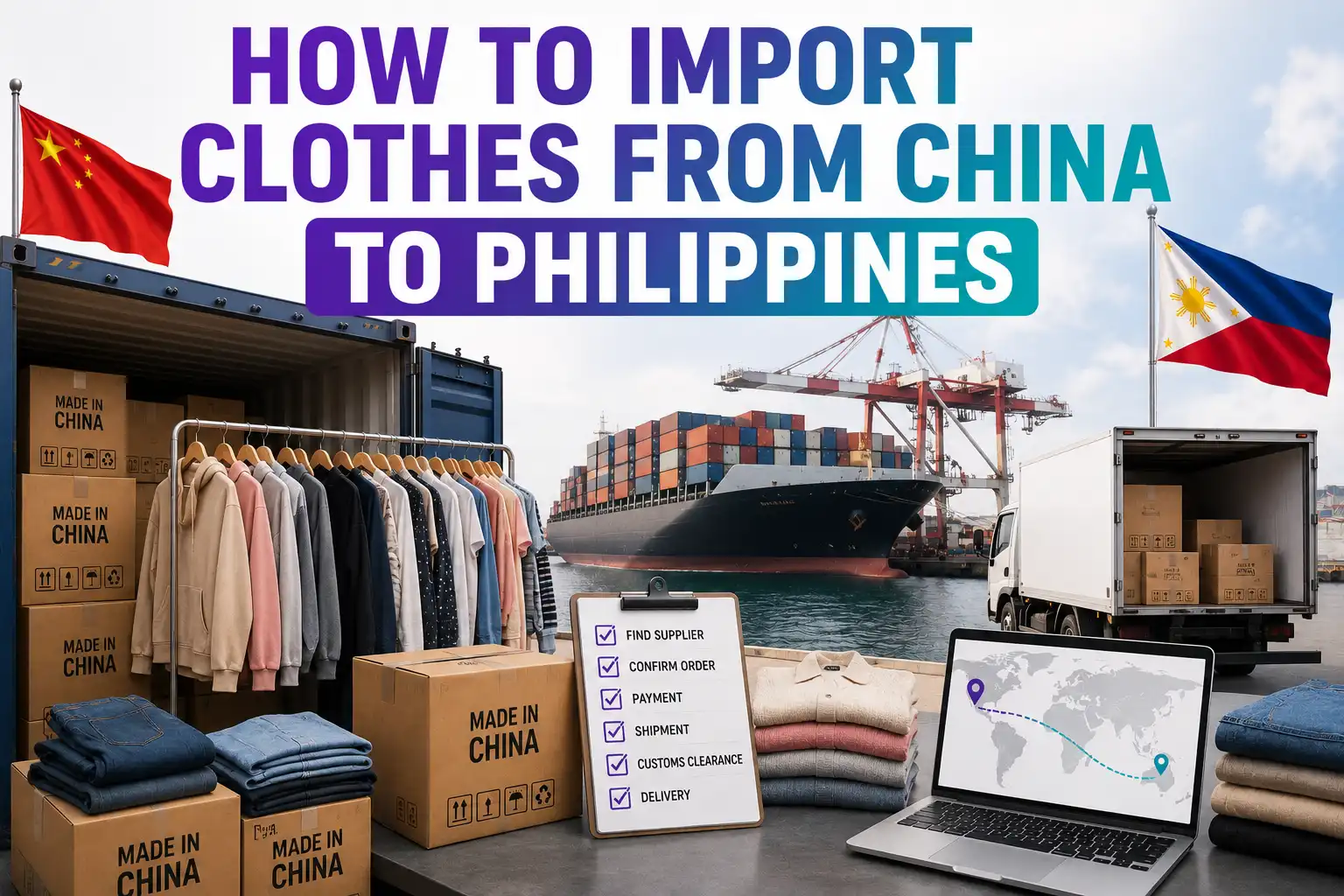
To import clothes from China to the Philippines, register your business with DTI, BIR, and BOC; source suppliers from Guangzhou wholesale markets or platforms like Alibaba or 1688.com; place an order under FOB terms; ship by sea to Manila or Cebu (5 to 10 days transit); prepare customs documents including a Form E Certificate of Origin; and clear goods at BOC under HS Chapter 61 or 62 with 0% duty under ACFTA plus 12% VAT. Most first-time importers complete the full process in 30 to 45 days.
China supplies more than 36% of all clothing exports globally, according to the WTO. For Philippine entrepreneurs and resellers, that means access to the world’s widest clothing selection at wholesale prices — often 60 to 70% below what local distributors charge.
But learning how to import clothes from China to Philippines is not as simple as placing an order online. There are registration requirements, specific HS codes, a critical used-clothing restriction, and duty rules that most first-time buyers get wrong.
This guide covers the full process, from where to find reliable suppliers in China to clearing customs at Manila’s port — so you can start your first order with confidence.
Is It Worth Importing Clothes from China to the Philippines?
Yes. Chinese wholesale clothing costs 60 to 80% less than comparable locally sourced stock. The Philippines’ active reseller economy on Shopee and Lazada makes apparel one of the most reliably profitable import categories you can start with.
China exports over $157 billion in clothing annually, giving Philippine buyers access to an enormous range of styles, fabrics, and price points.
Clothing is consistently one of the top-selling categories on both major Philippine e-commerce platforms.
Here is a quick margin example to show why this works. A woman’s dress sourced in Guangzhou for $3 to $5 USD retails for PHP 300 to 700 in the Philippines. Even at a 50% sell-through rate on a first LCL shipment of mixed clothing, you can still see a 2x to 3x return on your cost.
2026 is also a good time to start. Freight routes between China and the Philippines are stable, ACFTA eliminates most clothing duties (more on that below), and demand for affordable fashion continues to grow.
You might also like to read: Top 8 Fast Selling Products to Import from China in 2026
What Do You Need to Set Up Before Importing Clothes from China?
Before your first shipment arrives, you need three registrations: a DTI or SEC business registration, a BIR Import Clearance Certificate, and an active account in the Bureau of Customs’ Client Profile Registration System (CPRS).
Do You Need a Business Registration to Import Clothes in the Philippines?
Yes. The Bureau of Customs (BOC) only releases commercial clothing shipments to registered importers. A sole proprietor registers with the DTI Business Name Registration System. Corporations register with the SEC. Both must be completed before applying for BIR and BOC accreditation.
DTI registration costs PHP 500 to 2,000, depending on the scope, and takes 2 to 5 working days online.
Your BOC CPRS account costs approximately PHP 1,000 to renew annually, and processing takes up to 15 working days the first time.
What is an Import Clearance Certificate, and Do You Need One?
Yes, you need one. The Bureau of Internal Revenue (BIR) issues an Import Clearance Certificate (ICC) to all commercial importers. It confirms your business is tax-compliant and is a prerequisite for BOC importer accreditation.
You apply for it after your DTI or SEC registration, and your TIN is in order. The sequence is simple: DTI or SEC first, then BIR, then BOC. Do not skip any step in that order, or your BOC application will be rejected.
Where Can You Buy Wholesale Clothes in China for Import?
The best options for Philippine buyers are Guangzhou’s wholesale clothing markets — specifically Shisanhang and Shahe for affordable women’s fashion — and online B2B platforms like 1688.com and Alibaba.com for buyers who cannot travel to China.
Which Guangzhou Clothing Markets are Best for Philippine Buyers?
Shisanhang and Shahe wholesale districts are the two most popular sourcing destinations for Southeast Asian buyers.
Many Filipino importers shop here regularly because of the competitive pricing and wide variety of women's and casual fashion styles.
Here are the four main markets worth knowing:
- Shisanhang Clothes Wholesale Market — Mid-range and affordable women’s fashion, Korean and Japanese-influenced styles. Very popular with Southeast Asian buyers. Take Metro Line 6 to Cultural Park Station, Exit D.
- Shahe Wholesale District — Largest cluster by volume, best for budget fashion, jeans, and basic items. Take Metro Line 1 to Shahe Station.
- Baima Clothing Wholesale Market — Mid-to-high end women’s wear, more organized layout, good for boutique buyers. Located at No. 16 Zhannan Road, near Guangzhou Railway Station.
- Liuhua Fashion Wholesale Market — Foreign trade focus, caters specifically to international buyers, closest to Guangzhou Railway Station.
Most markets open at 8:00 to 8:30 AM and operate on a wholesale-only basis. Minimum orders per style typically range from 3 to 12 pieces, depending on the supplier.
Can You Source Wholesale Clothes from China Without Visiting?
Yes, absolutely. 1688.com and Alibaba.com are the two main online options. 1688 offers factory-direct pricing and lower MOQs, but the entire platform is in Chinese. Most Philippine buyers use a sourcing agent to navigate it effectively.
Alibaba is the better starting point if you are buying independently. It operates in English and offers Trade Assurance payment protection, which covers you if goods are not as described.
The Gold Supplier filter is a useful first screen when evaluating sellers.
The Canton Fair (Canton Fair Complex, Guangzhou) is another strong option for buyers planning large or multi-category orders.
The Spring session runs from April to May, and the Autumn session runs from October to November.
One important note: AliExpress is a retail platform, not a wholesale one. It is not suitable for commercial import volumes.
You might also like to read: How to Find a Sourcing Agent in China: Complete Step-by-Step Guide (2026)
What Types of Clothes Can and Cannot You Import to the Philippines?

Most new clothing can be imported freely. However, the Philippines has a strict prohibition on importing used or secondhand clothing, and counterfeit branded goods are seized at customs and result in serious legal penalties.
Is Importing Used Clothes (Ukay-Ukay) from China Legal in the Philippines?
No. The importation of used clothing and rags is explicitly prohibited under the Philippines’ Customs Modernization and Tariff Act (CMTA).
Shipments of secondhand clothing are seized and destroyed by BOC, and importers face fines and potential criminal charges.
This applies regardless of whether the goods are labeled as “vintage,” “thrift,” or “surplus.” Ukay-ukay sold locally is typically smuggled — it is not a legal import activity for commercial buyers. Any supplier who claims they can help you import used clothing legally is a serious red flag.
Are There Any Other Restricted Clothing Categories?
Yes. Counterfeit branded clothing — fake Nike, Gucci, and similar items — is prohibited under the Intellectual Property Code of the Philippines and will be confiscated by BOC. Clothing containing certain chemical treatments or dyes may also require additional BOC Laboratory testing before release.
What are the Duties and Taxes on Importing Clothes from China to the Philippines?
Under the ASEAN-China Free Trade Agreement (ACFTA), most clothing from China qualifies for 0% import duty in the Philippines — but only if you present a valid Form E Certificate of Origin. Without Form E, the standard MFN duty on garments is 10% to 20% of CIF value.
You might also like to read: Import Tax from China to Philippines: Rate & Real Examples (2026)
What HS Codes Apply to Imported Clothing in the Philippines?
Clothing falls under HS Chapter 61 (knitted or crocheted garments like T-shirts and sweaters) or Chapter 62 (woven garments like trousers, shirts, and dresses). The specific code depends on garment type, fabric composition, and intended user.
Always verify your exact code on the Philippine Tariff Commission finder before filing. Wrong classification means wrong duty rates and possible BOC penalties.
| Garment Type | HS Chapter | Example HS Code |
|---|---|---|
| T-shirts, sweaters, knitwear | Chapter 61 | 6109.10 (cotton T-shirts) |
| Trousers, dresses, shirts (woven) | Chapter 62 | 6204.62 (women’s trousers) |
| Women’s dresses (woven, cotton) | Chapter 62 | 6204.42 (cotton dresses) |
| Children’s garments (knitted, cotton) | Chapter 61/62 | 6111.20 |
What is the Form E Certificate of Origin, and Why Does It Matter for Clothing?
Form E is the Certificate of Origin used under ACFTA. If your Chinese supplier provides a valid Form E, your clothing shipment enters the Philippines at 0% customs duty instead of the standard 10% to 20% MFN rate.
On a $10,000 clothing shipment, that is a saving of $1,000 to $2,000 in duty alone.
Form E is issued by your Chinese supplier through the China Council for the Promotion of International Trade (CCPIT) or local chambers of commerce.
It must be submitted to BOC as part of your customs entry. BOC has increased its scrutiny of Form E authenticity in 2026, so always verify the certificate is genuine before your shipment departs China.
What Does the Total Landed Cost Look Like for Clothing Imports?
Landed cost equals: CIF value + customs duty + 12% VAT on CIF + BOC processing fee + customs broker fee. Here is a worked example based on a $5,000 CIF clothing shipment:
| Cost Item | Amount |
|---|---|
| CIF value | $5,000 (approximately PHP 280,000 at 56 PHP/USD) |
| Customs duty (with valid Form E) | PHP 0 (0% under ACFTA) |
| 12% VAT on CIF | PHP 33,600 |
| BOC processing fee | PHP 2,000 |
| Customs broker fee | PHP 5,000 |
| Total additional cost | PHP 40,600 (approximately 14.5% on top of CIF) |
This means on a well-managed clothing import, your total landed cost is roughly 14 to 15% above your CIF value, which is very manageable given the retail margins available in the Philippine market.
What Documents are Required to Import Clothes to the Philippines?
You need six core documents: commercial invoice, packing list, bill of lading, Form E Certificate of Origin, a Goods Declaration filed via BOC’s ACOS system, and your BOC importer accreditation number on file.
- Commercial Invoice — Must state garment type, fabric composition, unit price, quantity, HS code, and CIF value in USD.
- Packing List — Must match the invoice exactly. List by carton, quantity per carton, and gross weight.
- Bill of Lading (B/L) — Required for cargo release at Manila International Container Terminal (MICT) or Cebu International Port.
- Form E Certificate of Origin — Issued by your Chinese supplier via CCPIT. Mandatory to claim 0% ACFTA duty.
- Goods Declaration — Filed via BOC’s ACOS system before arrival. Your customs broker handles this.
- Importer Accreditation Number — Your BOC CPRS registration must be active and in good standing.
Important note on garment labeling: Clothing sold in the Philippines must indicate fiber content, country of origin (“Made in China”), and care instructions. While BOC does not always check this at clearance, garments sold without proper labeling violate Philippine consumer protection rules under the Consumer Act of the Philippines.
What is the Step-by-Step Process to Import Clothes from China to the Philippines?
The process has 8 steps: business registration, supplier sourcing, sample order, purchase contract, pre-shipment inspection, sea freight booking, BOC customs clearance, and inland delivery. Here is how each one works.
Step 1: Complete Your Business and Importer Registration
Register with DTI (sole proprietor) or SEC (corporation), obtain your BIR Import Clearance Certificate, and create your BOC CPRS account. Allow 3 to 4 weeks for this process the first time you do it.
Step 2: Source and Shortlist Suppliers
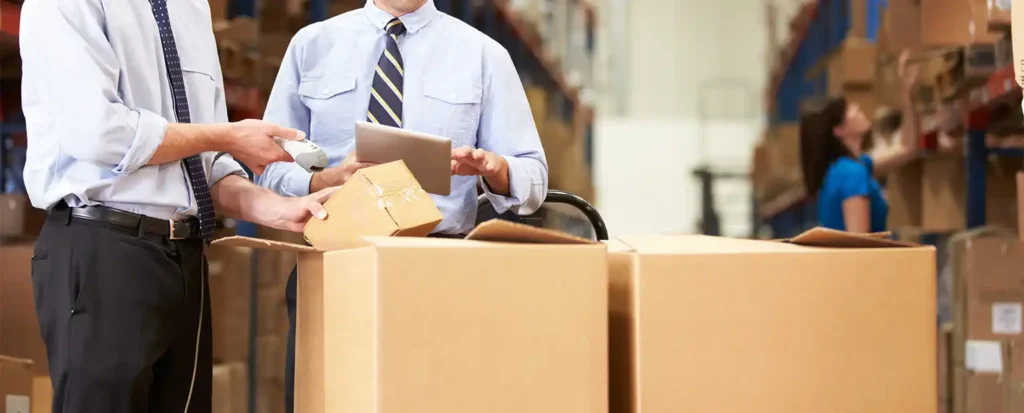
Visit Guangzhou wholesale markets or browse Alibaba.com or 1688.com. Shortlist 3 to 5 suppliers per clothing category. Verify their business licenses, export history, and ask for product photos before committing to anything.
Step 3: Order Samples Before Bulk
Order 3 to 10 pieces per style before committing to a container. Samples reveal fabric quality, stitching consistency, actual sizing, and color accuracy.
One critical detail: Chinese garment sizing typically runs 1 to 2 sizes smaller than what Philippine buyers and their customers expect. Factor this into your order and size labeling from day one.
Step 4: Negotiate and Sign a Purchase Contract
Confirm garment specs (fabric, weight, size run), price in USD, Incoterms (FOB is recommended for first-time buyers), and payment terms.
A common structure is 30% deposit and 70% before shipment via T/T bank transfer, or Alibaba Trade Assurance for added buyer protection.
Step 5: Pre-Shipment Inspection
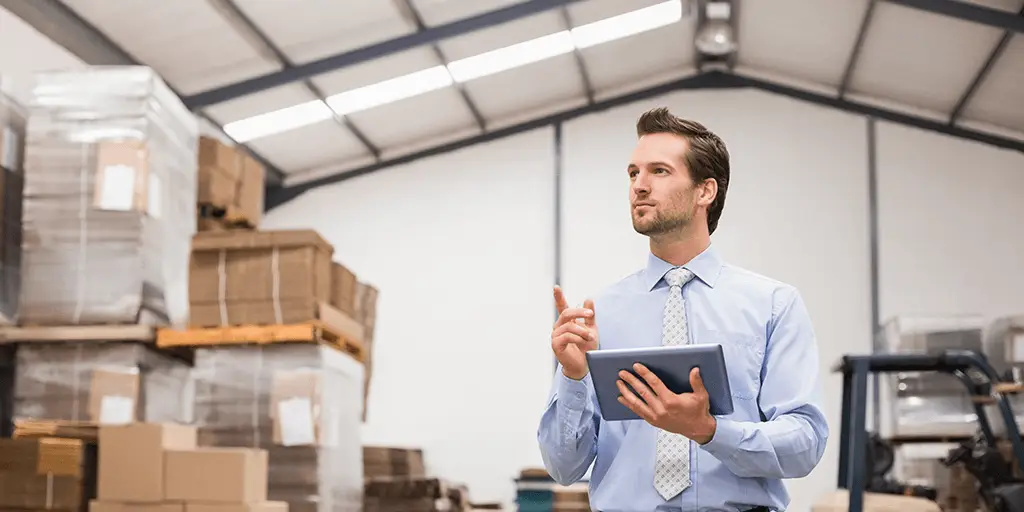
Hire an independent inspector to check the finished goods before they leave China. For clothing, the key checks are stitch count, color consistency across the batch, correct labeling, and quantity verification per carton. Catching problems before shipment saves you time, money, and a customs dispute.
You might also like to read: What is the Purpose of Pre-Shipment Inspection in Shipping?
Step 6: Book Sea Freight to Manila or Cebu
For most buyers, sea LCL (Less than Container Load) is the right entry point for first orders of 1 to 5 CBM. Transit time from Guangzhou or Shenzhen to Manila runs 5 to 10 days.
For buyers in the Visayas, Cebu International Port is faster and avoids Manila's trucking bottlenecks.
Step 7: File Goods Declaration Pre-Arrival
Your customs broker files the Goods Declaration via BOC’s ACOS system before the vessel arrives in the Philippines. Attach all six required documents.
Pre-arrival processing significantly reduces clearance time and minimizes your risk of demurrage fees while containers sit at the port.
Step 8: Pay VAT, Release, and Deliver
Pay 0% duty plus 12% VAT (assuming you have a valid Form E). Once BOC releases the cargo, arrange last-mile delivery from MICT Manila or Cebu port to your warehouse or sorting area.
Your shipment is now in the Philippines and ready to sell.
How Change Sourcing Helps You Import Clothes from China to the Philippines
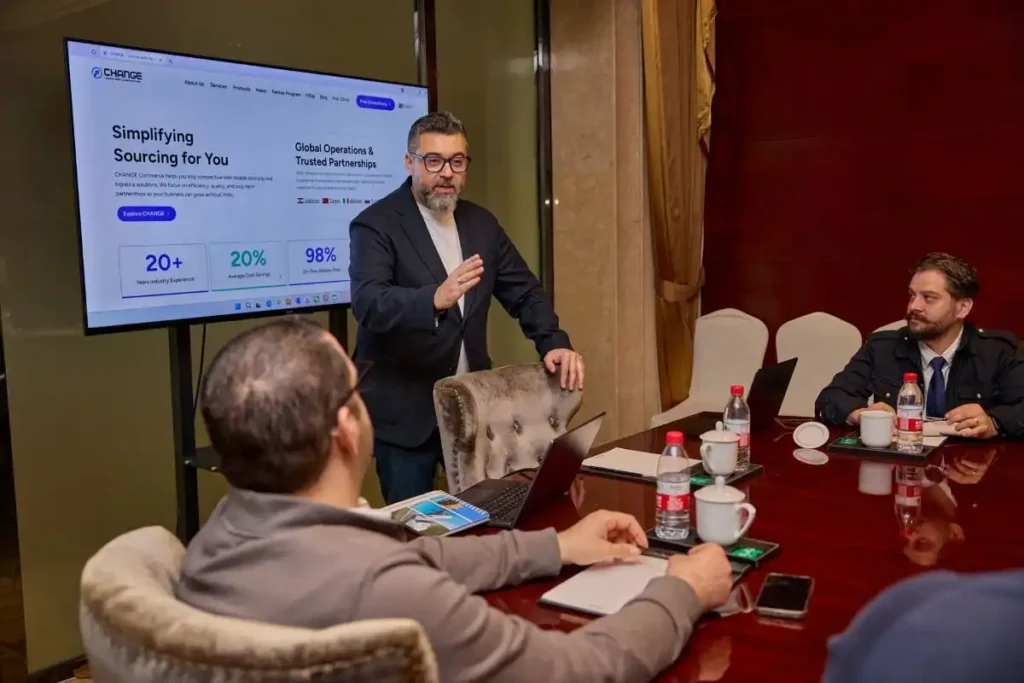
Change Sourcing is a China-based sourcing company with offices in Guangzhou and Yiwu that helps Philippine clothing buyers find verified suppliers, arrange pre-shipment inspections, and coordinate freight — without the buyer needing to travel to China.
The team handles factory and wholesale market vetting across Guangzhou’s apparel districts, including Shisanhang, Shahe, and Baima.
They coordinate sample orders, conduct quality inspections during production, and manage freight booking on the China-Philippines lane.
For first-time importers especially, having local support on the ground in China removes the biggest risks: unverified suppliers, quality surprises, and incorrect documentation.
Change Sourcing also provides guidance on Form E procurement, which directly affects your duty savings at BOC. With 18+ years of experience and over 1,500 clients served, the team understands the specific requirements of Philippine importers.
Contact Change Sourcing for a free consultation and get your first clothing shipment planned the right way.
Frequently Asked Questions
Under ACFTA, with a valid Form E Certificate of Origin, clothing from China enters the Philippines at 0% customs duty. Without Form E, the standard MFN rate is 10% to 20%. The 12% VAT applies in both cases on the CIF value of your shipment.
No. The importation of used clothing and rags is explicitly prohibited under the Philippine CMTA. Secondhand clothing shipments are seized and destroyed by BOC, and importers face fines and potential criminal charges regardless of how the goods are labeled.
Yes. You must have a DTI or SEC business registration, a BIR Import Clearance Certificate, and an active BOC importer accreditation before importing commercial quantities of clothing. All three are required and must be completed in that sequence.
Sea freight from Guangzhou or Shenzhen to Manila takes 5 to 10 days. Door-to-door, including production lead time, pre-shipment inspection, and customs clearance, typically runs 30 to 45 days for a first order.
Online, some suppliers on 1688.com and Alibaba accept orders as low as 3 to 5 pieces per style. For sea LCL shipments, the practical minimum is around 1 CBM, which is roughly 100 to 200 garments. Most wholesale market suppliers in Guangzhou require 6 to 12 pieces per style as a minimum order.
Conclusion
Importing clothes from China to the Philippines is one of the most accessible business opportunities available to Filipino entrepreneurs in 2026.
The combination of China’s unmatched wholesale supply, the ACFTA 0% duty benefit, and the Philippines’ thriving e-commerce reseller market makes apparel a category with strong, repeatable margins.
The process itself is straightforward once you understand it. Register your business properly through DTI, BIR, and BOC. Source from verified Guangzhou wholesale markets or platforms like Alibaba and 1688.
Always order samples before bulk, always get a Form E from your supplier, and always work with a licensed customs broker for clearance.