

To import solar panels from China to the Philippines, you need to: find a verified Chinese supplier, confirm IEC certifications, place an order under FOB terms with a 30/70 T/T payment structure, arrange sea freight to Manila (5 to 10 days transit), prepare seven BOC documents including a Form D certificate of origin, and clear customs under HS Code 8541.40 at 0% duty plus 12% VAT. Most first-time importers complete the full cycle in 30 to 45 days.
The Philippines is one of the fastest-growing solar markets in Southeast Asia right now. According to Ember’s May 2026 report, the country imported over 4 GW of Chinese solar panels in just the first four months of 2026 alone. That is more than the total installed capacity just two years ago.
The reason is simple. Meralco retail electricity prices rose 17% year-on-year by May 2026, making residential solar payback periods drop to just 3.1 years. Businesses and distributors who know how to import solar panels from China to the Philippines directly are locking in serious cost advantages.
This guide walks you through the entire process step by step. From finding the right supplier in China to clearing customs at Manila’s MICT and arranging inland delivery, you will have a clear, actionable roadmap by the end.
Why are Filipino Businesses Importing Solar Panels from China?
China manufactures over 80% of the world’s solar panels and can deliver them at 20 to 30% lower cost than other sourcing markets. For Philippine importers and distributors, that price gap translates directly into better margins and more competitive pricing.
The scale of China’s solar manufacturing is hard to overstate. Annual production capacity now exceeds 850 GW according to the International Energy Agency (IEA).
That means Chinese factories can accommodate any order size, from a 20-panel sample to a full utility-scale project, without breaking a sweat.
For Filipino buyers specifically, the economics have never looked better. Ember’s latest data shows the payback period for commercial rooftop solar in the Philippines has dropped to 2.3 years in 2026.
Importing directly from China is the most direct way to get the cost structure that makes those returns possible.
In 2025 alone, 448 active Philippine companies were importing solar panels from China. That number is growing fast.
You might also like to read: Import Tax from China to Philippines: Rate & Real Examples (2026)
What Type of Solar Panels Should You Import for the Philippines?
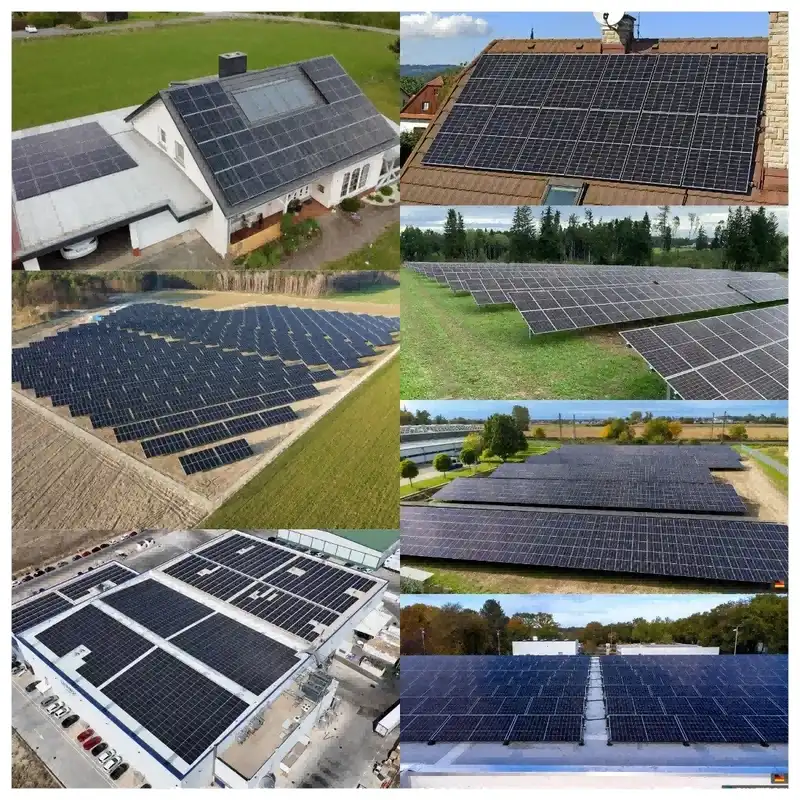
For the Philippine climate, monocrystalline TOPCon or bifacial panels are the best choice. The country averages 4.5 to 5.5 peak sun hours daily with high ambient temperatures, and these panel types are designed to handle both efficiently.
Which Panel Technology Performs Best in Philippine Heat?
TOPCon and HJT panels have the lowest temperature coefficients of any mainstream panel type. The temperature coefficient measures how much a panel’s output drops for every degree above 25°C.
HJT panels achieve as low as -0.26%/°C, compared to -0.35%/°C for standard PERC panels.
In practical terms, on a 40°C rooftop in Manila, an HJT panel loses about 3.9% output from heat. A standard PERC loses 5.25%. Across a 25-year lifespan, that difference adds up to real money.
Here is a quick breakdown of panel types relevant to Philippine buyers:
- Monocrystalline TOPCon: Best for residential rooftops. Good efficiency, competitive pricing, and performs well in heat.
- Bifacial: Best for ground-mounted commercial and industrial installations. Captures reflected light from below for extra output.
- HJT (Heterojunction): Highest efficiency at 22 to 24%, lowest temperature coefficient. Best for commercial projects where rooftop space is limited.
- Standard PERC: Most affordable entry point, still widely used, but loses more efficiency in high-heat conditions.
What Wattage Should You Import for the Philippine Market?
550W to 600W panels offer the best balance of container efficiency, market demand, and installation flexibility for Philippine buyers.
Higher wattage means fewer panels per container, which brings the freight cost per watt down.
A standard 40HQ container holds approximately 600 to 720 panels at 550W to 600W, depending on packaging. That works out to roughly 330 to 432 kilowatts of capacity per container. For a residential project at 6 to 8 kW, you can supply 40 to 70 homes from a single shipment.
How Do You Find Reliable Solar Panel Suppliers in China?

The most reliable starting point is Alibaba.com with Trade Assurance enabled, Made-in-China.com, or attending trade expos like the SNEC PV Power Expo in Shanghai.
Each platform lets you compare products, read buyer reviews, and verify business licenses before committing to any supplier.
A quick way to shortlist serious manufacturers: look for factories with Gold Supplier status on Alibaba for at least 3 years, a verified business license, and a product range focused specifically on solar modules rather than a broad electronics catalog.
What Certifications Should a Chinese Solar Supplier Have?
At minimum, the supplier’s panels must carry IEC 61215 (performance standard) and IEC 61730 (safety standard) certifications. These are internationally recognized and are required by the Philippine Bureau of Customs (BOC) to release commercial shipments.
ISO 9001 certification for quality management is the next layer. Third-party verification through TUV Rheinland or SGS gives you another level of assurance. You can verify any IEC certificate number directly on the TUV or SGS certification databases online.
For buyers planning to sell into commercial or utility-scale projects in the Philippines, check whether the supplier’s panels are also listed on the Department of Energy Philippines (DOE) approved equipment list. This is increasingly required for larger BOI or RE-registered project applications.
You might also like to read: Top 10 Third Party Inspection Companies in China in 2026
How Do You Avoid Solar Panel Scams from Chinese Suppliers?
Never pay 100% upfront. The standard safe payment structure for first-time orders is 30% deposit via T/T (telegraphic transfer) with the remaining 70% paid after a pre-shipment inspection confirms the goods meet your specifications.
For orders above $50,000 USD, consider using a Letter of Credit (L/C) through your bank. This protects you because payment is only released when shipping documents are presented and verified.
It is more admin work, but it provides the strongest protection for large transactions.
Watch for these red flags:
- No IEC 61215 or IEC 61730 certificates, or certificates that cannot be verified online
- Supplier refuses third-party pre-shipment inspection
- Price is 40 to 50% below the market rate for the same wattage and technology
- No verifiable Chinese business license (营业执照) available on request
You might also like to read: What is the Purpose of Pre-Shipment Inspection in Shipping?
What are the Import Duties and Taxes for Solar Panels in the Philippines?
Solar panels imported into the Philippines attract 0% customs duty under both the ASEAN Trade in Goods Agreement (ATIGA) and the Information Technology Agreement (ITA).
However, 12% VAT still applies on the CIF value unless you qualify for specific exemptions.
What HS Code Do I Use for Solar Panels in the Philippines?
Use HS Code 8541.40 (or the more specific 8541.43 for crystalline silicon photovoltaic cells) under the Philippines ASEAN Harmonized Tariff Nomenclature (AHTN 2022).
You can verify this on the Philippine Tariff Commission’s official tariff finder. Using the wrong code can trigger duty reassessment and hold up your shipment at BOC.
Think of the HS code like a product’s barcode for customs. If you scan the wrong barcode at checkout, the wrong price comes up. The same principle applies here.
A misclassified solar panel shipment can get reassessed at 3% to 5% duty when it should have been 0%, plus you face potential delays and broker fees to correct the entry.
For more details on how HS codes and HTS codes work for importers, read our guide: HTS Code vs HS Code: What Every Importer and Exporter Needs to Know (2026)
Are There VAT Exemptions for Solar Panel Importers in the Philippines?
Yes. Under the Renewable Energy Act of 2008 (RA 9513), importers registered with the DOE as renewable energy (RE) developers enjoy 0% customs duty AND 0% VAT on equipment directly used in RE projects for the first 10 years from registration.
Additionally, the CREATE MORE Act (2024) extends VAT incentives to BOI-registered enterprises operating in the renewable energy sector. If you are a solar distributor or installer scaling up, registering with the Board of Investments (BOI) can unlock substantial savings on every import cycle.
For non-RE-registered importers, the structure is simpler: 0% customs duty on the goods, then 12% VAT applied on the CIF value plus any applicable fees. No special license is needed to start importing.
How is the Total Landed Cost Calculated in the Philippines?
For most solar panel importers without DOE or BOI registration, the formula looks like this:
Landed Cost = CIF Value + 0% Customs Duty + 12% VAT + BOC processing fee + customs broker fee
BOC processing fees typically range from PHP 1,500 to PHP 3,000 per import entry. Broker fees depend on the broker but usually run PHP 3,000 to PHP 8,000 per shipment.
For a $50,000 CIF shipment, the 12% VAT alone would be approximately PHP 336,000 at current exchange rates. That number needs to be in your landed cost projection from day one.
What Documents are Required to Import Solar Panels to the Philippines?

The Bureau of Customs (BOC) requires seven core documents for commercial solar panel imports. Missing or mismatched documents are the number one cause of shipment delays at the Manila International Container Terminal (MICT).
- Commercial Invoice: Must state unit price, total value in USD, quantity, HS code, and Incoterms. The declared value must match what was actually paid.
- Packing List: Must exactly match the commercial invoice in terms of quantity, dimensions, and gross weight per carton.
- Bill of Lading (B/L): The legal title document for your goods. BOC will not release the shipment without the original or telex-released B/L.
- Certificate of Origin (Form D): Required to claim 0% ATIGA preferential duty from China. Must be issued by a Chinese Chamber of Commerce or CCPIT.
- IEC Test Certificates: Prove panels meet IEC 61215 and IEC 61730 standards. Required for BOC release and any DOE compliance requirements.
- Goods Declaration (GD): Filed electronically with the BOC via its ACOS system before or upon vessel arrival. Your customs broker handles this.
- Certificate of Authority (COA): Only required if you are claiming duty and VAT exemptions under RA 9513 as a registered RE developer.
Pro tip: File your Goods Declaration for pre-arrival processing before the vessel arrives at MICT Manila. Pre-arrival entries clear faster and help you avoid demurrage charges, which can reach PHP 5,000 to PHP 15,000 per container per day once the free time expires.
How Do You Ship Solar Panels from China to the Philippines?
Sea freight via FCL (Full Container Load) is the best option for most commercial importers. Transit time from major Chinese southern ports to Manila ranges from 5 to 10 days. It is cost-effective, reliable, and suited to the volume most Philippine buyers are moving.
What is the Shipping Cost from China to the Philippines for Solar Panels?
A 40HQ container from Shenzhen or Guangzhou to Manila costs approximately $1,800 to $3,200, depending on the carrier, season, and current freight market. LCL (shared container) rates run $35 to $60 per CBM.
Air freight is only practical for samples and costs $4 to $7 per kg.
| Method | Transit Time | Est. Cost | Best For |
| Sea FCL (40HQ) | 5 to 10 days | $1,800 to $3,200 per container | 500+ panels / bulk orders |
| Sea LCL (shared) | 8 to 15 days | $35 to $60 per CBM | Small test orders, 1 to 5 CBM |
| Air Freight | 3 to 5 days | $4 to $7 per kg | Samples only (1 to 10 panels) |
CHANGE Sourcing Insight: Rates fluctuate based on season and global freight conditions. Always get at least three quotes from freight forwarders before booking. The China-Manila route has regular carrier service from COSCO, Evergreen, and Yangming.
How Many Solar Panels Fit in a Container?
A standard 40HQ container holds approximately 600 to 720 panels at 550W to 600W wattage, depending on packaging dimensions.
A 20-foot container holds roughly 300 to 360 panels. Higher wattage panels tend to be slightly larger in physical size, which can reduce the panel count per container.
Your freight forwarder should confirm exact quantities with the supplier before booking, because the loading plan affects your declared gross weight and container booking. Overloading a container creates real liability issues.
What Incoterms Should Philippine Buyers Use When Importing from China?
FOB (Free on Board) is the most practical Incoterm for most Philippine buyers. Under FOB, the supplier delivers panels to the Chinese port, and loading is on their account. You take responsibility from that point forward, including freight, insurance, and Philippines customs clearance.
FOB gives you control over which freight forwarder you use, which directly affects your shipping costs. CIF (Cost, Insurance, Freight) has the supplier arrange shipping, but you lose price transparency and often pay more because the supplier marks up the freight.
DDP (Delivered Duty Paid) means the supplier handles everything, including Philippine customs, but it is the most expensive option and best reserved for sample orders only.
What is the Step-by-Step Process to Import Solar Panels from China to the Philippines?
The import process has 8 clear steps: supplier verification, sample order, commercial contract, production inspection, freight booking, export from China, sea transit, and BOC customs clearance in the Philippines.
Step 1: Identify and Verify Your Supplier
Start on Alibaba.com or Made-in-China.com. Filter for Gold Suppliers with Trade Assurance. Shortlist 5 to 7 suppliers, then verify their business license, IEC certificates, and ask for references from Philippine or Southeast Asian buyers specifically.
Always order samples (1 to 5 panels) before placing a container load. A sample order gives you a chance to physically inspect build quality, verify wattage output, and test your freight forwarder’s process on a low-risk shipment.
Step 2: Negotiate and Sign a Purchase Contract

Agree in writing on panel specifications (wattage, efficiency rating, cell technology), price in USD, Incoterms (FOB recommended), payment terms (30% deposit / 70% before shipment), production timeline, packaging standards, and warranty terms.
Do not proceed based on a quote or chat exchange alone. A signed purchase contract is your legal protection if the supplier ships substandard goods or delays production.
Step 3: Arrange Pre-Shipment Quality Inspection
Before the panels are loaded, hire an independent inspector to verify that the goods match your purchase contract. Companies like SGS, Bureau Veritas, or QIMA all offer pre-shipment inspections at Chinese factories for $250 to $400 per man-day.
For solar panels, the key inspection items are electroluminescence (EL) testing to detect cell cracks, wattage output verification, visual inspection for cosmetic defects, and carton count versus packing list.
Step 4: Book Your Freight Forwarder
Choose a freight forwarder with experience on the China-Philippines lane. Departure ports closest to most solar factories in Guangdong province are Yantian Port (Shenzhen) and Nansha Port (Guangzhou).
Both have frequent direct services to Manila.
Confirm your container size, get the sailing schedule and cut-off dates, and make sure your freight forwarder can also handle the Philippines-side customs clearance or has a trusted partner agent in Manila.
Step 5: Arrange Cargo Insurance
All-risk marine cargo insurance costs 0.3% to 0.8% of the declared shipment value. On a $50,000 order, that is $150 to $400. It covers breakage, water damage, and container damage in transit.
Solar panels are fragile and heavy. Skipping insurance is a risk that is simply not worth taking.
Step 6: Chinese Export Customs Clearance
Your Chinese supplier handles export customs clearance using their export license. They prepare the export declaration, commercial invoice, and packing list.
Your freight forwarder coordinates the container loading and filing. This step typically takes 1 to 2 working days.
Step 7: File Goods Declaration with the Philippine BOC (Pre-Arrival)
Your Philippine customs broker files the Goods Declaration via the BOC’s ACOS system before the vessel arrives. Attach all required documents (see Section 5). Submitting pre-arrival avoids delays and often results in faster cargo release.
Your broker should also confirm the correct HS code (8541.40 or 8541.43) and whether a Certificate of Authority is needed based on your registration status.
Step 8: Pay Duties, Taxes, and Release Cargo
Pay the 0% customs duty (plus 12% VAT on CIF value for non-exempt importers). BOC issues a release order. Your broker coordinates with the terminal operator at MICT Manila (Manila International Container Terminal) to pull the container.
From there, arrange an inland delivery to your warehouse or project site.
How Can Change Sourcing Help You Import Solar Panels from China to the Philippines?

Change Sourcing is a China-based product sourcing and logistics company with offices in Yiwu and Guangzhou. We work directly with verified Chinese solar panel manufacturers and handle the entire process on your behalf, from factory selection to pre-shipment inspection and freight coordination.
For Philippine buyers importing solar panels from China, we offer:
- Supplier verification and factory audits for solar panel manufacturers
- Pre-shipment inspection and EL testing coordination
- Freight booking and documentation support for the China-Philippines lane
- Guidance on BOC documentation requirements and HS code classification
Whether you are importing your first container or scaling up to monthly shipments, our team can help you avoid the common mistakes and protect your margins. Get in touch for a free consultation.
Frequently Asked Questions
Solar panels are classified under HS Code 8541.40 (or 8541.43 for crystalline silicon cells) under the Philippines AHTN 2022. Use a Form D Certificate of Origin from China to claim 0% ATIGA preferential duty. You can verify codes on the Philippine Tariff Commission finder.
No import license is required. Solar panels are freely importable under the Bureau of Customs guidelines. However, registering with the DOE or BOI as an RE developer unlocks full 0% duty and 0% VAT exemptions under RA 9513.
Sea freight from Shenzhen or Guangzhou to Manila takes 5 to 10 days. Door-to-door, including production, customs clearance, and inland delivery, typically takes 25 to 40 days for a full order.
Most manufacturers allow sample orders of 1 to 10 panels. Commercial LCL imports start from as little as 1 CBM (roughly 5 to 10 panels). Full container (FCL) imports begin at approximately 500 to 720 panels per 40HQ container.
Yes. Under ATIGA and the ITA Agreement, solar panels (HS 8541.40) qualify for 0% customs duty. The 12% VAT still applies for non-exempt importers. Registered DOE RE developers and BOI-registered RE companies qualify for 0% VAT under RA 9513.