

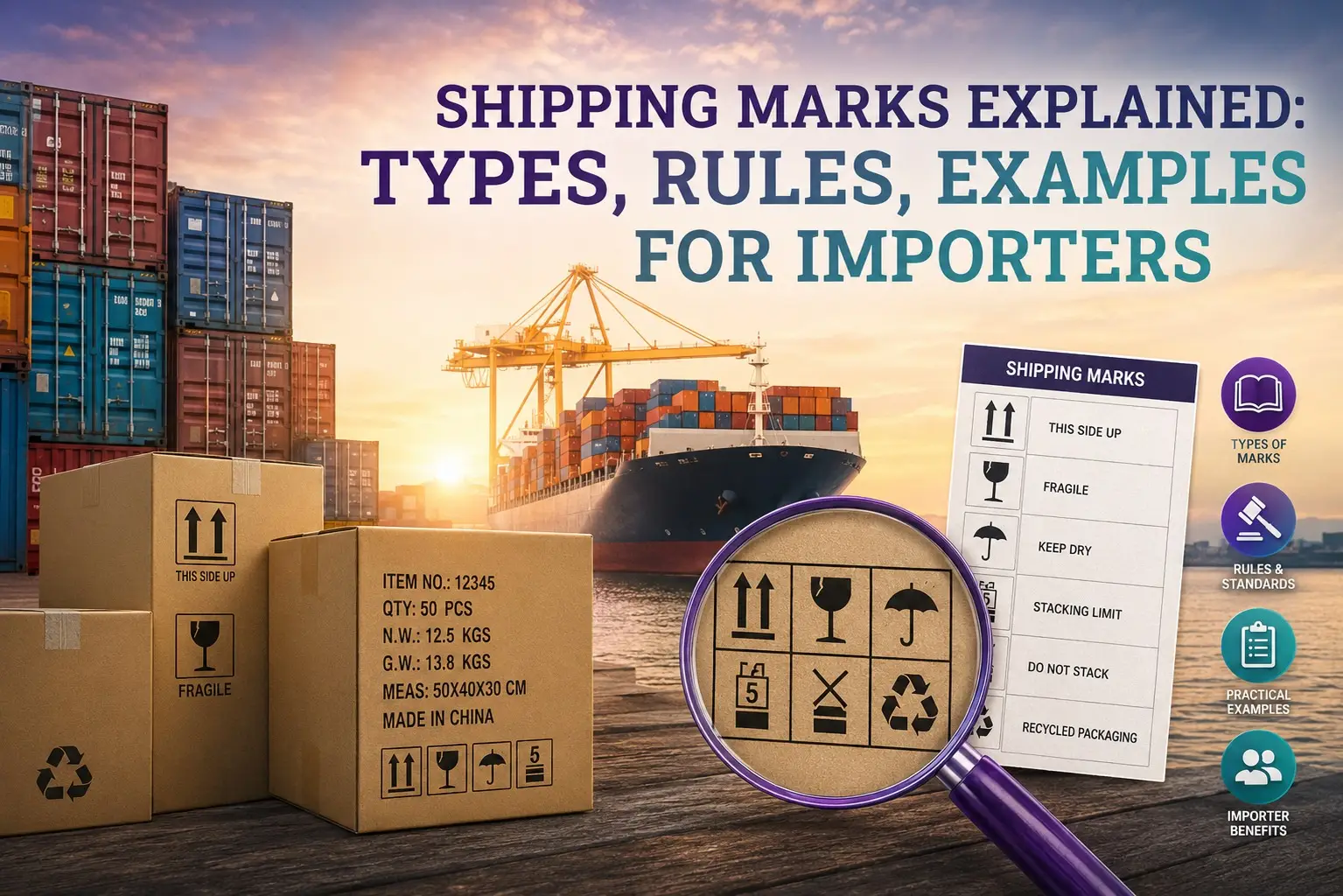
Shipping marks are identifying words, numbers, or symbols printed on export cargo packaging. They help carriers, customs officers, and warehouses track and handle goods. Without them, international shipments face severe delays, lost cargo risks, or customs fines.
You placed your order, production is done, and your supplier is about to ship your cargo. Suddenly, they ask you to send over your shipping marks. If you are new to importing, this request might make you freeze. What exactly are you supposed to send them?
Shipping marks can feel like a technical detail nobody explained properly. Getting them wrong means your shipment can be held at customs, misdelivered, or rejected by Amazon FBA.
This comprehensive guide covers everything you need to know. You will learn what shipping marks are, the six critical types, how to create your own, and how to avoid the mistakes that trip up global importers every year.
What are Shipping Marks?

Quick Answer: Shipping marks are the unique identifiers, symbols, and text printed or labeled on the outside of export packaging. They allow carriers, customs authorities, and warehouse staff to identify, route, and handle cargo throughout the global supply chain. They ensure your packages match your international trade documents exactly.
Think of it like this. The shipping label gets a carton to the right building. The shipping mark tells everyone inside that building what to do with it.
These markings appear on cartons, crates, pallets, and containers. They are also listed directly on your paperwork, including the packing list, commercial invoice, and bill of lading.
The text on your boxes must match your trade documents word for word. Even a tiny difference can cause a customs agent to stop your shipment for inspection.
Does Law Require Shipping Marks?
Quick Answer: No single global law requires shipping marks on every package, but international customs and shipping carriers make them practically mandatory. Most countries legally require specific elements, such as a clear country of origin marking, accurate weight data, and standardized hazardous material labels.
For example, the U.S. Customs and Border Protection requires a visible country of origin mark on virtually all imported goods. If you import products into America, your packaging must clearly show where the items were made.
The European Union and the United Kingdom follow similar rules to prevent consumer confusion. If your cargo lacks these markings, customs will detain your goods.
You will have to pay for expensive re-marking services at the port. Treat these marks as a legal requirement to avoid costly supply chain delays.
Who Creates the Shipping Marks — You or the Supplier?
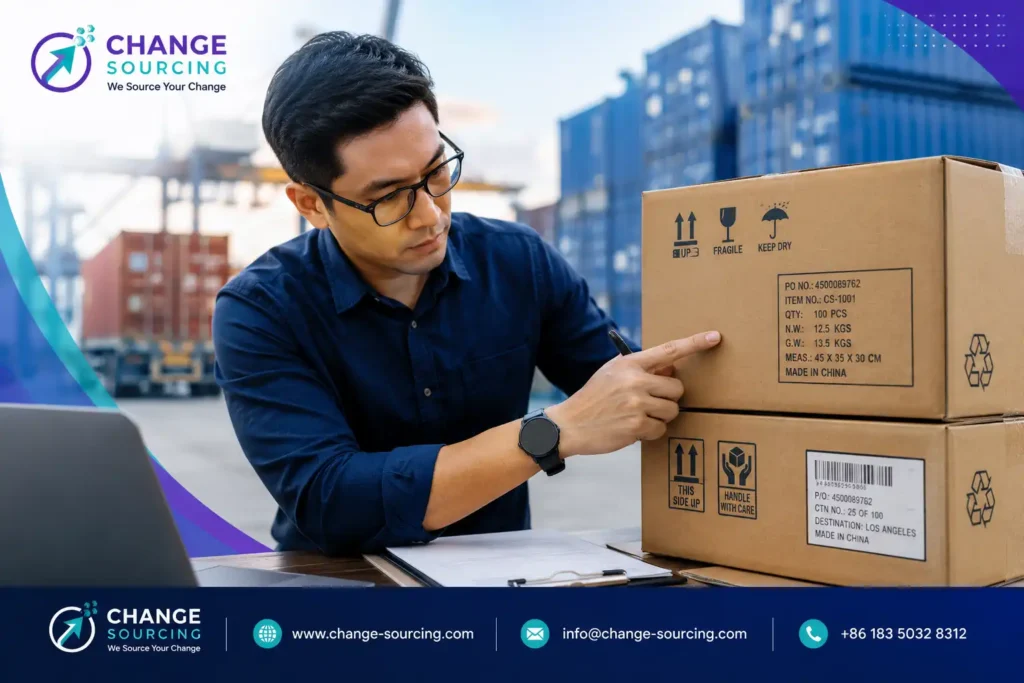
Quick Answer: The buyer is entirely responsible for creating the content of the shipping marks. The supplier or manufacturer is simply responsible for physically printing or stenciling those marks onto the shipping cartons before the cargo leaves the factory.
Many first-time importers assume their factory will automatically handle this detail. This mistake leads to missing data or rushed, incorrect labels.
You should send your clear shipping mark instructions to your factory before production even begins. Provide your requirements in writing using a visual template.
Always ask your factory to print a sample carton first. You can then review a photo of the sample to confirm the layout is perfect before they pack your entire order.
The 6 Types of Shipping Marks (With Examples)
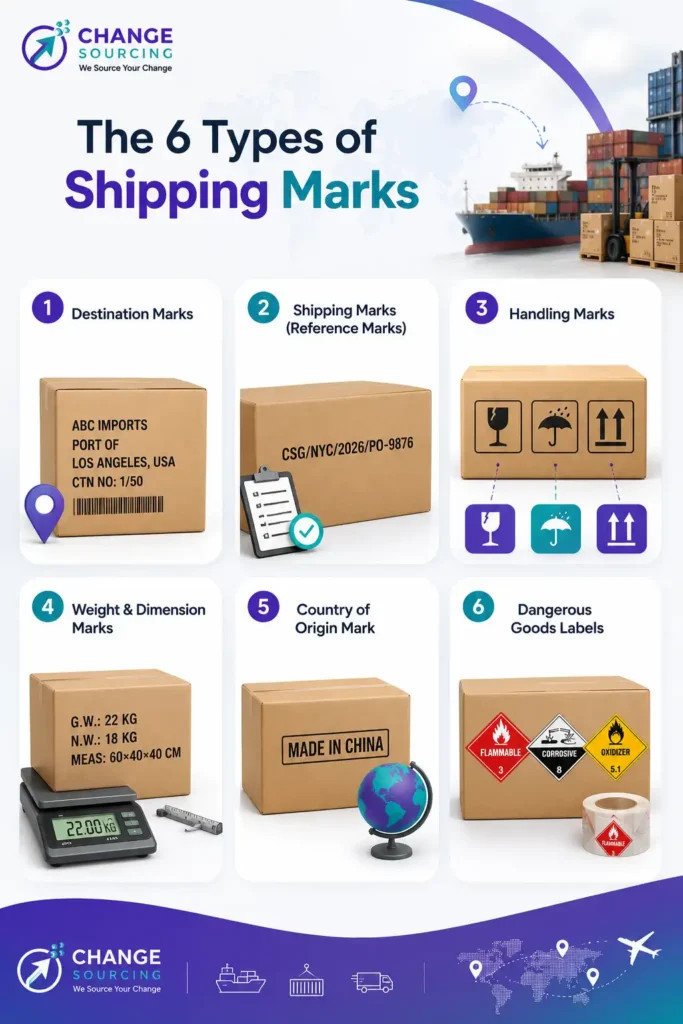
Quick Answer: International cargo relies on six specific types of shipping marks: destination marks, reference marks, handling symbols, weight and dimension metrics, country of origin declarations, and dangerous goods labels. Each type serves a distinct purpose for compliance, safety, or logistics tracking.
1. Destination Marks (Consignee Marks)
These markings tell logistics workers exactly where your cargo is going. They must include your company name or code, the destination port, and the country. They also feature a carton serial number to show the total size of the shipment.
- Example: ABC IMPORTS / PORT OF LOS ANGELES, USA / CTN NO: 1/50
2. Shipping Marks (Reference Marks)
This is a unique identifier code agreed upon by the buyer and the seller. It usually combines the buyer’s initials, the destination city, the current year, and a purchase order number. This data must match your bill of lading perfectly.
- Example: CSG/NYC/2026/PO-9876
3. Handling Marks
These are globally recognized symbols that tell warehouse workers how to treat your boxes. These pictograms follow the International Organization for Standardization ISO 780 framework.
They do not use text, so any handler can understand them instantly, regardless of language barriers. Common examples include:
- Fragile: Represented by a broken wine glass.
- Keep Dry: Represented by an umbrella with rain droplets.
- This Side Up: Represented by two upward-pointing arrows.
4. Weight and Dimension Marks
These marks list the gross weight, net weight, and physical dimensions of each individual carton. Carriers require this information to calculate your freight costs and plan container space. Air freight carriers rely heavily on these marks to balance aircraft weight.
- Example: G.W.: 22 KG / N.W.: 18 KG / MEAS: 60×40×40 CM
5. Country of Origin Mark
This mark states where the goods were manufactured. For products coming from overseas hubs, this is usually a legal customs requirement. The text must be legible, permanent, and written in English for Western ports.
- Example: Made in China
6. Dangerous Goods Labels
If your products contain hazardous materials, you must display mandatory diamond-shaped hazard labels. This applies to everyday consumer items like lithium batteries, aerosols, and strong adhesives. These labels must measure at least 100mm by 100mm and appear on opposite sides of the box.
What Does a Correctly Marked Carton Look Like?
Quick Answer: A correctly marked export carton splits its layout across two distinct faces of the box. The front face displays your identification, reference, and origin text, while the side face contains the physical logistics data, weights, dimensions, and handling symbols.
You can copy, paste, and fill out this standard template for your own shipments:
FRONT FACE (Main Identification Mark):
━━━━━━━━━━━━━━━━━━━━━━━━━━━━━━━━━━━━━
TO: [Your Company Name]
DISCHARGE PORT: [Destination City, Country]
━━━━━━━━━━━━━━━━━━━━━━━━━━━━━━━━━━━━━
REF CODE: [Your Custom Code — e.g., CSG/NYC/2026]
PO NUMBER: [Your Purchase Order Number]
CARTON NUMBER: [1/50] (Current Box / Total Boxes)
━━━━━━━━━━━━━━━━━━━━━━━━━━━━━━━━━━━━━
MADE IN CHINA
━━━━━━━━━━━━━━━━━━━━━━━━━━━━━━━━━━━━━

SIDE FACE (Logistics & Weight Mark):
━━━━━━━━━━━━━━━━━━━━━━━━━━━━━━━━━━━━━
GROSS WEIGHT (G.W.): ___ KG
NET WEIGHT (N.W.): ___ KG
DIMENSIONS (MEAS): ___ × ___ × ___ CM
[Insert ISO Handling Symbols Here, like This Side Up]
━━━━━━━━━━━━━━━━━━━━━━━━━━━━━━━━━━━━━
Make sure your supplier uses text that is at least 12mm tall so handlers can read it easily. Use waterproof ink or stenciling to ensure ocean humidity does not smudge the print.
Shipping Marks vs. Shipping Labels: What is the Difference?
Quick Answer: Shipping marks identify an entire cargo consignment across your formal trade documents for customs and port handlers. Shipping labels are carrier-generated stickers containing barcodes and precise street addresses used to route individual packages during last-mile delivery.
| Feature | Shipping Mark | Shipping Label |
| Primary Purpose | Identifies the consignment for ports and customs | Directs a parcel to a final delivery address |
| Who Creates It | The buyer designs it and sends it to the supplier | The carrier or logistics company generates it |
| Core Content | PO number, weights, origin, and consignee code | Street address, carrier name, tracking barcode |
| Application | Printed or stenciled directly onto the cardboard | Attached as a sticky paper label |
How Shipping Marks Must Match Your Trade Documents
Quick Answer: Your shipping marks must be completely identical across your commercial invoice, packing list, bill of lading, and certificate of origin. Even minor text variations like an extra hyphen or a modified abbreviation can trigger an official customs hold.
Imagine your shipping carton has the text code ABC-NYC-2026 printed on the side. If your commercial invoice lists that same code as ABC/NYC/2026, customs software may flag the shipment.
Foreign customs agents view document discrepancies as a potential sign of illegal cargo or tax evasion. Always cross-check your paperwork formatting with your freight forwarder before giving your factory the green light to print.
Shipping Marks for Amazon FBA: What is Different?
Quick Answer: Amazon FBA requires standard export shipping marks along with its own strict, proprietary labeling system. Every individual sellable item must feature a scannable FNSKU barcode, and every outer delivery carton must display a unique Amazon Shipment ID label.
If you are shipping inventory straight from an overseas factory to an Amazon fulfillment center, compliance is critical. You must generate your box labels inside Amazon Seller Central and email those PDF files to your supplier.
The supplier must place these sticky labels flat on the carton without wrapping them over edges or box seams. If your factory misses these requirements, Amazon may reject your inventory, fine your account, or charge you heavy product repackaging fees.
Shipping Marks for LCL Shipments: The Extra Risk
Quick Answer: Less-than-Container Load (LCL) shipments face high cargo mix-up risks because your boxes share container space with goods from other businesses. Clear, unique shipping marks are absolutely vital to prevent warehouse workers from misidentifying your inventory during consolidation.
When an LCL container reaches its destination port, workers unpack it rapidly in a busy warehouse. If your boxes only say “Made in China” without a unique company reference code, they look identical to hundreds of other incoming cartons.
Your boxes could easily be handed over to the wrong delivery driver. Protect your LCL cargo by numbering every box clearly and using highly visible, bold text identifier codes.
7 Shipping Mark Mistakes That Cause Costly Delays
Quick Answer: Importers frequently disrupt their own supply chains by using mismatching document text, omitting country of origin declarations, sending marking data late, ignoring carton serialization, using single-sided markings, applying non-waterproof inks, or mislabeling dangerous goods.
- Mistake 1: Discrepancies on paperwork. A tiny punctuation difference between your box text and your packing list can cause customs to halt your shipment.
- Mistake 2: Missing the origin mark. U.S. customs officials will seize import boxes that lack a clear “Made in China” or origin declaration.
- Mistake 3: Sending instructions too late. Rushing your supplier after they have already completed packaging leads to sloppy, hand-written mistakes.
- Mistake 4: Skipping box numbers. Failing to print carton numbers makes it impossible to tell if a box went missing during transit.
- Mistake 5: Printing on only one side. If that single marked face points toward the inside of a tightly packed pallet, forklift drivers cannot identify your goods.
- Mistake 6: Using cheap paper labels. Sea freight exposes cargo to extreme moisture, which dissolves low-grade paper stickers.
- Mistake 7: Hiding hazardous items. Failing to display proper lithium battery diamond labels can land your business with heavy legal fines.
Case Study: Optimizing Supply Chain Compliance With Change Sourcing

Managing factory communications across different languages can easily lead to costly logistics errors. A mid-sized eCommerce business came to us after its inventory was detained at a U.S. port.
Their Chinese supplier had printed conflicting reference codes on the outer boxes, causing a complete mismatch with the official bill of lading. Customs officials held the cargo, resulting in expensive port storage fines and a stressful stock shortage.
Our team at Change Sourcing stepped in to fix their factory compliance workflow. We took over their supplier communication and built a bilingual marking and packaging manual.
[Factory Inspection] ➔ [Document Audit] ➔ [Customs Compliance Clear]
       (Change Sourcing Verification Process Ensures Zero Mismatches)
We now audit this client’s packing lists and invoices against their physical carton text before any cargo leaves the factory floor.
By acting as an on-the-ground bridge, we eliminated their customs documentation errors entirely, ensuring every single shipment passes through international ports without a hitch.
FAQs About Shipping Marks

The buyer creates the specific layout, codes, and text for the shipping marks. The supplier simply prints or stencils that information onto the physical shipping boxes at the factory.
Your shipment can be detained by customs officials, rejected at warehouse docks, or accidentally delivered to another importer. Correcting these mistakes at a destination port requires expensive manual labor fees.
The core identification text remains identical for both methods. However, air freight requires highly accurate weight marks for flight safety, while sea freight requires highly durable, waterproof printing to survive humid ocean voyages.
Email your factory a clear PDF layout template along with written instructions. Always instruct your supplier to send you a clear digital photograph of a printed sample carton before they pack your entire order.
Conclusion
Shipping marks are the global language your cargo uses to communicate with every handler, inspector, and driver along its journey.
Getting them right costs very little time, but getting them wrong can completely disrupt your business operations.
If you want to protect your supply chain from costly communication errors and customs delays, let a professional team manage your factory compliance. Contact Change Sourcing today to streamline your international shipping process.