

The best products to import from China to South Africa in 2026 are solar panels and inverters (0% duty, driven by load shedding infrastructure demand), portable power stations, phone accessories and electronics (0% duty with VAT reclaim for registered businesses), vehicle aftermarket parts, hair extensions, home organizers, fashion accessories, LED lighting, smart home devices, and fitness products. South Africa's zero-duty position on electronics, the 2025 de minimis loophole closure that hurt Shein and Temu, and the SACU gateway to five countries make it one of the most structurally favorable import markets on the continent.
South Africa imported $21.77 billion from China in 2024, with electrical and electronic equipment alone accounting for $5.70 billion, the single largest import category by a wide margin.
The country’s energy crisis, ecommerce growth, and unique regulatory environment create specific, data-backed opportunities that most import guides either oversimplify or miss entirely.
This guide covers the 10 best product categories with real SARS duty rates, estimated margins, and the compliance requirements that determine whether a product is actually profitable once it clears Durban Port.
What Makes South Africa Unique for Chinese Imports?
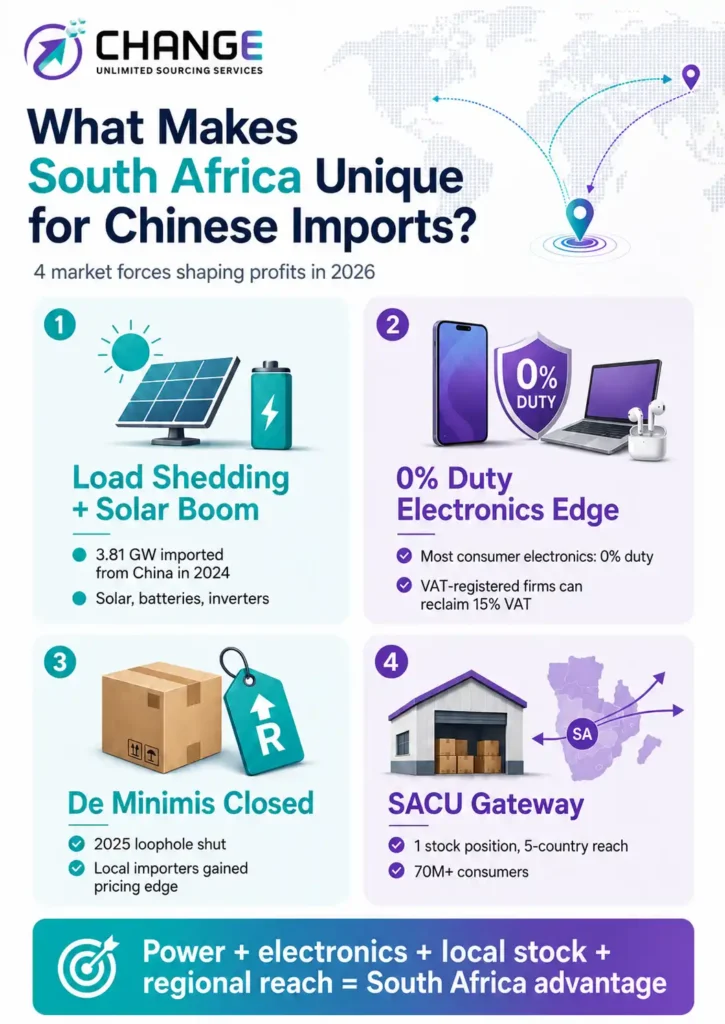
Before any product is considered, four structural forces shape what is actually profitable in South Africa in 2026. These are not trends. They are market conditions that determine which categories win.
The Load Shedding Emergency created the world’s most active consumer-level solar market. South Africa experienced its worst electricity crisis in modern history between 2022 and 2024. South Africa imported 3.81 GW of solar panels from China in 2024 alone, accounting for 50% of the entire African continent’s solar installations. Even as grid performance has partially stabilized, the infrastructure market for batteries, inverters, and backup power is permanent and growing.
The Zero-Duty Electronics Advantage is the least understood profit driver in this market. South Africa applies 0% customs duty to most consumer electronics. VAT-registered businesses can reclaim the 15% VAT as an input tax credit, making electronics the most tax-efficient import category in the entire SARS tariff schedule. An importer sourcing phone accessories from Shenzhen pays essentially only the shipping cost above the factory price.
The De Minimis Closure shifted the competitive landscape for local importers in mid-2025. South Africa closed the de minimis tax loophole that had allowed low-value imports from Shein and Temu to enter the country without paying VAT. The result was immediate price increases on these platforms and a meaningful advantage for local importers who stock domestically and can offer both competitive pricing and same-day delivery.
The SACU Gateway is the opportunity most guides ignore entirely. South Africa’s membership in the Southern African Customs Union means goods imported and cleared at Durban or Cape Town move freely to Botswana, Namibia, Lesotho, and Eswatini without additional customs duties. A single inventory position in Johannesburg or Cape Town effectively serves five countries and more than 70 million consumers.
Understanding South Africa’s Import Cost Structure
Two costs apply to every Chinese import entering South Africa: customs duty and VAT.
Customs duty is determined by your product's HS tariff code and can range from 0% on electronics and solar equipment to 45% on clothing. VAT at 15% is applied to the CIF value plus customs duty.
For VAT-registered businesses, this 15% is fully reclaimable as an input tax credit, effectively making it a cash flow item rather than a permanent cost.
NRCS (National Regulator for Compulsory Specifications) is the compliance requirement that surprises first-time importers. Products including electronics, electrical appliances, solar equipment, power tools, and lighting must meet NRCS standards before they can legally be sold in South Africa.
Getting NRCS-compliant products from verified Chinese factories is straightforward. Ordering without checking NRCS status is how first-time importers get shipments held at port.
Anti-dumping duties apply specifically to Chinese textiles and some steel products. South Africa’s clothing and textile industry successfully lobbied for protection. The result is a 40 to 45% base duty on clothing, PLUS anti-dumping levies that together effectively double the cost of Chinese apparel.
This is why clothing appears on this guide’s avoid list despite being one of China’s most common export categories.
Quick Comparison: 10 Best Import Categories
| Product | SARS Duty | Est. Margin | Demand | NRCS | Best Source Region |
| Solar panels and inverters | 0% | 40 to 60% | Very high and structural | Yes | Shenzhen |
| Portable power stations and UPS | 0% | 45 to 65% | Very high | Yes | Shenzhen |
| Phone accessories and electronics | 0% | 55 to 75% | Very high | Some | Shenzhen |
| Vehicle aftermarket parts | 20 to 30% | 35 to 55% | High and growing | Some | Guangzhou |
| Hair extensions and wigs | 15 to 30% | 55 to 70% | Very high | No | Xuchang |
| Home organization and kitchen | 10 to 25% | 40 to 60% | High | No | Yiwu |
| Fashion accessories | 20 to 30% | 55 to 75% | High | No | Yiwu |
| LED and rechargeable lighting | 0 to 10% | 50 to 70% | Very high | Yes | Zhongshan |
| Smart home and security devices | 0% | 50 to 70% | Growing fast | Yes | Shenzhen |
| Fitness and wellness products | 10 to 20% | 45 to 60% | Growing | No | Xiamen |
10 Best Products to Import from China to South Africa
Products are ranked by a combination of effective net margin after SARS costs, structural demand strength, and accessibility for new importers entering the South African market.
1. Solar Panels, Inverters, and LiFePO4 Batteries
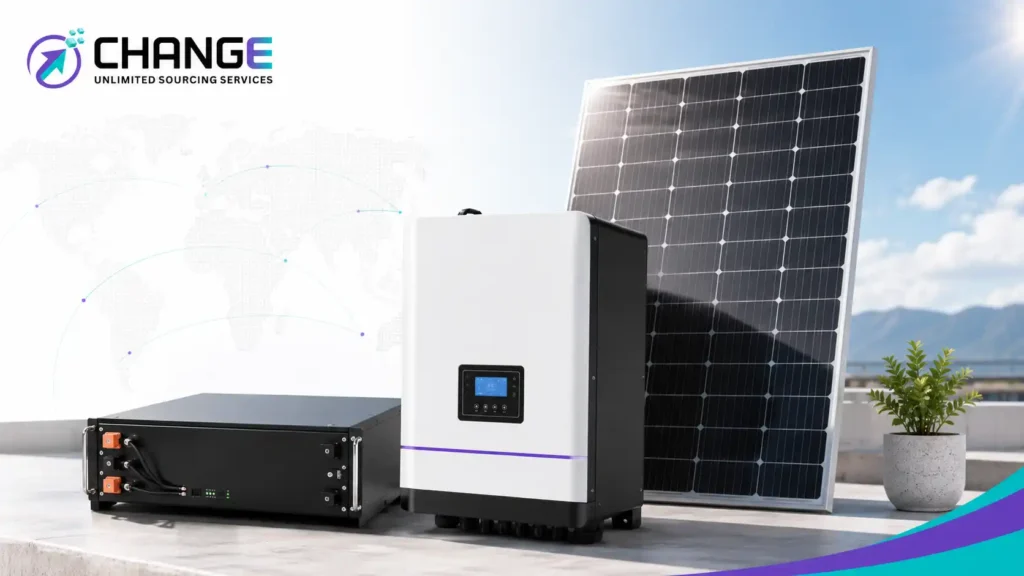
South Africa imported 3.81 GW of solar panels from China in 2024, the largest volume on the continent. The 0% duty position, combined with a market that is structurally driven by grid failure rather than lifestyle aspiration, makes this the most defensible import category in the country.
LiFePO4 batteries are the fastest-moving sub-product as existing solar users upgrade from lead-acid storage.
| Sub-Product | China Factory Price | SA Landed Cost | SA Retail Price | Gross Margin |
| 400W monocrystalline solar panel | R1,110 to R1,850 (~$60-100) | R1,500 to R2,300 | R2,500 to R4,000 | 37 to 43% |
| 3 to 5kW hybrid inverter | R2,220 to R6,475 (~$120-350) | R3,000 to R8,000 | R5,000 to R18,000 | 40 to 56% |
| 5kWh LiFePO4 battery bank | R5,180 to R11,100 (~$280-600) | R7,000 to R14,000 | R12,000 to R25,000 | 40 to 44% |
| MPPT solar charge controller | R463 to R1,295 (~$25-70) | R700 to R1,800 | R1,200 to R3,500 | 42 to 49% |
| Solar panel mounting structure kit | R278 to R740 (~$15-40) | R450 to R1,000 | R800 to R2,000 | 44 to 50% |
Solar panels and inverters deliver the most consistent absolute ZAR margin per unit in this article. LiFePO4 batteries carry slightly compressed percentage margins due to their higher absolute cost, but the rand value per sale is the highest of any sub-product on this list.
NRCS compliance documentation from Shenzhen factories is the critical check before ordering.
- SARS duty: 0% across all sub-products
- NRCS required: Yes for inverters, batteries, and charge controllers
- Best sourcing region: Shenzhen, Guangdong
2. Portable Power Stations and UPS Backup Systems
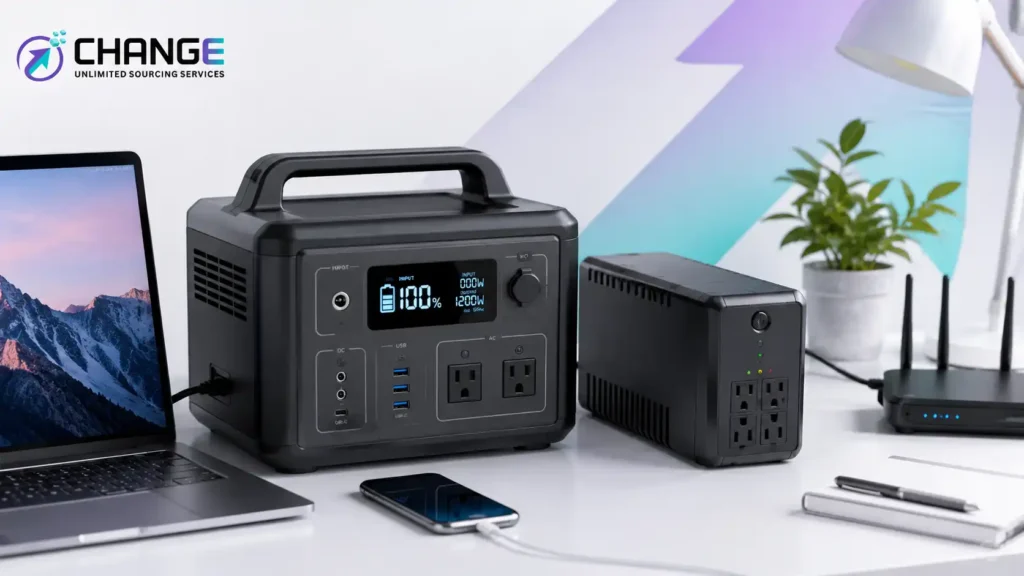
Portable power stations solve a specific South African consumer problem that exists nowhere else on the same scale: the renter, apartment dweller, or small business owner who cannot install rooftop solar but still faces regular load shedding.
The 0% duty position applies here too, and the category is almost entirely missing from existing competitor guides.
| Sub-Product | China Factory Price | SA Landed Cost | SA Retail Price | Gross Margin |
| 300Wh portable power station | R648 to R1,110 (~$35-60) | R900 to R1,500 | R1,800 to R3,500 | 50 to 57% |
| 1,000Wh lithium power station | R1,850 to R3,700 (~$100-200) | R2,500 to R5,000 | R5,000 to R12,000 | 50 to 58% |
| 1kVA pure sine wave UPS | R740 to R1,665 (~$40-90) | R1,100 to R2,200 | R2,000 to R5,000 | 45 to 56% |
| Solar generator kit (panel + station) | R1,480 to R3,700 (~$80-200) | R2,200 to R5,000 | R4,500 to R12,000 | 51 to 58% |
The solar generator kit (a bundled panel plus power station) consistently delivers the strongest gross margins in this table because the retail premium on a complete solution is significantly higher than on individual components.
Sourcing the components separately and assembling as a kit in South Africa is a margin optimization strategy available to established importers.
- SARS duty: 0% on energy storage equipment
- NRCS required: Yes for all electrical equipment
- Best sourcing region: Shenzhen, Guangdong
3. Consumer Electronics and Phone Accessories
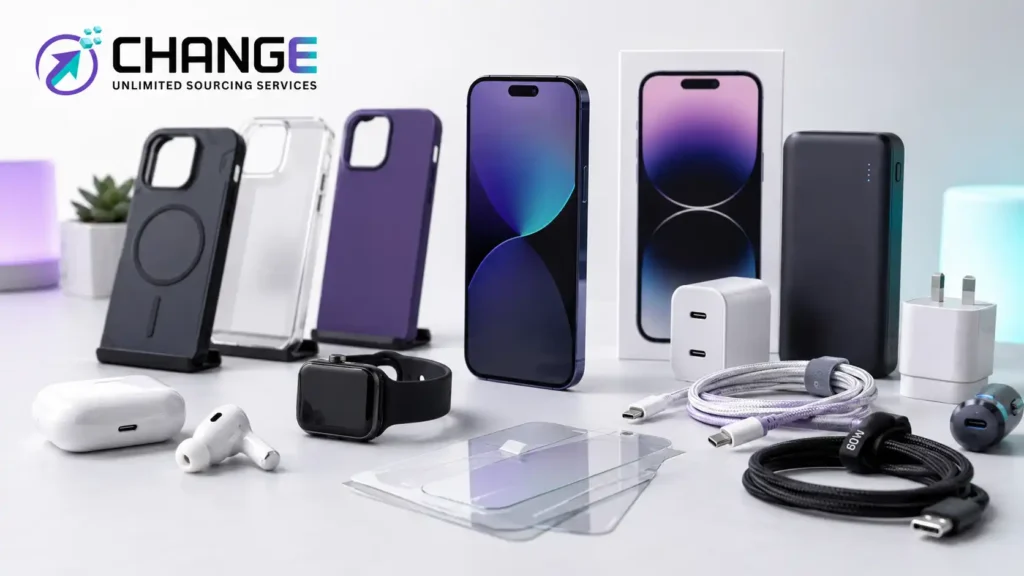
South Africa’s zero-duty electronics position is the most tax-efficient import category in the entire SARS tariff schedule. A Shenzhen importer sourcing phone accessories pays essentially only shipping above the factory price before building their retail margin.
The 0% duty combined with the 15% VAT reclaim for registered businesses makes this category uniquely favorable compared to every other African market.
| Sub-Product | China Factory Price | SA Landed Cost | SA Retail Price | Gross Margin |
| Braided USB-C cable (1m) | R8 to R15 (~$0.45-0.80) | R20 to R35 | R120 to R250 | 73 to 86% |
| 10,000mAh power bank | R93 to R148 (~$5-8) | R150 to R220 | R350 to R700 | 57 to 69% |
| Basic TWS earbuds | R37 to R111 (~$2-6) | R65 to R180 | R250 to R600 | 60 to 74% |
| TPU phone case (Samsung/Xiaomi) | R7 to R28 (~$0.40-1.50) | R18 to R55 | R80 to R300 | 60 to 82% |
| Tempered glass screen protector | R3 to R7 (~$0.18-0.40) | R12 to R25 | R60 to R180 | 72 to 86% |
| 33W fast charger | R37 to R93 (~$2-5) | R70 to R160 | R200 to R500 | 55 to 68% |
Phone cases and screen protectors deliver the highest gross margins in this category because their landed cost is extremely low and retail pricing is driven by brand positioning rather than component cost.
The 0% duty advantage is most powerful for these low-cost, high-value-perception accessories.
- SARS duty: 0% on all products in this table
- NRCS required: Yes for chargers and power banks. Not required for cases and screen protectors.
- Best sourcing region: Shenzhen, Guangdong
4. Vehicle Aftermarket Parts and Accessories
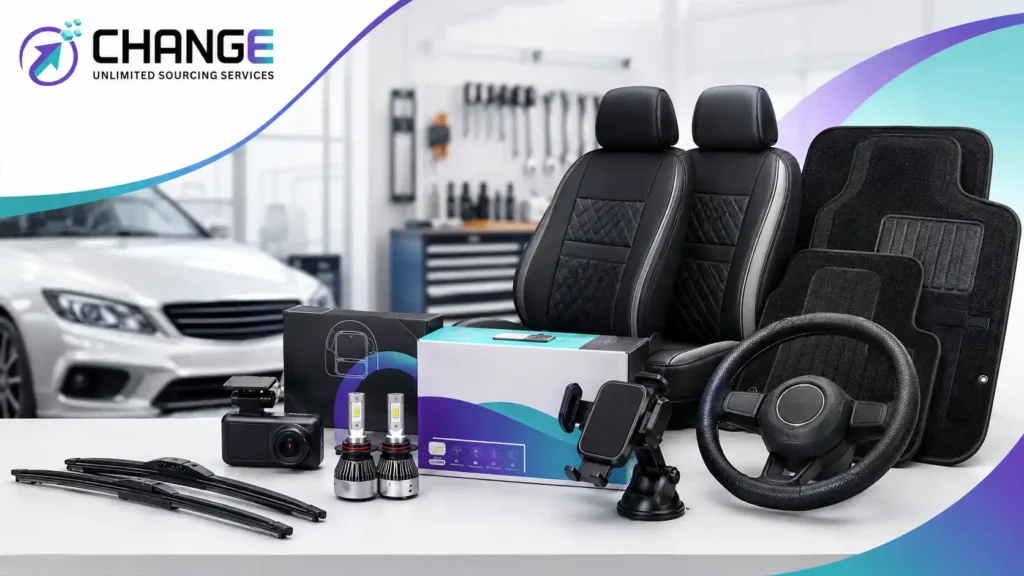
South Africa’s vehicle ownership rate is among the highest in Africa, with a large percentage of vehicles over 10 years old requiring regular consumable replacements.
The growth of Uber, Bolt, Mr Delivery, and Yango drivers has created a distinct high-frequency buyer segment for both maintenance parts and in-vehicle technology upgrades.
This is a consistent year-round category that performs independently of economic cycles.
| Sub-Product | China Factory Price | SA Landed Cost (incl. 25% duty est.) | SA Retail Price | Gross Margin |
| LED headlight conversion kit | R278 to R925 (~$15-50) | R450 to R1,400 | R800 to R3,000 | 40 to 53% |
| Full HD dashboard camera | R148 to R463 (~$8-25) | R250 to R700 | R500 to R2,000 | 50 to 65% |
| OBD2 diagnostic scanner | R93 to R278 (~$5-15) | R160 to R440 | R300 to R1,200 | 47 to 63% |
| Magnetic car phone holder | R28 to R74 (~$1.50-4) | R50 to R120 | R150 to R500 | 60 to 76% |
| Ceramic brake pads (set of 4) | R185 to R555 (~$10-30) | R300 to R850 | R600 to R1,800 | 42 to 53% |
Dashboard cameras and OBD2 scanners deliver the strongest gross margins because the technical nature of these products reduces direct price comparison pressure at retail.
Magnetic phone holders have the highest percentage margin due to low landed cost and strong, consistent demand from the gig economy driver segment.
- SARS duty: 20 to 30% depending on HS code
- NRCS required: Some product-specific requirements apply
- Best sourcing region: Guangzhou and Shenzhen, Guangdong
5. Hair Extensions and Wigs
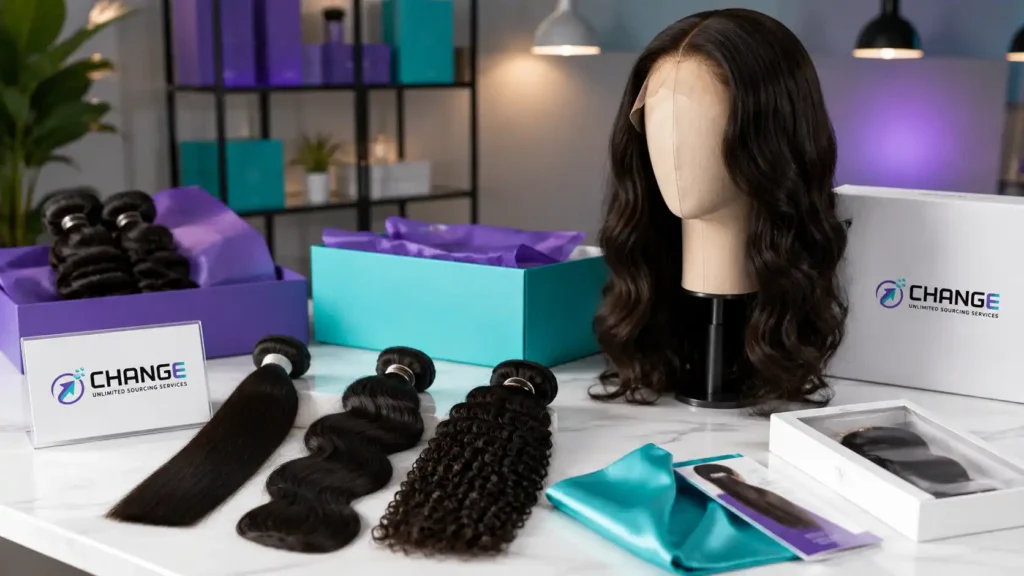
South Africa’s hair extension market is estimated to reach $149 million by 2028, and China’s Xuchang city has specifically developed production lines for African styling preferences.
There is no meaningful domestic manufacturing competition and no second-hand market equivalent. The category turns quickly on Takealot and through social media sellers.
| Sub-Product | China Factory Price | SA Landed Cost (incl. 22% duty est.) | SA Retail Price | Gross Margin |
| Brazilian body wave bundle (100g) | R111 to R333 (~$6-18) | R175 to R520 | R450 to R1,500 | 53 to 66% |
| Lace front wig (synthetic) | R278 to R648 (~$15-35) | R430 to R980 | R800 to R2,500 | 46 to 61% |
| Human hair lace wig (straight) | R648 to R1,480 (~$35-80) | R1,000 to R2,300 | R2,000 to R5,500 | 50 to 58% |
| Synthetic braided wig | R148 to R407 (~$8-22) | R230 to R620 | R400 to R1,500 | 42 to 59% |
| Hair closure (4×4 lace, straight) | R185 to R463 (~$10-25) | R290 to R700 | R600 to R1,800 | 48 to 61% |
Brazilian body wave bundles consistently outperform the rest of this table in turnover speed. Human hair wigs deliver the highest absolute and margin per unit.
Most Xuchang factories have established export relationships with South African buyers and can provide compliance documentation quickly.
- SARS duty: 15 to 30% depending on HS code (human vs synthetic)
- NRCS required: No
- Best sourcing region: Xuchang, Henan Province
6. Home Organization and Kitchen Tools
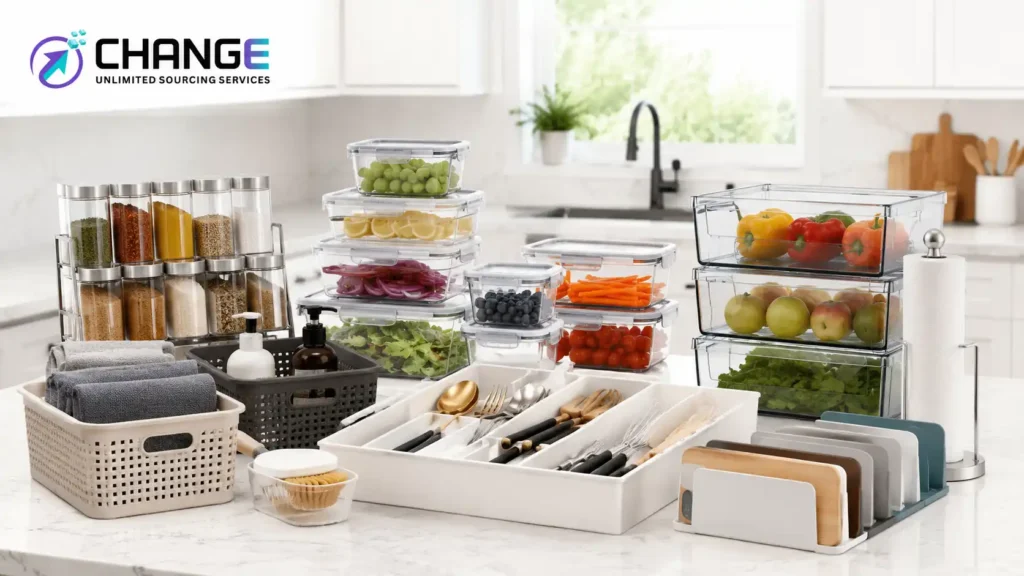
This category works because South Africa’s social commerce growth is driving a new purchase trigger: consumers see a product demonstrated in a short video and buy immediately.
A home organization product that solves a visible daily problem, shown in a 30-second TikTok clip, generates organic Takealot traffic without paid marketing.
The category has no NRCS requirement on non-electrical products, making compliance simple.
| Sub-Product | China Factory Price | SA Landed Cost (incl. 18% duty est.) | SA Retail Price | Gross Margin |
| Fridge organizer set (4 pieces) | R56 to R148 (~$3-8) | R85 to R230 | R200 to R600 | 45 to 57% |
| Drawer organizer set (6 pieces) | R28 to R93 (~$1.50-5) | R48 to R145 | R150 to R500 | 52 to 68% |
| Stackable pantry containers (set) | R56 to R167 (~$3-9) | R85 to R255 | R200 to R700 | 48 to 64% |
| Countertop rotating spice rack | R56 to R148 (~$3-8) | R85 to R225 | R200 to R700 | 53 to 68% |
| Under-sink storage organizer | R74 to R185 (~$4-10) | R110 to R270 | R250 to R800 | 56 to 66% |
Drawer organizers and spice racks deliver the strongest gross margins because they are extremely lightweight (low freight cost per unit) and sourced at very low factory prices from Yiwu.
The under-sink organizer outperforms on gross margin percentage because it has a strong perceived utility value relative to its low landed cost.
- SARS duty: 10 to 25% depending on HS code
- NRCS required: No for non-electrical products
- Best sourcing region: Yiwu, Zhejiang
Understanding how to source from Yiwu specifically, rather than through Alibaba trading companies, produces significantly better pricing for this category. The cheapest sourcing platform guide explains the cost difference and how to access factory-direct Yiwu pricing.
7. Fashion Accessories: The Category That Avoids South Africa’s Clothing Duty Trap
The critical distinction in this section bears repeating because it directly determines profitability. Chinese clothing attracts 40 to 45% SARS duty plus anti-dumping levies.
Fashion accessories sit in a completely different tariff bracket at 20 to 30% with no anti-dumping exposure.
Yiwu fashion accessories sourced at R50 to R200 retail at R300 to R1,200 on Takealot or Zando, with margins that clothing from China cannot produce.
| Sub-Product | China Factory Price | SA Landed Cost (incl. 25% duty est.) | SA Retail Price | Gross Margin |
| Fashion sunglasses | R28 to R93 (~$1.50-5) | R55 to R160 | R150 to R600 | 60 to 73% |
| Women’s fashion handbag | R56 to R222 (~$3-12) | R95 to R360 | R250 to R1,200 | 55 to 70% |
| Fashion jewelry set (earrings + necklace) | R9 to R56 (~$0.50-3) | R22 to R90 | R80 to R500 | 65 to 82% |
| Faux leather fashion belt | R28 to R93 (~$1.50-5) | R55 to R160 | R150 to R600 | 60 to 73% |
| Hair accessories set (clips, bands) | R9 to R56 (~$0.50-3) | R22 to R90 | R80 to R350 | 61 to 74% |
Fashion jewelry delivers the highest gross margin in this table, consistently above 65%, because Yiwu factory prices are extremely low and South African retail pricing reflects fashion value rather than material cost.
The entire category benefits from no NRCS requirement and no anti-dumping exposure.
- SARS duty: 20 to 30% depending on product type
- NRCS required: No for any product in this table
- Best sourcing region: Yiwu, Zhejiang
8. LED and Rechargeable Lighting Products
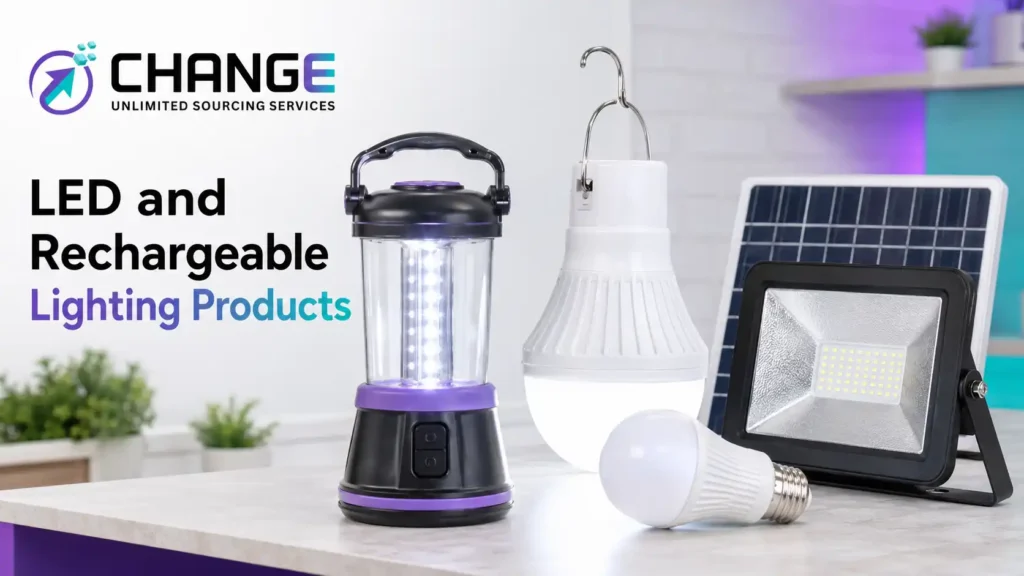
Rechargeable LED lighting is not a discretionary purchase in South Africa. For the millions of households that still experience regular outages without full solar systems, a rechargeable lantern or battery-backed LED bulb is a practical necessity.
This demand context, combined with 0 to 10% SARS duty and Zhongshan's exceptionally competitive factory prices, makes this one of the cleanest margin categories in the article.
| Sub-Product | China Factory Price | SA Landed Cost (incl. 5% duty est.) | SA Retail Price | Gross Margin |
| Rechargeable LED emergency lantern | R56 to R185 (~$3-10) | R80 to R260 | R200 to R700 | 56 to 71% |
| Solar outdoor garden lights (4-pack) | R93 to R278 (~$5-15) | R140 to R400 | R300 to R1,200 | 53 to 67% |
| Motion sensor outdoor security light | R111 to R333 (~$6-18) | R160 to R470 | R350 to R1,500 | 54 to 69% |
| Battery backup LED bulb (E27, warm white) | R28 to R93 (~$1.50-5) | R50 to R140 | R100 to R400 | 50 to 65% |
| Solar string fairy lights (10m) | R56 to R148 (~$3-8) | R80 to R215 | R200 to R700 | 55 to 69% |
Motion sensor security lights are the standout product in this table for both gross margin and demand driver. South Africa’s security consciousness, combined with the load-shedding context where mains-powered security lights go dark during outages, creates dual demand from security needs and backup power needs simultaneously.
- SARS duty: 0 to 10% depending on HS code
- NRCS required: Yes for all electrical products
- Best sourcing region: Zhongshan, Guangdong
Verifying that Chinese lighting suppliers have products that meet NRCS standards is critical before ordering. Our guide on the best ways to verify China suppliers explains how to check compliance documentation before any money moves.
9. Smart Home and Security Devices
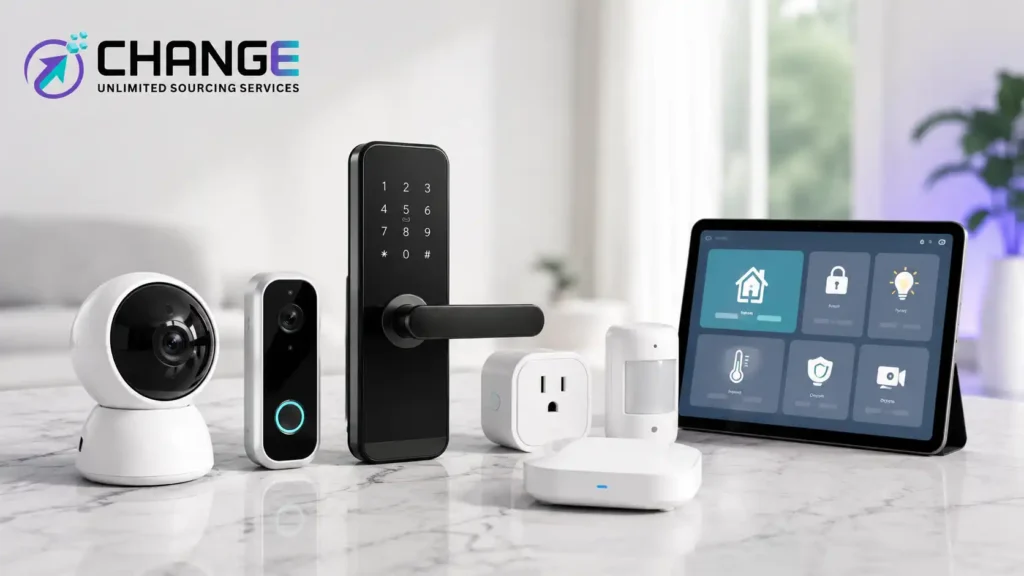
South Africa’s home security market is one of the most active in the world per capita. Smart devices that record locally, send mobile alerts, and operate on battery or solar power address a specific South African consumer pain point that no other market replicates at the same intensity.
The 0% duty position adds further advantage.
| Sub-Product | China Factory Price | SA Landed Cost (0% duty, incl. freight) | SA Retail Price | Gross Margin |
| Indoor Wi-Fi security camera (1080p) | R148 to R370 (~$8-20) | R220 to R540 | R400 to R1,500 | 45 to 64% |
| Solar-powered outdoor security camera | R333 to R833 (~$18-45) | R480 to R1,200 | R900 to R3,000 | 47 to 60% |
| Smart video doorbell (Wi-Fi) | R222 to R648 (~$12-35) | R320 to R940 | R600 to R2,500 | 47 to 62% |
| Smart Wi-Fi plug (16A) | R28 to R93 (~$1.50-5) | R50 to R140 | R120 to R500 | 50 to 72% |
| Smart RGB LED bulb (E27, app-controlled) | R28 to R111 (~$1.50-6) | R55 to R170 | R120 to R500 | 48 to 66% |
Solar-powered outdoor security cameras are the flagship product in this category for South Africa specifically. They operate independently of both the grid and internet connectivity during outages, record locally, and send battery-backed Wi-Fi alerts.
The combination of security and load-shedding functionality at 0% duty justifies the strong retail premium South African consumers pay.
- SARS duty: 0% on all consumer electronics
- NRCS required: Yes for all electrical devices
- Best sourcing region: Shenzhen, Guangdong
For smart home products with connectivity features, ensuring quality inspection before shipment, covering app functionality, Wi-Fi range, and camera resolution, is essential before approving mass production.
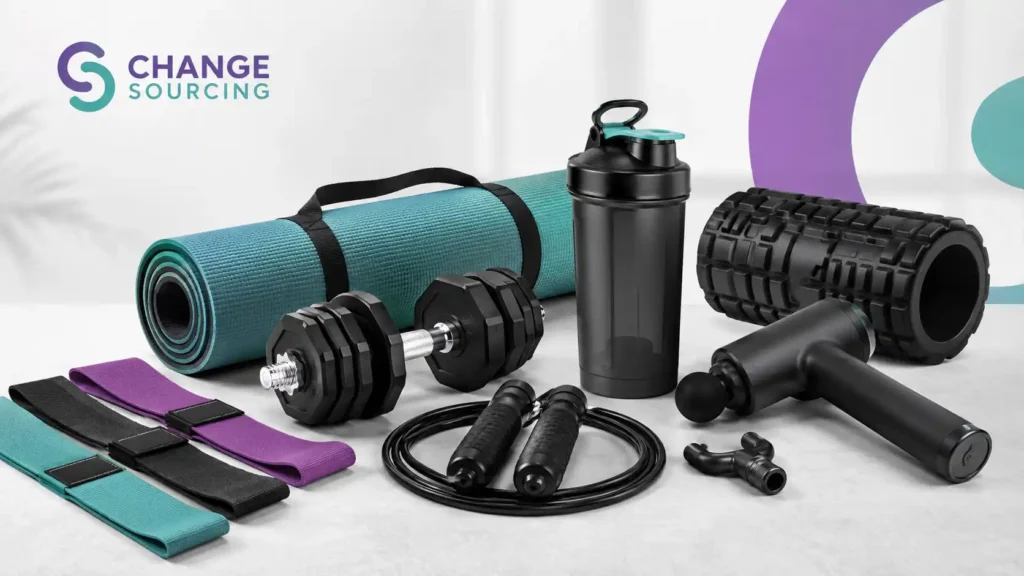
10. Fitness and Wellness Products
Gym memberships in Johannesburg and Cape Town are among the most expensive in Africa relative to median income. This drives consistent demand for home gym alternatives.
Resistance bands, yoga mats, and foam rollers all ship well because their weight-to-value ratio is favorable, and the category carries no NRCS requirement, keeping compliance straightforward.
| Sub-Product | China Factory Price | SA Landed Cost (incl. 15% duty est.) | SA Retail Price | Gross Margin |
| Resistance band set (5 levels) | R37 to R111 (~$2-6) | R60 to R165 | R150 to R500 | 58 to 67% |
| Premium yoga mat (6mm, non-slip) | R74 to R222 (~$4-12) | R110 to R320 | R250 to R900 | 55 to 65% |
| EVA foam roller (standard) | R56 to R185 (~$3-10) | R85 to R270 | R200 to R700 | 57 to 70% |
| Adjustable dumbbell pair (5kg each) | R222 to R555 (~$12-30) | R330 to R800 | R700 to R2,500 | 47 to 53% |
| Speed jump rope (aluminum handles) | R28 to R93 (~$1.50-5) | R55 to R145 | R120 to R500 | 54 to 71% |
Foam rollers and resistance bands are the sweet spot in this table: extremely low landed cost, no NRCS, favorable shipping weight, and a retail price point that performs well on both Takealot and through independent social commerce sellers.
Adjustable dumbbells have the lowest margin percentage but the highest absolute rand margin per sale, making them suitable for sellers with storage capacity.
- SARS duty: 10 to 20% depending on the product
- NRCS required: No for most non-electrical fitness products
- Best sourcing region: Xiamen, Fujian and Guangdong broadly
Suggested Reading: How to Import from China to South Africa in Simple Steps?
Products to Avoid When Importing to South Africa
Understanding what not to import protects your capital as much as knowing what to source.
- Chinese clothing and apparel: The combination of 40 to 45% SARS duty plus anti-dumping levies on Chinese textiles makes clothing from China extremely difficult to import profitably. The landed cost of Chinese women’s garments effectively doubles the purchase price by the time it clears South Africa. Experienced importers avoid this category from China specifically.
- Generic smartphones: While electronics attract 0% duty, smartphones are a highly competitive market dominated by established distribution channels for Samsung, Apple, Xiaomi, and Tecno. Undercutting on price is nearly impossible without a specific niche.
- Food products: South African food imports require SABS compliance, specific labeling in English and Afrikaans for some categories, and various health and agricultural certifications. Rejections at the port are common, and the goods are destroyed with no refund.
- Counterfeit branded goods: South African customs enforcement at Durban and Cape Town ports is active on intellectual property violations. Counterfeit goods are seized, the importer is flagged, and significant fines apply.
- Used electronics: South Africa’s National Consumer Commission has tightened requirements around disclosed conditions and warranty obligations for used goods, making this category legally complex for importers.
The SACU Gateway: Why South Africa is More Than Just One Market
Most important guides treat South Africa as a single destination. The reality is significantly more valuable for importers thinking strategically.
South Africa’s membership in the Southern African Customs Union (SACU) with Botswana, Namibia, Lesotho, and Eswatini means that goods imported and customs-cleared in South Africa move freely between all five member countries without additional duties.
Once your shipment clears Durban Port and SARS collects the applicable duties, the same inventory can supply retail customers in Windhoek, Gaborone, or Maseru at no additional tariff cost.
For an importer based in Johannesburg or Cape Town, this is a meaningful regional distribution advantage. South Africa’s logistics infrastructure, financial systems, and ecommerce platforms are more developed than those of the other SACU members.
Stocking in Cape Town or Johannesburg and distributing regionally via road freight covers a market of more than 70 million consumers from a single import position.
This regional opportunity is particularly strong for solar equipment, electronics, and vehicle parts, where neighboring SACU markets have similar demand drivers but even less developed local supply infrastructure than South Africa.
How Change Sourcing Helps South African Importers Source Correctly from China?
South Africa’s zero-duty electronics position and structural solar demand create exceptional import opportunities. But accessing factory-direct pricing in the right Chinese region, navigating NRCS documentation, and verifying suppliers before money moves are the practical barriers that most first-time importers underestimate.
Change Sourcing operates ground teams in Yiwu and Guangzhou, covering the two regions most relevant to South African importers: Yiwu for home organization, fashion accessories, and consumer goods, and Guangzhou for electronics, beauty products, and direct Canton Fair manufacturer access.
For South African importers, their service covers:
- Identifying factory-direct suppliers in the correct Chinese manufacturing region
- Verifying supplier legitimacy and NRCS-relevant compliance documentation
- Negotiating pricing using real market benchmarks, not Alibaba-listed prices
- Arranging quality inspection before goods leave China
- Consolidating goods from multiple suppliers into single shipments to reduce per-unit freight costs
- Managing international logistics to Durban, Cape Town, or Port Elizabeth
The difference between using a verified sourcing agent and navigating Chinese factories independently is often the difference between correct first shipments and expensive corrections.
Reach out to the Change Sourcing team before your first South Africa-bound shipment.
Frequently Asked Questions
Solar panels and inverters, portable power stations, phone accessories and electronics (0% duty), vehicle aftermarket parts, hair extensions, home organization products, and fashion accessories consistently offer the strongest margins. Electronics are particularly favorable because South Africa applies 0% customs duty and VAT-registered businesses reclaim the 15% VAT.
South Africa applies 0% customs duty to most consumer electronics, including phone accessories, computers, tablets, and solar equipment. VAT at 15% applies to the CIF value but is fully reclaimable for VAT-registered businesses. This makes electronics the most tax-efficient import category in South Africa’s entire tariff schedule.
The National Regulator for Compulsory Specifications (NRCS) requires that specific product categories, including electronics, electrical appliances, solar equipment, power tools, and lighting, meet South African safety standards before they can legally be sold. Products without NRCS-compliant specifications can be held or destroyed at port. Budget for this requirement before ordering any electrical product from China.
South Africa applies a 40 to 45% customs duty on Chinese clothing, plus anti-dumping duties on top. These combined levies effectively double the cost of Chinese apparel before it reaches a South African retailer. Fashion accessories (bags, jewelry, sunglasses) sit in different tariff categories, attract 20 to 30% duty, and have no anti-dumping levies, making them a far more practical alternative for new importers.
South Africa’s membership in the Southern African Customs Union means goods imported and customs-cleared in South Africa can be distributed to Botswana, Namibia, Lesotho, and Eswatini without additional duties. A single import position in Cape Town or Johannesburg effectively serves more than 70 million consumers across five countries from one inventory.
South Africa closed its de minimis tax loophole in mid-2025, which had previously allowed low-value imports from Shein and Temu to enter the country without paying VAT. The closure raised prices on these cross-border platforms and gave local importers who stock domestically a meaningful price and delivery speed advantage. Same-day delivery from Takealot or Amazon SA is now genuinely competitive with Shein pricing.
Before placing any order, check the supplier’s SAMR business registration, request factory photos and a third-party audit report, and search their export history on Import Yeti. Confirm NRCS compliance documentation is available for regulated product categories before committing. Ourbest ways to verify China suppliers guide covers the full process.
Yes. Takealot’s marketplace allows third-party sellers to list products and fulfil either from their own warehouse or through Takealot’s fulfillment network. Electronics, home goods, fitness products, and beauty accessories are all high-performing categories on the platform. Amazon SA, launched in 2024, provides an additional marketplace channel with growing traffic.
Final Takeaway
The best products to import from China to South Africa in 2026 are the ones that align with South Africa’s specific market realities: the load shedding energy crisis, the zero-duty electronics advantage, the de minimis closure that disadvantaged cross-border platforms, and the SACU gateway that extends your effective market to five countries.
Solar equipment and electronics are the most structurally favorable categories by duty rate. Fashion accessories, hair products, and home goods offer the cleanest margins without compliance complexity. Vehicle parts and smart home devices serve a growing demand from a specific demographic that is underserved by the existing local supply.
The mistake that costs South African importers the most is not choosing the wrong product. It is calculating the landed cost incorrectly and discovering the SARS duty math only after the shipment is already at Durban Port.
Change Sourcing’s ground teams in Yiwu and Guangzhou help importers access factory-direct pricing from China, manage quality and compliance before goods leave, and land product in South Africa at the margins of the numbers actually promised. Get in touch before your next order.