

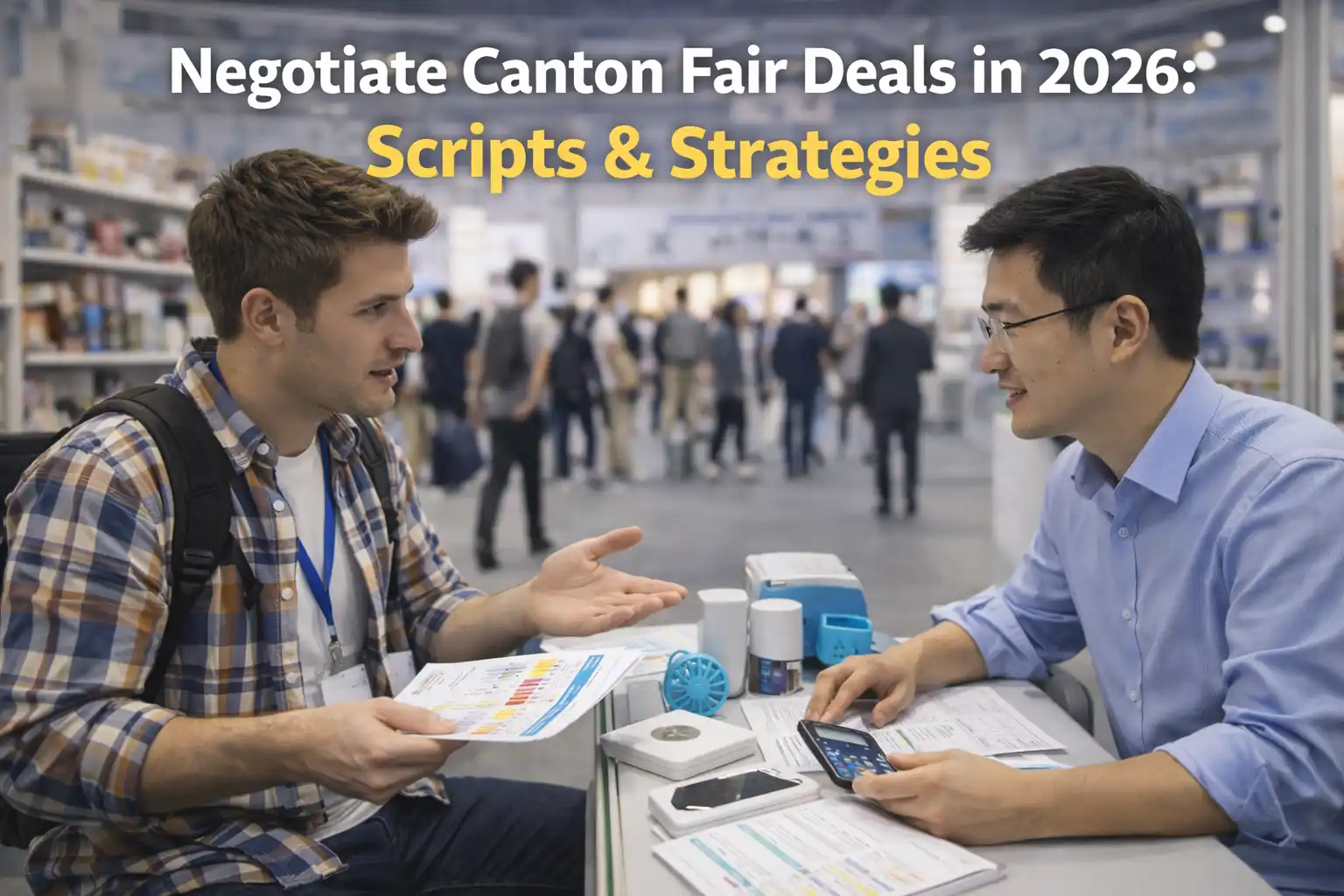
To negotiate Canton Fair deals well, compare several suppliers before discussing price, ask for flexibility on MOQ, lead time, and payment terms, and never treat the first quote as final. The fair is useful for face-to-face supplier talks, but the best deals usually come from structured follow-up after the event, not rushed booth bargaining.
Bad negotiation at the Canton Fair does not only mean paying too much. It can also mean accepting a weak MOQ, unclear lead time, or packaging terms that increase your total landed cost later.
That is why buyers who want to negotiate with suppliers at the Canton Fair need a process, not just confidence. This guide explains how to negotiate at Canton Fair, what to ask suppliers, which terms matter most, and which scripts can help you get better results.
Can You Negotiate at the Canton Fair?
Yes, you can negotiate Canton Fair deals, and suppliers usually expect it. But strong negotiation is not about demanding the lowest number at the first booth. It works best when you compare multiple suppliers, keep the same specification across all quotes, and negotiate total terms instead of price alone.
Change Sourcing advises buyers not to accept the first quote and to compare several factories before deciding.
That matters because a booth quote is usually a starting point, not a final offer. If you want better outcomes, use the fair to collect comparable offers first, then negotiate from a stronger position.
What Should You Prepare Before Negotiating?
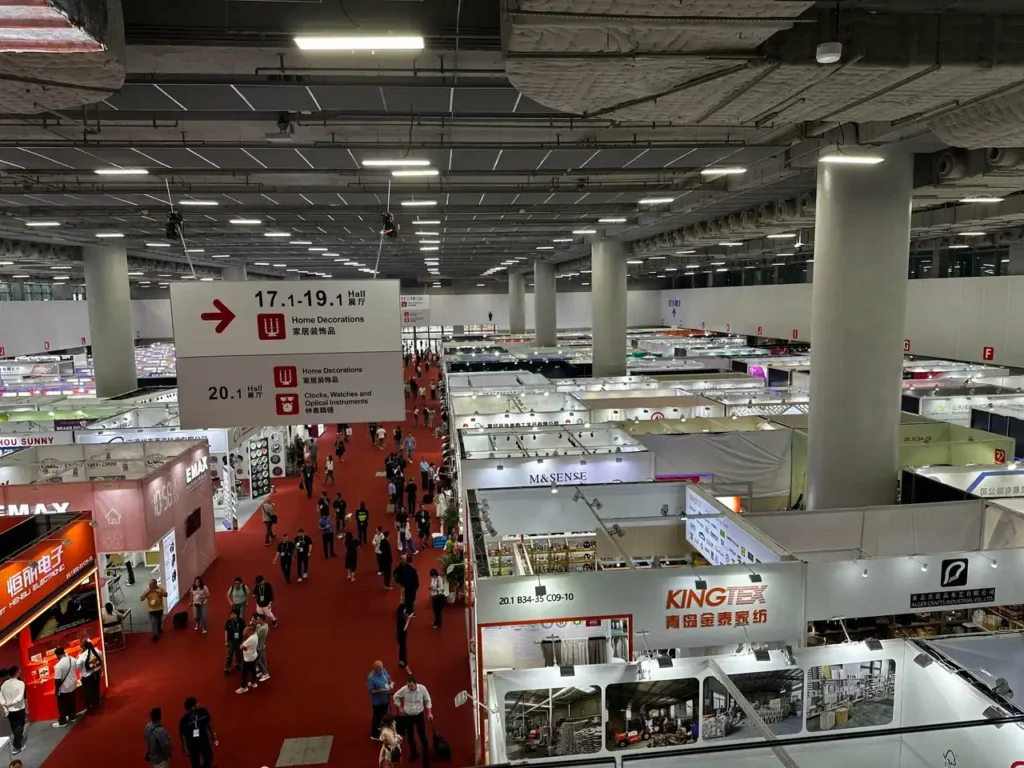
The best Canton Fair negotiation strategy starts before you enter the hall. Buyers should prepare exact product specs, a target MOQ, a realistic budget range, packaging needs, and a list of must-have requirements. Suppliers respond better when they can see that you know what you want.
For example, “What is your best price?” is a weak question.
“What is your FOB price at 500 and 1,000 units for this exact spec with plain packaging?” is much better.
Before the fair, prepare:
- exact product specifications
- target MOQ
- acceptable lead time
- preferred price basis, such as FOB or EXW
- packaging and logo requirements
- sample expectations
- fallback suppliers
This also improves what to ask suppliers at Canton Fair because every conversation becomes easier to compare.
What Should You Negotiate Besides Price?
Buyers should negotiate MOQ, lead time, sample policy, packaging, customization, payment terms, and defect handling as seriously as they negotiate price.
A supplier with a slightly higher unit price can still be the better deal if the MOQ is lower or the lead time is more reliable.
This is where many buyers make mistakes. They focus only on canton fair price negotiation and ignore the other terms that affect profit and delivery.
Important items to negotiate:
- unit price
- MOQ
- sample cost
- tooling or setup fees
- packaging
- payment terms
- lead time
- remake or defect policy
If you want to negotiate MOQ at the Canton Fair or negotiate payment terms at the Canton Fair, do it as part of the same structured discussion. The real deal is the full package, not one headline number.
Scripts: What Should You Say to Suppliers?
A good Canton Fair negotiation script should be short, specific, and easy to compare later. The goal is not to sound aggressive. It is to get clear answers that can help you evaluate suppliers properly.
Use scripts like these:
- Price script: “We are comparing several suppliers for this item. What is your FOB price at 500, 1,000, and 3,000 units?”
- MOQ script: “This MOQ is high for our first run. Can you reduce it if we keep the packaging simple?”
- Lead time script: “What is your production lead time after deposit, and what usually causes delays?”
- Private label script: “We need logo printing and custom packaging. Which part changes the MOQ and which part changes the unit price?”
- Follow-up script: “Please send a formal quotation with MOQ, lead time, packaging, and payment terms in one sheet after the fair.”
How Do You Compare Quotes Properly?
To compare quotes correctly, buyers must keep the specification and quote basis consistent. A cheap quote does not mean much if it uses a different MOQ, lower-quality materials, or different packaging.
Here is a properly filled Canton Fair supplier comparison checklist example:
| Supplier | MOQ | Price Basis | Unit Price | Lead Time | Sample Cost | Packaging | Payment Terms | Notes |
| Supplier A | 500 | FOB | $2.85 | 25 days | $45 | Plain box | 30% deposit, 70% before shipment | Lowest MOQ, slower reply |
| Supplier B | 1000 | FOB | $2.55 | 20 days | Free with bulk order | Retail box included | 30% deposit, 70% before shipment | Better packaging, higher MOQ |
| Supplier C | 500 | EXW | $2.40 | 28 days | $30 | Plain box | 50% deposit, 50% before shipment | Lowest headline price, weaker payment terms |
In this example, Supplier C looks cheapest at first glance, but it is not automatically the best option. The quote is based on EXW, which means the buyer still has to cover more logistics costs after pickup. It also comes with weaker payment terms, which increases buyer risk.
Supplier B offers the best unit price on an FOB basis, includes retail packaging, and has a faster lead time, but the MOQ is 1,000 units, which may be too high for a first order.
For many first-time buyers, Supplier A may actually be the best starting choice. The unit price is higher, but the 500-unit MOQ is easier to manage, the payment terms are standard, and the lower commitment makes it safer for testing the product before scaling.
This is the best way to answer how to compare quotes at Canton Fair.
The best supplier is not always the one with the lowest price. It is the one that offers the strongest balance of price, MOQ, payment terms, packaging, and risk for your actual buying stage.
What Mistakes Should Buyers Avoid?
The biggest Canton Fair buyer negotiation mistakes are negotiating before clarifying the spec, focusing only on price, comparing mismatched quotes, and failing to document what was promised.
Buyers also lose leverage when they sound too eager too early. Good negotiation is calm and structured. It is not loud or overly aggressive.
Avoid these mistakes:
- asking only for “best price.”
- comparing different specs as if they are the same
- ignoring MOQ and lead time
- forgetting packaging details
- failing to ask for a written follow-up
- trying to close too fast at the booth
The better first meeting tips are: ask clear questions first, negotiate second.
Change Sourcing Case Study: How James Carter, UK, Improved Terms at the Canton Fair

At the 2025 Canton Fair, Change Sourcing supported James Carter from the United Kingdom, who was sourcing bathroom organizers and home storage items. At first, he focused mainly on unit price, but the quotes he received were inconsistent because MOQ, packaging, and customization needs were not aligned.
We helped him standardize his request across suppliers and compare offers on the same terms. That shifted the conversation from “Who is cheapest?” to “Who gives the best total deal?”
As a result, James removed weaker suppliers faster and moved forward with better quote quality, clearer lead times, and more realistic MOQ options. This shows how to get best prices at Canton Fair is often about comparing smarter, not pushing harder.
If you meet promising suppliers at the fair but want help comparing quotes, checking supplier credibility, or negotiating terms more confidently, Change Sourcing can support that process after the show. You can check our services here.
What Should You Do After the Canton Fair?
Once the fair is over, you return with quotations and supplier notes. After the event, you can compare suppliers more calmly, restate the exact specification, and negotiate with a smaller shortlist.
A simple post-fair process is:
- Rank suppliers within 48 hours
- Remove weak options
- Request formal written quotations
- Restate the exact specification
- Negotiate final terms with two or three shortlisted suppliers
- Verify the supplier before placing a larger order
FAQs
Yes. Buyers can negotiate on price, MOQ, lead time, packaging, and payment terms. The best results usually come from comparing multiple suppliers first.
No. The first quote is usually a starting point. Buyers should compare several suppliers before deciding.
Besides price, negotiate MOQ, lead time, sample fees, packaging, payment terms, and defect handling. These often affect the real cost more than the unit price alone.
Yes. Private label buyers can negotiate on logo printing, packaging, MOQ, tooling, sample policy, and lead time.
Final Thoughts on Negotiating the Canton Fair
To negotiate Canton Fair deals well, prepare before you arrive, compare offers carefully, and negotiate terms that actually affect your business outcome. Price matters, but MOQ, lead time, packaging, and payment terms matter just as much.
Suggested Readings: