

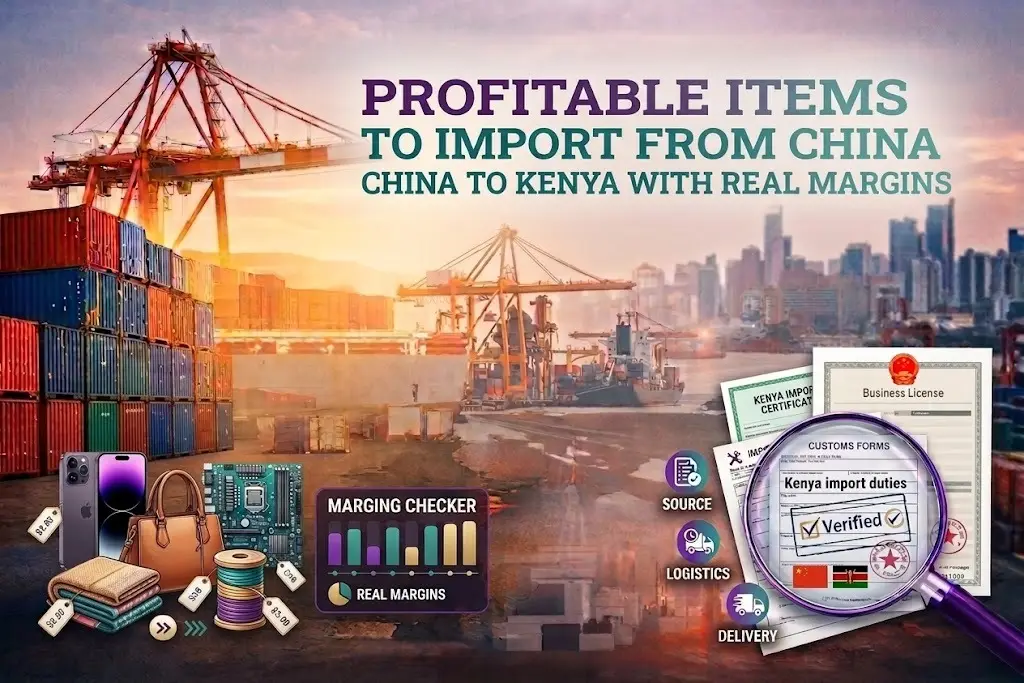
The most profitable items to import from China to Kenya in 2026 are solar panels and inverters (0% import duty, 40 to 60% margins), phone accessories (50 to 75% margins despite 25% duty), LED rechargeable lighting, beauty tools, hair extensions, kitchen organizers, fashion accessories, agricultural tools, construction fittings, and fitness products. Profitability depends not just on which product you choose but on Kenya's import duty rate, PVoC compliance requirements, and which market driver the product serves.
Kenya imported $4.31 billion from China in 2024, making China its single largest import partner by a significant margin. Electrical and electronic equipment alone accounted for $685 million of that figure. The opportunity is real and growing.
But profitable importing is not just about finding cheap products. It is about choosing products where Kenya’s specific market conditions, duty structure, and consumer behavior work in your favor.
This guide covers the 10 most profitable categories with real margin estimates, current 2026 duty rates, and the one compliance requirement most first-time importers get blindsided by.
Why Kenya is One of the Best Markets for Chinese Imports Right Now?
Understanding why certain products are profitable requires understanding the four forces shaping Kenya’s import market in 2026.
The energy access gap is the most structural driver of all. Approximately 25% of Kenya’s population remains off-grid, and grid electricity for those connected costs KES 23 to 29 per kWh, among the highest rates in sub-Saharan Africa. This is not a trend. It is an infrastructure reality that drives predictable, recurring demand for solar products regardless of economic cycles.
The mobile commerce boom creates a direct sales channel that many markets lack. Kenya processes an estimated 63% of its GDP through M-Pesa. With 40 million internet users and a $762 million ecommerce market growing at 15 to 20% annually, products that are demonstrable on TikTok or Instagram and purchasable via mobile money sell with very low customer acquisition cost. Kenya is the 3rd largest ecommerce market in Africa.
The growing urban middle class is driving aspirational spending on beauty, fitness, home organization, and branded-looking products at accessible price points. Nairobi is the commercial and financial hub of East Africa, concentrating purchasing power that no other regional city matches.
The mitumba gap is the factor most importers miss. Kenya’s second-hand clothing market is enormous. Generic apparel from China cannot compete on price with well-organized mitumba markets. However, fashion accessories, beauty tools, and electronics accessories have no mitumba equivalent. These categories are open.
How to Read Profitability in Kenya: The Duty and Landed Cost Reality?
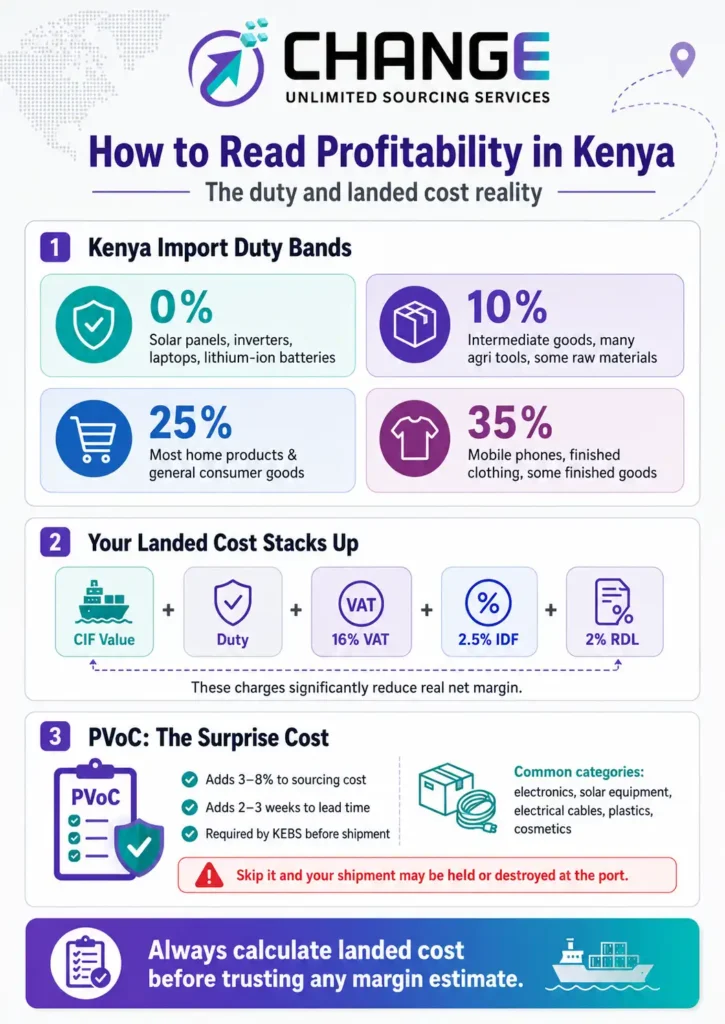
Before any margin estimate is meaningful, understanding Kenya’s import cost structure is essential.
Kenya applies the EAC Common External Tariff with four bands:
- 0%: Solar panels, inverters, laptops, and lithium-ion batteries
- 10%: Intermediate goods, most agricultural tools, and some raw materials
- 25%: General consumer goods, including most home products and accessories
- 35%: Mobile phones, finished clothing, and certain finished goods
On top of duty, every import pays VAT at 16% on the CIF value, plus the Import Declaration Fee (IDF) at 2.5% of the CIF value, and the Railway Development Levy (RDL) at 2% of the CIF value.
These stack together and significantly affect your actual net margin.
PVoC (Pre-Export Verification of Conformity) is the requirement that catches first-time importers by surprise. Kenya’s Bureau of Standards (KEBS) requires that many product categories be inspected by an accredited body such as SGS or Bureau Veritas before leaving China.
This adds 3 to 8% to sourcing cost and 2 to 3 weeks to your lead time. Products requiring PVoC include electronics, solar equipment, electrical cables, plastics, and cosmetics. Skipping it means your shipment can be held or destroyed at the port.
Quick Comparison: 10 Most Profitable Import Categories
| Product | Duty Rate | Est. Margin | Demand | PVoC Required | Best Source Region |
| Solar panels and inverters | 0% | 40 to 60% | Very high and growing | Yes | Shenzhen |
| LED rechargeable lighting | 0 to 10% | 50 to 70% | High | Yes | Zhongshan |
| Phone accessories | 25% | 50 to 75% | Very high | Varies | Shenzhen |
| Kitchen organizers and storage | 10 to 25% | 40 to 60% | High | No | Yiwu |
| Beauty tools and skincare | 25% | 60 to 80% | Very high | Yes (cosmetics) | Guangzhou |
| Hair extensions and wigs | 25% | 60 to 75% | Very high | No | Xuchang, Henan |
| Fashion accessories | 10 to 25% | 60 to 80% | High | No | Yiwu |
| Agricultural tools and irrigation | 0 to 10% | 40 to 55% | High | Some | Various |
| Construction fittings and tiles | 10% | 40 to 60% | High | Yes (some) | Foshan |
| Fitness and wellness products | 10 to 25% | 45 to 60% | Growing | No | Xiamen |
The 10 Most Profitable Product Categories to Import from China to Kenya
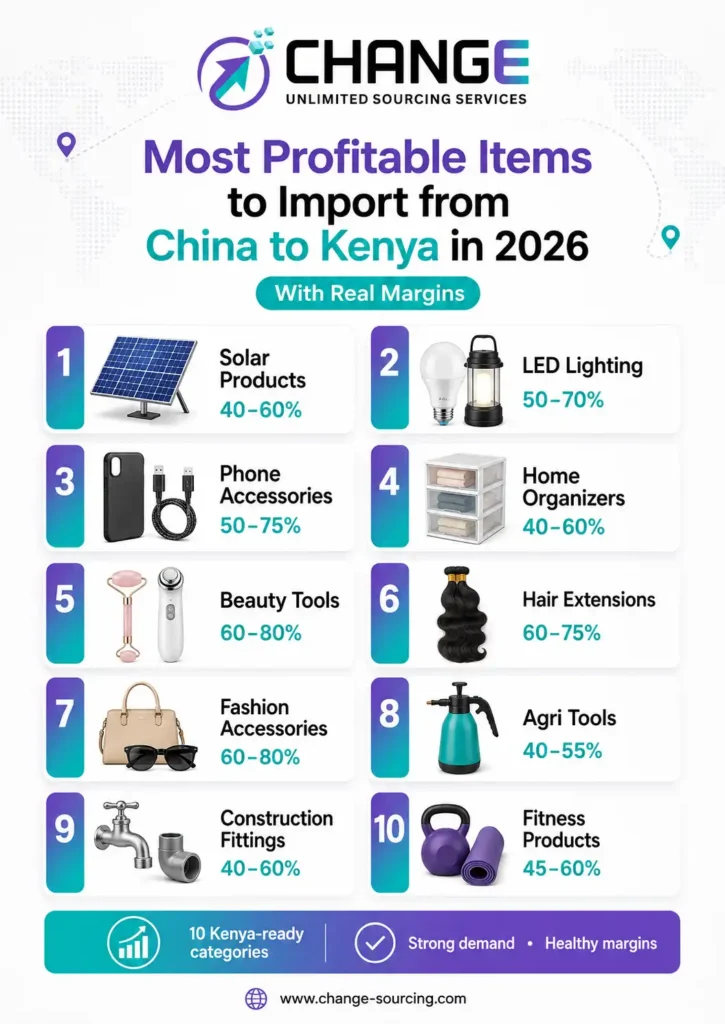
Products are ordered by a combination of effective net margin after Kenya costs, market demand strength, and accessibility for new importers.
1. Solar Panels, Inverters, and Batteries
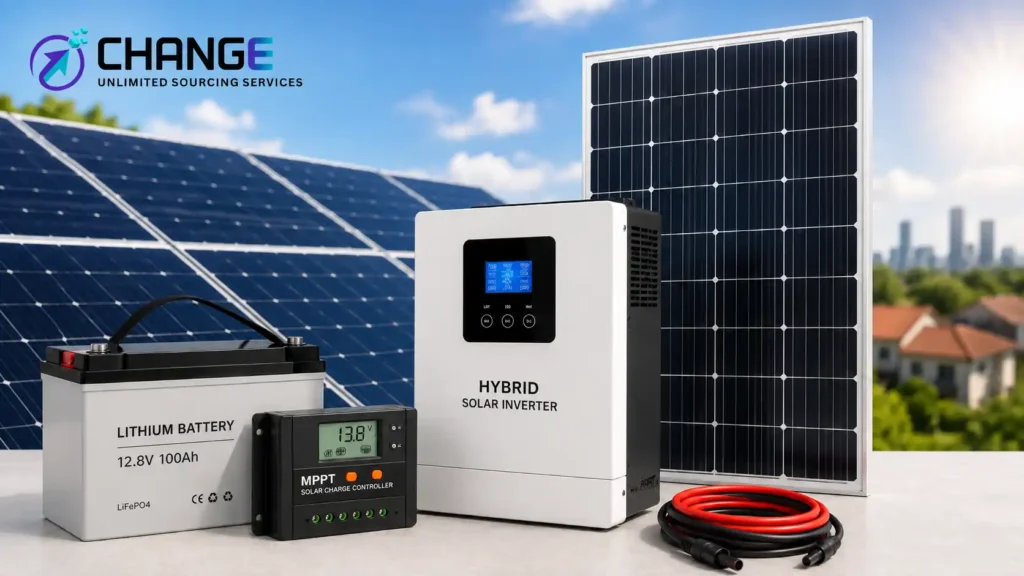
What to source: Monocrystalline solar panels (80W to 400W), hybrid inverters, MPPT charge controllers, and lithium-ion storage batteries.
Solar equipment carries 0% import duty under Kenya’s renewable energy incentive framework. VAT exemptions also apply to qualifying solar products. This is the single best duty position available to any importer.
Kenya's solar market was valued at $65.2 million in 2022 and is projected to reach $171.6 million by 2030 at 13.5% CAGR.
Kenya accounts for 74% of total off-grid solar sales in East Africa. This is not a trend. It is a structural demand driven by the government’s 100% renewable energy target by 2030 and the 25% of the population still off-grid.
- Sourcing price: $50 to $200 per panel, depending on wattage (100-unit order, Shenzhen)
- Kenya retail price: 2.5x to 3x sourcing price at current market rates
- Estimated net margin: 40 to 60% after duty, shipping, and clearing
- PVoC required: Yes. Budget an additional 3 to 5% and 2 to 3 weeks for KEBS compliance inspection
- Best sourcing region: Shenzhen, Guangdong (largest solar manufacturing cluster in China)
2. LED Rechargeable Lighting
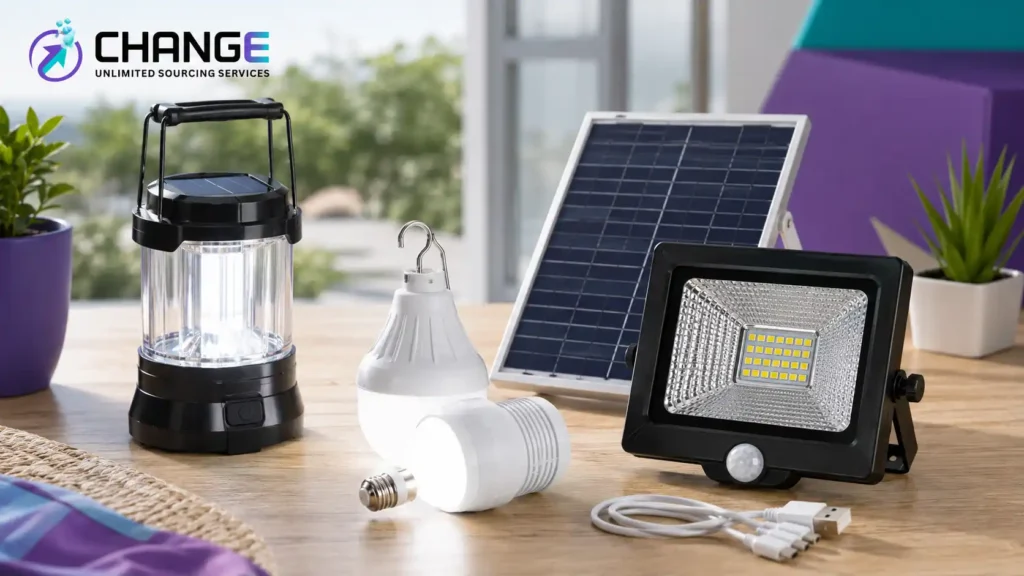
What to source: Portable solar-charged LED lanterns, rechargeable bulbs, and outdoor security lights with built-in solar panels.
This category sits at the intersection of Kenya’s energy access gap and the growth of mobile commerce.
A rechargeable LED lantern priced at KES 800 to 1,200 retail on TikTok Shop sells to rural and peri-urban buyers who have no alternative. Duty is 0 to 10% for most lighting products, depending on the HS code.
Zhongshan in Guangdong Province is the global center of LED lighting manufacturing. Products are produced at extremely competitive factory prices, and the category has a low shipping weight relative to value.
- Sourcing price: $3 to $15 per unit (200-unit minimum, Zhongshan)
- Kenya retail price: 2.5x to 3x
- Estimated net margin: 50 to 70%
- PVoC required: Yes for electrical products
- Best sourcing region: Zhongshan, Guangdong
3. Phone Accessories: Cables, Power Banks, Cases, and Screen Protectors
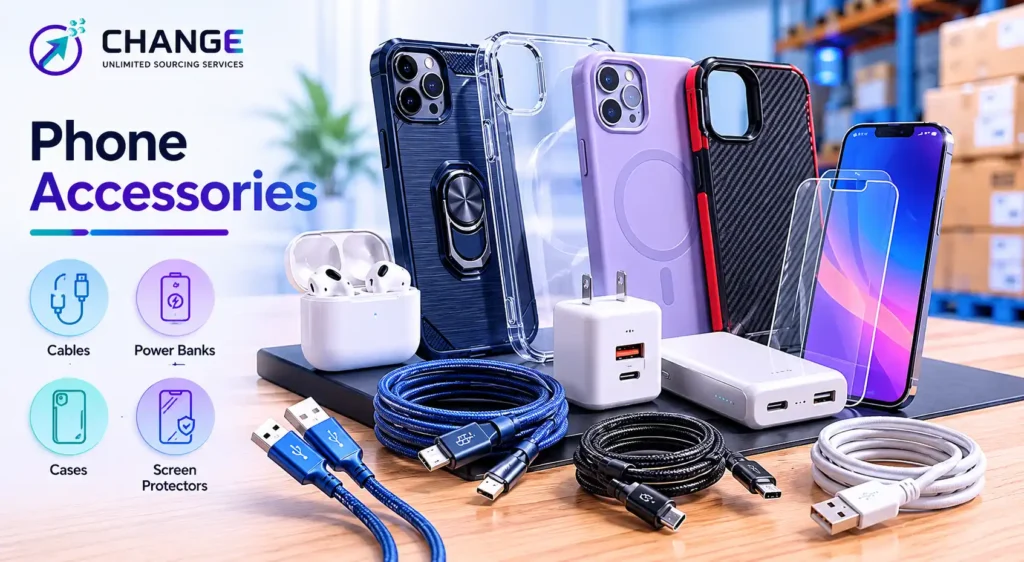
What to source: USB-C and multi-port charging cables, power banks (10,000mAh to 20,000mAh), phone cases for top-selling Android models, and screen protectors.
Kenya’s electrical apparatus imports from China reached $173.91 million in 2024, the largest single sub-category of electrical imports. Mobile phone penetration in Kenya exceeds 110%, and M-Pesa makes every phone owner an active digital commerce participant.
Despite a 25% import duty, margins on phone accessories sourced from Shenzhen at factory prices remain strong because the markup from Chinese wholesale to Nairobi retail is substantial.
A USB-C cable that sources at $0.80 at factory price retails in Nairobi for KES 300 to 500.
- Sourcing price: $0.80 to $8 per unit, depending on product
- Kenya retail price: 3x to 4x
- Estimated net margin: 50 to 75% (after 25% duty and shipping)
- PVoC required: Yes for chargers and power banks
- Best sourcing region: Shenzhen, Guangdong
Connecting with verified factories directly rather than through trading companies on Alibaba is what produces the strongest margins in this category. Our guide on how to contact China manufacturers directly is a useful starting point.
4. Kitchen Organizers and Home Storage Products
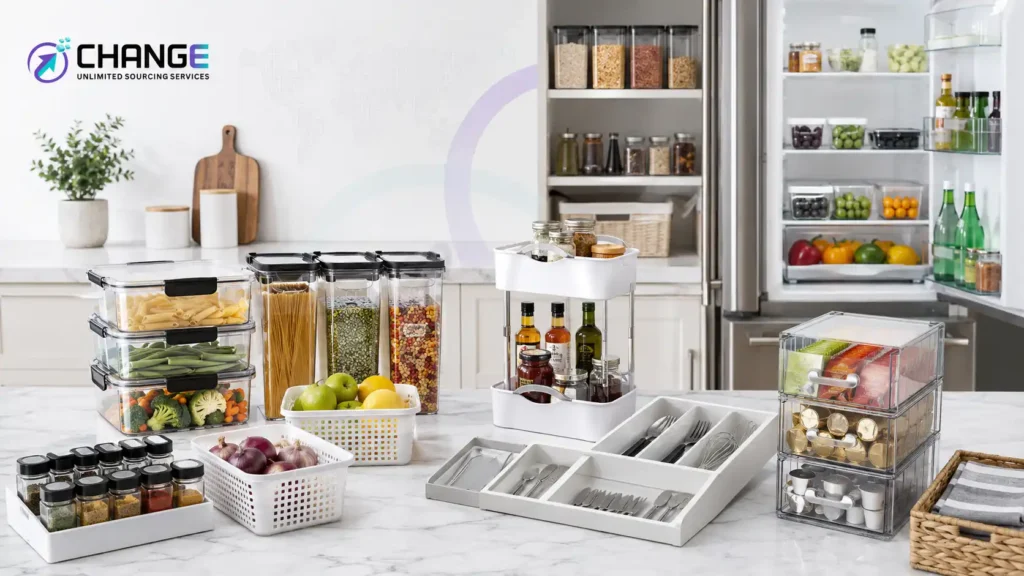
What to source: Fridge organizers, drawer dividers, stackable storage containers, spice racks, and countertop organizers.
This category benefits from Kenya’s TikTok commerce boom more than almost any other. Kitchen organization content performs exceptionally well on Kenya’s social media platforms.
A buyer who sees a fridge organizer on TikTok can purchase it via a link directly through M-Pesa within 60 seconds. No importer needs a physical store.
Yiwu is the cheapest and most varied source for these products globally. Factory prices for home storage items are extremely competitive, and the products are lightweight relative to their retail price.
- Sourcing price: $2 to $10 per unit (100-unit minimum, Yiwu)
- Kenya retail price: 2.5x to 3.5x
- Estimated net margin: 40 to 60%
- PVoC required: No for most non-electrical plastic products
- Best sourcing region: Yiwu, Zhejiang
Understanding how to source from Yiwu efficiently before committing to a shipment is important. The cheapest sourcing platforms guide covers the options, including Yiwugo and 1688 access for Kenyan importers.
5. Beauty Tools and Skincare Devices

What to source: Electric facial massagers, gua sha tools, LED face masks, microcurrent devices, hair curlers, and straighteners.
Kenya’s beauty market is one of the most dynamic in sub-Saharan Africa. Urban Kenyan women are heavy consumers of beauty content and responsive to product demonstrations on social media.
The category benefits from strong repeat purchase behavior and very high retail markups on products that are sourced cheaply in Guangzhou.
PVoC compliance applies to electrical beauty tools. However, non-electrical beauty tools (gua sha, jade rollers, manual massagers) avoid this requirement entirely and still command strong margins.
- Sourcing price: $3 to $15 per unit (Guangzhou factories)
- Kenya retail price: 3x to 5x
- Estimated net margin: 60 to 80% on non-electrical tools
- PVoC required: Yes for electrical devices, No for manual tools
- Best sourcing region: Guangzhou, Guangdong
6. Hair Extensions and Wigs
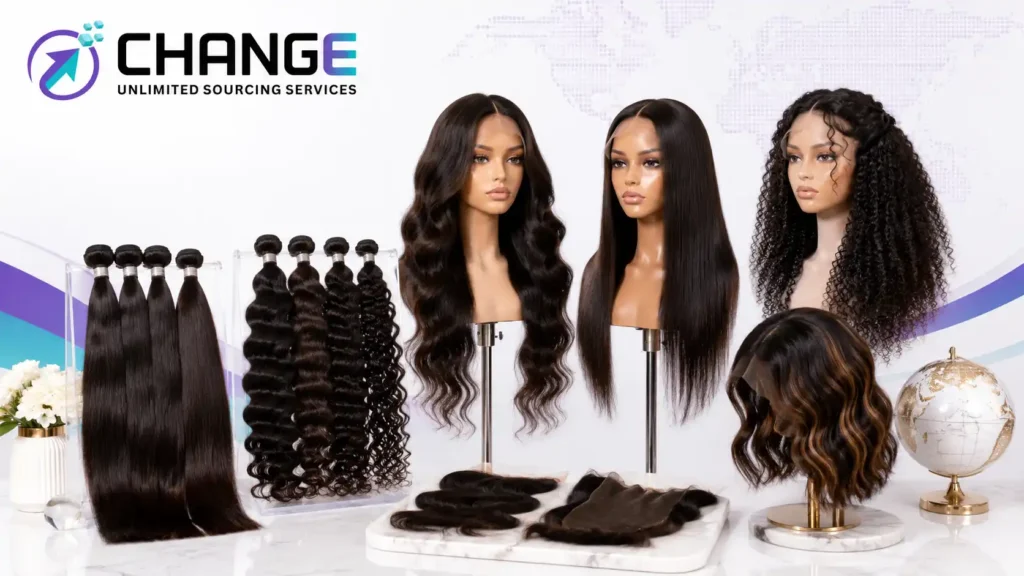
What to source: Human hair weaves (Brazilian, Peruvian, body wave), synthetic wigs, lace front wigs, and hair bundles.
Kenya’s hair extension market is among the largest per capita in Africa. This demand is consistent year-round and shows no sign of saturation. It also has no mitumba equivalent. There is no second-hand market for hair extensions.
China's Xuchang city in Henan Province produces approximately 80% of the world's hair extensions and wigs.
Factory prices are dramatically lower than Nairobi retail prices, and the product-to-weight ratio is favorable for air freight on high-value bundles.
- Sourcing price: $5 to $30 per bundle, depending on grade and length
- Kenya retail price: 3x to 4x
- Estimated net margin: 60 to 75%
- PVoC required: No
- Best sourcing region: Xuchang, Henan Province
7. Fashion Accessories: The Category Mitumba Cannot Touch
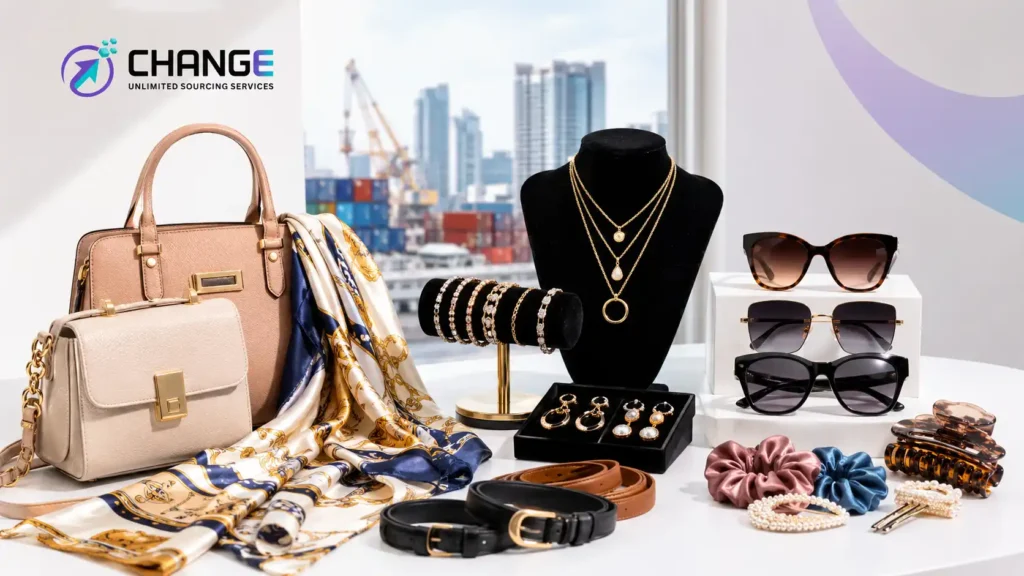
What to source: Sunglasses, handbags, belts, jewelry sets, hair accessories, and fashion scarves.
This is the most important distinction in Kenya’s fashion import market: accessories are not apparel. Generic clothing competes directly with Kenya’s large and well-organized mitumba second-hand market, where imported Western apparel is sold cheaply across Nairobi, Mombasa, and Kisumu. Accessories have no mitumba equivalent.
A bag sourced from Yiwu at $4 faces no second-hand competition in Nairobi. It faces only other importers.
Yiwu is the world’s largest small commodity market and carries more variety in fashion accessories than any other single sourcing location.
- Sourcing price: $1 to $8 per unit (Yiwu, 100-unit minimums)
- Kenya retail price: 3x to 5x
- Estimated net margin: 60 to 80%
- PVoC required: No for most accessories
- Best sourcing region: Yiwu, Zhejiang
8. Agricultural Hand Tools and Small Irrigation Equipment
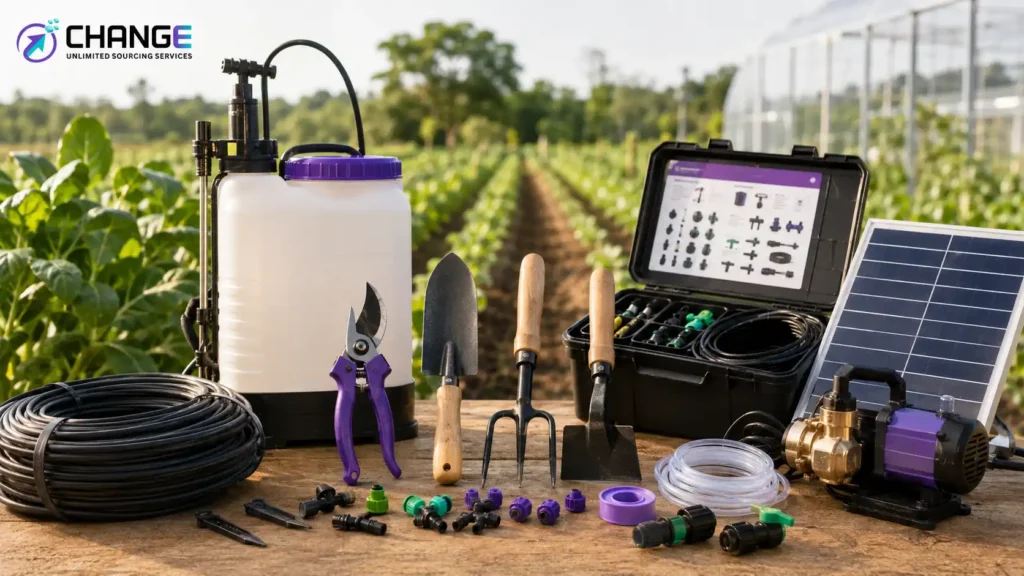
What to source: Knapsack sprayers, drip irrigation kits, pruning tools, hoes, and solar-powered water pumps.
Agriculture contributes approximately 22% of Kenya's GDP and employs over 40% of the workforce. Small-scale farmers are an underserved import market.
Agricultural tools attract 0 to 10% import duty. Solar-powered water pumps attract 0% duty on the solar components. The market is less competitive than consumer electronics because fewer importers target it, and demand is growing with the government’s push for small-scale irrigation.
- Sourcing price: $5 to $30 per unit
- Kenya retail price: 2x to 3x
- Estimated net margin: 40 to 55%
- PVoC required: Varies by product
- Best sourcing region: Various provinces; sprayer manufacturers concentrated in Taizhou, Zhejiang
9. Construction Fittings, Tiles, and Sanitary Ware
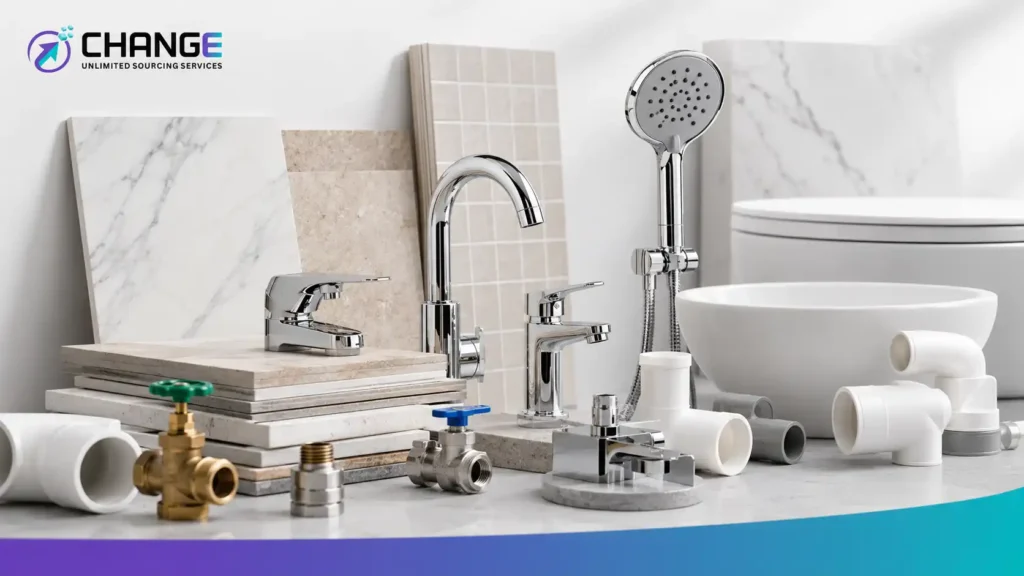
What to source: Ceramic and porcelain floor tiles, door handles, faucets, shower systems, and PVC pipes and fittings.
Kenya’s construction sector is among the fastest-growing in East Africa. Kenya imported $116 million in iron and steel articles from China in 2024 alone.
Construction materials are consistently high-volume imports with growing demand as Kenya's infrastructure investment continues.
Foshan in Guangdong Province is China’s dedicated manufacturing hub for ceramics, tiles, fittings, and bathroom products. Prices from Foshan factories are significantly below what Nairobi distributors charge.
- Sourcing price: $5 to $20 per unit, depending on category
- Kenya retail price: 2x to 3x
- Estimated net margin: 40 to 60%
- PVoC required: Yes for some steel and electrical fittings
- Best sourcing region: Foshan, Guangdong
Before shipping construction materials, working with a quality inspection service is especially important given the bulk volumes involved.
Our guide on 7 China Product Quality Inspection Tips covers what to check before approving a construction materials shipment.
10. Fitness and Wellness Products
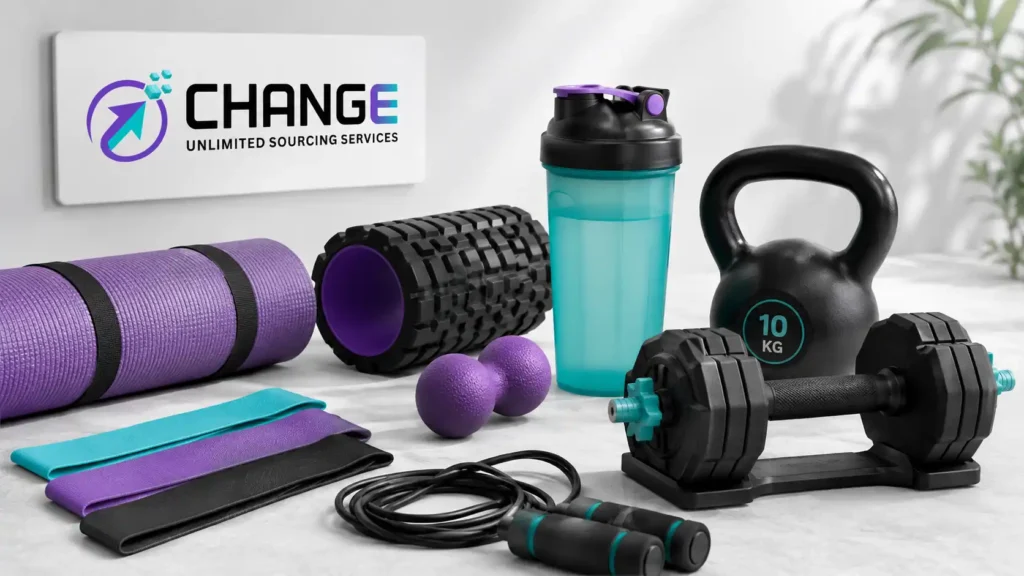
What to source: Resistance bands, yoga mats, jump ropes, foam rollers, adjustable dumbbells, and blender bottles.
Kenya’s growing urban middle class is demonstrating increasing health consciousness. Gym membership costs in Nairobi are high, driving demand for home workout equipment.
Fitness products also perform exceptionally well on TikTok and Instagram for Kenyan sellers because demonstrations are inherently engaging content.
This category has no mitumba equivalent, attracts 10 to 25% duty depending on the specific product, and sources at competitive prices from multiple Chinese manufacturing regions.
- Sourcing price: $5 to $25 per unit
- Kenya retail price: 2.5x to 3.5x
- Estimated net margin: 45 to 60%
- PVoC required: No for most non-electrical fitness products
- Best sourcing region: Xiamen, Fujian, and broader Guangdong
Products to Avoid When Starting Out
Knowing what not to import protects your capital as much as knowing what to source.
- Generic clothing and basic apparel: Kenya’s mitumba second-hand market imports hundreds of thousands of tonnes of used Western clothing annually. Competing with this on price as a new importer sourcing new Chinese apparel is extremely difficult. The 25 to 35% import duty compounds the problem.
- Smartphones: The 35% import duty on mobile phones is the highest in the EAC tariff structure. Combined with fierce competition from established phone importers and the dominance of Samsung, Tecno, and Infinix distribution channels, margins for independent smartphone importers are very thin.
- Food products without PVoC: Food imports require PVoC from a KEBS-approved body, Kenya Food and Drugs Authority clearance, and, in many cases, specific labeling in English. Shipments without correct documentation are destroyed at the port, with no refund.
- Counterfeit branded goods: Customs at JKIA and Mombasa Port have improved enforcement significantly. Counterfeit goods are seized, the importer is blacklisted, and fines are issued. This is not a risk worth taking.
- Used electronics: Kenya applies strict age restrictions on used electronic imports. Devices must meet minimum age limits to be cleared, and enforcement has increased.
How Change Sourcing Helps Kenyan Importers Source Correctly from China?

The biggest challenge for most Kenyan importers is not knowing which product to source. It is accessing factory-direct pricing in the right Chinese region, navigating PVoC compliance documentation, and verifying suppliers before money moves.
Change Sourcing operates ground teams in Yiwu and Guangzhou, covering the two regions most relevant to Kenyan importers. These regions are:
Yiwu: small consumer goods, fashion accessories, kitchen products, and home storage.
Guangzhou: beauty products, fashion, electronics, and Canton Fair supplier access.
For Kenyan importers, their service covers:
- Identifying factory-direct suppliers in the correct Chinese manufacturing region for each product category
- Verifying supplier legitimacy through SAMR registration and factory audits
- Negotiating pricing using local market benchmarks
- Arranging quality inspection before goods leave China, including working with PVoC-accredited bodies where required
- Consolidating goods from multiple suppliers into single shipments to reduce per-unit freight costs
- Managing international logistics to Mombasa or Nairobi
For importers just beginning their China sourcing journey, working with a verified sourcing agent removes the most common and most expensive mistakes before they happen.
Reach out to the Change Sourcing team before placing your first China order.
Frequently Asked Questions
Solar panels and inverters offer the best combination of 0% import duty and strong margins of 40 to 60%. Phone accessories, beauty tools, fashion accessories, and hair extensions consistently deliver 60 to 80% gross margins. The most profitable category for any individual importer depends on their starting capital, target market, and ability to manage compliance requirements like PVoC.
Kenya applies the EAC Common External Tariff with four bands. Solar equipment, laptops, and lithium batteries attract 0%. Most intermediate goods attract 10%. General consumer goods, including home products and accessories, typically attract 25%. Mobile phones and finished clothing attract 35%. VAT at 16%, IDF at 2.5%, and RDL at 2% apply in addition to the base duty rate.
PVoC stands for Pre-Export Verification of Conformity. Kenya’s Bureau of Standards requires that certain product categories be inspected and certified by an accredited body before leaving China. Products requiring PVoC include electronics, solar equipment, electrical cables, plastics, and cosmetics. Missing this adds cost and delays at the port. Budget for it in your landed cost calculation before ordering.
Generic clothing faces direct competition from Kenya’s mitumba second-hand market and attracts 25 to 35% import duty. For new importers, clothing is one of the hardest categories to compete in. Fashion accessories, which have no mitumba equivalent and typically attract lower duty, are a more accessible alternative with comparable or better margins.
Sea freight becomes cost-effective at roughly $1,500 to $2,000 in goods value. Most importers start with air freight on high-value, lightweight products like accessories or beauty tools, which allows testing with smaller budgets. Factor in the cost of the goods, shipping, duty, clearing fees, and PVoC inspection before calculating your minimum viable order.
Products that are demonstrable in short videos sell fastest on Kenya’s social platforms. Kitchen organizers, beauty tools, fitness products, and LED lighting are all strong performers because their value is immediately visible. Kenya’s mobile money infrastructure means buyers can purchase directly from a social media link within seconds of seeing a demonstration.
Before placing any order, request the supplier’s SAMR business registration, ask for factory photos and an audit report, and search their export history on Import Yeti. Our guide onbest ways to verify China suppliers covers the full verification checklist specifically for importers buying from Chinese factories.
Final Takeaway
The most profitable items to import from China to Kenya in 2026 are those that combine favorable duty rates with strong structural demand and categories where Kenya’s unique market dynamics work in your favor.
Solar products win on duty (0%) and structural necessity. Phone accessories win on volume and mobile commerce reach. Beauty tools, hair extensions, and fashion accessories win on the mitumba gap. Construction materials and agricultural tools win in an underserved, high-volume market most importers overlook.
The mistake that costs importers the most is not choosing the wrong product. It is calculating the wrong cost. PVoC requirements, actual duty stacking, and freight costs on the wrong product category can turn a 70% gross margin into a 15% net margin overnight.
Change Sourcing’s ground teams in Yiwu and Guangzhou help importers access factory-direct pricing, manage quality and compliance before goods leave China, and land products in Kenya at the margins of the numbers actually promised. Get in touch before your next order.