

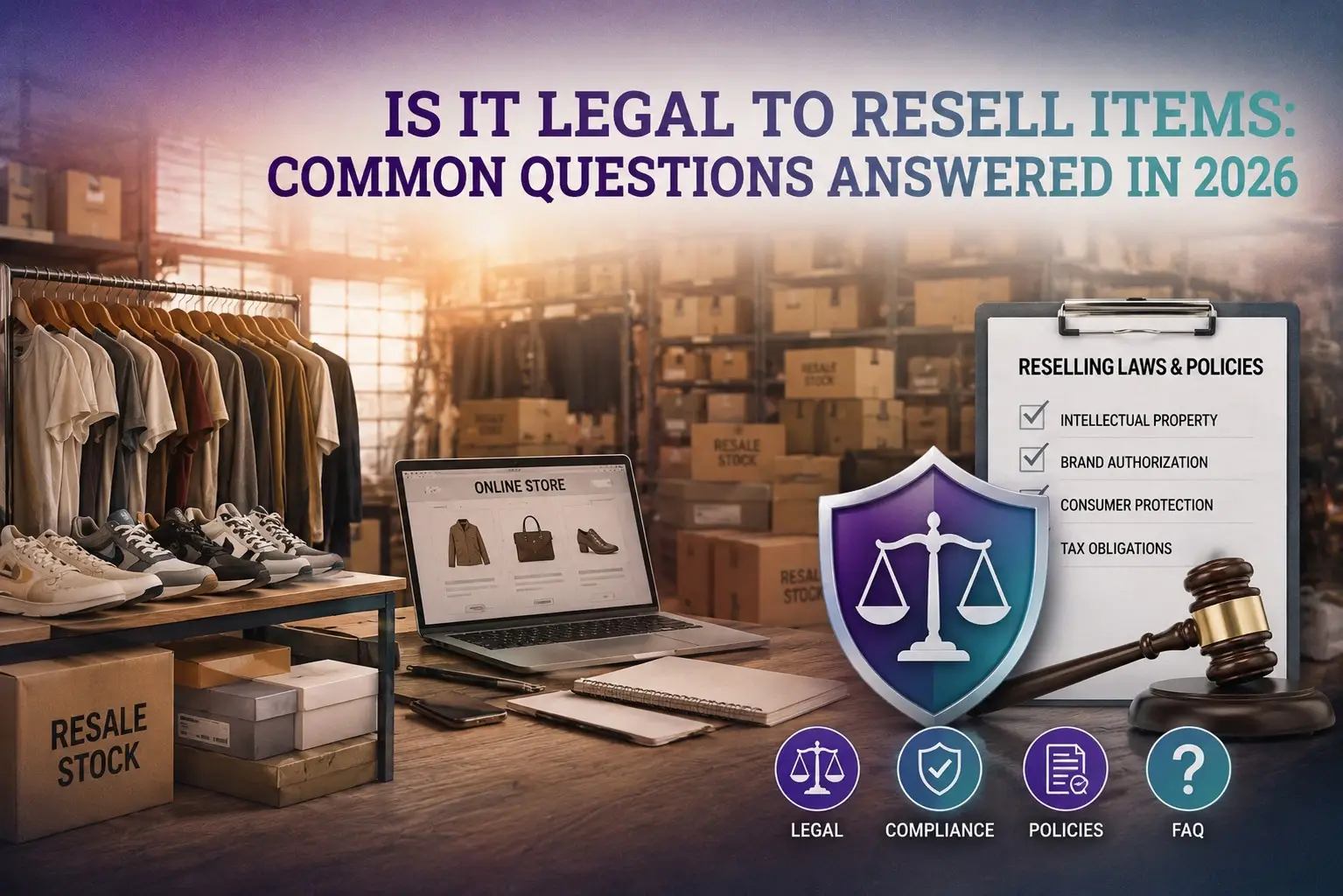
Yes, reselling items is legal in the United States and most countries worldwide. The First Sale Doctrine gives you the legal right to resell any physical product you lawfully purchased. However, certain categories carry real risks — counterfeit goods, recalled products, safety-regulated items, and digital goods are all exceptions. Platform rules on Amazon and eBay add another layer you need to understand before you start.
The reselling business is growing fast. According to ThredUp’s 2026 Resale Report, the U.S. secondhand market is expected to reach $78.8 billion by 2030, growing nearly four times faster than the broader retail market in 2025. Millions of people are buying products and flipping them for profit every single day.
But a lot of new sellers pause and ask a very reasonable question: Is this actually legal?
The short answer is yes. Reselling items you purchased is protected under U.S. law, and most countries have equivalent protections. This guide covers exactly what is legal, what is not, what platform rules apply, and what you need to know before your first order lands.
Is It Legal to Resell Items?
Yes. Reselling items you legally purchased is protected under the First Sale Doctrine, a U.S. law codified in Section 109 of the Copyright Act. Once you buy a physical product, the original manufacturer loses control over what you do with that specific unit. You can use it, gift it, or sell it to someone else.
This is the legal foundation that powers every reselling platform in existence. eBay, Amazon, Poshmark, Facebook Marketplace — all of them operate on this principle.
The doctrine applies to physical goods. You own the item. You can sell it.
What the First Sale Doctrine does not cover is counterfeit goods, recalled products, or items you do not actually own ( such as digital licenses and software subscriptions). Those fall under a completely different set of rules.
What Items can You Legally Resell?
Most physical products you buy legally — whether from a retail store, a wholesale supplier, a trade show, or a manufacturer in China — are fully legal to resell.
The key condition is that the goods must be genuine, legally purchased, and not subject to specific safety or regulatory restrictions.
General Retail Goods
Every day consumer products are the safest category. Clothing, home goods, electronics, kitchenware, toys, personal care products, and sports equipment are all fair game as long as they were legally purchased and are authentic.
This is the heart of retail arbitrage — buying at a lower price and selling at a higher one. There is nothing illegal about that practice.
Branded and Name-Brand Products
You can resell branded items legally under the First Sale Doctrine even without permission from the brand. Buying a pair of Nike shoes at a retail store and reselling them on eBay is completely legal.
Where this gets complicated is when brands enforce their own authorized reseller programs or minimum advertised pricing (MAP) policies.
These are contractual policies, not laws. Violating them may get you cut off from a wholesale account. It does not automatically make the resale illegal.
Items Sourced from China
This is the most relevant category for importers. Buying products from Chinese manufacturers through platforms like Alibaba or directly from factories and reselling them is entirely legal — provided the goods are genuine and do not infringe on trademarks or patents.
The legal risk here is not in the reselling itself. It is in the sourcing. Counterfeit goods, products that mimic branded packaging, or items that violate safety standards create liability for the importer.
Buy legitimate, verified goods from legitimate suppliers, and the resale is clean.
What Items are Restricted or Risky to Resell?
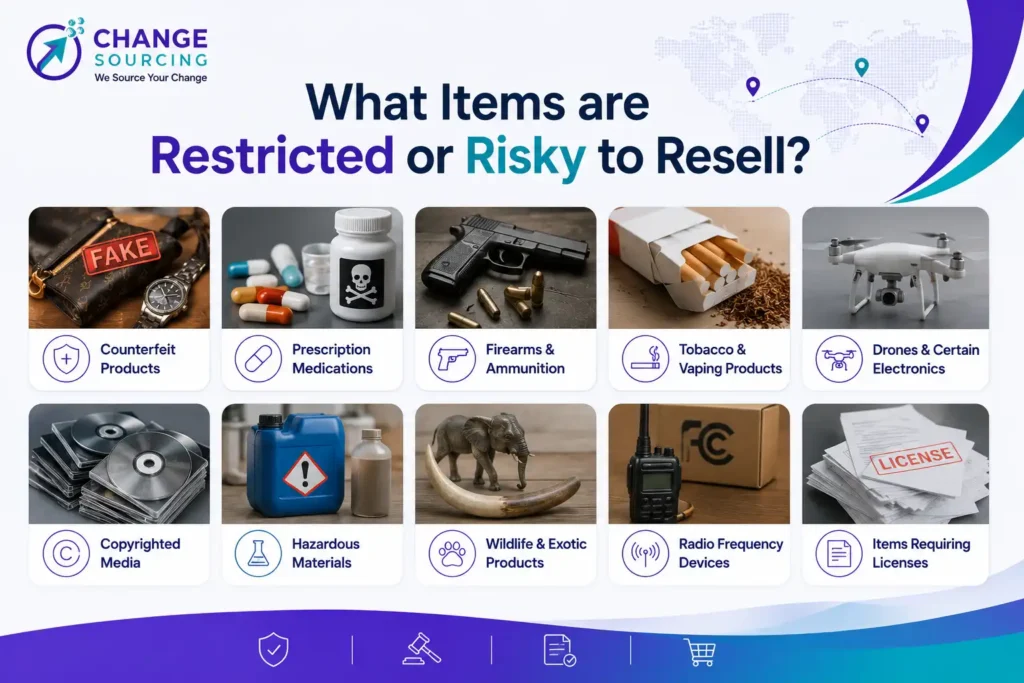
Not every product you can physically buy is safe to resell. Four categories carry genuine legal exposure: counterfeit goods, recalled or safety-regulated products, digital goods and software licenses, and items with active export or import restrictions.
Here is a clean breakdown:
| Category | Can You Resell? | Why |
|---|---|---|
| Genuine branded retail goods | Yes | Protected by the First Sale Doctrine |
| Wholesale goods from verified suppliers | Yes | Legally purchased, authentic |
| Products sourced from China (legitimate) | Yes | Legal import and resale |
| Counterfeit branded goods | No | Trademark and IP law violations |
| Recalled or banned products | No | Consumer safety law violations |
| Digital goods/software licenses | No | License agreements, not ownership |
| Items bought under restrictive contracts | Risky | Breach of contract exposure |
| Safety-regulated items without compliance docs | Risky | Liability and customs violations |
Counterfeit or Fake Goods
Selling counterfeit goods (fake branded items that copy a trademark) is illegal under the Lanham Act in the United States and equivalent trademark laws globally. This is the single biggest legal trap for importers sourcing from China.
A supplier offering branded-looking goods at suspiciously low prices is a serious red flag. If a product carries a recognizable brand logo and is not genuine, selling it exposes you to civil lawsuits and, in serious cases, criminal charges.
Safety-Regulated and Recalled Products
Products like children’s toys, electronics, and cosmetics must meet safety standards enforced by bodies like the U.S. Consumer Product Safety Commission.
Reselling recalled products or goods that fail safety compliance is illegal, regardless of where you bought them.
If you source from China, this means verifying that your supplier holds the correct certifications — CE, FCC, CPSC compliance — for your product category before you import and resell.
Digital Goods and Licensed Software
The First Sale Doctrine applies to physical goods only. If you buy a digital movie, an e-book, or a software license, you own a license to use it — not the file itself. You cannot legally resell a Steam game account, a Netflix subscription, or a digital product you purchased under a personal use license.
Platform Rules You Must Know Before You Resell
Beyond the law, every major selling platform has its own policies that go further than what is legally required. Breaking a platform’s rules will not land you in court, but it will get your account suspended and your inventory frozen. Know the rules before you list a single item.
- Amazon has a Restricted Products policy that limits or prohibits certain categories — including items with specific safety certifications, pesticides, and certain medical devices. Reselling is legal on Amazon, but listing restricted items without the correct documentation results in immediate removal and potential account suspension.
- eBay operates with more flexibility but restricts certain brand categories where the rights holder has registered a program. If a brand has filed a VeRO (Verified Rights Owner) notice, listings can be removed even if the goods are genuine.
Selling on your own store or website gives you the most freedom. You are not subject to a platform’s listing policies. Your only obligations are to the law, tax compliance, product safety, and trademark rules.
Do You Need a License or Permit to Resell Items?
In the United States, you do not need a federal license to resell items. However, you will likely need a state-level reseller permit (also called a resale certificate or seller's permit) to buy goods wholesale without paying sales tax. You are also required to report income from reselling on your tax return.
A reseller permit is free or low-cost to obtain in most U.S. states. It proves you are buying goods for resale, not personal use, which exempts you from sales tax at the purchase stage. You then collect sales tax from your buyer instead.
If you are importing goods from China and reselling them, you are operating as an importer of record. That means you are responsible for customs duties, import compliance, and product liability. Working with a freight forwarder or sourcing agent who understands these obligations is the practical way to stay compliant from day one.
Change Sourcing Insights: How One Reseller Avoided a Trademark Trap

A small homewares brand came to us after running into a serious problem with their first China order. They had found a supplier offering kitchen accessories with packaging that closely resembled a well-known Western brand. The price was very low, and the supplier assured them the goods were “inspired by” the original.
They asked us to step in before placing a large follow-up order. After reviewing the product images and packaging, it was clear that the goods were designed to mimic a trademarked product line. Selling them in the U.S. would have exposed the buyer to trademark infringement claims under the Lanham Act.
We sourced an alternative supplier producing a genuinely original product in the same category, arranged a factory inspection to verify quality and compliance, and confirmed the goods carried no infringing marks or packaging. The client placed the new order, imported legally, and launched their store without any legal exposure.
The lesson is simple. Legal reselling starts with legal sourcing. Verify your supplier, verify your product, and verify your documentation before the goods ever leave China.
If you need further information about sourcing from China, you can contact us for a FREE Consultation call.
Frequently Asked Questions
Yes. Buying products at wholesale prices from a supplier or manufacturer and reselling them at a higher price is the foundation of retail and eCommerce. It is fully legal as long as the goods are genuine, legally imported, and comply with safety and trademark laws.
You can resell genuine branded goods purchased legally. You cannot resell counterfeit items that copy a brand’s trademark, even if the factory claims they are “replicas.” Selling counterfeit goods is a trademark violation regardless of where the goods were made or where you purchased them.
Yes. Income from reselling is taxable in the United States and most countries. If you are reselling regularly as a business, you are required to report that income. Most U.S. states also require a reseller permit so you can buy wholesale tax-exempt. Consult a tax professional for guidance specific to your situation.
Yes. Retail arbitrage — buying discounted goods from retail stores and reselling them on Amazon — is legal and widely practiced. Amazon permits it under its marketplace policies. You still need to comply with Amazon’s restricted product categories and brand-gating rules on specific products.
Conclusion
Reselling items is legal, widely practiced, and backed by a clear legal principle. The First Sale Doctrine gives you the right to resell any genuine physical product you legally purchased.
The risks come from counterfeit goods, safety-regulated products, digital licenses, and platform policy violations — all of which are avoidable with the right sourcing process.
Looking to source products from China the right way — with verified suppliers, factory inspections, and full compliance support? Get your free consultation with the CHANGE Sourcing team and start your reselling business on solid legal ground.