
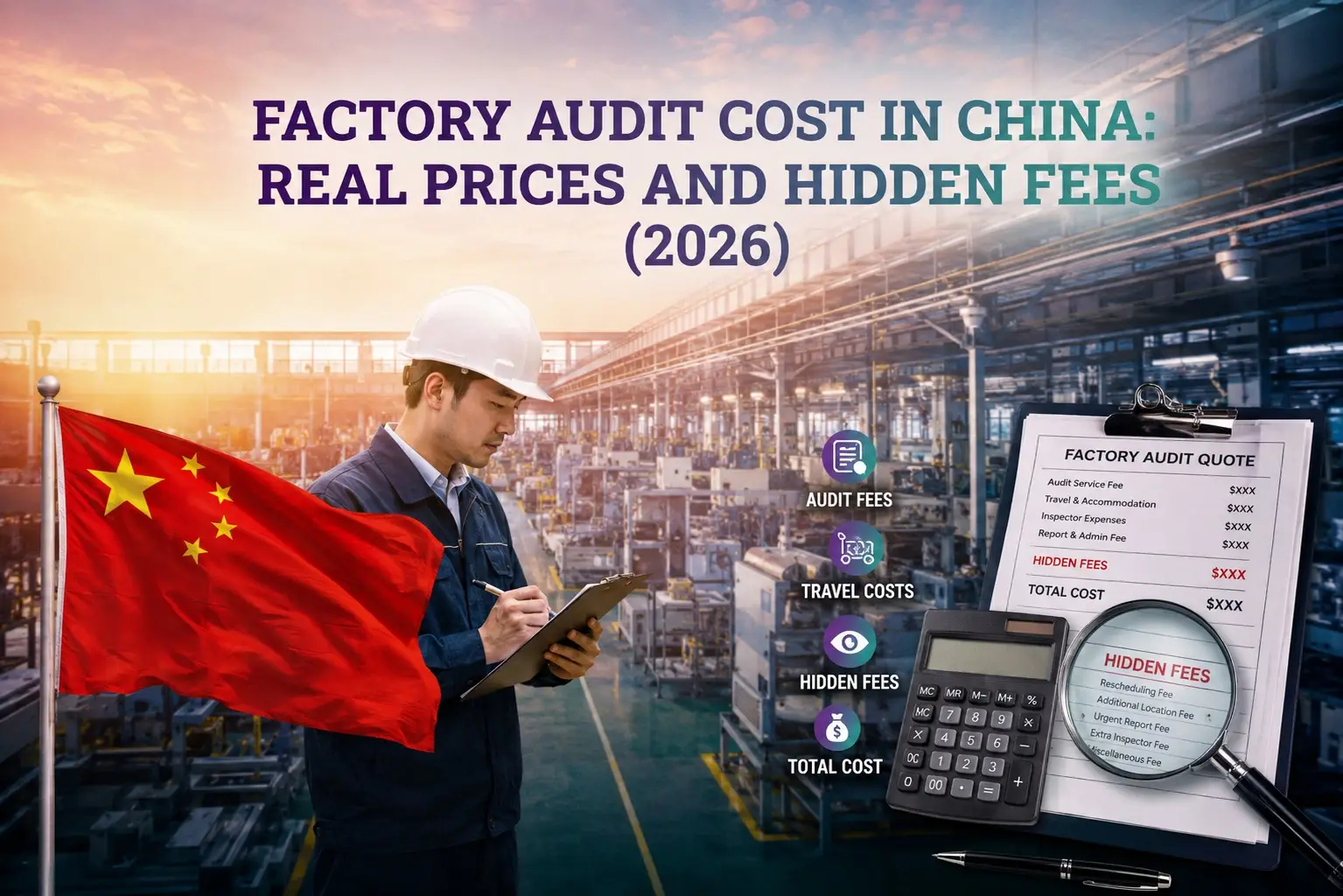
A factory audit in China costs between $220 and $1,000 for most importers. Pricing is based on a man-day rate, meaning what one auditor charges for one full working day. Basic capability audits start at $188 to $300. Quality management and social compliance audits run $400 to $800. Combined audits reach $500 to $1,000 or more. Beyond the base rate, always budget for travel surcharges, report fees, and potential re-audit costs if the factory fails.
You found a supplier in China that looks good. The samples came back clean. The price makes sense. But before you wire a deposit on a $20,000 order, someone says: “You really should do a factory audit first.”
Now you are wondering what that actually costs and whether it is even worth it.
Factory audit costs in China typically fall between $220 and $1,000 for most importers. That range exists for real reasons. The price shifts based on the type of audit, the factory’s location, the provider you pick, and a list of extra fees that most guides quietly skip over.
This article gives you the real numbers. You will get a full breakdown by audit type, provider tier, and manufacturing region. You will also get a clear, honest framework for deciding when a factory audit pays for itself and when you can skip it without taking on serious risk.
What is a Factory Audit in China?
A factory audit is an on-site evaluation of a manufacturing facility. A trained auditor visits the factory in person and checks whether it can actually deliver what the supplier has promised. The result is a detailed written report covering the factory's capabilities, quality systems, licenses, and compliance status.
Most importers confuse a factory audit with a product inspection. They are two different tools. A product inspection checks the finished goods after production. A factory audit checks the facility itself before you place the order in the first place.
Think of it this way. A product inspection is like tasting food before it leaves the kitchen. A factory audit is like checking the kitchen itself before you ever sit down to eat.
Audits cover production equipment, worker management, quality control processes, business registration documents, and safety conditions.
A solid audit report shows you where a supplier is strong, where the risks are, and whether the claims they made on Alibaba actually match what is happening on the factory floor.
How Much Does a Factory Audit in China Cost?
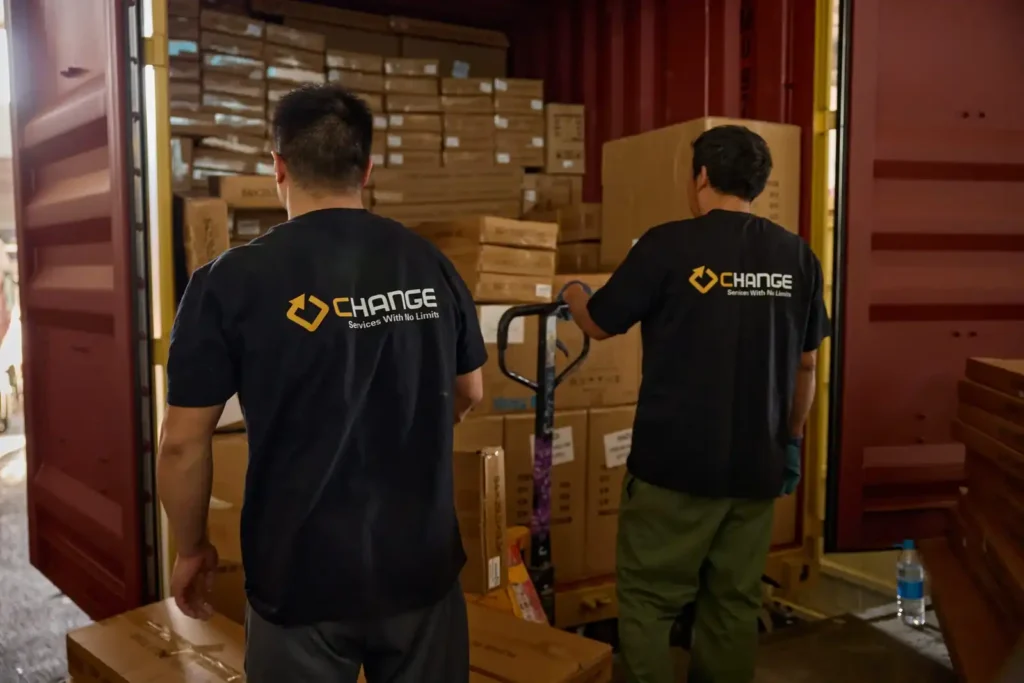
A factory audit in China is priced on a man-day rate, meaning the fee for one auditor working one full day. Most third-party QC firms operating in China charge between $160 and $500 per auditor-day. Total costs for most importers land between $220 and $1,000 for one to two days of on-site work. Large international agencies like SGS and Intertek sit at the higher end of that range.
The man-day rate covers the auditor’s time on-site, preparation work before the visit, and the written report they issue afterward.
Most audits take one to two man-days to complete. An extensive combined audit at a large facility may need three to five days.
Here is a summary of real pricing by audit type. These figures are based on published rates from active QC providers, including Veriquality, AQI Service, and benchmarks from QC Advisor:
| Audit Type | Typical Price Range | Duration |
|---|---|---|
| Basic Capability Audit | $188 to $300 | 0.5 to 1 day |
| Quality Management System (QMS / ISO 9001) | $400 to $700 | 1 to 2 days |
| Social Compliance Audit | $400 to $800 | 1 to 2 days |
| Environmental Compliance Audit | $400 to $900 | 1 to 2 days |
| Combined / Extensive Audit | $500 to $1,000+ | 2 to 3 days |
| Remote / Virtual Audit | $100 to $250 | Half-day to 1 day |
These numbers reflect what real importers pay when booking through specialist QC firms operating in China in 2026.
What are the Main Types of Factory Audits, and What Does Each Cost?
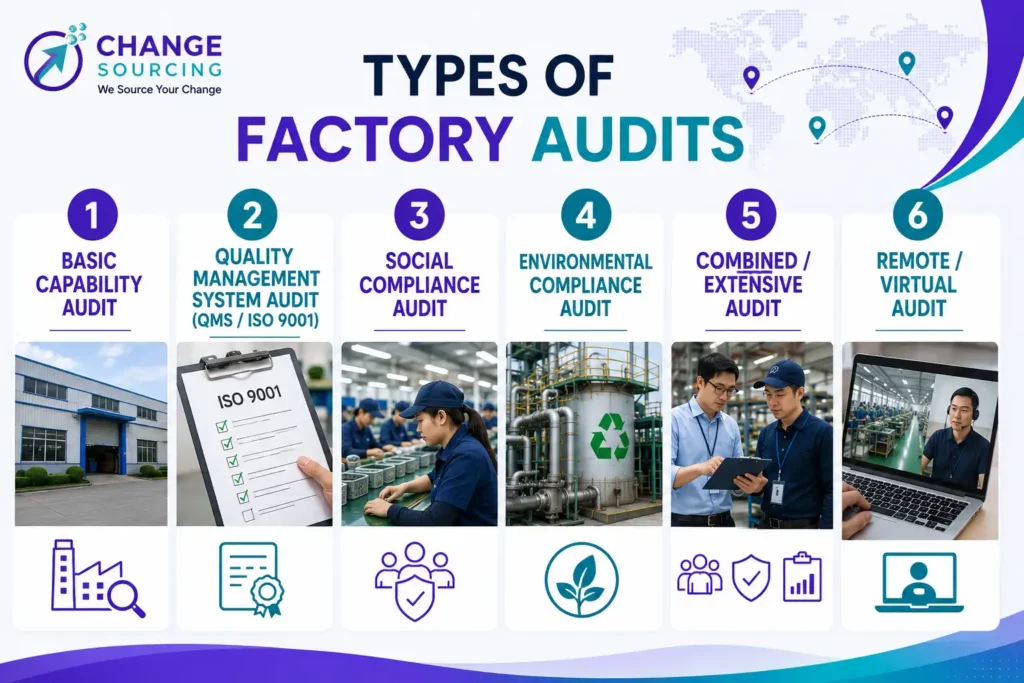
There are five main factory audit types used in China sourcing. Each one is built for a different purpose.
When you pick the wrong type, you get a report that answers questions you were not asking. And when you pick the right one, you walk away with exactly the information you need to make a confident sourcing decision.
Here is what each type covers and what it costs in practice.
Basic Capability Audit: $188 to $300
A capability audit is the entry-level option. It confirms that the factory is real, operational, and physically set up to produce your product. The auditor checks business licenses, facility size, machinery condition, worker headcount, and the general production layout.
This is the right audit for smaller first orders, new suppliers found on Alibaba, or any situation where your main concern is confirming the factory is a real manufacturer and not a trading company fronting for someone else. It takes half a day to one full day on-site.
According to Veriquality’s published pricing page, a simple factory audit starts at $220 plus travel costs. That makes it one of the most accessible and clearly priced options available for importers booking their first audit.
Quality Management System Audit (QMS / ISO 9001): $400 to $700
A QMS audit goes much deeper into a supplier's operations. Auditors examine internal quality control processes, documentation systems, corrective action procedures, inspection records, and whether any ISO 9001 certificate on file is real and still valid.
Many factories in China display ISO 9001 certificates on their website profiles. A QMS audit tells you whether that certification reflects working systems or just a framed document on the office wall.
This is the right audit when you are building a long-term supplier relationship or when consistent product quality across multiple orders matters to your business.
Expect to pay $400 to $700 with a specialist QC firm, covering one to two days on-site.
Social Compliance Audit: $400 to $800
A social compliance audit checks labor conditions, wages, working hours, fire safety, child labor policies, and dormitory conditions where applicable. It confirms that the factory meets ethical standards, whether that is your own company code of conduct or an external framework like SA8000 or BSCI.
This audit type is growing in importance fast. A 2022 QIMA benchmark study, referenced by Traceforgood, found that brands with little to no supplier engagement had 32% more critical quality defects. That kind of oversight gap reaches into labor and compliance practices just as easily as it does into product quality.
If you supply to large retailers, sell on Amazon, or export to European markets, your buyers may already require this audit type.
Budget $400 to $800, depending on factory size and the specific compliance standard being assessed.
Environmental Compliance Audit: $400 to $900
An environmental audit checks whether a factory follows Chinese environmental law and relevant international standards. Auditors look at waste disposal, emissions controls, chemical handling procedures, and whether the factory holds the correct environmental permits.
These audits are less common for smaller importers right now. They are growing in demand as EU environmental regulations tighten and ESG reporting becomes standard for larger brands.
Cost range is $400 to $900, depending on how complex the factory’s processes are.
Combined / Extensive Audit: $500 to $1,000+
A combined audit rolls two or more of the above types into one factory visit. The result is a complete picture covering capability, quality systems, and compliance, all delivered in a single report.
For most importers placing orders of $15,000 or more with a new supplier, this is the best value option available.
One visit, one report, and full coverage at a lower total cost than booking each audit separately. AQI Service lists their extensive factory audit at $440 per man-day, which is a solid benchmark for what reputable local QC specialists charge in China today.
Remote / Virtual Audit: $100 to $250
Virtual audits became common during COVID-19 and have held a niche role since. The auditor reviews the facility through a live video call, checks shared documents, and interviews factory management remotely.
The cost is lower, typically $100 to $250, but so is the reliability. You cannot properly assess real working conditions, live equipment status, or what is actually happening on the production floor through a screen.
Use virtual audits as a preliminary screening step or to re-check an established supplier when travel is not feasible. For a new supplier on a significant first order, an on-site audit is always the better choice.
Hidden and Extra Costs You Need to Budget For
The man-day rate is not your final cost. Most factory audits carry additional charges that add $50 to $200 or more to the total bill. These include travel surcharges, same-day report fees, weekend premiums, re-audit fees, and late cancellation penalties. Always ask for a fully itemized quote before you confirm any booking.
Here is a full breakdown of what you may be charged on top of the base rate:
| Extra Cost Item | Typical Charge | When It Applies |
|---|---|---|
| Travel surcharge (major manufacturing city) | $30 per day | Standard in most contracts |
| Travel surcharge (remote inland province) | $50 to $80 per day | Factories in Xinjiang, Gansu, and rural areas |
| Same-day report fee | $30 per report | When you need the draft issued the same day |
| Sunday or public holiday premium | 1.5x man-day rate (~$90 extra per day) | Weekend or holiday bookings |
| Late cancellation fee | $100 flat | Cancelled after 6 pm the day before the visit |
| Re-audit fee | Full man-day rate | The factory fails and needs re-inspection |
| Overtime after 5:30 pm | $35 per hour plus hotel if needed | Long production days or late container loading |
These charges are published clearly by audit firms. They are easy to miss if you only look at the headline man-day rate on the website.
The practical rule is simple. Before you confirm any booking, ask the QC firm for a full written quote that covers the base man-day rate, estimated travel costs, and any applicable report fees.
For the main manufacturing cities in Guangdong, Zhejiang, and Jiangsu, travel typically adds around $30 per day. For remote factory locations, budget $50 to $80 extra on top of the base rate.
Local QC Firm vs. International Agency: Which is Actually Worth the Cost?
For most small and mid-size importers, a reputable local QC specialist delivers the same practical audit outcome as a major international agency at 30 to 50% less cost.
International firms like SGS, Intertek, and Bureau Veritas are worth the premium only in specific situations, such as retailer-mandated audits, regulated product categories, or markets that require a globally recognized audit brand on the report.
Here is a direct side-by-side comparison of the two tiers:
| Local / Regional QC Firm | International Agency (SGS, Intertek, Bureau Veritas) | |
|---|---|---|
| Typical Man-Day Rate | $160 to $300 | $350 to $800+ |
| Report Turnaround | 2 to 5 business days | 5 to 10 business days |
| Audit Recognition | Sufficient for most importers | Required by major retailers and regulated industries |
| Local Knowledge | Strong — auditors based locally | Good — bilingual locally deployed teams |
| Best For | eCommerce sellers, SMEs, first-time audits | Large retail buyers, pharma, and EU compliance requirements |
| Report Style | Practical and supplier-specific | Standardized with a broader scope |
As per the QC Advisor, specialist local firms average around $209 per auditor-day. Global firms like SGS and Intertek charge considerably more because of brand overhead and the cost of maintaining global accreditation networks.
When a Local QC Specialist Makes More Sense
If you are an eCommerce seller, a small brand sourcing private-label products, or an importer placing orders under $50,000, a reputable regional QC firm gives you everything you need at a fraction of the big-name price.
Firms like Veriquality and AQI Service have trained auditors across all major Chinese manufacturing hubs. Their reports are thorough, professional, and accepted by most standard buyers.
When to Pay for SGS, Intertek, or Bureau Veritas
If your retail buyer or product category requires a report from an internationally accredited body, you need one of the major agencies. This applies to pharmaceuticals, food, cosmetics, electronics sold into regulated markets, and any situation where you supply to large Western retailers with their own approved auditor lists. The premium is real in these cases — and so is the non-negotiable requirement.
Factory Audit Cost by Manufacturing Region in China
Your factory’s location directly affects what you pay for an audit. Travel costs are built into every quote, and auditing a supplier in a major hub like Guangzhou or Shenzhen costs less than auditing a factory in a remote inland province.
That difference can be $50 to $100 per auditor-day in extra travel fees.
Here is a quick regional reference to help you budget before you request a quote:
| Region | Main Products | Typical Travel Cost | Notes |
|---|---|---|---|
| Guangdong (Guangzhou, Shenzhen, Dongguan) | Electronics, garments, furniture | ~$30 per day | High QC firm density, low travel overhead |
| Zhejiang / Yiwu / Ningbo | General goods, hardware, toys | ~$30 per day | Well-covered, strong local auditor presence |
| Jiangsu / Shanghai | Machinery, textiles, chemicals | ~$30 to $40 per day | Multiple active QC firms in the region |
| Fujian | Footwear, sportswear, stone goods | ~$35 to $45 per day | Moderately accessible |
| Remote inland provinces (Sichuan, Henan, Xinjiang) | Heavy industry, raw materials | ~$50 to $80 per day | Limited local auditor base, higher travel costs |
If your supplier is in Yiwu or Guangzhou, travel costs stay low and are easy to predict. If they are based in a smaller city far from a major manufacturing hub, factor in the higher travel surcharge when you are comparing quotes from different providers.
Change Sourcing Insights: How One Audit Saved a $28,000 Order
A kitchenware brand came to us after placing a first order with a Guangdong supplier found through Alibaba. They had not audited the factory. The samples looked clean, the price was right, and a 30% deposit had already been sent.
Two weeks before the expected production date, the supplier sent a vague message about a delay with no clear explanation. The buyer was uneasy and asked us to step in.
We arranged an on-site factory audit within two days of the request. What the auditor found was not a scheduling issue. The factory was much smaller than it had claimed. Most orders, including this one, were being subcontracted to a third facility the buyer had never seen or approved.
The factory’s in-house capacity could not handle the agreed volume within the agreed timeline. There were also clear documentation gaps related to an ISO certification listed on their profile.
With that information, the client renegotiated the delivery schedule with penalty clauses, shifted part of the production to a backup supplier we had already verified, and recovered the full order without a total loss.
Had the audit been done before the deposit was paid, they would have chosen a different supplier from the start. The audit cost $380. The order was worth $28,000.
How to Reduce Your Factory Audit Cost Without Cutting Corners
The five most practical ways to lower your factory audit cost in China are: combining audit types into one visit, choosing a local QC specialist for standard work, booking on a weekday, working with a sourcing agent who bundles audit coordination, and building audit costs into your supplier negotiation from the start.
Here is how each approach works in real terms.
Combine Audit Types Into One Visit
Instead of booking a capability audit now and a social compliance audit later as a separate trip, request a combined audit that covers both in a single visit. You pay a bit more for the extra on-site time. You pay far less than two separate bookings would cost you.
Choose a Local QC Specialist for Standard Audits
Unless your buyer or product category specifically requires SGS or Intertek, a regional specialist delivers the same practical quality at 30 to 50% less cost. Review published pricing from firms like Veriquality and AQI Service before assuming the big names are your only option.
Book on a Weekday
Sunday and Chinese public holiday rates are typically 1.5x the standard man-day rate. A weekday booking avoids that surcharge automatically. Auditors also tend to have better access to the production floor on regular working days.
Work With a Sourcing Agent Who Coordinates Audits
Some sourcing agents like Change Sourcing, operating in Yiwu and Guangzhou, bundle factory audit coordination into their broader service. You pay the base audit rate without extra coordination fees.
This is particularly useful when your supplier is in a hub where the agent already has established QC relationships on the ground.
Build Audit Costs Into Your Supplier Negotiation
For long-term supplier relationships, some buyers negotiate a modest unit price reduction that offsets the cost of an annual audit. Framing audits as a regular part of supplier management, rather than a one-off suspicion check, tends to make suppliers more cooperative. Some will even share the cost on annual repeat visits.
7 Mistakes That Drive Up Your Factory Audit Costs
Every one of these mistakes is avoidable. Each one either adds direct cost or forces you into a second, more expensive audit.
Mistake 1: Booking too late. Most QC firms need at least two business days’ notice. Last-minute requests trigger rush fees or push you into a weekend slot at 1.5x the normal rate.
Mistake 2: Not specifying the audit scope clearly. A vague brief produces a general report that misses your specific concerns. That usually means a second audit to get the answers you needed the first time.
Mistake 3: Choosing the cheapest provider without checking credentials. Very low-cost audit services sometimes use untrained local contacts rather than qualified auditors. A poor audit that misses real problems costs far more than a thorough one that catches them early.
Mistake 4: Auditing the wrong facility. Always confirm the exact factory address before booking. Some suppliers show buyers a clean showroom or main office while actual production happens at a different, unvetted location.
Mistake 5: Ignoring the re-audit fee. If a factory fails, most providers charge a full man-day rate for the follow-up visit. Factor that possibility into your budget from the start, especially with new suppliers.
Mistake 6: Skipping the travel cost question. For remote provinces, travel surcharges can add $80 to $100 per day, effectively doubling the cost of a basic audit. Always get a fully itemized quote before you confirm.
Mistake 7: Treating a passed audit as a permanent green light. A factory that passes today can look very different in six months. Management changes, subcontracting starts quietly, and production lines shift without notice. For key suppliers, an annual audit is a far stronger investment than a single one-time check.
Frequently Asked Questions
Most factory audits take one to two days on-site. A basic capability audit can be completed in half a day. An extensive combined audit at a large facility covering quality systems, social compliance, and production capacity may take two to three days. The written report is typically delivered within two to five business days after the visit.
A man-day rate is the fee for one auditor working one full day, typically eight hours. It covers time on-site, local travel to and from the factory, and preparation and report writing. Long-distance travel to remote locations is usually charged separately as a travel surcharge on top of the base rate.
No. A factory audit evaluates the manufacturing facility itself, including its capabilities, systems, licenses, and compliance. A product inspection evaluates the specific goods made in a given production run. Audits happen before or at the start of a supplier relationship. Inspections happen during or after each order. Both tools serve different purposes and work best when used together as part of a consistent quality control process.
Amazon does not explicitly require one, but the risks of skipping it are high for FBA sellers. Goods that arrive at an FBA warehouse with compliance or quality issues can trigger removal fees, account warnings, and negative buyer feedback that is hard to recover from. For any FBA order over $5,000 with a new supplier, a basic capability audit is the smart step before sending your deposit.
A failed audit does not automatically mean you walk away. The report identifies specific problems and usually includes a corrective action framework. If the issues are fixable, such as documentation gaps, minor safety shortfalls, or process weaknesses, the factory can correct them and request a re-audit. If the failures are serious, such as fraudulent licenses, hidden subcontracting, or major labor violations, most experienced importers find a different supplier. The re-audit always costs the full man-day rate again.
Yes, remote audits exist and cost less, typically $100 to $250. But they are far less reliable than on-site visits for assessing real working conditions, actual equipment status, and live production processes. They work best as a quick preliminary screen or for re-verifying an established supplier when travel is not feasible. For any new supplier on a significant first order, on-site is always the right call.
Conclusion
A factory audit in China is not a luxury for cautious buyers. It is one of the most cost-effective tools available to any importer who takes their supply chain seriously. The price is clear — $220 to $1,000 for most situations. The protection it provides on any meaningful order far outweighs that number.
Know the audit types. Budget for the hidden fees. Match your provider tier to what your buyers actually need. And revisit key suppliers every 12 to 18 months, because supply chains change and a one-time green light does not last forever.
Want an experienced team on the ground in China to coordinate your factory audit, handle supplier communication in Chinese and English, and give you an honest on-site assessment before you commit your budget? Book your free consultation with CHANGE Sourcing today and get 18 years of hands-on sourcing experience in Yiwu and Guangzhou working for you.