

You’ve found a product you want to source from China. You’ve browsed Alibaba, seen hundreds of suppliers, and now you’re staring at a blank message box, wondering what to actually say.
You are not alone. Most first-time importers get stuck right here. Reaching out to a Chinese manufacturer feels intimidating, especially when you don’t know the process, the platforms, or the right words to use.
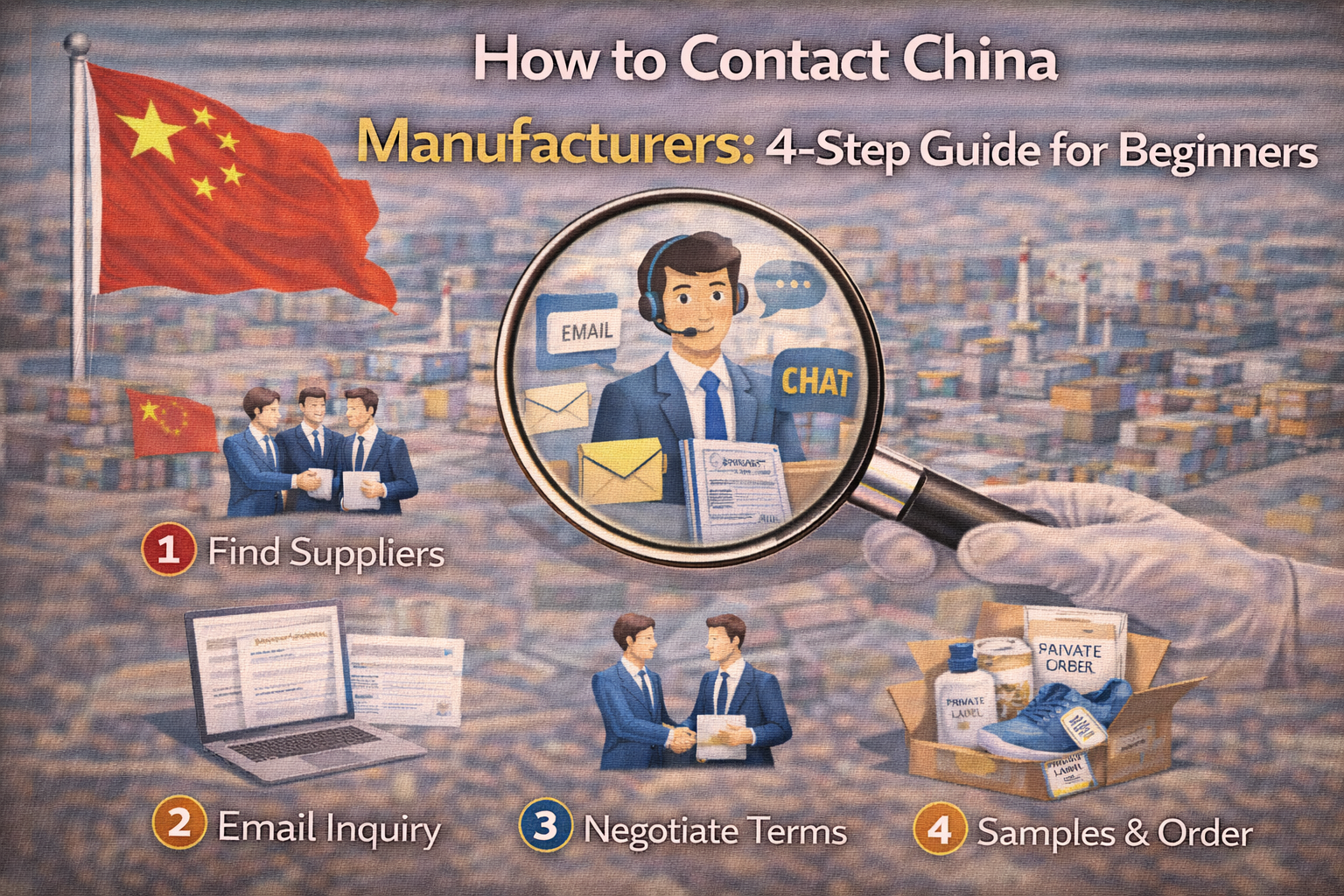
This guide breaks it all down for you. By the end, you will know exactly where to find Chinese manufacturers, how to send a first message that gets a reply, how to check if a supplier is legitimate, and what red flags to watch out for.
Let’s get started.
1. Where to Find Chinese Manufacturers to Contact
Before you can contact anyone, you need to know where to look. There are several reliable ways to find Chinese manufacturers — each with its own advantages depending on your product and budget.
B2B Online Platforms
This is where most importers begin, and for good reason. B2B marketplaces list thousands of verified manufacturers in one place.
- Alibaba (alibaba.com)—The largest B2B platform in the world. Best for beginners. Use the “Gold Supplier” and “Trade Assurance” filters to narrow down verified manufacturers.
- Global Sources (globalsources.com)—Stronger for electronics and tech products. Suppliers tend to be mid-to-large factories.
- Made-in-China (made-in-china.com)—A solid alternative to Alibaba, particularly for industrial goods and machinery.
For most beginners, Alibaba is the fastest and safest starting point. It has built-in buyer protection and a huge variety of product categories.
Search Google with Targeted Queries
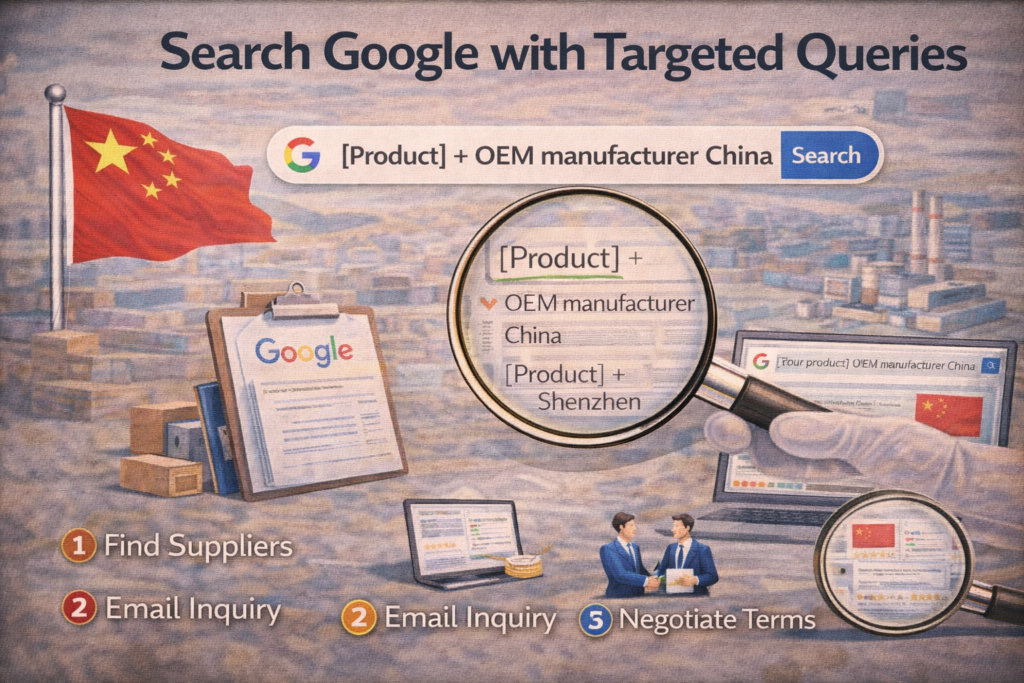
A simple Google search can surface manufacturers that are not listed on B2B platforms. Try searches like:
- [Your product] + OEM manufacturer China
- [Your product] + factory + Shenzhen / Guangzhou / Dongguan
- [Your product] + wholesale supplier China
This works especially well for niche products. Always cross-check any factory you find this way against their website, business registration, and reviews.
Trade Shows
The Canton Fair in Guangzhou is one of the biggest trade events in the world, held twice a year. You meet manufacturers face to face, see product samples in person, and build relationships quickly.
If traveling to China is not an option, international trade shows like the Consumer Electronics Show (CES) in Las Vegas often feature Chinese manufacturers with English-speaking representatives.
China Sourcing Agents
If finding and vetting manufacturers feels overwhelming, a sourcing agent can handle it for you. They have local contacts, speak Mandarin, and know how to spot bad factories.
Companies like CHANGE Sourcing offer full sourcing services — from finding the right manufacturer to quality inspection and shipping. This is a practical option if you are scaling fast or working with complex products.
How to Contact a Chinese Manufacturer — Step by Step

Found a supplier you like? Here is the exact process to make contact, build trust, and get a real response.
Step 1: Send an Inquiry Through the Platform First
On Alibaba, Global Sources, or Made-in-China, start by using the platform’s built-in inquiry or messaging system. This keeps your initial contact documented and lets the supplier know you found them through a verified channel.
Keep this first message short. Introduce yourself, name the product, and ask for a price list and MOQ (minimum order quantity). Do not write a wall of text—suppliers receive dozens of inquiries daily.
Step 2: Move to Email for Formal Communication
Once a supplier replies and the conversation gets serious, switch to email. It is more professional, easier to track, and creates a paper trail for every agreement you make.
Not sure what to say in that first email? Use this template:
Subject: Product Inquiry — [Your Product Name]
Hi [Supplier Name],
My name is [Your Name] from [Company / Country]. I found your listing on [Platform], and I am interested in sourcing [describe product clearly].
Could you please share:
– Your current price list and MOQ
– Available customization options (colour, packaging, logo)
– Sample lead time and cost
– Any relevant certifications (e.g., CE, ISO, RoHS)
I am looking to place an initial order of approximately [quantity] units, with the potential to scale based on quality.
Looking forward to your reply.
[Your Name] | [Company Name] | [Phone / WhatsApp]
Keep the language simple and direct. Avoid idioms, sarcasm, or overly complex sentences. Many supplier contacts speak English as a second language.
Step 3: Use WhatsApp or WeChat for Faster Replies
Once you have established contact, Chinese suppliers prefer messaging apps for day-to-day communication. WeChat is the dominant platform in China. WhatsApp is widely used for international buyers, though some suppliers may need a VPN to access it.
Quick tip: Use numbered lists in your messages rather than long paragraphs. A message like ‘1. Price? 2. MOQ? 3. Lead time? ‘ is far easier for a supplier to respond to than a paragraph asking the same things.
Step 4: Request a Product Sample Before Any Bulk Order
Never skip this step. Always request a physical sample before committing to a large order, even if the supplier’s photos look perfect.
Samples typically cost between $20 and $150, depending on the product. Some suppliers waive the sample cost if you place an order later. Get sample quality confirmed in writing before you approve production.
How to Verify a Chinese Manufacturer is Legitimate
Fraud is a real risk when sourcing from overseas. The good news is that most legitimate manufacturers are easy to verify if you know what to check.
Check Their Business License
Ask the supplier for a copy of their business license (营业执照). Look at the registered business scope. If it says ‘Manufacturer’ or ‘Production,’ that is a good sign. If it only says ‘Trading’ or ‘Consulting,’ you may be dealing with a middleman, not a factory.
Look for Industry Certifications
Reputable manufacturers carry third-party certifications. The most common ones are:
- ISO 9001 — International quality management standard
- CE Mark — Required for products sold in Europe
- RoHS — Restricts hazardous materials, often required for electronics
- SGS / Intertek / Bureau Veritas audit reports — Independent third-party factory audits
According to the International Organization for Standardization, over one million companies globally hold ISO 9001 certification. A factory that holds this standard has demonstrated consistent quality management processes.
Request a Virtual Factory Tour
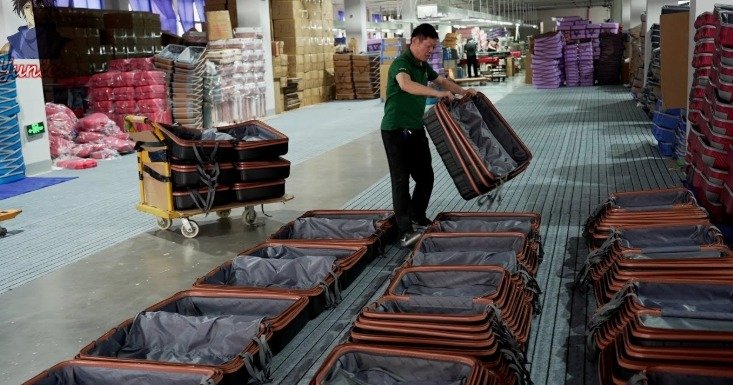
Ask your supplier for a live video call or a walkthrough of the production floor. Legitimate factories will agree to this without hesitation. If a supplier refuses or avoids a video call repeatedly, treat that as a warning sign.
Use Platform Verification Tools
On Alibaba, filter suppliers by Gold Supplier status and Trade Assurance. These are not perfect guarantees, but they are a meaningful baseline filter that removes many fraudulent listings.
Red Flags to Watch Out For
- Prices that are dramatically lower than those of every other supplier
- No certifications and refusal to provide a business license
- Unwilling to do a video call or factory tour
- Requests 100% payment upfront via wire transfer only
- Poor English combined with very vague product knowledge
Trust your instincts here. If something feels off, it usually is.
Communication Tips That Chinese Manufacturers Actually Appreciate
Even after you make contact, how you communicate can determine whether a factory prioritizes your orders or pushes them to the bottom of the pile.
Keep Messages Short and Numbered
Chinese business culture values clarity and efficiency. A short, numbered list of questions is far more likely to get a complete answer than a paragraph of mixed requests.
If your message requires more than three scrolls on a phone screen, it is too long. Break it up.
Respect Time Zone Differences
China Standard Time (CST) is UTC+8. If you are in the US, that is a 12- to 16-hour difference depending on your coast and the time of year.
Expect a 12 to 24-hour reply window for email. Instant messaging via WeChat or WhatsApp is faster, but do not expect real-time responses during Chinese business hours unless your conversation is already active.
Build the Relationship (Guanxi)
In Chinese business culture, Guanxi (关系)—roughly translated as ‘relationships’—carries significant weight. Suppliers who trust you and like working with you will offer better pricing, faster turnarounds, and more flexibility.
Small things matter: greeting them around Chinese New Year, asking about their team, being respectful even when there is a problem. These gestures compound over time into a stronger business relationship.
Get Everything in Writing
Verbal agreements mean very little in cross-border trade. Every price, specification, timeline, and packaging detail should be confirmed over email or in a formal contract before production starts.
This protects both sides and removes ambiguity if a dispute arises later.
What to Do If a Manufacturer Does Not Reply
It happens. You send a well-crafted inquiry and hear nothing back. Before you give up, try these steps:
- Wait 48–72 hours. Time zone gaps and high inquiry volumes mean suppliers often reply late.
- Follow up once. A brief follow-up message sent 3 days later is professional and often gets a response.
- Check if there is a public holiday. Chinese factories close for Golden Week, Chinese New Year (typically 2–3 weeks off), and other national holidays. No one will reply during these periods.
- Try a different contact method. If the email gets no response, try the platform messaging system or find a WhatsApp/WeChat contact on their website.
- Move on if needed. If three follow-ups get no reply, this supplier is not a fit. There are thousands of others on Alibaba alone.
When to Consider Using a Sourcing Agent
Contacting manufacturers directly works well when you have the time to research, vet, and communicate back and forth. But sometimes it makes more sense to bring in a professional.
A sourcing agent is worth considering if:
- You are sourcing multiple products at the same time
- Your product requires strict quality control or custom manufacturing
- You do not have time to manage supplier communication personally
- You have been scammed or had quality issues before
A full-service sourcing company like CHANGE Sourcing manages the entire process — supplier discovery, vetting, negotiation, factory audits, quality inspection, and shipping coordination — under one roof. This removes a significant amount of risk and time cost, especially when you are scaling.
Frequently Asked Questions

For beginners, Alibaba is the most practical starting point. It has the largest supplier database, buyer protection through Trade Assurance, and verification tools like Gold Supplier status. Global Sources and Made-in-China are strong alternatives depending on your product category.
Most manufacturers on B2B platforms have English-speaking sales staff. Write in clear, simple English using short sentences and numbered lists. Avoid idioms and complex phrasing. Tools like Google Translate can help if you receive a response in Chinese.
Ask for their business license, check for ISO or product certifications, request a live video call, and use platform verification tools like Alibaba’s Trade Assurance. If prices seem too low or a supplier refuses basic verification steps, proceed with caution.
Introduce yourself and your company, describe the product you need, and ask for pricing, MOQ, lead time, and certifications. Keep it short and professional. Refer to the sample email template in Section 2 of this guide.
Final Thoughts
Contacting Chinese manufacturers is straightforward once you know the process. Start on a verified B2B platform, send a clear and professional first message, verify the supplier before placing any order, and keep communication simple and consistent.
The biggest mistake first-time buyers make is waiting for the ‘perfect’ moment or over-complicating the first message. Send the inquiry. Get the conversation going. The rest follows from there.
If you want to skip the back-and-forth and get straight to a reliable factory, a sourcing partner can make that process significantly faster and safer.