

You found the perfect product. You know your market. Then you contact a Chinese supplier and hear, “Minimum order is 500 pieces.”
For most ecommerce sellers just starting out—or testing a new product—that number kills the idea before it begins.
The good news? Low MOQ China suppliers exist across almost every product category. You just need to know where to look, what to ask, and how to negotiate.
This guide covers the best platforms to find low minimum order quantity suppliers in China, real MOQ benchmarks by category, and a step-by-step negotiation framework that actually works in 2026.
What is MOQ and Why do Chinese Suppliers Set it?
The Simple Definition
MOQ stands for minimum order quantity. It is the lowest number of units a supplier will produce or sell in a single order.
A factory that sets an MOQ of 300 units means you cannot buy fewer than 300 pieces per order. This applies to manufactured goods—custom products, private label items, and branded goods.
Stock items work differently. If a supplier already has inventory sitting in a warehouse, they may sell as few as 1–10 units. That is essentially a no-MOQ situation.
Why Factories Use MOQs
Chinese manufacturers operate on thin margins. According to industry data from Statista, factory profit margins in Chinese light manufacturing typically sit between 2% and 8%. Low margins mean every production run must be efficient to be profitable.
Setting up a production line — whether it’s cutting fabric, configuring injection molds, or mixing cosmetics — has a fixed cost. The more units produced in one run, the lower the cost per unit.
That is why MOQs exist. They are not about being difficult. They are about economics.
Stock Goods vs. Custom / Private Label Goods
Stock goods: Items already manufactured and sitting in inventory. MOQ is often 1–50 units. Platforms like AliExpress and DHgate are built around this model.
Custom / private label goods: Items made specifically for your brand—with your logo, custom packaging, or unique specifications. These always carry a higher MOQ because the factory is setting up a new production run just for you.
Knowing which type you need will determine which platform and strategy to use. We’ll come back to this throughout the guide.
What Counts as a “Low MOQ” in 2026?
There is no universal definition of low MOQ. What counts as low depends entirely on your product category.
A clothing supplier asking for 50 pieces per style is remarkably flexible. A cosmetics supplier asking for 50 units of a custom formulation is almost unheard of.
Use this benchmark table as your starting reference point when evaluating suppliers:
| Product Category | Typical Factory MOQ | Low MOQ Range | No-MOQ Option? |
|---|---|---|---|
| Apparel & Clothing | 300–1,000 pcs | 50–200 pcs | Yes—AliExpress stock |
| Electronics & Accessories | 500–2,000 pcs | 100–500 pcs | Limited |
| Home & Kitchen | 200–500 pcs | 50–150 pcs | Yes—DHgate / AliExpress |
| Cosmetics & Beauty | 500–10,000 units | 50–500 units | Rare — private label only |
| Custom Packaging & Print | 500–1,000 units | 100–300 units | Via print-on-demand services |
| Jewelry & Accessories | 100–500 pcs | 20–100 pcs | Yes—many stock items |
| Bags & Luggage | 200–500 pcs | 50–150 pcs | Limited |
| Toys & Games | 500–1,000 pcs | 100–300 pcs | Rare |
Pro tip: Always treat these as starting points, not hard limits. The negotiation tactics in Section 4 can bring these numbers down by 30–50% in many cases.
Best Platforms to Find Low MOQ China Suppliers
Not every platform is built for the same type of buyer. Some are ideal for small-batch testing. Others work best for scaling brands. Here is a breakdown of the top platforms and what each one does well.
1. Alibaba
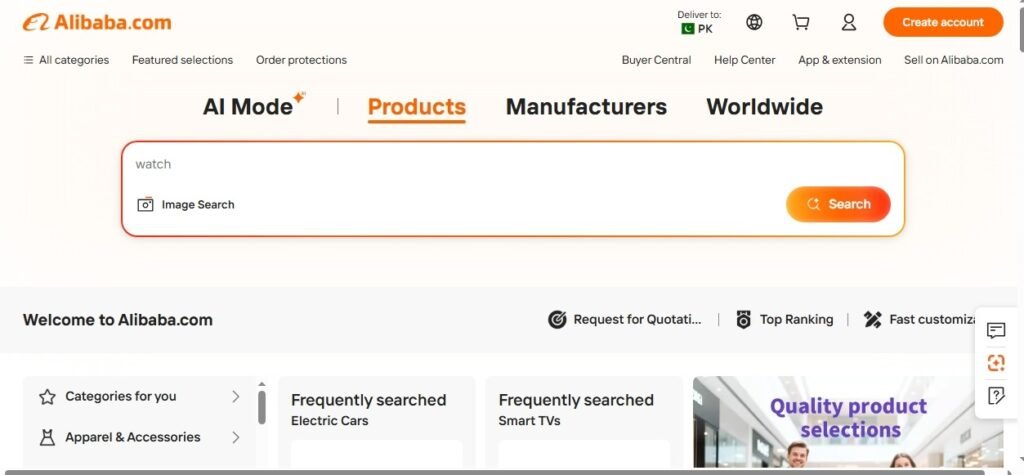
The most widely used B2B sourcing platform in the world, Alibaba connects buyers with verified Chinese manufacturers and trading companies across virtually every product category.
Alibaba is best for semi-custom and private label orders. Most suppliers here list an MOQ, but that number is almost always negotiable — especially if you are ordering samples first.
How to find low MOQ suppliers on Alibaba
- Use the “Small Orders” filter on the left sidebar when searching
- Type your product + “low MOQ” or “small batch” in the search bar
- Filter by “Verified Supplier” and “Trade Assurance” for safer transactions
- Look for suppliers with response rates above 80%—they are more open to negotiation
Typical MOQ range on Alibaba: 50–1,000 units, depending on category and customization level.
2. AliExpress
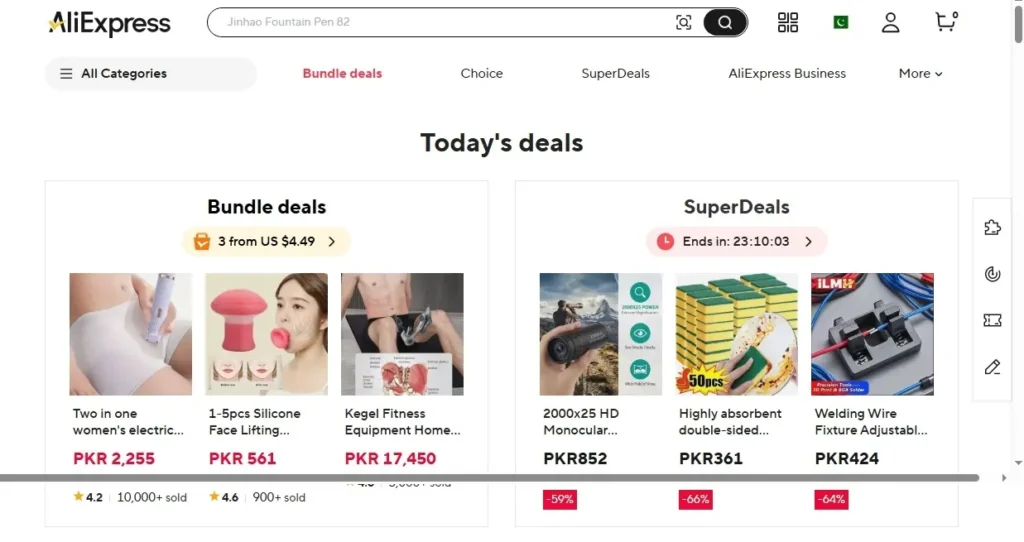
AliExpress is the consumer-facing arm of the Alibaba Group. It is built around stock items, which means MOQs are effectively zero for most listings. You can order a single unit.
This makes it the go-to platform for product testing, dropshipping, and anyone who needs small quantities without any commitment.
The trade-off is that you are almost always buying stock goods—not custom products. Margins are thinner because you are competing with thousands of other sellers carrying the same items.
Best use cases for AliExpress
- Testing a product idea before placing a bulk order
- Dropshipping without holding inventory
- Buying samples to evaluate quality before moving to a factory
3. 1688.com
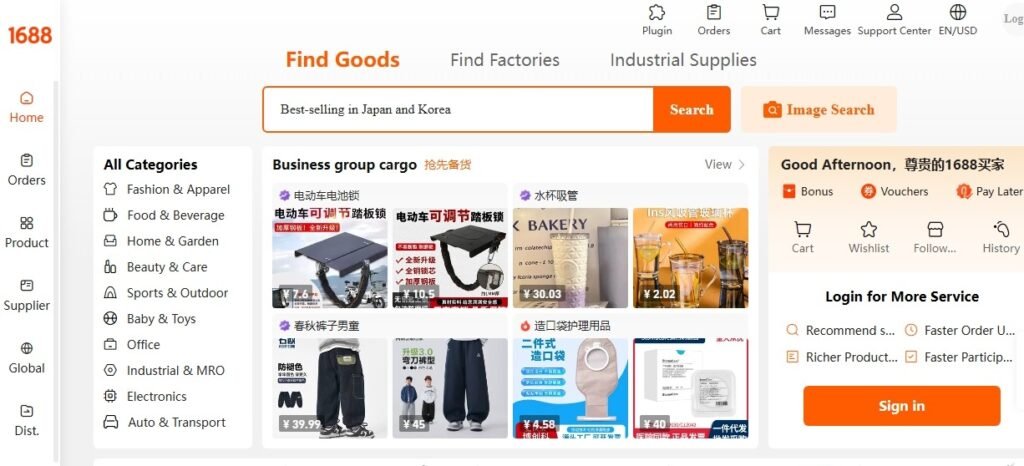
1688.com is Alibaba’s domestic Chinese marketplace. It is designed for Chinese buyers, which means everything is in Mandarin — but it is also where you find the lowest prices and, often, the most flexible MOQs.
Suppliers on 1688 are typically smaller factories and wholesalers who do not export directly. Because they are targeting local buyers rather than international ones, they are less cautious about high minimums.
The language barrier is real, but it is solvable. Many ecommerce sellers use a sourcing agent or the built-in translation features on Google Chrome to navigate the platform.
Why 1688 is worth using
- Prices are typically 20–40% lower than Alibaba for the same product
- MOQs often start at 10–50 units for stock items
- Less competition from other international buyers
- Great for finding manufacturers that have not yet built an international presence
4. DHgate
DHgate sits between AliExpress and Alibaba. It focuses on small-to-medium wholesale orders and is particularly strong in categories like jewelry, fashion accessories, electronics, and sporting goods.
Most DHgate sellers accept orders starting from 1–10 units, with prices that drop significantly at 50+ or 100+ units. Buyer protection is solid, with an escrow payment system that holds funds until you confirm receipt.
DHgate strengths
- Low MOQ with volume pricing tiers
- Escrow payment protection for buyers
- Strong in fashion accessories, electronics, and seasonal goods
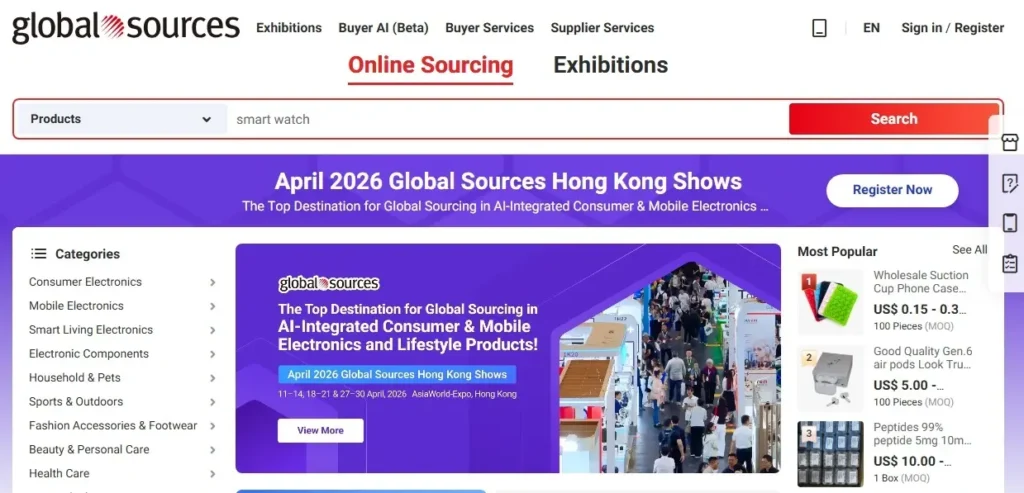
5. Global Sources
Global Sources is a Hong Kong-based B2B platform that focuses on verified, export-ready manufacturers. MOQs here are generally higher than Alibaba’s—typically 200–1,000 units—but the quality and verification level is also higher.
It is a better fit for brands that have already validated their product and are ready to scale. The trade shows that Global Sources organizes in Hong Kong are particularly valuable for building direct supplier relationships.
6. Made-in-China.com
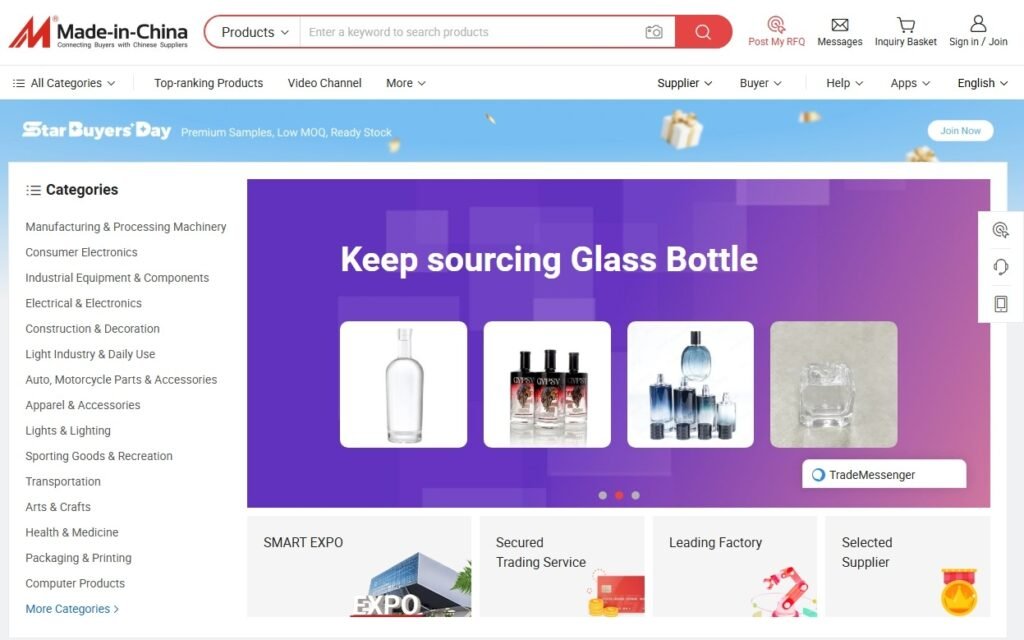
Made-in-China.com is strong in industrial goods, hardware, and manufacturing components. For general consumer goods, it is similar to Alibaba but with a smaller supplier base and less noise.
MOQs vary widely. It is a good secondary platform to check if you cannot find what you need on Alibaba, particularly for niche product categories.
7. China Sourcing Agents
If you are struggling to find a supplier willing to accept your order size — or if you need custom products but cannot justify a high MOQ — a sourcing agent is often the most practical solution.
Agents have established relationships with factories and can negotiate MOQs on your behalf. They know which suppliers are open to small batch orders and which are not, saving you weeks of back-and-forth emails.
Companies like CHANGE Sourcing offer full-service sourcing support — from finding the right factory to quality inspection and shipping. For brands that want low MOQ without spending months vetting suppliers, a dedicated sourcing partner can cut that timeline significantly.
| Platform | MOQ Range | Best For | Buyer Protection | English Support |
|---|---|---|---|---|
| Alibaba | 50–1,000 units | Semi-custom, private label | Trade Assurance | Strong |
| AliExpress | 1–10 units | Testing, dropshipping | Buyer protection | Strong |
| 1688.com | 10–100 units | Lowest prices, small batches | Limited | Mandarin only |
| DHgate | 1–50 units | Fashion, accessories, wholesale | Escrow system | Good |
| Global Sources | 200–1,000 units | Verified, scaling brands | Verified suppliers | Strong |
| Made-in-China | 100–500 units | Industrial, niche goods | Moderate | Good |
| Sourcing Agent | Negotiable | Custom goods, any category | Agent-managed | Strong |
How to Negotiate a Lower MOQ With Chinese Suppliers
The MOQ a supplier lists on their profile is rarely fixed. Most factories have room to negotiate, especially with buyers who show genuine purchase intent and a plan to scale.
Here is a framework that works across platforms — whether you are emailing a factory on Alibaba or working through a sourcing agent.
Step 1: Order Samples First
Always request samples before negotiating MOQ. This signals that you are a serious buyer, not someone fishing for information.
When you pay for a sample, you are demonstrating commercial intent. Suppliers are far more willing to reduce their MOQ for a buyer who has already committed, even at a small scale.
Step 2: Reference Future Volume
Be specific about your growth plan. Tell the supplier that your initial order is small, but you expect to reorder every 60–90 days. Give them a realistic projection.
Factories are businesses. If they believe you will become a recurring customer, they will accept a lower MOQ on your first order to earn your long-term business.
Step 3: Ask About Mixing SKUs
Many suppliers will not drop their MOQ below a certain number, but they will let you split that MOQ across multiple SKUs.
For example, a supplier with an MOQ of 300 units might let you order 100 units each in three different colors. You still meet their minimum, but you carry less risk on any single variant.
Step 4: Offer a Price Premium
If a supplier’s MOQ is 500 units and you only need 100, offer to pay a slightly higher unit price in exchange for the smaller run.
This compensates the factory for the less efficient production run. Many suppliers will accept this trade-off, especially if your product is not highly complex to manufacture.
Step 5: Ask About Existing Inventory
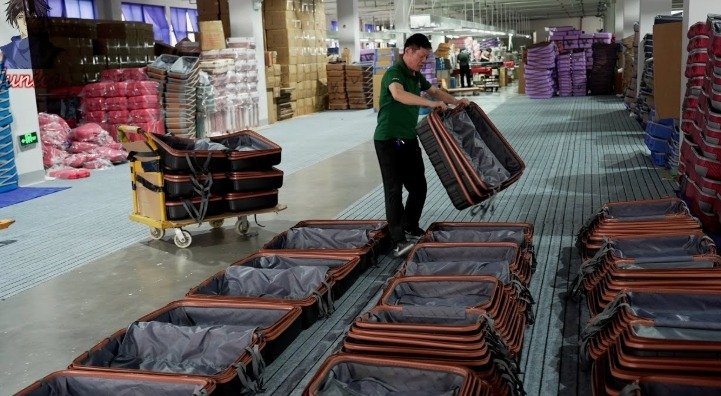
Some suppliers have unsold stock from cancelled orders or overproduction. This existing inventory can often be purchased with no MOQ at all.
Ask directly: “Do you have any current stock of this item available for a small order?” You will be surprised how often the answer is yes.
Step 6: Use Slower Seasons to Your Advantage
Chinese factories are significantly busier between April and June, and again from September to November. Outside those windows—particularly February to March after Chinese New Year—many factories have spare capacity.
During slower periods, suppliers are more willing to take small orders to keep their production lines running. According to data from China’s National Bureau of Statistics, manufacturing output dips noticeably in Q1 each year — that is your window.
Step 7: Work With a Sourcing Agent
If you are repeatedly hitting walls with high MOQs, a professional sourcing agent is often the fastest solution. Agents have existing relationships with hundreds of factories and can negotiate access that individual buyers cannot.
A full-service provider like CHANGE Sourcing can identify factories that genuinely work with small-batch ecommerce orders, handle communication entirely in Mandarin, and manage quality checks so you are not flying blind on your first shipment.
Which Strategy is Right for Your Business?

Not every ecommerce seller should approach low-MOQ sourcing the same way. Your ideal platform and strategy depend on where you are in your business journey.
Dropshippers
Best platforms: AliExpress, DHgate
You do not need a low MOQ—you need no MOQ. Both platforms support single-unit ordering and integrate with Shopify and other ecommerce tools. Start here, validate your products, then consider upgrading to a branded supplier once you have consistent sales.
New Private Label Brands
Best platforms: Alibaba + sourcing agent
You are building a brand, so you need your own logo and packaging. Target suppliers on Alibaba willing to work at 50–200 units. Use the negotiation steps above—sample first, mention future reorders, and ask about SKU mixing.
Scaling Ecommerce Brands
Best platforms: 1688.com + sourcing agent, or Global Sources
At this stage, cost efficiency matters more than simplicity. Use 1688 for dramatically lower unit prices on items you have already validated. Work with an agent to handle communication and quality control.
Product Testers
Best platforms: AliExpress, 1688.com, stock items
Buy 5–20 units of a product before ever committing to a production run. This costs almost nothing and tells you everything about product quality, packaging, and customer response.
Red Flags to Watch When Sourcing Low MOQ Suppliers
Low MOQ sourcing comes with genuine risks. Smaller orders are less profitable for suppliers, which means some will cut corners on quality or use bait-and-switch tactics.
Watch out for these warning signs before placing any order:
MOQ Increases After Initial Negotiation
If a supplier agrees to a 100-unit order and then raises it to 300 after you have confirmed your product specifications, walk away. This is a common tactic to extract more commitment before the buyer can easily back out.
No Verifiable Business Information
Every legitimate Chinese manufacturer has a business registration number and export record. On Alibaba, check the “Verified Supplier” badge and review the third-party audit reports. If a supplier cannot or will not share this information, that is a serious red flag.
Prices Too Low to Be a Real Manufacturer
If a supplier’s price is 40–60% below every other quote you have received, they are likely a trading company pretending to be a manufacturer, or the quality will be unacceptable. Unrealistically low prices for custom goods almost always signal a problem.
Vague Sample Policies
A factory confident in its product quality will have a clear, professional sample process. If a supplier refuses to provide samples, asks for an unusually large sample fee, or cannot produce a sample in a reasonable timeframe, it is a sign that they are not set up for the order you need.
Frequently Asked Questions
It depends on the product type. For apparel, anything under 200 units per style is considered low. For electronics, under 500 units is reasonable, and for jewelry and accessories, you can often find suppliers willing to work at 20–50 units. Stock goods on platforms like AliExpress have no effective MOQ at all.
Yes. AliExpress and DHgate both allow single-unit purchases on most listings. These are stock items, not custom goods, but they are ideal for testing and dropshipping.
Start with Alibaba using the Small Orders filter, or browse AliExpress and DHgate for stock items. For custom goods, 1688.com combined with a sourcing agent often unlocks the lowest MOQs. The negotiation tactics in Section 4 above will help you push any quoted MOQ down.
Yes, if you follow safe purchasing practices. Use platforms with buyer protection (Alibaba Trade Assurance or DHgate escrow). Always verify the supplier’s business credentials and read their reviews. Pay via credit card or PayPal where possible, not bank transfer on first orders.
1688.com is Alibaba’s domestic Chinese marketplace. It is not better or worse — it is different. Prices are lower, and MOQs on stock items are often much smaller, but everything is in Mandari,n and the platform does not cater to international buyers. Using a sourcing agent to navigate 1688 gives you access to prices and flexibility that you simply cannot get on Alibaba.
You do not need one for straightforward stock purchases on AliExpress or Alibaba. But if you are ordering custom goods, using 1688, or struggling to negotiate acceptable MOQs, a sourcing agent pays for itself very quickly—both in saved time and lower unit costs.
Final Thoughts
Finding low MOQ China suppliers for ecommerce is genuinely achievable in 2026. The market has shifted in buyers’ favor—factories are more open to smaller runs, more platforms cater to small-batch orders, and tools to navigate even Mandarin-only platforms are better than ever.
Here is the simple framework to take away from this guide:
- Match your platform to your seller type—dropshippers start with AliExpress, private label brands use Alibaba, scaling brands go to 1688
- Use the seven-step negotiation framework before accepting any quoted MOQ
- Always order samples first and reference future volume in every supplier conversation
- Watch for the four red flags before committing any money
Start small, validate fast, and scale what works. That is how the most successful ecommerce businesses are using China sourcing in 2026.