

Finding the right factory in China can make or break your product business. You might have a brilliant product idea, a ready design, and a clear target market — but without a reliable manufacturing partner, none of that matters. The good news? China accounts for roughly 28% of global manufacturing output, which means the factory you need almost certainly exists.
According to World Bank data, China has consistently led global manufacturing for over a decade. The challenge is not whether the right factory exists — it is knowing where to look and how to tell a great partner from a costly mistake.
This guide walks you through seven proven methods to find China factories, how to vet them properly, and what to watch out for. Whether you are starting from scratch or expanding an existing product line, these steps will save you weeks of guesswork.
Step 1: Understand What Type of Manufacturer You Need
Before you search for a single factory, you need to know what kind of manufacturer fits your situation. Not all factories are the same, and reaching out to the wrong type wastes time on both sides.
There are three main categories you will encounter when sourcing from China. Each serves a different purpose depending on your product stage, order volume, and level of customization.
OEM, ODM, and Trading Companies — What Is the Difference?
| Type | What They Do | Best For |
|---|---|---|
| OEM (Original Equipment Manufacturer) | Manufactures your product based on your design and specs | Buyers with a finished design ready for production |
| ODM (Original Design Manufacturer) | Offers pre-designed products you can brand as your own | Private label sellers, fast-to-market products |
| Trading Company | Acts as a middleman between buyers and multiple factories | Small order volumes, first-time importers, product variety |
OEM factories give you full control over design, materials, and specifications. They are the right choice when you have a clearly defined product and want it built to your exact standards.
ODM manufacturers already have product designs ready to go. You pick a base product, add your branding, and potentially request minor modifications. This is the fastest route to market for many private label sellers.
Trading companies are not factories — they work with multiple manufacturers and consolidate orders. Prices are higher, but they are more flexible with low minimum order quantities (MOQs). They are useful for early-stage testing before you commit to a factory relationship.
How to spot a real factory vs. a trading company
Look at the company name. Words like ‘manufacturing,’ ‘industry,’ ‘technology,’ or ‘factory’ in the name are strong signals that you are dealing with a real producer. Trading companies often use words like ‘trading,’ ‘international,’ or ‘enterprise.’ You can also cross-reference their Alibaba listing with their presence on 1688.com (more on that later) — real factories appear on both.
Step 2: Start with Online B2B Directories
Online B2B sourcing platforms are the most practical starting point for most buyers. They give you access to thousands of verified suppliers, factory profiles, and product catalogs without ever leaving your desk.
The key is knowing which platform suits your product type and how to filter for genuine manufacturers rather than intermediaries.
Alibaba
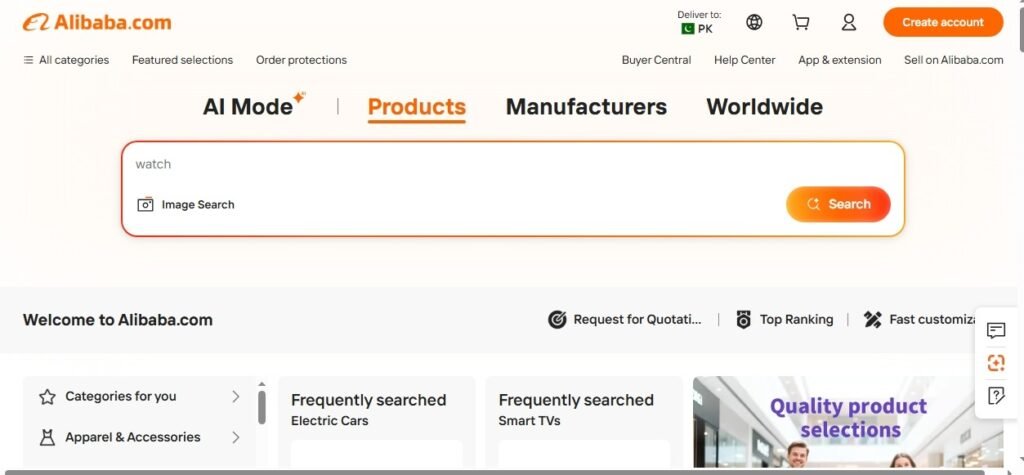
Alibaba is the largest B2B sourcing platform in the world, with over 200,000 suppliers listed across almost every product category. It is well-known, well-organized, and easy to use for first-time buyers.
When searching on Alibaba, apply these filters to narrow results: Verified Supplier, Trade Assurance, and Assessed Supplier. These badges indicate that Alibaba has conducted at least a basic check on the supplier’s business registration and production capabilities.
Be aware that the majority of Alibaba listings are trading companies, not factories. Always review factory photos, audit reports, and company descriptions carefully before shortlisting.
Global Sources
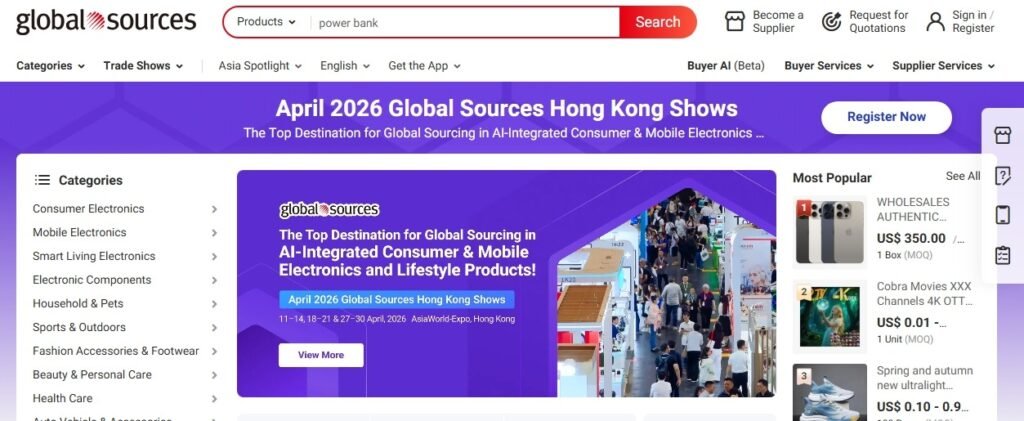
Global Sources tends to attract more established, export-focused manufacturers than Alibaba. It has a particularly strong presence in electronics, consumer goods, and fashion accessories.
Supplier verification on Global Sources is generally more rigorous. The platform also hosts trade shows in Hong Kong, which gives you a direct bridge from online research to in-person meetings.
Made-in-China.com
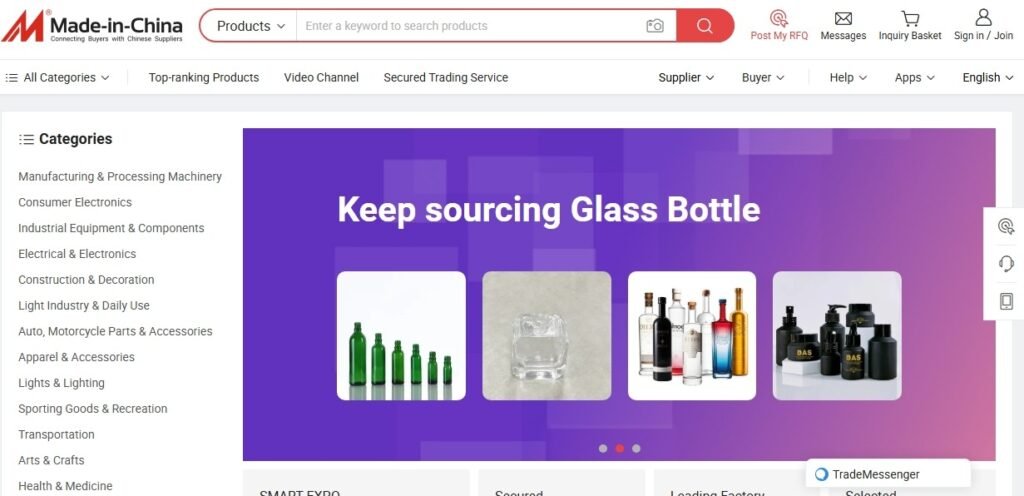
Made-in-China.com is a well-established alternative with solid coverage across industrial products, hardware, and niche manufacturing categories. It has less traffic than Alibaba, which means less competition when reaching out to suppliers.
The platform is particularly useful for sourcing technical components, machinery, and B2B industrial goods that are harder to find on general marketplaces.
1688.com — The Advanced Buyer’s Secret
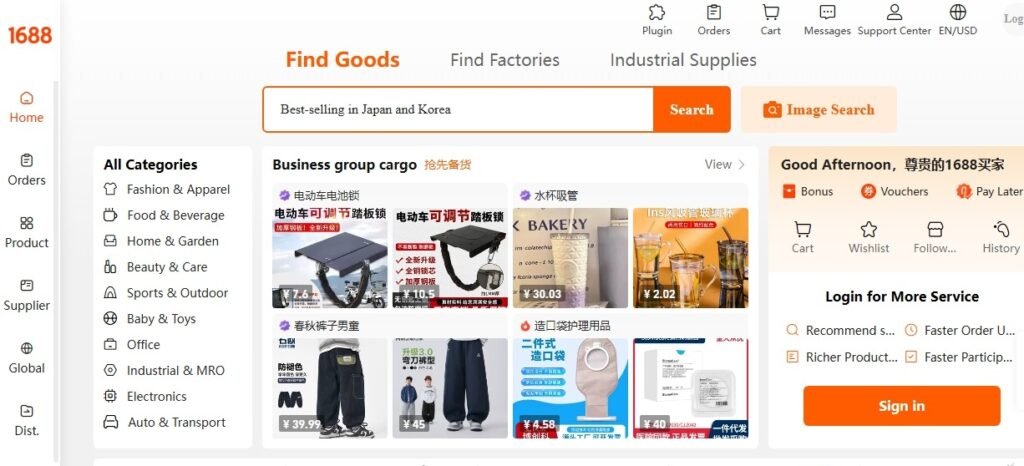
1688.com is Alibaba’s domestic Chinese platform, built for local buyers. Factories listed here are not trying to market to international buyers, which means you get closer to factory-direct pricing — often 20 to 40 percent lower than equivalent Alibaba listings.
The entire platform is in Mandarin, so you will need Google Translate or a sourcing agent to navigate it. But the effort pays off. Most Western buyers skip this platform entirely, which is exactly why it gives you a competitive pricing advantage.
| Pro tip: Search the same product on both Alibaba and 1688.com. If the Alibaba supplier’s company name appears on 1688.com with a different (lower) price, you are dealing with a trading company, not a factory. |
Step 3: Research Your Competitors’ Suppliers
This is one of the fastest and most reliable ways to find vetted factories. If your competitor is already importing successfully from a Chinese manufacturer, that factory has already been tested in the real market.
Tools like ImportYeti and Panjiva pull data directly from US Customs import records. You can search any company name and see their full shipment history—including factory names, addresses, shipment volumes, and order frequency.
Search for a competitor’s brand name. You will often see their exact China factory listed, with details on how much they import and how often. This takes the guesswork out of the search and puts you in touch with manufacturers who have already passed real-world quality tests.
What to look for in import records
- Factory name and address: Use this to look them up directly on Alibaba or via Google
- Shipment frequency: Monthly shipments indicate a reliable, active supplier relationship
- Product descriptions: Confirm they manufacture your specific product category
- Volume patterns: Large volumes suggest the factory can scale with your business
Step 4: Attend China Trade Shows
No digital tool replaces the value of meeting a factory representative face to face. Trade shows let you evaluate product samples on the spot, build personal relationships, and shortlist serious partners in a matter of days.
For buyers who are ready to move past initial research and into serious sourcing, trade shows are one of the most efficient ways to spend time and money.
Canton Fair (Guangzhou, China)
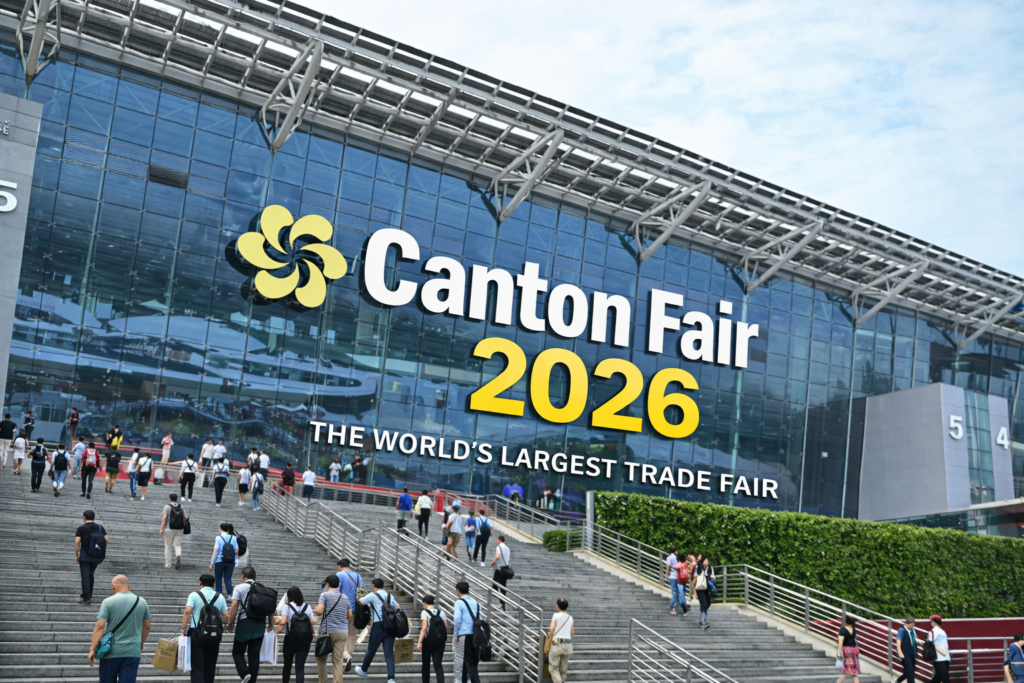
The Canton Fair is the world’s largest trade show, held twice a year — April and October — in Guangzhou. With over 25,000 exhibitors across every product category, it is the closest thing to a one-stop shop for Chinese manufacturing.
The fair runs in three phases, each covering different product types (electronics and industrial goods in Phase 1, household items and décor in Phase 2, and textiles and clothing in Phase 3). If you know your product category, you can target the relevant phase and avoid the overwhelming scale of the full event.
Global Sources Summit (Hong Kong)
The Global Sources Summit is smaller and more curated than the Canton Fair, making it a better fit for first-time trade show visitors. It has a strong focus on electronics, mobile accessories, and consumer goods.
Hong Kong’s logistical advantages—familiar legal environment, English-speaking contacts, easy flights—also make it a lower-stress entry point to in-person China sourcing.
Industry-Specific Trade Shows
Niche trade shows often attract more specialized, higher-quality factories than general fairs. If you are sourcing furniture, attend the China International Furniture Fair. If you are sourcing toys, the China Toy Expo in Shanghai is a better use of your time.
Specialized shows have less noise. Every exhibitor is in your category, which means faster shortlisting and deeper conversations.
| Budget to plan for: A trade show sourcing trip to China or Hong Kong typically costs $2,000 to $5,000+, including flights, accommodation, and registration fees. Best for buyers with a defined product and a ready budget — not early-stage exploration. |
Step 5: Search Baidu and Chinese Industrial Directories
Most Western buyers search for factories using Google. The problem is that the best Chinese manufacturers rarely invest in Google-optimized websites. Their marketing is targeted at domestic Chinese buyers through Baidu — China’s dominant search engine.
This matters because Baidu holds over 60% of China’s search market. Factories that rank well on Baidu are often well-established, locally reputable businesses that have never thought to market themselves internationally.
Use Google Translate to navigate Baidu’s interface, and search in simplified Mandarin for your product category. You will surface suppliers that simply do not appear in any English-language directory.
This takes more effort, but the factories you find here face far less competition from other international buyers.
Other Chinese directories worth exploring
- HKTDC Directory: Hong Kong Trade Development Council’s database of verified manufacturers and traders — visit at hktdc.com
- ChinaManufactures.com: Focused on verified exporters with English-language profiles—visit at chinamanufactures.com
- DHgate: Better suited to small orders and testing, not bulk manufacturing—visit at dhgate.com
Step 6: Work with a China Sourcing Agent

If the language barrier, time difference, or sheer complexity of factory sourcing feels overwhelming, a professional sourcing agent can handle it for you.
A good agent is based in China, speaks Mandarin, has existing factory relationships, and negotiates on your behalf.
Sourcing agents are especially valuable for first-time importers, buyers sourcing complex or multi-component products, and anyone who wants boots-on-the-ground quality control without traveling to China.
What a sourcing agent typically handles
- Factory identification and shortlisting
- Mandarin negotiations and price benchmarking
- Sample coordination and quality checks
- Factory audits and production follow-up
- Shipping and logistics coordination
What does a sourcing agent cost?
Most agents charge 5 to 10 percent of the total order value, or a flat monthly retainer if you work with them on an ongoing basis. Some specialize in specific industries—electronics, apparel, furniture—which means they bring deeper supplier networks and quality knowledge to your category.
If you want a reliable, full-service sourcing partner in China, CHANGE Sourcing offers end-to-end procurement services — from factory identification and supplier vetting to quality control and shipment coordination. They work directly with verified manufacturers across multiple product categories, which removes the most time-consuming parts of the sourcing process for international buyers.
Step 7: Vet and Verify Every Supplier Before You Commit
Finding a factory is one thing. Trusting it with your money and your brand is another. The vetting step is where most sourcing mistakes happen — buyers get excited about a low price and skip the due diligence that would have saved them thousands of dollars.
Use the following checklist before committing to any supplier, regardless of how professional their profile looks.
Supplier Vetting Checklist
| Verification Step | How to Do It |
|---|---|
| Business registration check | Ask for their business license and verify it on China’s AMR (Administration for Market Regulation) database |
| Sign an NDA | Protect your product designs and specs before sharing any details with a factory |
| Send a detailed RFQ | Request for Quotation—include exact materials, dimensions, quantities, and timeline. Get quotes from at least 5 to 8 factories |
| Order product samples | Never skip this. Evaluate physical samples for quality, dimensions, and finish before any bulk order |
| Third-party factory audit | Hire SGS (sgs.com), Bureau Veritas (bureauveritas.com), or QIMA (qima.com) to conduct an on-site audit if you cannot visit personally |
| Verify certifications | ISO 9001, CE, FDA, RoHS—confirm these are genuine by contacting the issuing body directly |
| Payment terms check | Avoid any factory demanding 100% upfront. Standard terms are 30% deposit and 70% before shipment |
Red Flags to Watch Out For
Not every factory on Alibaba or Global Sources is legitimate. Some are outright scams. Others are simply poor partners that will cost you time and money.
- Refuses to sign an NDA: Any professional factory will agree to basic IP protection
- Cannot provide a business license: Legitimate manufacturers are registered legal entities in China
- Demands 100% upfront payment: This is unusual and a major warning sign for new relationships
- Unrealistically low prices: If pricing is 40-50% below other quotes, something is wrong—materials, quality, or legitimacy
- No verifiable audit history: Established factories have audit records. Ask for previous reports
- Poor or delayed communication: Slow response times before the order rarely improve after payment
How to Send Your First Supplier Outreach Email
Most buyers send generic messages that get ignored. A specific, professional email that shows you are a serious buyer gets 3 to 5 times more responses. Here is a template you can adapt:
| Subject: Manufacturing Partnership Inquiry — [Your Product] Hi [Factory Name] Team, My name is [Your Name], founder of [Company]—a [country] business selling [product category]. We have been operating for [X] years with consistent, growing order volumes. We are currently looking for a long-term manufacturing partner for [specific product]. Our initial order would be approximately [quantity] units, with planned repeat orders every [timeframe]. We are targeting a unit cost of around [price range]. Could you please share: (1) your MOQ, (2) sample lead time and cost, (3) production lead time, and (4) standard payment terms? We reviewed your profile and believe your capabilities are a strong fit. I would be glad to set up a short video call at your convenience. Best regards, [Your Name] | [Company Website] |
Frequently Asked Questions
1) What is the best website to find Chinese factories?
Alibaba is the most widely used starting point due to its scale and supplier verification features. For more rigorous supplier checks, Global Sources is a strong alternative. If you want direct factory pricing without trading company markups, 1688.com is worth the extra navigation effort despite being in Mandarin.
2) How do I verify that a Chinese manufacturer is legitimate?
Request their business license and cross-check it with China’s Administration for Market Regulation database. Use a third-party auditing firm like SGS, Bureau Veritas, or QIMA for an independent factory audit. Always order samples before committing to bulk production, and insist on standard payment terms — never pay 100% upfront.
3) What is a typical minimum order quantity (MOQ) from Chinese factories?
MOQs vary by product and factory. Basic consumer goods and apparel typically start at 500 to 1,000 units. Electronics and custom-engineered products may start at 100 to 500 units. Smaller factories are often willing to negotiate lower MOQs for buyers who show long-term potential.
4) Do I need to visit China to source from a Chinese factory?
No. Many buyers build successful supply chains entirely online or through a sourcing agent. However, for high-value products, complex items, or large initial orders, an in-person factory visit or third-party audit is strongly recommended before committing significant capital.
5) What does a China sourcing agent charge?
Most sourcing agents charge between 5 and 10 percent of the total order value, or a flat monthly retainer for ongoing work. Fees vary based on service scope—some cover only factory identification, while full-service agents like CHANGE Sourcing handle everything from factory audit to shipment tracking.
6) How do I avoid scams when sourcing from China?
Always verify the supplier’s business registration. Never pay 100% upfront. Use Trade Assurance on Alibaba for payment protection. Order samples before the bulk. Use third-party audits. Be skeptical of prices that are significantly lower than other quotes—quality corners are usually being cut somewhere.
Final Thoughts
Finding a Chinese factory is not as intimidating as it seems once you have a clear process. Start by identifying the type of manufacturer you need—OEM, ODM, or trading company. Use online directories like Alibaba, Global Sources, and 1688.com to build an initial list.
Spy on your competitors using import data tools to find pre-vetted suppliers. Attend trade shows if you are ready for in-person meetings. Search Baidu for factories that do not market internationally. And if you want expert help, a sourcing agent removes most of the friction.
Above all, never skip the vetting step. Request samples, check registrations, use third-party audits, and protect your designs with an NDA before sharing anything.
A great factory partner is a long-term business asset. Take the time to find one properly, and it will pay off for years.