

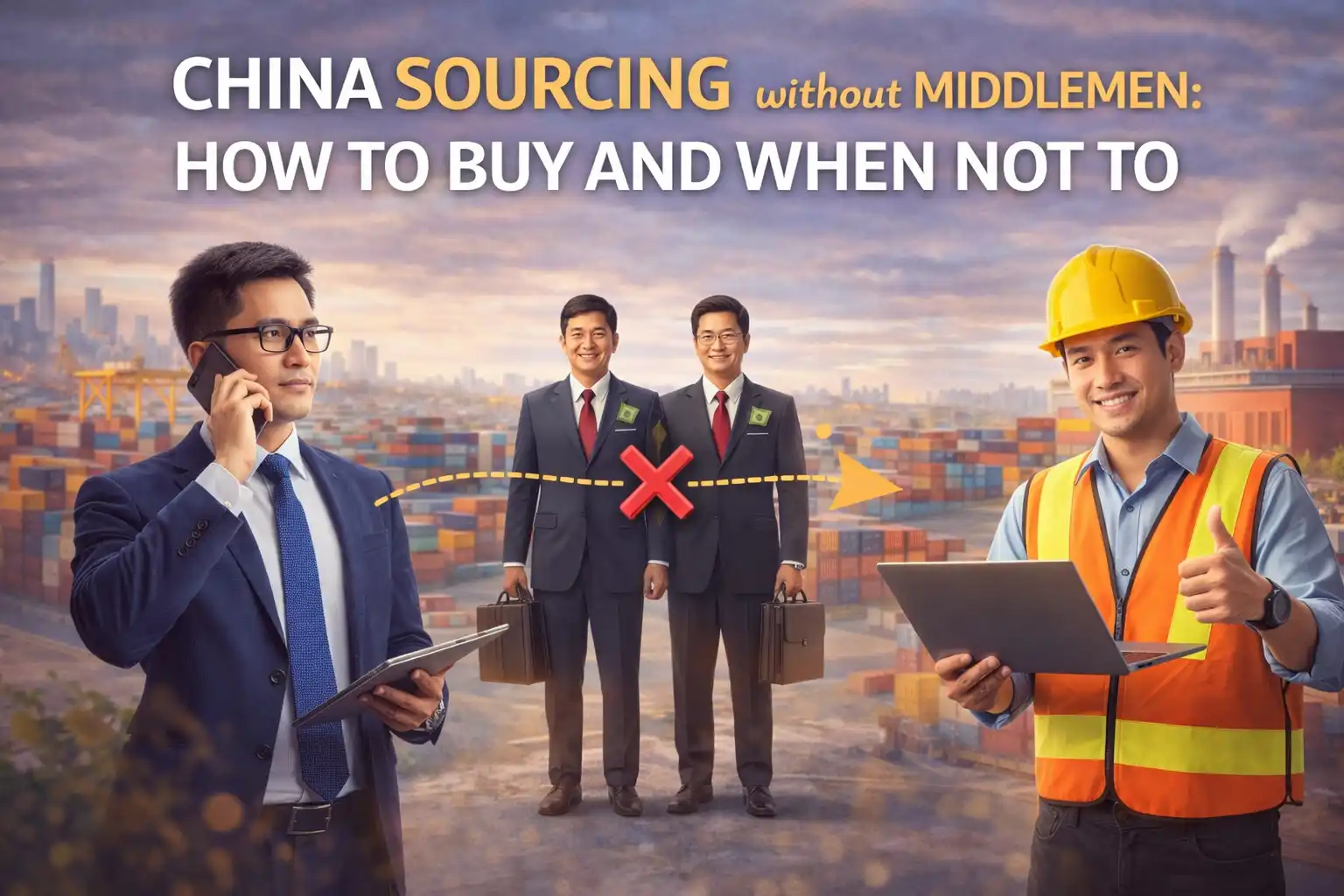
Every time a trading company stands between you and a factory, it takes a cut. That cut is typically 15 to 30 percent on top of the factory price — money that comes straight out of your margin.
On a 500-unit order priced at $12 factory-direct, a trading company could quietly inflate that to $15 or more per unit. That is $1,500 gone before a single product leaves China.
This guide breaks down exactly how to source from China without middlemen, where to find real factories, how to verify them, and — just as importantly — when it actually makes more sense to keep a sourcing partner in the chain.
Who Is the “Middleman” You Are Actually Cutting?
Before you start cutting, it helps to know who you are cutting out. Not every third party in the China supply chain is a problem. But three types add cost without adding proportional value for most importers.
Trading Companies
Alibaba, the world’s largest B2B sourcing platform, is full of them. A trading company buys finished goods from factories and resells them to foreign buyers at a markup.
They are not manufacturers. On Alibaba, they often present themselves with polished storefronts and wide product ranges—a common red flag that you are not dealing with a factory.
Trading companies are not always bad. They are useful when you need very small quantities, mixed SKUs, or consolidated shipments from multiple product categories. But for focused, repeating orders, they cost you money every time.
Import Brokers and Commission Agents
These are individuals or small firms who charge a percentage — usually 5 to 15 percent — to connect you with suppliers.
Some operate legitimately and add real value. Others are gatekeepers who simply forward your inquiry to the same Alibaba suppliers you could reach yourself.
Domestic Wholesalers
If you are buying China-made goods through a local wholesaler in your home country, you are paying the manufacturing cost, the importer’s margin, the wholesaler’s margin, and shipping twice.
This is the most expensive form of middleman sourcing and the easiest to eliminate.
| Middleman type | Typical markup | Worth keeping? |
| Trading company | 15–30% | Only for tiny MOQs or mixed-product orders |
| Commission broker | 5–15% | Depends on their verified factory access |
| Domestic wholesaler | 40–80% | Rarely — only for urgent local stock |
Where to Find Chinese Factories Directly
Once you know what you are looking for, finding factories is less about luck and more about knowing which platforms and channels to use—and how to filter them correctly.
Alibaba — With the Right Filters On
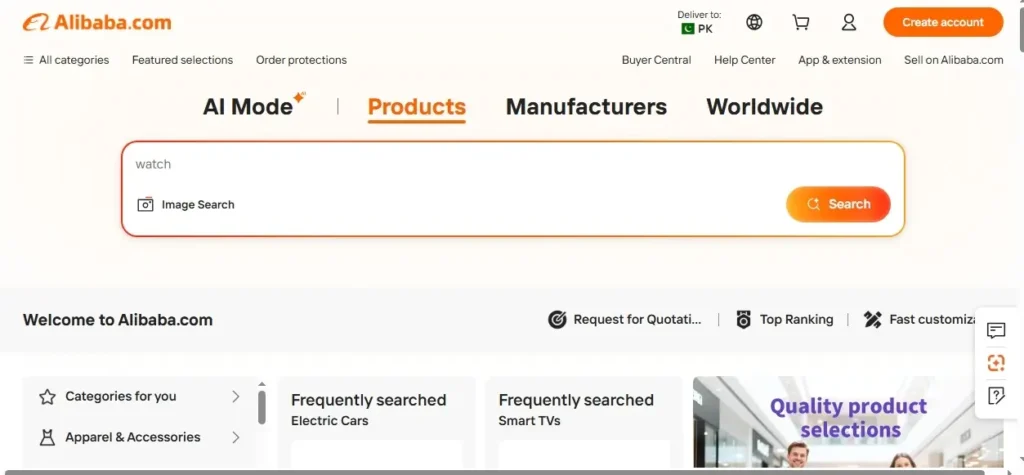
Alibaba is the world’s largest B2B sourcing platform and still one of the best places to start.
The key is knowing how to read the supplier badges. A “Verified Manufacturer” badge indicates a third-party audit has confirmed on-site production. A “Gold Supplier” badge alone only confirms the company paid a membership fee—it says nothing about whether they manufacture anything.
When searching, use the filter Supplier Type → Manufacturer and look at the company’s factory photos, production capacity, and trade assurance history.
If their product range spans 20 unrelated categories, you are almost certainly looking at a trading company.
1688.com — The Factory-Direct Platform Most Buyers Miss
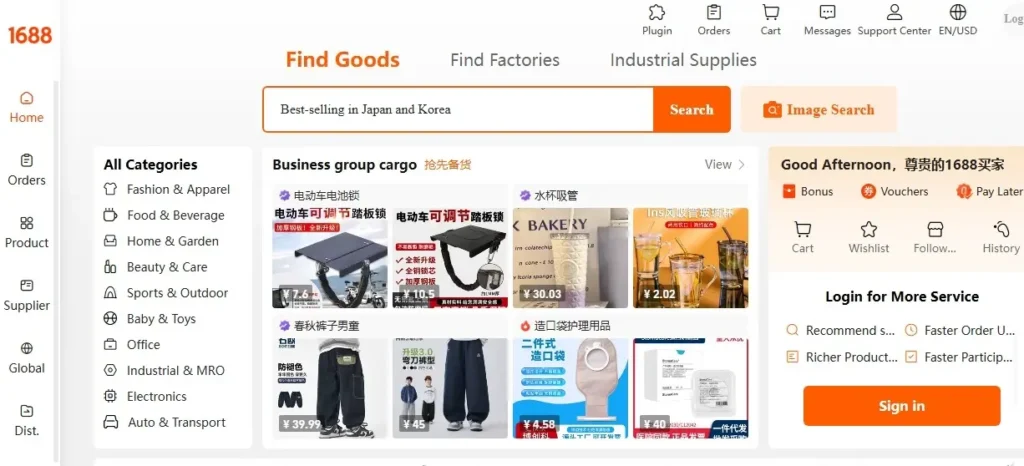
688.com is Alibaba’s domestic Chinese platform, where Chinese businesses buy from factories for the Chinese market.
Prices here are typically 20 to 50 percent lower than what you see on the international Alibaba site — because trading company margins have been stripped out entirely.
The barrier is the language. The platform is entirely in Mandarin and is not designed for overseas buyers. Most listings require a Chinese bank account to place orders directly.
However, many importers use a sourcing agent or a translation tool to browse and shortlist suppliers here, then contact factories via WeChat or email to negotiate directly. It is the single most overlooked factory-direct channel in English-language sourcing guides.
Made-in-China and Global Sources
Made-in-China has a strong presence in industrial and machinery categories, with better factory verification than many comparable platforms.
Global Sources is particularly strong for electronics and technology products and tends to attract larger, more export-experienced factories.
Both platforms allow supplier audits and often show production line videos. They are worth adding to your initial supplier search alongside Alibaba.
The Canton Fair
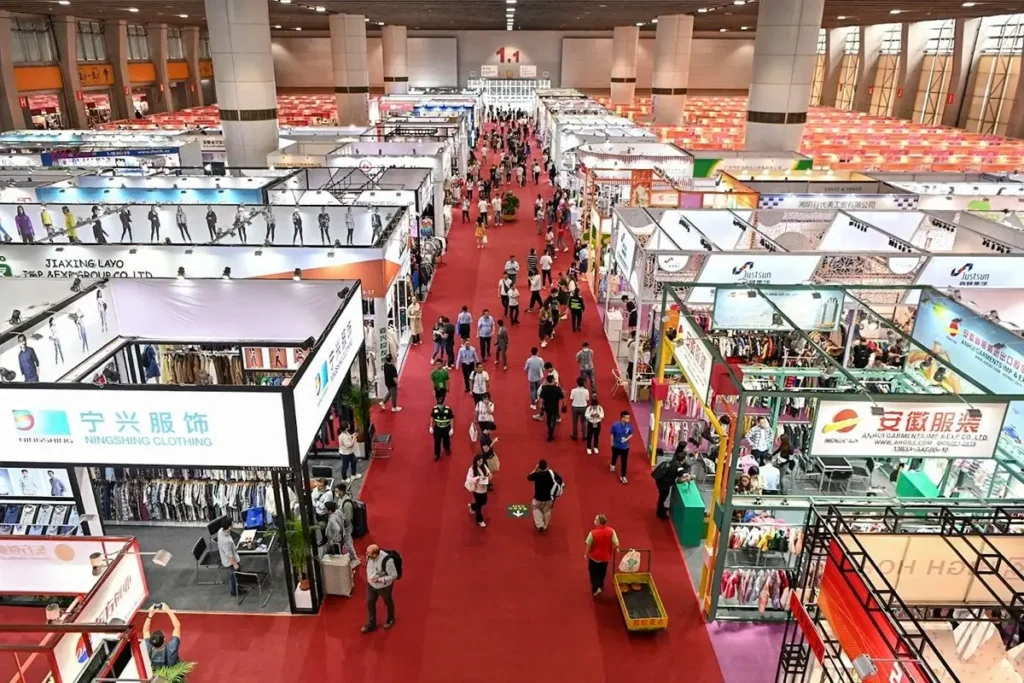
The Canton Fair is held twice a year in Guangzhou and is the largest trade fair in China. Attending in person gives you something no online platform can match: face-to-face meetings with factory owners, physical sample inspection on the spot, and the ability to compare dozens of suppliers in a single afternoon.
The trade-off is cost and logistics. For buyers placing regular or high-value orders, one Canton Fair trip can pay for itself many times over by locking in direct factory relationships.
How to Verify You Are Talking to a Real Factory
This is where most first-time importers get burned. A polished Alibaba storefront, professional product photos, and fast response times do not confirm that a company manufactures anything.
Here is a four-step verification process that takes under 30 minutes per supplier.
Step 1 — Request the Chinese Business License
Every legitimate Chinese company has a 营业执照 (Yíngyèzhêzhào)—a business registration certificate.
Ask for a copy and check three things: the registered company name, the business address, and the stated business scope.
The business scope should include manufacturing for the product category you are sourcing. If it says “trading” or “commerce,” you are talking to a trading company.
Step 2 — Cross-Check the Factory Address
Take the factory address from the business license and search it on Google Maps or Baidu Maps. A genuine factory should show an industrial building or complex.
If the address maps to a residential apartment, an office tower in a city center, or a single floor of a commercial building, that is a strong red flag.
Step 3 — Request a Live Factory Video Call
Ask the supplier for a 10-minute live WeChat or WhatsApp video call from the production floor—filmed that day, not a recorded tour.
A real factory will agree without hesitation. A trading company will stall, offer pre-recorded footage, or claim it is not possible for “security reasons.”
Step 4 — Look for These Red Flags
Pricing too far below market
If a supplier quotes 40 percent or more below every other quote you have received, something is wrong.
Either the quality will not match the spec, or you are looking at a scam. A real factory competes on margin—not by offering prices that make no economic sense.
Unwillingness to provide documentation
Any supplier who refuses to share a business license, a factory video, or certifications relevant to your product should be removed from your list immediately. Legitimate factories have nothing to hide.
A product range that is too wide
A factory that claims to manufacture electronics, clothing, furniture, and kitchenware is not a factory. Factories specialize. If the product catalog looks like a department store, you are almost certainly looking at a trading company.
The Real Cost of Cutting the Middleman — And the Costs You Take On
Going factory-direct saves money. But it is important to be honest about what you are taking on when you remove the middleman from the chain.
What You Save
Here is a simple illustration. Suppose you are ordering 500 units of a product priced at $12 per unit, direct from the factory. A trading company handling the same order might quote $16 to $18 per unit, depending on their margin.
At $16 per unit, that is a $2,000 saving on a single order. At $18, it is $3,000. Across four orders a year, that is $8,000 to $12,000 staying in your business instead of going to an intermediary.
What You Take On
Direct sourcing transfers responsibility back to you. Trading companies and agents often handle quality control checks, shipment coordination, and supplier communication in Mandarin. When you go direct, those tasks become yours.
The most common pain points for direct buyers are:
- Language barrier — Most small Chinese factories do not have English-speaking sales staff. Communication relies on translation apps, WeChat voice messages, and occasional miscommunication on specs.
- Higher MOQs — Factories prefer large orders. Many have minimum order quantities that a trading company would split across multiple buyers. If your order volume is small, you may face MOQs that you cannot meet alone.
- Quality control—Without an agent or trading company doing pre-shipment checks, you are responsible for arranging a third-party inspection or traveling yourself. Skipping this step on a direct order is a high-risk move.
Should You Go Direct or Use a Sourcing Agent?

This is the question every competitor guide avoids answering clearly. The truth is that cutting the middleman entirely is not the right move for every buyer at every stage.
Here is a straightforward framework.
Go Direct If You Meet Most of These Criteria
- You are placing orders of 500 units or more per run
- You are sourcing the same product repeatedly—not testing new categories constantly
- You have an established relationship with at least one verified factory
- You can afford a pre-shipment inspection (or travel to China yourself)
- Your product does not require complex certifications that you cannot manage independently
Use a Sourcing Agent If You Meet Most of These Criteria
- You are new to China sourcing and placing your first few orders
- Your order volumes are small (under 200–300 units), and factories keep rejecting your MOQ
- You are developing a custom or OEM product that requires back-and-forth on specs and samples
- You need quality control handled on the ground without travelling to China
- You are sourcing multiple product types and need someone to coordinate across factories
| A note on sourcing agents:A good sourcing agent is not a middleman in the traditional sense—they work for you, not for the factory. Services like CHANGE Sourcing act as your in-China team: verifying factories, negotiating prices, managing quality checks, and handling logistics—without inflating the product price the way a trading company does. If direct sourcing feels like too big a leap right now, a transparent agent is a much smarter middle ground than a trading company. |
| Your situation | Recommended approach |
| First order, new product | Sourcing agent |
| Repeat orders, verified factory | Go direct |
| Small MOQ (< 200 units) | Sourcing agent or trading company |
| Custom / OEM product development | Sourcing agent |
| Large repeating orders (500+ units) | Go direct |
| Multiple product categories | Sourcing agent for coordination |
Step-by-Step: Your First Direct Factory Order
If you have verified a factory and you are ready to place your first direct order, follow these steps in sequence. Skipping any of them is where problems typically start.
Step 1 — Build a Detailed Product Spec Sheet
Write down every detail of your product before you contact anyone: material, dimensions, weight, color, packaging type, labeling requirements, target price, and any certifications needed (CE, RoHS, ASTM, etc.). Vague briefs produce vague quotes.
The more specific your spec sheet, the fewer revision rounds you will go through — and the more accurately you can compare quotes from different factories.
Step 2 — Find and Shortlist 10 to 15 Candidates
Use Alibaba (manufacturer filter), Made-in-China, and 1688.com to identify 10 to 15 potential factories in your product category. Do not start evaluating yet—just build the list. Cast wide before you start narrowing.
Step 3 — Verify and Reduce to 3 Finalists
Run every supplier through the four verification steps outlined above: business license, address check, live video call, and red flag scan. Most of your original list will not pass. Reduce to three strong finalists before you invest further time.
Step 4 — Request Samples from All Three Simultaneously
Never order samples from one supplier, wait, then move to the next. Request samples from all three finalists at the same time. Evaluate each sample against your spec sheet and document every discrepancy in writing before you give any feedback to the factories.
Step 5 — Negotiate MOQ and Payment Terms
Standard payment terms in China are 30 percent deposit before production and 70 percent before shipment. Never pay 100 percent upfront. On your first order, push for Alibaba Trade Assurance or an escrow arrangement — it protects your deposit if the factory defaults on the order.
Step 6 — Book a Pre-Shipment Inspection
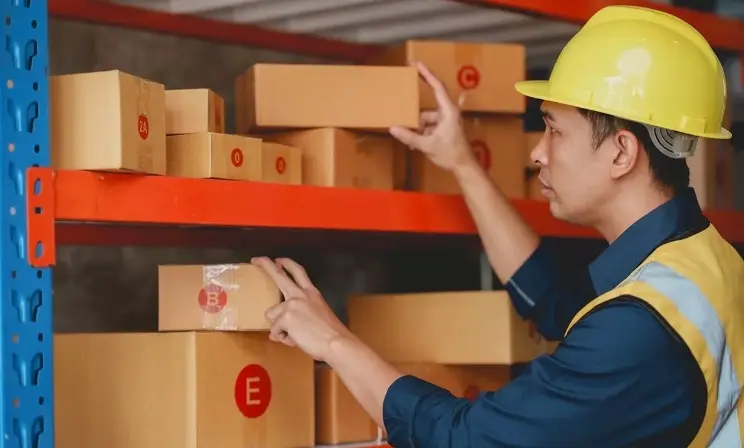
Before the goods leave the factory, hire a third-party inspection company to check quality, quantity, labeling, and packaging against your specifications.
Companies like CHANGE Sourcing offer pre-shipment inspection services starting from around $200 to $300 per inspection day. This single step prevents the vast majority of expensive quality disputes.
Step 7 — Arrange Shipping and Customs Clearance
Get freight quotes from at least two forwarders before committing. Make sure your supplier provides a correct commercial invoice and packing list — errors in these documents are the most common cause of customs delays.
If you are importing into the US, ensure all HS codes are accurate and check whether your product category faces any current tariff restrictions.
Final Thoughts
China sourcing without middlemen is entirely achievable — but it requires the right groundwork. The biggest mistake new importers make is skipping verification and going straight to price negotiation.
The second biggest mistake is assuming direct sourcing is always cheaper once you factor in QC, logistics management, and communication overhead.
The smart approach is to match your sourcing model to your order stage. Use a trusted partner when you are starting out or developing a new product.
Move to direct factory purchasing once you have a verified relationship, stable volumes, and the processes in place to manage quality yourself.
The factories are there. The platforms to find them are accessible. What separates profitable importers from frustrated ones is simply the due diligence they do before the money moves.