

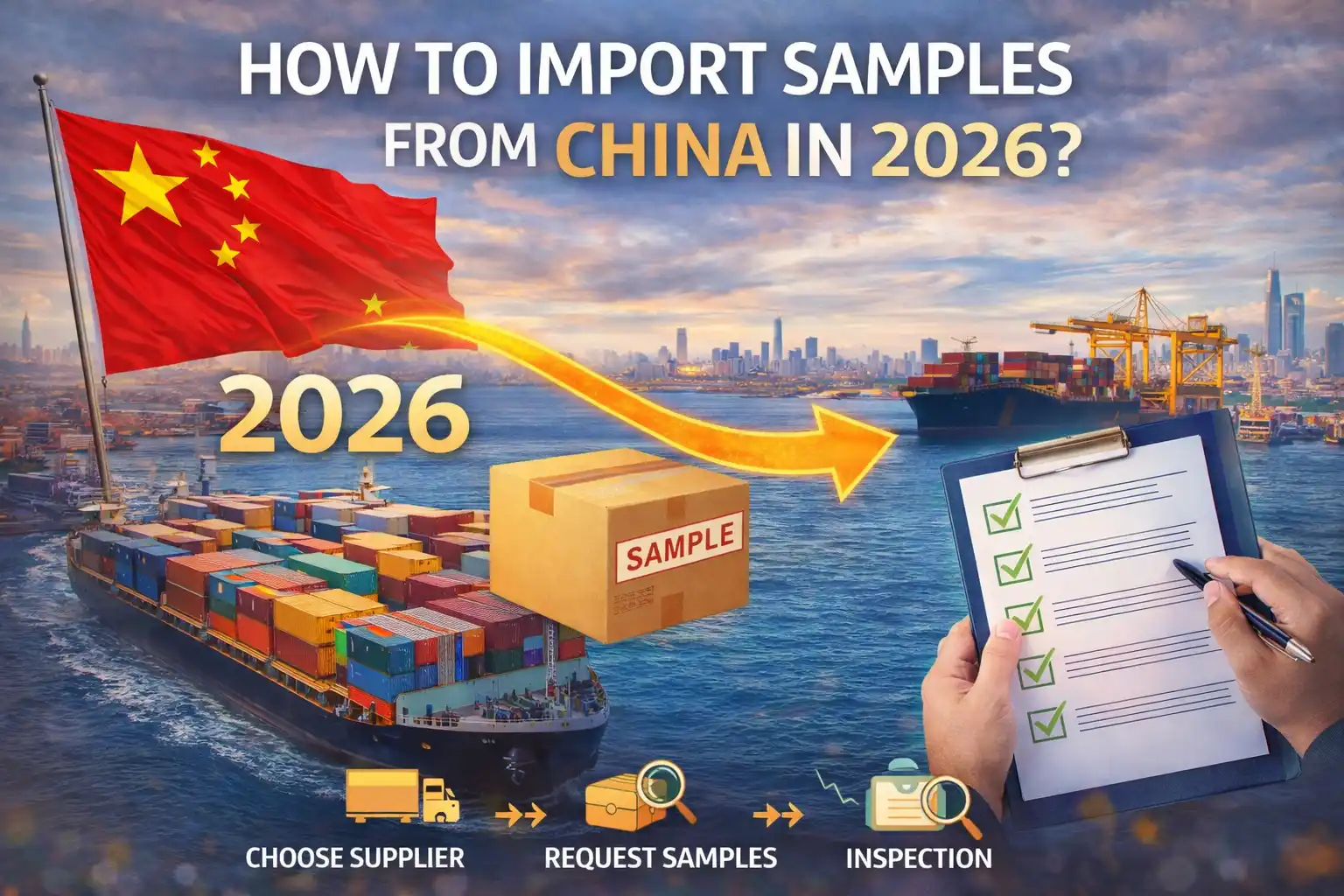
You found a supplier in China, the price looks great, and you are ready to place a bulk order. But before you wire thousands of dollars, you need to hold the product in your hands first.
Ordering a sample is the most important step in the importing process — and most new importers skip it or do it wrong.
This guide walks you through exactly how to import samples from China. You will learn how to request them, what they cost, how long they take, and what to look for when they arrive.
Why Ordering Samples is Non-Negotiable
Ordering a sample before a bulk purchase protects you in three key ways. First, you verify that the product quality matches what was shown in photos or videos. Second, you test whether the supplier can actually produce what they promised. Third, you catch any spec errors—wrong size, wrong material, or wrong color—before they become expensive mistakes.
According to a report by Statista, global eCommerce sales continue to grow rapidly, which means more competition and less room for costly sourcing errors. A sample order that costs you $100 can save you from a $10,000 mistake.
Find and Vet Your Supplier
The three most trusted platforms for finding Chinese suppliers are Alibaba, Global Sources, and Made-in-China.com. Each platform lists thousands of manufacturers and trading companies.
Before you request a sample, always vet the supplier first. Check their trade records and response rate. Look for verified badges and third-party audit reports. Read reviews from other buyers and confirm they have experience exporting to your country.
Red Flags at This Stage
Be cautious if a supplier has no trade history, no business license on file, or pushes you to communicate only outside the platform. These are early warning signs of a scam.
Request Your Sample — With a Ready-to-Use Email Template
When you contact a supplier for a sample, be as specific as possible. Vague requests lead to generic samples that tell you nothing useful. Your message should include the exact product specifications, your target market, your intended order quantity if you approve the sample, and a clear deadline.
Sample Request Email Template
Copy and use this template directly with any Chinese supplier:
Subject: Sample Request — [Product Name]
Dear [Supplier Name],
I am interested in ordering a sample of [Product Name] before placing a bulk order. Please find the specifications below:
• Product: [Name/Model]• Material: [Specify]• Color/Size: [Specify]• Quantity: 1–3 units• Target Market: [Your country]
Please confirm the sample cost, shipping cost, and estimated lead time. I plan to place an initial order of [X] units if the sample meets our requirements.
Thank you,[Your Name]
Understand the Types of Samples
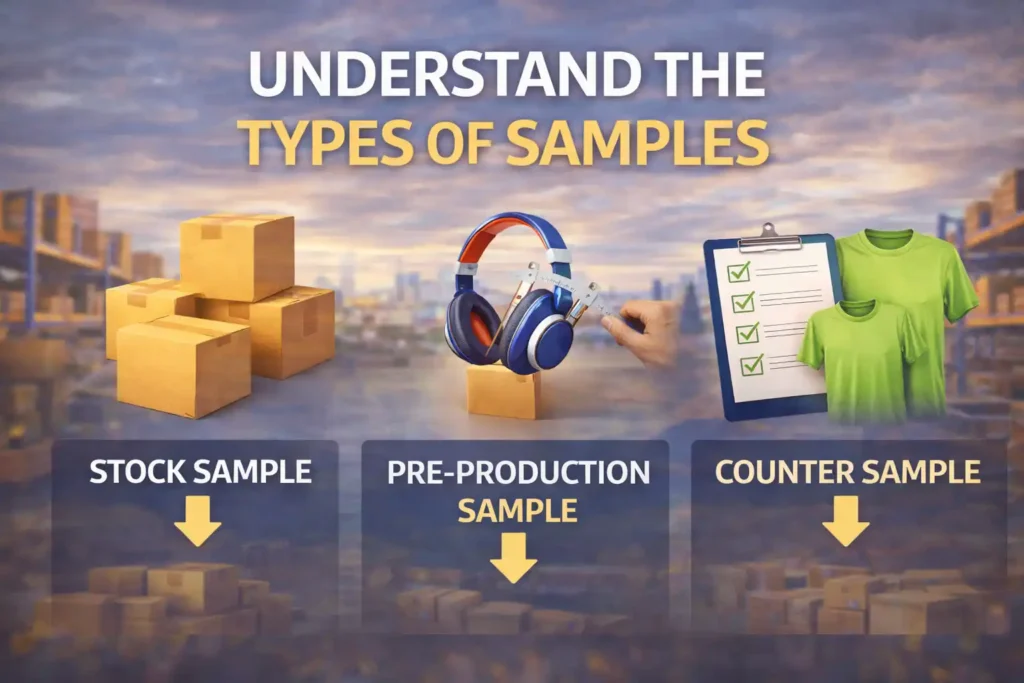
Not all samples are the same. Understanding the type you need will save you time and money.
- Stock sample: A standard item already in production. Fastest to receive and usually cheapest.
- Pre-production sample: Built to your exact specs before the bulk run begins. Best for custom products.
- Counter sample: You send the supplier a reference item, and they replicate it. Used when you have a specific product you want copied or improved.
For most first-time importers, a pre-production sample is the right choice. It confirms the supplier can build exactly what you need.
How Much Do Samples from China Actually Cost?
This is the question most guides avoid. Here are realistic cost ranges based on common product categories:
| Sample Type | Sample Cost (USD) | Express Shipping (DHL/FedEx) |
|---|---|---|
| Standard/stock sample | $20 – $80 | $50 – $100 |
| Custom/pre-production sample | $80 – $300 | $60 – $150 |
| Counter sample (replica) | $100 – $400 | $60 – $200 |
Will Suppliers Charge for Samples?
Most suppliers will charge for samples, especially custom ones. Some will refund the sample cost once you place a bulk order — always ask about this upfront. Be cautious of suppliers who offer completely free custom samples, as quality is often compromised.
Who Pays for Shipping?
In most cases, the buyer pays for sample shipping. Use your own courier account with DHL, FedEx, or UPS for faster transit and easier tracking. Avoid relying on the supplier’s courier account — it reduces your control over the shipment.
Shipping Your Sample from China
For samples, always use express courier services. They are faster, safer, and easier to track than sea freight or postal services.
- DHL Express: 3–5 business days, best coverage in most countries
- FedEx International Priority: 3–5 business days, strong in North America and Europe
- UPS Worldwide Express: 3–5 business days, reliable for heavier samples
Lead Times to Expect
Here is a simple breakdown of how long the full sample process takes:
- Stock sample: Ready in 1–3 days + 3–5 days shipping = about 1 week total
- Custom/pre-production sample: 7–15 days production + 3–7 days shipping = 2–3 weeks total
- Counter sample: 10–20 days production + 3–7 days shipping = 2–4 weeks total
What About Customs Duties on Samples?
Samples are often declared as “no commercial value” or marked with a low declared value, which can help avoid import duties in some countries. However, customs rules vary by country and product type.
Check your country’s customs authority for the exact rules. In the US, for example, shipments valued under $800 may enter duty-free under de minimis rules (CBP). In the UK and EU, different thresholds apply.
Inspect Your Sample When It Arrives
When your sample arrives, do not just glance at it. Run through a thorough inspection before you approve bulk production.
- Dimensions: Measure and compare against your specs
- Material quality: Feel, weight, and finish—does it match what was agreed?
- Functionality: Test all moving parts, features, or mechanisms
- Packaging: Check if the packaging is sturdy enough for your market
- Labeling: Verify any required labels, barcodes, or compliance markings
What to Do If the Sample Fails
If the sample does not meet your specs, do not accept it or move to bulk production. Go back to the supplier with detailed written feedback, photos, and a request for a revised sample. A reputable supplier will work with you to fix the issues. If they are unresponsive or dismissive, walk away.
Red Flags to Watch for When Ordering Samples
Knowing the warning signs can save you from fraud and wasted money.
- Price is too low: A custom sample priced at $5–$10 is a red flag. Unrealistic pricing often means poor materials or a bait-and-switch.
- Refuses to send a sample: A serious supplier will always accommodate a sample request. Flat refusals without explanation are suspicious.
- Wants full payment upfront: For samples, partial or full payment is normal. But never pay for a bulk order upfront with no prior relationship.
- Poor or slow communication: If a supplier takes days to reply to a simple question before you have even ordered, imagine how they handle problems after payment.
- Sample quality is much better than bulk: Some suppliers send a premium sample but deliver inferior bulk goods. Always request a production sample after bulk starts, not just a pre-sales sample.
If you are working with a new supplier and want extra protection, a professional sourcing partner can handle verification, factory audits, and sample quality checks on your behalf.
CHANGE Sourcing is a full-service sourcing company that manages supplier vetting, sample coordination, and quality inspections for importers — useful if you want to reduce risk from day one.
Frequently Asked Questions

No. Free samples are rare and usually limited to very low-cost stock items. Most suppliers charge for samples, especially custom or modified products. Expect to pay between $20 and $400, depending on the product, plus shipping.
For express courier shipments (DHL, FedEx, UPS), expect 3–7 days of transit time. Add 1–15 days of production time, depending on the sample type. Total lead time is typically 1 to 4 weeks.
It depends on your country and the declared value of the sample. Many countries have low-value thresholds where small shipments enter duty-free. Check your local customs authority or use a customs broker to confirm the rules for your specific product category.
Quick Checklist: Importing Samples from China
Before moving to bulk, make sure you have completed each of these steps:
- Verified the supplier on Alibaba, Global Sources, or Made-in-China.com
- Sent a detailed sample request email with full product specifications
- Confirmed the sample type (stock, pre-production, or counter sample)
- Agreed on sample cost, shipping method, and lead time
- Used your own courier account (DHL, FedEx, or UPS) for shipping
- Checked customs rules for samples in your country
- Completed a full inspection on arrival (dimensions, material, function, packaging)
- Provided written feedback and requested revisions if needed before approving bulk
Final Thoughts
Importing samples from China is not complicated — but it does require a clear process. Vet your supplier first, send a detailed request, know your costs, and do a proper inspection when the sample arrives. Skipping any of these steps is where importers run into problems.
Take your time with the sample stage. Get it right before you scale. Your future bulk orders will thank you.