

Key Points
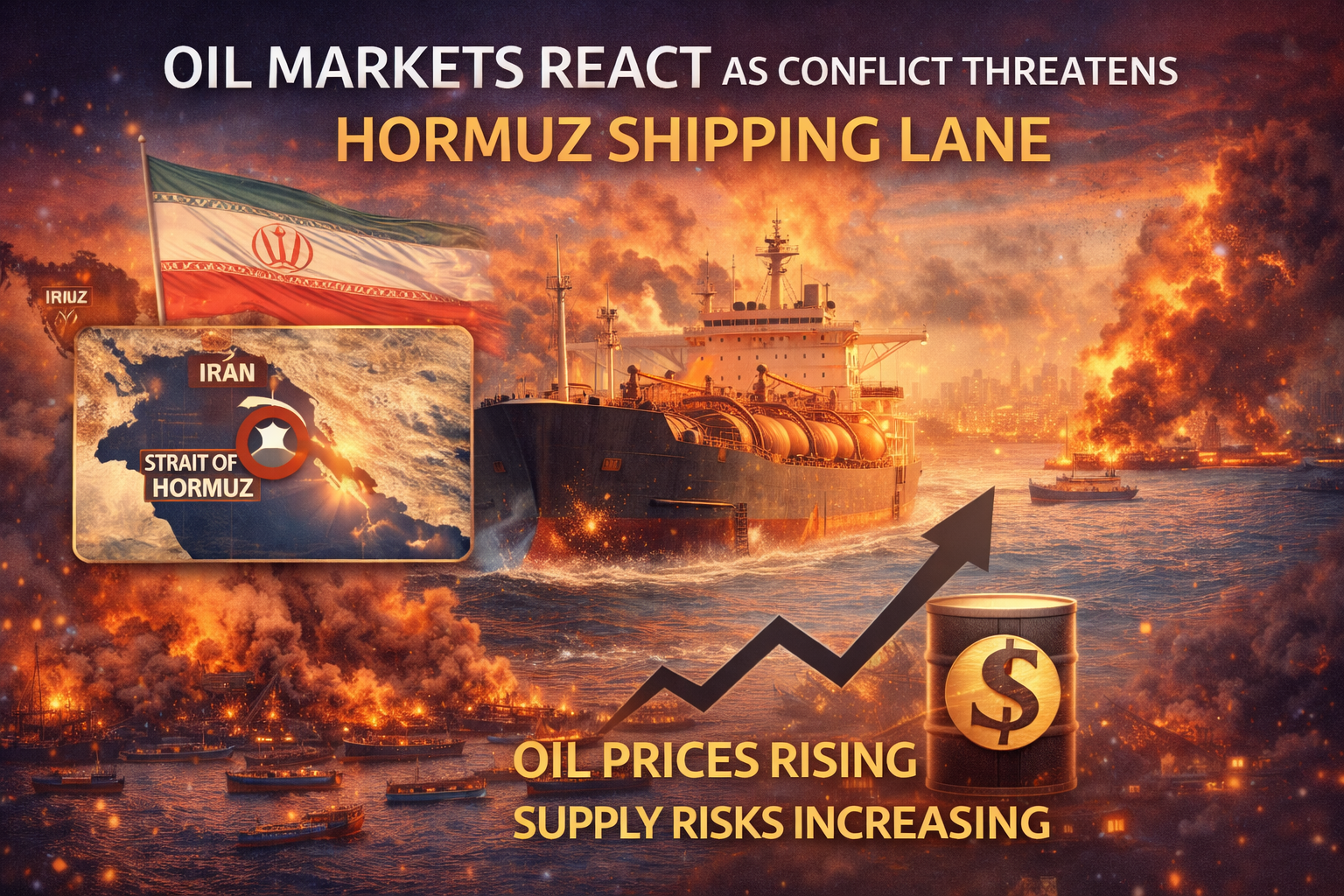
- The Strait of Hormuz carries around 20% of the global oil trade
- Conflict fears raise shipping and insurance costs
- Oil markets are showing increased volatility
- Tanker operators monitoring regional security risks
- Potential supply disruptions could affect global energy prices
Rising geopolitical tensions in the Middle East are triggering fresh volatility in global energy markets as concerns grow over potential disruptions in the Strait of Hormuz—one of the world’s most critical oil transit routes.
The narrow waterway handles roughly 20% of global oil shipments, making it a vital artery for energy exports from Gulf producers.
Escalating tensions involving Iran have prompted shipping companies and energy traders to monitor tanker movements through the region closely.
Market analysts report that oil prices have shown renewed volatility, with traders factoring in the possibility of shipping delays, higher insurance premiums, and potential rerouting of tankers.
Any prolonged disruption could significantly affect supply chains, particularly for major energy importers in Asia and Europe.