

China is still the single largest source of goods imported into the United States. But the rules have changed — a lot. Between the Section 301 tariffs, the end of the de minimis exemption in May 2025, and new reciprocal tariff policies, importing from China today is more complex than it was even two years ago.
That does not mean it is too hard. It means you need the right roadmap.
This guide walks you through every step of importing from China to the USA — from finding a supplier to clearing customs and getting goods to your door. We also cover the 2025/2026 tariff changes, real cost estimates, and the most common (and expensive) mistakes importers make.
Quick Navigation: Before You Start → Step 1: Find a Supplier → Step 2: HS Code → Step 3: Duties & Tariffs → Step 4: Shipping Method → Step 5: ISF & Freight Forwarder → Step 6: Quality Control → Step 7: US Customs Clearance → Common Mistakes → FAQ
Before You Start: 3 Questions to Answer First
Most people jump straight to finding a supplier. That is a mistake. Before you spend a dollar, you need answers to three basic questions. Getting these wrong can cost you your entire shipment.
1. Is Your Product Legal to Import?
Not everything made in China can enter the US freely. Some products are outright banned. Others require prior approval from US government agencies.
The US Customs and Border Protection (CBP) maintains a list of prohibited and restricted items. Products like counterfeit goods, certain food items, and specific chemicals are blocked at the border. Always check the CBP prohibited items list before placing any order.
2. Does It Require a License or Certification?
Many product categories need pre-approval before they can be sold in the US. These certifications vary by industry.
- Electronics: FCC certification required
- Food, supplements, cosmetics: FDA registration needed
- Children’s products: CPSC compliance testing required
- Textiles and apparel: FTC labeling rules apply
Skipping this step does not just risk a fine — it can mean your entire shipment is seized at the port.
3. Does the Math Actually Work?
Before you commit, run a quick landed cost check. This is the real total cost of getting goods into your hands in the US.
Landed Cost Formula: Product Cost + Freight Cost + Import Duties + Customs Broker Fee + Inland Delivery = Total Landed Cost
Many importers calculate only the product price and get a nasty shock when duties and freight are added. Run this calculation first — every time.
Step 1: Find and Vet Your Supplier

Where to Source Products
The three most widely used platforms for finding Chinese suppliers are Alibaba, Global Sources, and Made-in-China. Each has a different profile of suppliers — Alibaba has the widest range, Global Sources tends to skew toward verified manufacturers, and Made-in-China is popular for industrial goods.
If you are sourcing at volume, consider attending the Canton Fair (held twice a year in Guangzhou). It is one of the world’s largest trade expos and lets you meet manufacturers face to face before placing orders.
How to Vet Suppliers
Never order from a supplier you have not verified. Here is a practical checklist to run before committing.
- Request a business license and factory audit report
- Ask for three to five references from existing US buyers
- Order samples before any bulk order—always.
- Confirm whether they are a manufacturer or a trading company (manufacturers are usually cheaper)
- Check their Trade Assurance or escrow payment options on Alibaba
Documents to Get from Your Supplier
Once you agree to move forward, your supplier should provide a Proforma Invoice before the order and a full Commercial Invoice once production is complete. You will also need a Packing List and a Certificate of Origin. These documents are not optional — customs require them.
Understanding Incoterms
Incoterms define who is responsible for freight, insurance, and risk at each stage of the journey. For beginners, the most important ones to understand are:
| Incoterm | Who Arranges Freight | Best For |
| EXW | You (buyer) arrange everything from the factory | Experienced importers with their own forwarder |
| FOB | The seller delivers to the port; you arrange ocean/air freight | Most common choice for US importers |
| DDP | The seller handles everything, including duties | Beginners; seller takes all risk |
Step 2: Classify Your Product with an HS Code
What Is an HS Code?
The Harmonized System (HS) code is a 10-digit number that classifies every traded product in the world. For US imports, this is called the HTS (Harmonized Tariff Schedule) code. Every product you import must have one.
Your HS code determines your import duty rate. It also flags whether your product needs special licenses, inspections, or agency approval. Getting it wrong — even accidentally — can trigger a CBP audit, penalties, or a higher-than-expected duty bill.
How to Find Your HS Code
Use the official CBP HTS Lookup Tool on the US International Trade Commission website. Enter your product description, and the tool will walk you through the classification hierarchy. If you are unsure, a licensed customs broker can classify your goods correctly — this is worth paying for.
Never rely on the HS code your Chinese supplier gives you. Suppliers sometimes use codes that minimize their export taxes, which may not match the correct US import classification.
Step 3: Understand Duties and Tariffs in 2026
This is the most important section in this guide—and the one most competitors have not updated. Tariffs on Chinese goods have changed significantly over the past two years. Here is what you need to know right now.
The Four Layers of Tariffs on Chinese Goods
Layer 1: Base MFN (Most Favored Nation) Duty
This is the standard import duty that applies to all countries. For Chinese goods, it typically ranges from 0% to 25%, depending on product type. Consumer electronics are often 0%; textiles can be 12% to 25%.
Layer 2: Section 301 Tariffs
These additional tariffs were introduced starting in 2018 and remain in place. They add 7.5% to 25% on top of the base rate for most Chinese goods, depending on which Section 301 list your product falls under. Check the USTR database to see which list applies to your product.
Layer 3: IEEPA Reciprocal Tariffs
In 2025, the US imposed a new layer of reciprocal tariffs on Chinese goods under the International Emergency Economic Powers Act (IEEPA). According to the US Trade Representative, the combined effective tariff rate on many Chinese goods reached over 100% at its peak in mid-2025 before being reduced following a temporary trade truce. As of early 2026, rates have stabilized but remain significantly elevated. Always verify the current rate before placing an order.
Layer 4: End of De Minimis for China
This is critical for small parcel importers. Until May 2025, shipments valued under $800 from China entered the US duty-free under the de minimis exemption. That exemption ended on May 2, 2025 (CBP.gov). All commercial shipments from China — regardless of value — must now be formally entered through CBP’s Automated Commercial Environment (ACE) and are subject to duties.
Sample Landed Cost Calculation
To make this concrete, here is an example for a $10,000 CIF shipment of consumer goods from China:
| Cost Component | Estimated Amount |
| Product Cost (CIF value) | $10,000 |
| Base MFN Duty (e.g., 12%) | $1,200 |
| Section 301 Tariff (e.g., 25%) | $2,500 |
| Customs Broker Fee | $200 – $500 |
| ISF Filing Fee | $50 – $100 |
| Estimated Total Landed Cost | ~$14,000 – $14,300 |
Note: Tariff rates vary significantly by HS code. The above uses illustrative rates. Always confirm the exact rate for your product before finalizing your order.
Step 4: Choose Your Shipping Method
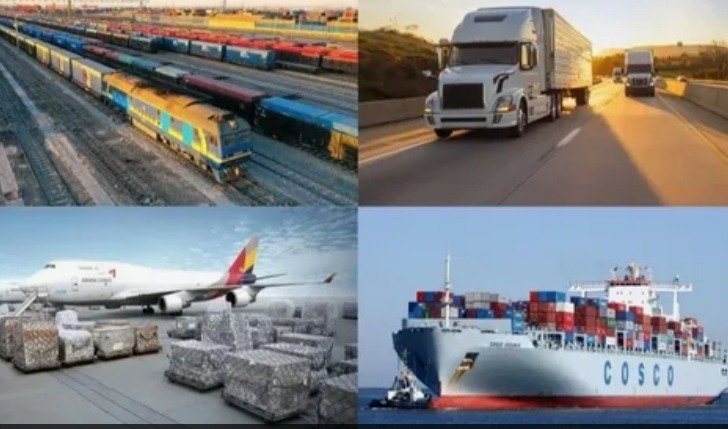
The right shipping method depends on three things: your shipment size, your timeline, and your budget. Here is a side-by-side comparison of your options.
| Ocean FCL | Ocean LCL | Air Freight | Express (DHL/FedEx) | |
| Transit Time | 20–35 days | 25–40 days | 5–10 days | 3–7 days |
| Best For | Large orders (20+ CBM) | Small/medium cargo | Urgent or high-value goods | Very small parcels |
| Relative Cost | Lowest | Low – Medium | High | Highest |
| Minimum Size | 1 full container | No minimum | No minimum | No minimum |
Quick Decision Guide
- Choose Ocean FCL if your shipment fills a 20 ft. or 40 ft. container, and timing is flexible
- Choose Ocean LCL if your cargo is under 15 CBM and cost matters more than speed
- Choose Air Freight if you need goods in 2 weeks or less, or if your goods are high-value and lightweight
- Choose Express if you are sending a small trial order or samples
Most small and medium businesses start with LCL to test the process before committing to full containers.
Step 5: Hire a Freight Forwarder and File Your ISF
What Does a Freight Forwarder Do?
A freight forwarder is your logistics coordinator. They book cargo space, manage documentation, coordinate with the shipping line, and often handle customs clearance too. Think of them as a travel agent—but for your goods.
You do not have to use the freight forwarder your supplier recommends. In fact, using your own forwarder gives you more control, better pricing, and a clear chain of responsibility. Always get quotes from at least two or three forwarders.
The ISF Filing: The Step Most Importers Miss
This is where first-time importers often run into trouble. The Importer Security Filing (ISF) — also called the 10+2 rule — is a mandatory CBP requirement for all ocean freight shipments entering the US.
You must file the ISF at least 24 hours before your cargo is loaded onto the vessel in China. Failure to file on time results in a $5,000 penalty per violation. Your freight forwarder or customs broker will file this on your behalf, but you need to initiate it in time.
The ISF requires 10 data elements from the importer (including seller name, buyer name, ship-to party, HS code, and country of origin) plus 2 elements from the carrier.
Customs Broker vs. Freight Forwarder
Some forwarders handle both logistics and customs. Others only do one. A licensed customs broker is specifically certified by CBP to file customs entries on your behalf. If your forwarder is not a licensed broker, you will need to hire one separately.
For most importers, using a freight forwarder that has an in-house customs brokerage division is the simplest and most cost-effective option.
Documents Your Forwarder Will Need
- Commercial Invoice (showing product value, quantity, and description)
- Packing List (weights, dimensions, carton counts)
- Bill of Lading or Airway Bill (issued by the carrier)
- Certificate of Origin (issued by your supplier or Chinese authorities)
- Any applicable licenses or agency approvals (FDA, FCC, etc.)
If you need support finding a reliable sourcing and logistics partner in China, CHANGE Sourcing is a full-service provider that can handle supplier vetting, order management, and pre-shipment logistics—reducing the number of moving parts you need to manage from the US side.
Step 6: Quality Control Before Your Goods Leave China

This is the step that separates experienced importers from beginners. Never wait until your goods arrive in the US to check quality. By then, it is too late—the goods are already in your warehouse, and you own them.
Why Pre-Shipment Inspection Matters
A third-party Pre-Shipment Inspection (PSI) is conducted at the factory in China, usually when 80% of production is complete. An inspector physically checks a statistically significant sample of your goods and verifies that they match your specifications, labeling, and packaging requirements.
AQL Sampling Standard
Most inspections use the AQL (Acceptable Quality Level) standard. AQL 2.5 is the most common benchmark — it means that if more than 2.5% of sampled units are defective, the shipment is rejected. You can set stricter or looser thresholds depending on your product and risk tolerance.
What to Do If Goods Fail Inspection
- Request that the factory rework or replace defective units
- Set a re-inspection date and make re-inspection a contractual requirement
- Document all failures in writing before authorizing shipment
- Delay final payment until inspection passes—use payment terms strategically
A good inspection service costs $200 to $400 per factory visit. It is the cheapest insurance you can buy in this process.
Step 7: US Customs Clearance
Your goods have shipped, the ISF has been filed, and the vessel is on its way. Here is what happens when it arrives.
The Customs Entry Process
When your shipment arrives at a US port of entry (Los Angeles, Long Beach, New York/New Jersey, and Savannah are the busiest for China imports), your customs broker files a formal entry with CBP. This is done electronically through the Automated Commercial Environment (ACE) system.
CBP reviews the entry and may take one of three actions:
- Release: Goods are cleared immediately — the most common outcome for low-risk shipments.
- Document Review: CBP requests supporting documents (commercial invoice, packing list, etc.) before releasing.
- Physical Examination: CBP physically inspects the cargo. This can add one to five business days and may incur examination fees.
Paying Import Duties
Once the entry is filed, CBP calculates the duty owed based on your HS code and the declared value. Your customs broker will notify you of the amount. Duties must typically be paid within 10 business days of entry.
If your goods are subject to antidumping or countervailing duties (common in categories like steel, aluminum, and solar panels), CBP may require a bond or deposit before release.
The Importer of Record (IOR)
Someone must be legally responsible for the shipment. That person or entity is called the Importer of Record. In most cases, this is you — the buyer. The IOR is liable for accurate classification, correct duty payment, and compliance with all US import laws.
If you are a foreign entity importing into the US without a US business entity, you may need a third-party IOR service. This is a compliance area that most blog guides ignore entirely.
After Clearance: Final Delivery
Once cleared, your goods are either picked up at the port (port-to-door) or delivered directly to your warehouse or Amazon FBA center if door-to-door service was arranged. Confirm your inland delivery arrangements with your forwarder before the shipment arrives.
7 Common Importing Mistakes — and How to Avoid Them
These are the errors that cost importers thousands of dollars every year. Many are avoidable with basic preparation.
Mistake 1: Using the Wrong HS Code
Misclassification is one of the leading causes of CBP audits. A wrong HS code means a wrong duty rate—and you will either overpay or face back duties plus penalties. Always have a customs broker verify your classification before your first shipment.
Mistake 2: Missing the ISF Filing Deadline
As covered earlier, the ISF must be filed 24 hours before loading. Many first-time importers do not know this exists until they receive a $5,000 penalty notice. Brief your forwarder on timelines the moment you confirm your shipment date.
Mistake 3: Skipping Pre-Shipment Inspection
It feels like an unnecessary cost when you are already tight on margins. But one rejected or defective batch that makes it to the US will cost you 10 times what an inspection would have. Make it non-negotiable.
Mistake 4: Not Reading Incoterms Carefully
If you agree to EXW (Ex Works), you are responsible for everything from the factory door onward — including export clearance in China. Many beginners do not realize this and face unexpected costs or delays. FOB is usually the safest starting point.
Mistake 5: Assuming De Minimis Still Applies
If your business relied on sub-$800 shipments from China to avoid duties, that model is no longer viable. All commercial imports from China now require a formal customs entry regardless of value. Adjust your cost models accordingly.
Mistake 6: Using the Supplier’s Freight Forwarder
Your supplier’s recommended forwarder works for your supplier — not for you. They have little incentive to protect your interests if problems arise. Always use your own forwarder or one recommended by a trusted business network.
Mistake 7: Forgetting About Compliance Certifications
You can have a perfect shipment that never reaches your customer because CBP holds it for missing FDA registration or FCC certification. Check agency requirements for your product category before the goods are even produced.
For businesses that want to avoid these pitfalls from the start, CHANGE Sourcing provides end-to-end support — from supplier verification and production oversight to pre-shipment inspection coordination — so importers can focus on growing their business rather than managing logistics from overseas.
Frequently Asked Questions

Total costs vary widely based on product type, shipment size, and current tariff rates. As a general estimate, expect to add 30% to 60% on top of your product cost when you factor in freight, duties, and broker fees. Always run a landed cost calculation before ordering.
Most general merchandise does not require an import license. However, product-specific certifications are common — FDA registration for food and supplements, FCC approval for electronics, and CPSC compliance for children’s products. Check with the relevant US agency for your product category.
Ocean freight typically takes 20 to 35 days from major Chinese ports to the US West Coast and 30 to 45 days to the East Coast. Air freight takes 5 to 10 days. Add 3 to 7 business days for customs clearance on top of transit time.
It depends on your product. Most goods face at least two layers: the base MFN duty and Section 301 tariffs. Some categories also carry additional IEEPA tariffs. Check the HTS database for the specific rate on your product’s HS code, and verify with a customs broker, given how frequently rates have changed.
Technically, yes—individuals can file their own customs entries for shipments valued under $2,500 using the informal entry process. For commercial imports above that threshold, using a licensed customs broker is strongly recommended. The complexity of tariff stacking, agency compliance, and ACE filing makes it very easy to make costly errors without expert help.
Final Thoughts
Importing from China to the USA is not simple — but it is very manageable when you follow the right process. The most important things to get right are your product compliance checks upfront, your HS code classification, your ISF filing, and your pre-shipment inspection.
The importers who get into trouble are almost always the ones who skipped a step or assumed the process was easier than it is. The ones who succeed treat each shipment as a system—with each step building on the last.
Use this guide as your baseline. Verify current tariff rates before every order. Build relationships with a good customs broker and freight forwarder. And do not skip the inspection.
If you found this guide useful, bookmark it—we update it as tariff rules and CBP requirements change throughout the year.
Disclaimer: This guide is for informational purposes only and does not constitute legal or financial advice. Tariff rates and import regulations change frequently. Always consult a licensed customs broker or trade attorney before making import decisions.